American policy has once again become the main foreign-policy backdrop for news in Japan, France and Australia — but not as an abstract superpower, rather as a direct source of risks and opportunities. In March 2026 several “American storylines” come to the fore for these countries at once: nuclear disarmament and a renewed confrontation with Russia, escalation with Iran and an increased US military presence in the Middle East, the economic and technological effects of Washington’s course on its allies, and domestic American disputes over AI and tech regulation. In each society, however, the conversation about America is equally a conversation about themselves: about their own security, economic future and place in the world.
One of the most notable reasons for debate is the final termination of the strategic offensive arms treaty between the US and Russia. Australian ABC News examines in detail how the Donald Trump administration declined a one‑year extension of the New START, calling it a “poorly negotiated deal,” and instead proposed a “new, improved and modernized treaty” that should include China. The piece emphasizes that Washington is deliberately breaking the Cold War–era arms‑control architecture in the name of a more “realistic” approach to three‑way nuclear competition. Australian commentators note a troubling detail: if the previous treaty, imperfect as it was, provided a framework of predictability, regional US allies in the Pacific now find themselves in a world where US–China competition and the risk of a nuclear race with Russia are both intensifying. For Canberra, which relies on the American “nuclear umbrella,” this is not an academic question but an element of national strategy: Australian media interest is growing in how any changes in American nuclear doctrine will affect practical deterrence in the Asia‑Pacific. (abc.net.au)
At the same time another, far hotter front is intensifying: the US–Iran confrontation. In France, expansive survey and analytical pieces note a large-scale buildup of American military presence in the Middle East in 2025–2026, up to the deployment of additional carrier strike groups and the relaunch of a “maximum pressure” policy on Tehran through tough sanctions and attempts to nullify Iranian oil exports. French articles describe this as a return to the logic of force dominance that Europe tried to distance itself from after the 2003 Iraq war, and stress Paris’s ambiguous position: on the one hand France is a NATO ally of the US; on the other, it is a serious player in the Persian Gulf tied to energy and relations with Arab monarchies. Thus French analysts focus mainly on the risks to European energy security and how American “maximum pressure” strategy effectively deprives the EU of maneuvering space, pushing it toward a harder line than it might otherwise choose. (fr.wikipedia.org)
Australian media bring their own angle to the same story. ABC’s report on how the US together with Arab states actually turn to Ukraine for help in countering Iranian Shahed strike drones looks almost symbolic: Washington, accustomed to being the “arsenal of democracy,” finds itself in the position of a buyer of foreign experience and technology. Analysts cite experts who say the American missile‑defense and air‑defense systems proved less adapted to mass cheap drone attacks than expected, and that Washington is now forced to build unusual triangles of cooperation: US — Ukraine — Gulf states. For Australian audiences this is an example of how the US is relearning to fight in the age of cheap drones, and a lesson for its own defense policy: you cannot rely only on expensive “exclusive” systems when an adversary uses inexpensive mass attack means. Underneath this runs another point: allies’ dependence on the American military architecture looks vulnerable if even the main center of that architecture must urgently patch technological gaps. (abc.net.au)
The French public, for its part, reacts to American forceful activity in Iran and the Middle East with long‑accumulated scepticism. Around discussions of a “war with Iran in 2026” French outlets show fatigue with a recurring scenario: the US increases military presence, announces another round of sanctions, speaks of defending global security, and Europe then faces waves of refugees, energy price volatility and the need to navigate between allied solidarity and caution. Commentators recall that the former EU foreign policy chief Josep Borrell repeatedly publicly questioned the effectiveness of American military campaigns, saying that the United States “hasn’t won a major war since World War II.” That view, widely cited on European and Francophone analytic platforms, reflects a deep debate: can one indefinitely rely on the American war machine if its operations rarely translate into sustainable political results. (reddit.com)
In economics and technology France sees the contemporary US as both partner and aggressive competitor. Think tanks such as the Observatoire de l’Europe analyze the Trump administration’s trade and tax policies with a distinctly pragmatic lens: corporate tax cuts, protectionist measures and the pull of major multinational investments into American jurisdiction. One such publication details pharmaceutical giant AstraZeneca’s decision to invest more than €40 billion in the US over the next five years, including a large research center in Virginia, as well as a major agreement between American Eli Lilly and Danish Novo Nordisk to lower prices on key drugs in exchange for new capital investments in US manufacturing. For French authors this is an example of how Washington, using “Buy American” policies and tax incentives, “siphons off” innovative activity from Europe, widening the productivity and technological leadership gap. The worrying conclusion follows: if the EU does not build its own industrial and scientific strategy, it risks becoming a periphery of two giants — the US and China. (observatoiredeleurope.com)
Another French strand concerns technology regulation, particularly artificial intelligence in the US. Francophone tech sites and economic reviews frequently cite American opinion polls: publications note that, according to NBC and other studies, most Americans both use AI services and view them with a high degree of distrust. A recent piece citing a survey conducted in late February–early March 2026 emphasizes the paradox: although AI use in the US is growing, the share of those who “very much trust” these technologies does not exceed a few percent, while a significant portion of the population expresses a “high level of anxiety.” French commentators see here a reflection of a broader American dilemma: a country claiming technological leadership fails to embed rapid technological progress into the social contract. For Paris this is not just observing someone else’s problems: in debates about its own AI regulation France is watching American disputes closely — as both a model of innovation dynamics and as a set of warning signs about social rifts and growing distrust of elites. (cointribune.com)
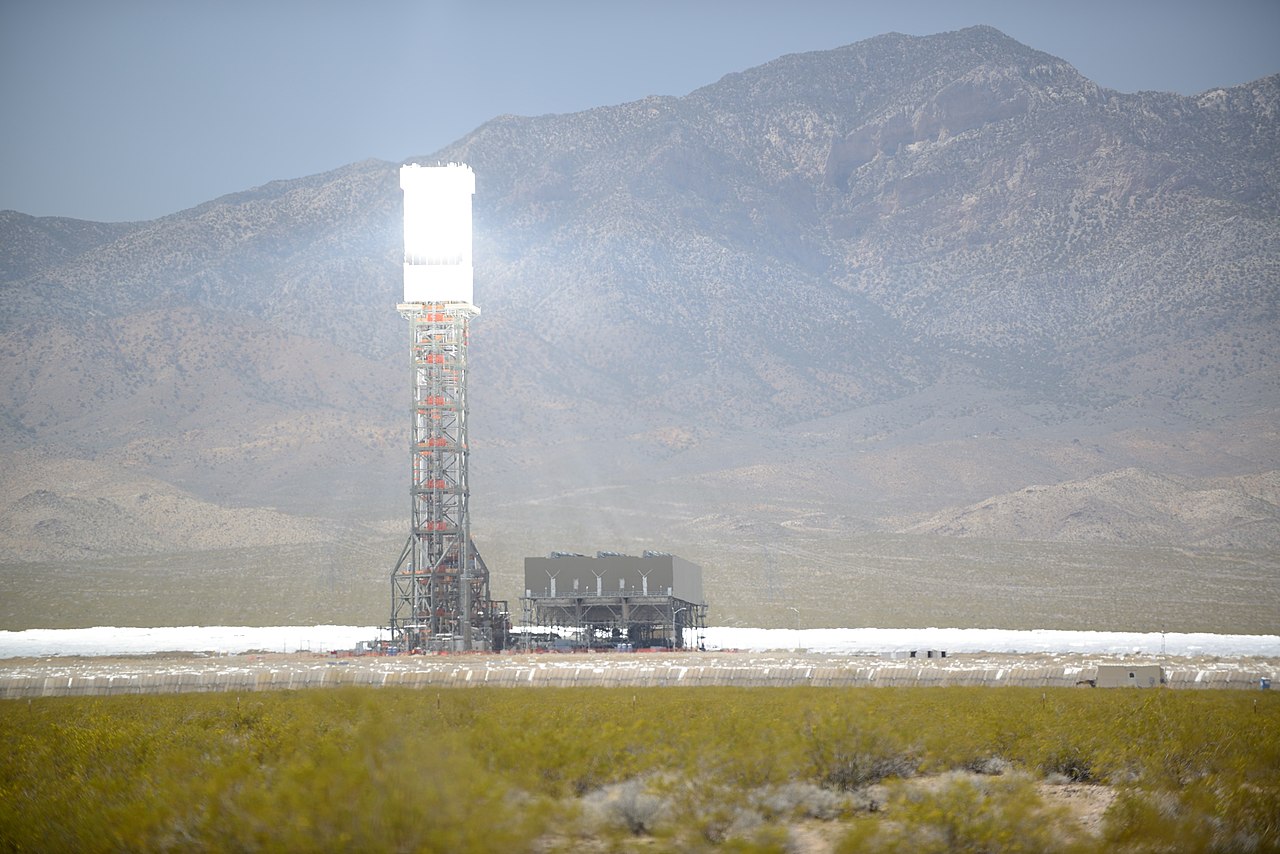
In the Japanese information space the American theme these weeks appears less as a dramatic conflict line and more as a constant structural factor — primarily in economics, energy and technology. For Tokyo, Washington’s political course on climate and energy is not an abstract agenda but a question of balancing the “green” transition and supply security. Japanese economic and sectoral outlets closely analyze how the US, after adopting the Inflation Reduction Act, is sharply scaling up investment in solar energy and related manufacturing capacity, and what that means for Japanese players. Against the backdrop of the American plan to expand offshore drilling and issue dozens of new oil and gas licenses in 2026–2031, Japanese analysts see a growing duality: Washington officially speaks of climate leadership, but de facto is ready to increase hydrocarbon production to both profit and weaken competitors like Russia and OPEC countries. For Japan, which depends on imports and seeks to strengthen low‑carbon energy, this raises questions about how reliable American rhetoric on decarbonization is and how to diversify its energy ties in a world where the US increasingly plays on many fields at once. (fr.wikipedia.org)
A special place in the Japanese discussion is occupied by the technological dimension of American policy — from export controls to immigration restrictions. Research centers in France already note how the tightening of American visa and migration regimes, especially for highly skilled specialists, and the rollback of some of the more liberal Biden‑era directives affect global flows of talent. For Japan, which is also competing to attract researchers and engineers, this American line is both a risk and an opportunity. The risk is that tightening controls around key technologies, including semiconductors and AI, deepens fragmentation of global value chains and forces Tokyo to embed more tightly into American control schemes. The opportunity is that some scientists and entrepreneurs facing barriers to the US may look for alternatives in other Asian tech hubs, including Japan, if it offers more predictable conditions. (ifri.org)
Against this backdrop Australian discussion of the “American factor” increasingly emphasizes Canberra’s dependence on strategic shifts in Washington. Pieces on American initiatives to defend against Iranian drones, the winding down of arms‑control deals and the expansion of US military presence in the Persian Gulf and Eastern Mediterranean are read in Australia not only as distant news. They are directly woven into debates around AUKUS, the purchase of American and British submarines, participation in US missile‑defense systems and intelligence sharing. Australian authors ask: if the US at any moment is ready to reallocate resources between Europe, the Middle East and the Indo‑Pacific, can Australia guarantee that at the crucial hour American forces will be fully available to deter China? The answer is not always comforting, pushing toward the idea of “responsible autonomy”: strengthening its own defense capabilities within the alliance with the US, not instead of it. (abc.net.au)
Meanwhile in French intellectual circles America still appears as an image of political futures — both good and bad. In a number of long surveys published in outlets such as Le Courrier des Amériques, American society is described as a laboratory where several major trends converge: demographic change, the shift to “platform capitalism,” polarization around cultural and identity issues, and now mass AI adoption. Some authors openly discuss the question: “Will AI kill all jobs in the US?” — stressing that the American model with its flexible labor market and weak social safety nets turns technological shocks into especially painful shocks. For the French reader this is both a warning and a mirror: the same debates take place in Paris, but against a background of much stronger unions and a tradition of social welfare. In this context the US appears less as a “model country” and more as a “warning country” about what happens when technological and financial capital race ahead while political institutions fail to incorporate those changes into fair rules of the game. (courrierdesameriques.com)
The common motif uniting Japanese, French and Australian discussions about America is a growing distrust in US predictability as a system. This is not anti‑Americanism in the old sense, but an awareness that a country which simultaneously leads harsh sanction campaigns, increases oil drilling, tries to control global AI and reshapes trade and tax systems for its own needs has become too large and often contradictory a factor to be treated simply as an “anchor of global stability.” Japanese analysts try to stitch American fluctuations into long‑term energy and technology strategies; the French balance between allied solidarity and the fear of becoming an economic appendage and political hostage to others’ wars; Australians try to rethink their role as a junior partner for whom American decisions in Iran, Europe or on nuclear control automatically have consequences in the Indo‑Pacific.
At the same time none of these countries is seriously talking about breaking with the US. On the contrary, the more turbulent American policy appears, the more actively elites in Tokyo, Paris and Canberra seek ways not just to “follow,” but to influence — through bilateral consultations, coordination in NATO and the G7, and proposals for joint initiatives in AI, energy or arms control. In this sense the current state of discussions about America abroad can be described as a transition from “unipolar trust” to “critical partnership”: the US remains indispensable, but its course must be constantly checked, debated and sometimes corrected. That is why the local voices — economists, diplomats, military experts, technology analysts — from Tokyo, Paris and Canberra are so important: they look at Washington not from below, but as at a complex, contradictory, yet necessary partner, for whom naivety is no longer a luxury.