The world continues to assess how exactly the United States is shaping its policy toward Iran and the overall level of tension in the Middle East: in some statements, Washington’s approach is criticized, while in others there are attempts to understand whether it increases escalation or, on the contrary, restrains the risk of the conflict spreading. Against this backdrop, attention is focused not only on specific decisions, but also on how confidently the United States is holding its diplomatic course—and why negotiation tracks remain tangled and agreements remain fragile. A separate topic is discussions about how U.S. strength—or, conversely, the perceived lack of firmness of the American position—is being received, and what this could mean for the next steps in a region where any mistake can easily turn into a new round of instability. This article is based on materials from www.makorrishon.co.il (Israel) and www.instagram.com (Ukraine).
Israel sees a dangerous U.S. weakness in the Iran deal
The Israeli outlet Makor Rishon does not view U.S.-Iran understandings as an expression of “realism,” but as a dangerous signal of U.S. weakness. The piece is written through a distinctly Israeli lens: the deal is presented not as a neutral diplomatic step, but as a decision that, in the author’s view, again places “keeping order” and controllability ahead of tough deterrence of the Iranian threat.
The main fear running through the text is not just a temporary breathing space for Tehran, but the actual political and economic legitimization of the ayatollahs’ regime. The author emphasizes that, for Israel, what is happening looks like a “lifeline” for Iran: an opportunity to preserve a functioning nuclear program, strengthen its positions in the region, and continue pressure via lines such as Lebanon and the Strait of Hormuz. In the Israeli view, this is not abstract geopolitics, but a direct threat to the country’s security linked to Hezbollah and to growing Iranian nuclear capabilities.
One of the key voices in the material is Eli Klotzshtein, a researcher at the Misgav Institute for National Security. His stance is extremely hardline: he rejects the justification of the American line as the behavior of a “responsible superpower” and argues that Washington’s actions demonstrate weakness. In his view, the deal “sends the world a signal of weakness and failure,” and Iran, as he believes, is already turning this into a propaganda victory.
At the same time, in the article Israeli criticism of the U.S. goes well beyond the Iran issue. The authors and the quoted experts connect what is happening to a broader fear: if the United States gives way to Tehran, it could embolden China, Russia, and North Korea to take even more risky steps. In other words, in the Israeli reading, an agreement with Iran becomes not only a regional problem, but a global one that undermines trust in American deterrence as such.
An important layer of the article is an internal Israeli conclusion. Israel is, in essence, set against the United States: Washington thinks about global stability, oil prices, and crisis management, while Israel thinks about its own survival in a region where enemies openly talk about wanting to destroy it. This is where the classic perspective of a small state living under constant threat shows through—and, as the piece stresses, it has no “strategic patience” of the kind that a superpower might afford.
To reinforce his point, the author uses historical parallels. He compares the logic of concessions now with a situation in which allies could have stopped in 1944 and not finished off Nazism to the end. For the Israeli audience, this analogy is especially powerful: it appeals to memories of the Holocaust and to the belief that evil cannot be “built into” order—it must be destroyed before it becomes even more dangerous.
The cultural dimension of this reaction is also evident. In Israeli public rhetoric, security almost always takes precedence over diplomatic abstraction, and the article is structured accordingly: it does not merely report on the agreement, but evaluates it through the prism of national anxiety, distrust of international promises, and historical experience—when compromises with a threat only delayed the next crisis. Even while acknowledging that the United States may have its own rational reasons to act cautiously, the author still reaches a hard conclusion: in a region where the threat to Israel remains real and close, such caution looks like a concession to the enemy.
In the end, Makor Rishon is not a neutral report on the deal, but a political and security commentary in which the U.S. line is interpreted as a choice in favor of “order” over decisive deterrence of Iran. In the author’s view, it is precisely this that makes the deal dangerous not only for the region, but above all for Israel.
The U.S., Iran, and a worrying signal for Ukraine
Another flare-up around Iran and Donald Trump’s tough rhetoric in Ukraine are being read not only as a Middle East crisis, but also as an important indicator of how willing Washington is to maintain firmness across multiple fronts at once. As noted in an Instagram post, in the Ukrainian perception such signals spark concern: if the United States is ready to “see it through” with Iran, it could also mean an even greater shift in U.S. foreign-policy focus toward pressure tactics and strategic conflicts.
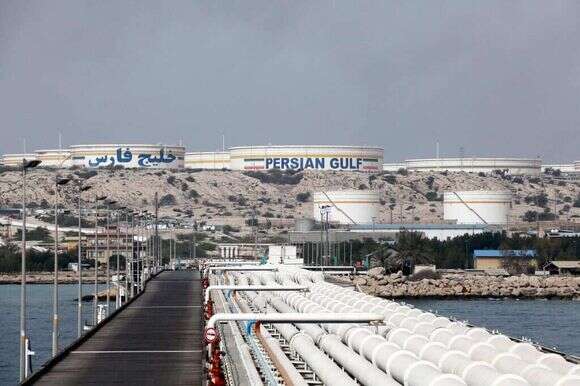
For the Ukrainian audience, it is not Iran itself that matters so much as the consequences for the overall international agenda. In Kyiv, similar news is usually interpreted through the lens of how it could affect energy prices, risks for maritime trade, the stability of global markets, and—most importantly—how much attention the United States is paying to the war in Europe. A worsening situation in the area of the Strait of Hormuz, as emphasized in the Ukrainian commentary, is seen as a factor that could hit the global economy—and therefore Ukrainian exports, fuel imports, and overall financial stability.
In Ukraine’s media space, Trump’s statements of this kind are often compared to the experience of their own war. Ultimatum language, threats of strikes, and demonstrations of strength resemble rhetoric familiar from Russian aggression—so such signals cause not only interest, but also unease. At the same time, the Ukrainian interpretation remains ambivalent: on the one hand, it is a demonstration of U.S. strength as a global arbiter; on the other, it is a reminder that the world is becoming even more tense, and that competition for attention and resources could intensify.
That is why in Kyiv such news is read more broadly than just as an ordinary message about Trump’s words. The question is how resilient U.S. foreign policy remains—and whether Ukraine could find itself in a situation where Washington is forced to spread its efforts across several crises at the same time.