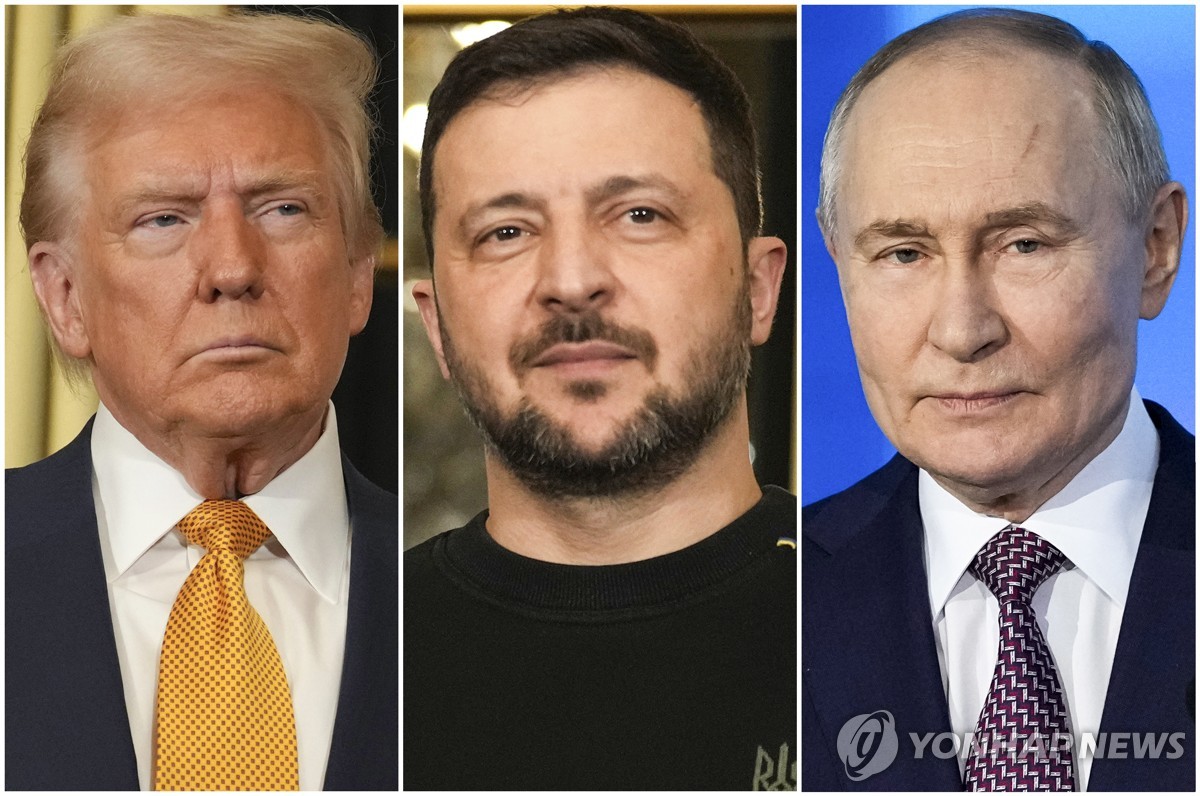
The visit by a Ukrainian negotiating delegation to Florida, contacts between Donald Trump’s administration and Vladimir Putin, and discussions about possible presidential elections in Ukraine combine to form a picture that Ukrainian analysts view with considerable concern. In a report by columnist Yulia Zabelina published by Radio NV, these episodes are seen as signs that the United States may be reconsidering its approach to the war, sanctions, and relations with Moscow.
The author pays particular attention to the reported agreement between Trump and Putin concerning supplies of Russian diesel fuel to the United States. In Kyiv, a possible easing of restrictions in the energy sector could be perceived not simply as a commercial decision, but as a political signal: Moscow is gaining an opportunity to discuss practical economic issues directly with Washington, while Ukraine continues seeking to coordinate its own position with the American side.
The scenario could look entirely different from a Russian perspective. Direct Russian-American contacts would be presented as confirmation that European security, energy, and the stability of global markets cannot be discussed without Moscow. A possible easing of sanctions on diesel fuel would support the argument that Western policy is pragmatic: restrictions introduced as a tool of pressure may be reconsidered when the interests of the U.S. economy and domestic fuel market require it.
Uncertainty surrounding the talks is also heightened by reports that Steve Witkoff and Jared Kushner’s visit to Moscow has been postponed. According to the logic set out in the Ukrainian report, the reason may have been the lack of clarity regarding the positions of Ukraine and its European partners. In Russian political rhetoric, this could serve as confirmation of a different argument: Kyiv and European capitals are not the only decision-making centers and are not always able to determine the course of negotiations between Washington and Moscow.
This once again raises the question of the strength of transatlantic unity. The Ukrainian view is based on fears that the United States may act independently, guided by its own political and economic interests rather than by a coordinated line with Europe and Ukraine. The Russian interpretation, by contrast, would emphasize that Washington can revise its previous policies without regard for its allies, and that declared Western solidarity has pragmatic limits.
For Russia, the issue of diesel supplies is important not only as a possible commercial development. It reinforces the perception that Russian energy resources remain in demand even under sanctions pressure. Domestically, such news could be used as evidence that sanctions remain an incomplete and contradictory instrument, and that attempts to isolate Russia do not eliminate the need to maintain economic and diplomatic channels with it.
This perception fits the Russian assessment of relations with the West that has taken shape since 2014. Public confrontation, sanctions, and harsh rhetoric can coexist with closed-door negotiations, trade in raw materials, and the search for exemptions beneficial to all sides. In this logic, declarations of values give way to “realpolitik”—questions of security, fuel prices, market stability, and the interests of national elites.
The Radio NV report is an analytical assessment rather than a neutral listing of facts. It links the Ukrainian delegation’s visit to Florida, the possible diesel deal, the postponement of the American representatives’ trip to Moscow, and the issue of Ukrainian elections into a single picture that is alarming for Kyiv. In the Russian information space, the same sequence of events would likely be presented as evidence that Moscow retains negotiating and economic weight despite Western pressure.
U.S. “Energy Truce” Seen as Benefiting Russia
The “energy truce” between Russia and Ukraine announced by U.S. President Donald Trump could become not a diplomatic breakthrough but a decision that shifts the balance of the economic war in Moscow’s favor. This is the conclusion reached by South Korean news agency Yonhap, drawing on an assessment by The New York Times and examining the initiative through the lens of sanctions, energy, and the reliability of Washington’s alliance policy.
At the center of attention is a possible agreement to supply 300,000 metric tons of Russian diesel fuel to the United States. Experts estimate that such a contract could bring Russia around $4 billion. For Moscow, this would mean substantial financial support amid the war and international restrictions, while for the Trump administration the supplies could offer a way to reduce domestic diesel prices ahead of the midterm elections.
It is precisely this exchange—access to Russian fuel in return for restrictions on strikes against energy infrastructure—that is causing the greatest concern. According to the logic presented in the report, Washington may be willing to weaken the international sanctions front for the sake of a short-term domestic-market objective, while simultaneously limiting Ukraine’s most effective tool against Russia’s military economy.
Ukrainian attacks on oil-refining facilities are viewed as one of the most important means of reducing Russian revenues from energy exports. If Kyiv is forced to abandon such strikes as part of the “energy truce,” Ukraine risks losing its “most powerful tool” of pressure on Moscow. At the same time, the terms of the deal do not appear symmetrical: as the analysis notes, Russia could potentially retain the ability to attack other critical sectors of the Ukrainian economy—ports, steel mills, warehouses, and data centers.
The Black Sea ports of Odesa are particularly important, as Ukrainian grain exports depend on them. Statistics cited in the report demonstrate the scale of the problem: the number of vessels departing from the three Odesa ports fell from 266 in September last year to 12 in September this year. Thus, restricting strikes on Russia’s oil industry does not necessarily mean protecting Ukraine’s export infrastructure, while economic pressure on Kyiv may continue in other forms.
For South Korea, this issue goes far beyond the European war. Seoul supports sanctions against Russia, depends on the stability of global energy markets, and relies on American security guarantees. Consequently, the possible prioritization of U.S. domestic political needs over a long-term containment strategy is perceived as an alarming signal.
Although the Yonhap report does not include separate comments from South Korean politicians, its focus reflects widespread concern in the country: the war in Ukraine has become a test of whether the United States and its partners are prepared to maintain a united front against the forcible alteration of the international order. For the Korean Peninsula, where deterrence and allied coordination have direct significance, the possible erosion of sanctions solidarity is particularly telling.
In this interpretation, the “energy truce” does not look like a neutral formula for ending attacks, but rather like a mechanism that effectively “ties Ukraine’s hands and feet,” gives Russia new financial opportunities, and creates a risk of division among the allies. The South Korean analysis raises a question broader than the specific negotiations involving Trump, Vladimir Putin, and Volodymyr Zelenskyy: can the short-term benefit of cheaper fuel outweigh the strategic cost of weakening sanctions pressure and transatlantic unity?