Events in the United States have repercussions far beyond domestic politics. In Brazil, Lula’s victory is linked to the defeat of Trump and the global right, while commentators discuss possible interference by Washington in the case involving Flavio Bolsonaro and the prospects for relations with the United States. Israeli commentators view the elections and US military signals to Iran as a test of American resolve—one on which Israel’s security depends. Based on Agência Pública (Brazil) and Makor Rishon (Israel).
Brazil sees a possible Trump defeat as a chance for democracy
The Democratic Party’s likely success in the US midterm elections is seen in Brazil not just as a matter of American domestic politics, but as a factor that could affect the resilience of Brazilian democracy and the position of Latin America. In an analysis by Agência Pública, a possible weakening of Donald Trump and the Republicans is linked to reduced pressure from Washington on Brazil and less international support for Bolsonaro’s allies.
The author focuses in particular on Trump’s relationship with Flavio Bolsonaro, whom the article describes as a defeated candidate who left Brazil. His reception in the United States is presented not as a routine diplomatic contact, but as part of a broader attempt to influence Brazilian domestic politics. According to the article, Trump did not recognize the results of Brazil’s elections and made unsubstantiated claims of fraud. Former Trump adviser Steve Bannon, meanwhile, backed the claim that Brazil had supposedly become a “dictatorship” and should therefore face harsh US sanctions.
The article contrasts this approach with the reaction of US Democrats to the victory of Luiz Inácio Lula da Silva. Bernie Sanders, Alexandria Ocasio-Cortez, and Zohran Mamdani, it notes, were quick to congratulate Lula. For the author, this suggests that the Democratic wing of US politics can be seen in Brazil as a partner in defending electoral institutions, sovereignty, and the legitimacy of elected governments.
In this view, a possible Democratic victory in the congressional elections matters not only because it would constrain the Trump administration’s powers at home. Democratic control of both chambers of Congress, the author argues, could make it harder to use US territory, political structures, and institutions as a platform for attacks on Lula’s fourth term. The article explicitly claims that Democrats defended Brazilian democracy in 2022 and 2026.
In this interpretation, Brazil is one of the key countries in the region resisting right-wing and “neocolonial” pressure from Washington. Alongside Mexico and Uruguay, it is contrasted with the broader rightward shift in Latin America. Lula’s victory is presented not as a purely national result, but as an international point of reference for resisting far-right movements.
The article also cites US economic difficulties as an argument for a likely Republican defeat. Rising fuel and food prices, the effects of Trump’s tariff policy, harm to farmers, and strained trade relations with Canada and Mexico could, the author believes, influence American voters. For Brazil and other countries in the region, this issue also has practical significance: US protectionism and instability can affect export markets, supply chains, and economic conditions across Latin America.
The article draws a direct parallel between the American and Brazilian experience of undermining trust in elections. According to the account presented, Trump uses unsubstantiated claims about noncitizen voting and election fraud to discredit a possible defeat in advance. In Brazil, similar tactics are particularly painful because of Bolsonaroism’s attacks on the electronic voting system, doubts about the legitimacy of the results, and mobilization against state institutions after an election loss.
Thus, Agência Pública’s article does not claim to offer a neutral overview of US polling or election campaigns. It is a politically engaged perspective from Brazil, in which a possible Democratic “blue wave” is seen as a favorable scenario for protecting Brazilian sovereignty, Lula’s government, and the country’s democratic institutions. Trump’s weakening is linked not only to the future of the United States, but also to Latin America’s prospects in resisting external pressure and transnational far-right networks.
Israeli writer urges US and Israel to adopt decisive strategy against Iran
The Israeli publication Makor Rishon published an opinion piece arguing that a strategy of limited pressure on Iran—sanctions, targeted strikes, and attempts to bring Tehran back to negotiations—does not serve Israel’s interests. The author insists that Jerusalem should not accept another protracted war of attrition, but should instead propose a joint plan to Washington aimed at decisively destroying Iran’s military capabilities.
The article’s central argument is that the United States and Israel have different capabilities. In the author’s view, the United States can afford a prolonged confrontation with Iran because of its size, resources, and geographic distance from the Middle East. Israel, by contrast, is surrounded by hostile forces and depends on reserve mobilization, economic stability, and social cohesion. A long war involving massive Iranian strikes, attacks on US facilities in the region, and pressure on neighboring countries would therefore carry especially high risks for Israel.
The author links the possibility of a new round of US-Israeli strikes to the political calendars of both countries. The article suggests that a window for a new operation could open after the US midterm elections. At the same time, Israel’s elections have ended without a clear majority, and government formation could coincide with a period of potential escalation. If the US president asks Israel to join a new campaign, the author argues, Jerusalem should not limit itself to the role of an ally awaiting instructions from Washington. Instead, it should present its own strategic vision.
The article is particularly critical of the approach it associates with Elbridge Colby, the US deputy secretary of defense for policy. Under this doctrine, the US objective is not necessarily to defeat an adversary outright, but to prevent it from achieving strategic success. The author acknowledges that this deterrence model may apply to relations between nuclear superpowers. But, the article argues, it is unacceptable in the case of Iran, since one of the war’s principal aims is to prevent the Islamic Republic from becoming a nuclear power.
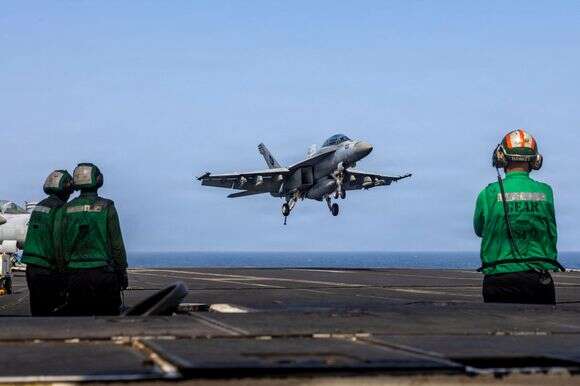
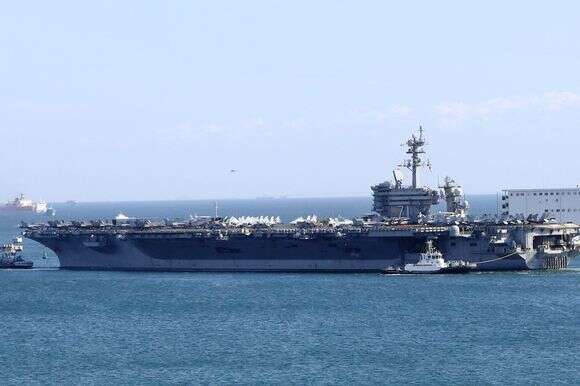
To support the claim that the current course is inadequate, the article cites Dana Stroul, a former senior Pentagon official for the Middle East. She says that a combination of military action, sanctions, and a naval blockade has not brought Iran’s leadership back to meaningful negotiations. The article also mentions an analysis by the US Council on Foreign Relations, which concluded that Washington had failed to turn military gains into political victory. The author of the Makor Rishon piece, however, takes these assessments not as a reason to de-escalate, but as evidence that a more decisive course is needed.
The Israeli experience after Hamas’s October 7 attack plays an important role in the argument. The author writes that for years Israel relied on “deterrence, threat containment, and attrition” instead of eliminating threats before they grew stronger. In the author’s view, the price of this policy became clear during the Hamas attack. In the postwar Israeli political context, the comparison serves as a warning: caution and conflict management may be not pragmatism, but an illusion that allows an adversary to build up its strength.
At the same time, the article stresses that a war with Iran would be fundamentally different from fighting Hamas or Hezbollah. On Israel’s borders, the author argues, victory usually requires ground maneuver, and the capture and holding of territory until an agreement is reached that prevents the threat from re-emerging. This scenario is impossible in Iran’s case because of the distance and the absence of a shared border. Israel and the United States must therefore find technological and military means of depriving the Iranian regime of its ability to continue the war and dictate the terms of its end, without a large-scale ground operation.
The author also warns against assuming that striking Iran’s economic lifelines would, by itself, amount to victory. Raising the economic cost of war for Tehran is not enough if the regime retains the ability to fight. The desired outcome, the article says, is a short campaign that quickly creates the conditions for a lasting settlement not dictated by Iran.
More broadly, the article reflects a common position in Israeli strategic discourse: lasting peace is achieved not through concessions or prolonged conflict management, but through a willingness to wage a decisive war. The maxim “If you want peace, prepare for war” is interpreted as a need to demonstrate to the adversary the ability to win. The author assumes that authoritarian regimes and non-state armed groups may be more willing than developed democracies to endure long wars, and that the absence of decisive force supposedly encourages them to start conflicts again.
The practical proposal is directed at the prime minister and the Israeli cabinet: task the chief of the General Staff with developing an alternative strategy for “resolving the Iran problem,” approve it in Israel, present it to the US president, and coordinate it with the US armed forces. Under this model, Israel would not be a junior partner waiting for Washington to decide, but the initiator of a joint military concept drawing on the technological and military capabilities of both countries.
Thus, Makor Rishon’s article is not a neutral report on diplomacy or possible escalation, but a call for a change in strategy. Its author believes that the United States can afford to forgo complete victory and pursue a prolonged pressure campaign, whereas Israel—because of its size, vulnerability, and regional position—cannot.