Australia, Japan and Saudi Arabia today view the United States primarily through the lens of one issue: the US‑Israeli war against Iran and the crisis in the Strait of Hormuz. The US and Israeli strike on Iran on 28 February 2026, the killing of Supreme Leader Ali Khamenei and the near‑complete halt of tanker traffic through Hormuz — through which ordinarily about one‑fifth of the world’s oil passes — turned for these countries the abstract story of “American power” into an existential test of their own vulnerability and autonomy relative to Washington. In March, US President Donald Trump launched an air campaign to force Iran to reopen the strait and demanded that oil‑consuming countries “take on military responsibility” for Hormuz’s security, but Australia and Japan publicly refused, while in Saudi Arabia a more nuanced debate began: how to profit from high oil prices without becoming a tool of American escalation. (apnews.com)
Against this backdrop several overlapping themes are emerging in the three countries. First: how far can one go in supporting the US without becoming complicit in “someone else’s war”? Second: the fear of a “third oil shock” and stagflation, where the risk is attributed not only to Iran but also to the unpredictability of American policy. Third: a new perspective on the security of sea lanes — is it acceptable that freedom of navigation in Hormuz is effectively regulated by a superpower that has decided to “seize the strait”? Finally, a debate is developing in the Persian Gulf region over who and under what terms should internationalize the strait’s security — the US, a US‑led coalition, or a broader international framework involving the UN and littoral states.
In Australia, the US war with Iran became a litmus test for a long‑standing dispute over the nature of Australia’s partnership with Washington. At the government level the line remains traditionally allied, but with noticeable limits. Canberra condemned the Iranian attack on Al‑Minhad airbase hosting Australian forces and confirmed participation in US operations in the region, stressing that this is part of AUKUS obligations and shared efforts to deter Iran. However, when Trump called on “countries of the world that receive oil through Hormuz” to send military forces to secure the strait, Australia took a strictly limited stance: a government minister stated plainly on 16 March that Australia would not send ships into the strait. (en.wikipedia.org)
Domestically this crystallized into a heated debate about repeating “America’s endless wars.” In left‑wing and antiwar media, for example in Vince Hooper’s article “The Iran war is Australia’s margin call” in Independent Australia, the war is called “a stress test of Australian strategic policy on every front: alliance dependence, energy fragility, consular capability and commitment to international law.” The author notes that oil prices exceeded $100 per barrel and that “another US‑led war” could draw Australia into a long‑term spiral of conflicts profitable for the US defense industry but dangerous for the Australian economy and diaspora communities from the Middle East. (antinuclear.net)
To the left of the government line there are direct calls to sever some institutional ties to the US war machine. The socialist publication Solidarity in its March issue ran an editorial titled “Albanese joins Trump’s war in Iran — time to break US alliance,” equating Australia’s participation in the US campaign with the histories of Iraq and Afghanistan and proposing to “break dependence on the US and stop trading weapons.” Here the US role is seen not as a guarantor of order but as a systemic source of instability, pushing allies into conflicts that the public does not support and that the economy cannot sustain. (solidarity.net.au)
At the same time, business press and economists offer a more pragmatic line: the conflict inevitably hits the Australian dollar, inflation and markets, but breaking the alliance with the US over a one‑off crisis is risky. Financial analyses of the AUD/USD pair published on trading platforms link Trump’s decision to temporarily postpone strikes on Iranian energy infrastructure directly to an improvement in market “risk appetite” and stabilization of the Australian currency; investor briefs warn that upcoming business activity indices in Australia and the US will show how deeply the war has already penetrated the real economy. (mitrade.com)
In Japan’s debate, the United States is seen simultaneously as a guarantor of maritime security and a source of systemic risk. Unlike in Australia, where the dispute is primarily about political loyalty to the alliance, in Japan the focus shifts to constitutional constraints combined with energy dependence. In an emergency leaflet “革新のひろば” from the Japanese Communist Party demanding “an end to US and Israeli attacks on Iran,” American actions are described as an “imperialist war,” and readers are reminded of demonstrations in Washington under slogans “America, get out of Iran now” and “End imperialist wars.” Japanese authorities are urged to “raise a loud voice against the war” and to show solidarity with the global antiwar movement rather than automatically backing the US line. (jcp‑kanagawa.jp)
But while the communists’ stance is simple — the US is the main aggressor — mainstream analysis is more nuanced. Political scientist Satoru Ikeuchi in an article for 公研 describes the current war as a continuation of the trend in which US military infrastructure in GCC countries (Saudi Arabia, the UAE, Qatar) has become “a forward base for Israel’s defense.” He writes that “for countries like Japan, which heavily depend on stable extraction and supplies of oil and gas from the Persian Gulf, the actions of Israel and the US under its influence have become a huge, concretely manifested risk.” In other words, the risk is seen not only in Iran but also in Washington’s willingness to radicalize military actions without regard for the long‑term interests of importing countries. (koken-publication.com)
Economists and business consultants spell out this fear in terms familiar to Japan: the formula of a “third oil shock.” In a long analysis titled “2026 US‑Iran Conflict and the Course of the Japanese Economy: The Crisis of Stagflation Brought by a Third Oil Shock,” the authors directly link the US‑Iran war to a threat of stagflation: rising energy prices, falling real household incomes, and worsening conditions for energy‑intensive industries. An important nuance: in this logic the US are not merely “protecting world trade” but provoking a chain of events that lead to structural problems in Japan’s economy. (human-trust.co.jp)
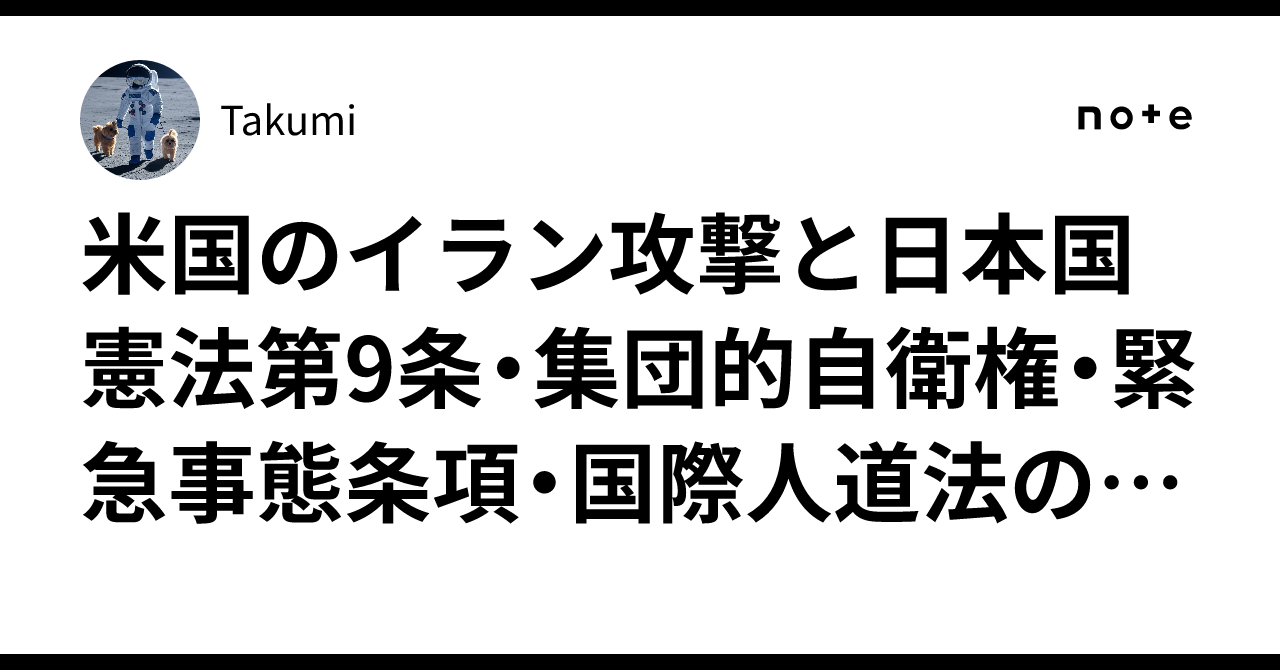
Legal and constitutional commentary raises another dimension — whether and how Japan can or should follow the United States into such operations. In an analytical column on the platform note, “US Attacks on Iran and Japan’s Constitution Article 9, Collective Self‑Defense, Emergency Clauses and International Humanitarian Law,” lawyer Takumi Inoue examines how the February US strike on Iran shook interpretations of Article 9 of the Constitution. He recalls that Prime Minister Takaiti on 2 March condemned Iran’s nuclear program but “expressed neither explicit support nor criticism” of US military actions, and asks whether Japan can participate in collective self‑defense in such a controversial war without clear UN Security Council backing, without undermining international humanitarian law. Here the US functions as a test of the limits of Japan’s “normalization” of defense policy. (note.com)
An important strand of Japanese discussion is tied not only to military but also to US climate and energy policy. Even before the current war, Japanese research centers scrutinized the second Trump administration’s steps to exit climate agreements and roll back environmental regulations, warning that this sharply reduces America’s international influence and strengthens the EU and China in the global climate architecture. In a January JETRO review it was noted that a unilateral US withdrawal from the UN Framework Convention on Climate Change is technically contentious and could shift influence toward actors who continue to push the decarbonization agenda. Against the backdrop of the Iran war this reads as a double threat: the US both destabilizes fossil fuel supplies and distances itself from coordination on the green transition on which Japanese companies depend. (jetro.go.jp)
Reactions in Saudi Arabia to the US over the Iran war and the Hormuz crisis are the most complex and cannot easily be boiled down to a simple “for” or “against America.” On one hand, the kingdom has historically relied on American security guarantees and is highly vulnerable to any disruption in Hormuz shipping. On the other, Vision 2030 and diversification efforts push the elites toward greater maneuverability and caution about becoming the frontline of another US campaign.
A characteristic example is a recent article in the Saudi newspaper Al‑Riyadh, which describes Iranian threats to close the strait as a reason to “internationalize” the Hormuz issue. The author notes that Trump’s statements were accompanied by harsh threats toward Iran and calls for “the international community, especially countries dependent on Persian Gulf energy resources,” to participate in securing navigation. The piece emphasizes, however, that Saudi Arabia is one of the largest and most reliable suppliers of “safe and stable energy sources with guaranteed deliveries and acceptable prices,” and that the international community should build solutions not on unilateral US steps but on coordinated initiatives with the Gulf’s coastal states. (a5.alriyadh.com)
In the kingdom’s energy and economic circles the US is more often seen as one actor within a broader architecture of competing centers of power. Analysts at the KAPSARC research center, analyzing the US‑China confrontation in tariffs and LNG trade, pointed out that the growth of China’s long‑term contracts to import US LNG in 2026–2030 simultaneously increases Beijing‑Washington interdependence and creates for exporters like Saudi Arabia a need to more actively consolidate their positions as reliable suppliers to Asia. In this picture the US is not only a military actor but also an economic rival that can use energy as a tool of pressure. (kapsarc.org)
It is also interesting how Saudi Arabic‑speaking online communities discuss the American economy and the balance of power. In discussions on the forum r/SaudiForSaudis in the context of lists of the world’s largest economies, the figure of nearly $32 trillion US GDP regularly appears, but users emphasize that real comparisons must account for purchasing power parity and standards of living; a recurring sentiment is that the West led by America overestimates its own economic might while ignoring the rise of India, China and the Global South. This is not direct criticism of Washington, but a shift in perception: the United States is no longer the unambiguous “center” but one pole among others. (reddit.com)
A unifying theme for Australia, Japan and Saudi Arabia is the sense that American foreign policy has entered a phase of “rupture” with the previous order. This was noted beyond the countries discussed here: in Mark Carney’s 2026 World Economic Forum address, the confrontational trade policy and territorial ambitions of the US were described as causes of a “rupture” in the global system, forcing middle powers and small states to seek new coalitions to protect their interests. (en.wikipedia.org) This motive is now being localized in domestic debates:
- In Australia — through the question of whether the alliance is worth the cost of participating in wars “of Washington’s choosing,” exposing energy security and diaspora communities to risk;
- In Japan — through fear that the “American factor” simultaneously undermines energy stability, intensifies climate rifts and pushes Tokyo toward risky steps that dilute its pacifist constitution;
- In Saudi Arabia — through attempts to turn the world market’s dependence on its oil into an argument for a more multilateral, rather than “US‑monopolized,” security architecture in the Persian Gulf.
Readiness to openly challenge the US also varies. Australian leftists and a portion of the public already openly speak of the need to “break the alliance” and define red lines for participation in American wars. In Japan criticism is more often coded in constitutional and economic debates, where Washington appears as an external parameter rather than the target of frontal attack. In Saudi Arabia the rhetoric of the official press remains carefully calibrated: criticism is directed at Iran and abstract “threats to navigation,” and the US is mentioned as the initiator of harsh statements but not as an actor whose interests can be directly contested; skepticism and irony are expressed in closed discussions and online forums.
Against this background, Western readers who follow only American media often see a simplified picture: either “allies back Washington,” or “China and Russia oppose.” The real voices from Australia, Japan and Saudi Arabia are far more complex. They simultaneously acknowledge that the US will remain indispensable in the foreseeable future and speak more loudly about the cost of that dependence. The question repeated in various formulations in Canberra, Tokyo and Riyadh is the same: how long can one remain in a system where American domestic politics and the will of a single president can, in a few weeks, reconfigure the planet’s energy flows, test allies’ constitutions and again push the world to the brink of a major regional conflict. There is no answer yet, but the very posing of the question shows how much attitudes toward the United States have transformed: from the unchallenged core of the world order to a powerful but increasingly unpredictable partner one must live with while constantly calculating exit routes.