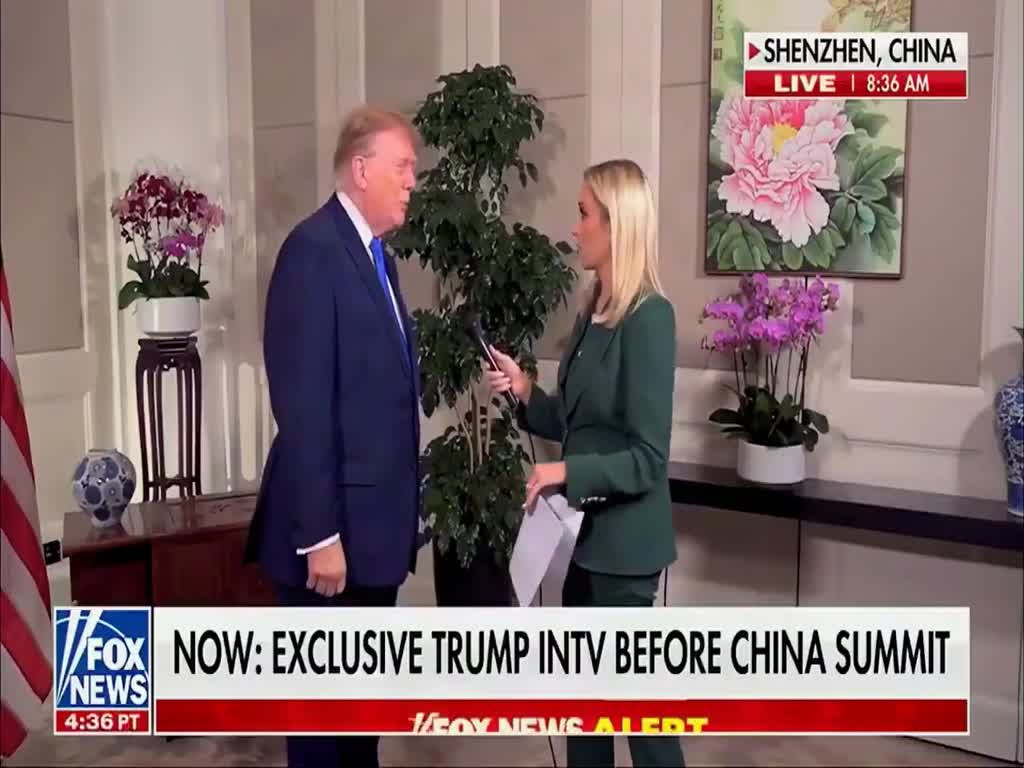
Israeli and Turkish publications describe a narrowing window for a decision on Iran: Benjamin Netanyahu is pressing Donald Trump to take military action, while the US president hesitates. Tehran rejects US proposals and denies that talks are taking place, heightening tensions around efforts to prevent Iran from acquiring nuclear weapons. This article is based on reporting by Maariv (Israel) and Hürriyet (Turkey).
Israel Seeks to Expand the Campaign Against Iran
Israel is increasing pressure on Washington to secure approval for a broader military campaign against Iran, including new strikes on the Islamic Republic’s nuclear program and energy infrastructure. However, according to Maariv, US President Donald Trump has not yet approved such a scenario, and serious divisions persist within his administration.
Israel’s political and defense establishment fears the US may limit itself to containing Tehran rather than taking the steps Jerusalem considers necessary to weaken Iran over the long term. The issue is not limited to countering Iranian missiles, drones, or individual military installations. According to the report, Israel wants plans to include strikes on nuclear sites and a large-scale attack on the energy sector—potentially cutting off electricity to the country’s industry and population.
Trump’s position remains the main uncertainty. As Maariv reports, the White House is divided over both the reliability of intelligence and the merits of another large-scale strike. Skepticism intensified especially after the US midterm elections: voter discontent is linked to the continuation of the war, rising prices, and the absence of the promised swift victory.
For Israel, this raises the risk that US decisions will be shaped primarily by the domestic political cost of the conflict in Washington, rather than by Jerusalem’s assessment of the threat. Contacts with the US administration and pressure on it have been linked, among others, to Prime Minister Benjamin Netanyahu, although the article cites no direct statements by Israeli politicians.
Israel’s argument is that the Iranian threat has implications not only for the region but also for the West. In particular, Jerusalem points to Tehran’s potential chemical and biological capabilities. In this view, such weapons could be used against the US and European countries, or deployed on drones.
However, Israeli assessments differ from those of the US intelligence community. According to the report, US agencies have observed Iranian activity in the chemical and biological fields, but largely view it as a means of deterrence. Israel, by contrast, assumes the worst-case scenario: in its view, the existence and development of such capabilities warrant preemptive pressure and a military response, regardless of Tehran’s stated intentions.
Iran’s nuclear program occupies a special place. Israel has traditionally seen it not as another regional dispute, but as an existential threat. The Israeli position therefore holds that waiting for international consensus could prove more dangerous than taking timely unilateral or joint action.
The deployment of US forces—including a third aircraft carrier, combat aircraft, and B-1 and B-2 bombers on standby—is viewed by Israel as a sign that a window of opportunity for a strike exists. But that window remains politically unstable: some forces are already being redeployed, and the final decision depends on Trump.
Thus, the Maariv report reflects not merely a dispute over military plans, but Israel’s concern that the US may become less willing to use force against Tehran. Jerusalem fears that Washington’s political constraints could leave Israel facing Iran with less reliable support from its principal ally.
Turkish Journalist Warns of Risk of US-Iran War
In his Hürriyet column, journalist Yunus Paksoy treats reports of a possible Iranian threat to Washington not as established fact, but as part of a dangerous escalation between the US and Iran. In his view, leaks about alleged plans to attack US leaders may reflect genuine concerns among officials, but could also serve as information preparation for a new war.
Paksoy does not claim that Tehran is actually planning an assassination attempt on Donald Trump or members of his administration. He offers several possible explanations for the reports: a false-flag operation, Israeli disinformation, or a deliberate effort to shape public opinion ahead of a military campaign. By repeatedly saying “possibly,” the author underscores the lack of evidence available to the public and notes that a large-scale information war over Iran has been underway for years.
At the same time, the journalist does not dismiss the possibility of a threat. He points to reports that senior members of the US administration—including Secretary of State Marco Rubio, Defense Secretary Pete Hegseth, Treasury Secretary Scott Bessent, and other officials—are reportedly living on military bases. To Paksoy, this is indirect evidence that Washington takes the risks seriously. “Would people at the very top of the state spend months living with their families on a military base for no good reason? No,” he writes.
The article cites leaks to CNN and The New York Times about alleged plans to use a “dirty bomb” or chemical weapons in Washington. However, Paksoy notes that it is unclear whether such intelligence was actually obtained or whether Iran’s leadership decided to take action. At the same time, he recalls the hostile rhetoric of Iranian state media, symbolic threats against Trump, and calls for revenge over the deaths of Qasem Soleimani and Ali Khamenei.
The central question the author raises concerns not so much the reliability of specific leaks as their political role. The very discussion of a possible extension of the conflict onto US soil has become part of a new reality: an attack on US leaders, if it occurred, would almost certainly trigger a massive response from Washington. The article’s apocalyptic tone is reinforced by a remark attributed to Trump: “I’m not worried. I’m worried about you. If I go, you all go.”
Turkey’s view of the crisis is also shaped by Iran’s proximity. For Ankara, a confrontation between the US and Tehran is not a distant American problem: Iran remains a neighbor and a key Middle Eastern player. A new war could destabilize Turkey’s borders, drive migration, disrupt trade and energy supplies, and heighten risks in Iraq, Syria, and the Caucasus.
Paksoy expresses a dual position common in Turkey: criticism of the American and Israeli information agenda is paired with recognition that Iran’s policy of retaliation and asymmetric pressure could push the region into an extremely dangerous phase. His article does not read as a defense of Tehran; rather, it warns against a simplistic narrative in which each new accusation automatically becomes grounds for war.