Analysts and commentators from Turkey and Saudi Arabia increasingly describe Washington’s current policy toward Iran as a manifestation of imperial arrogance and strategic overreach. Publications advance the thesis that historical mistakes are being repeated: the US is allegedly being drawn into a destructive, quasi-colonial war whose purpose is doubtful and whose consequences will destabilize the entire region. Commentators question whether America has achieved its goals and point to Washington’s growing responsibility for escalation and regional instability, noting that a show of force risks becoming a self-destructive trap. This selection is based on materials from mobil.hurriyet.com.tr (Turkey) and www.youtube.com (Saudi Arabia).
“Democracy does not come by the bomb”: the Turkish view on the war, the US and its own fate
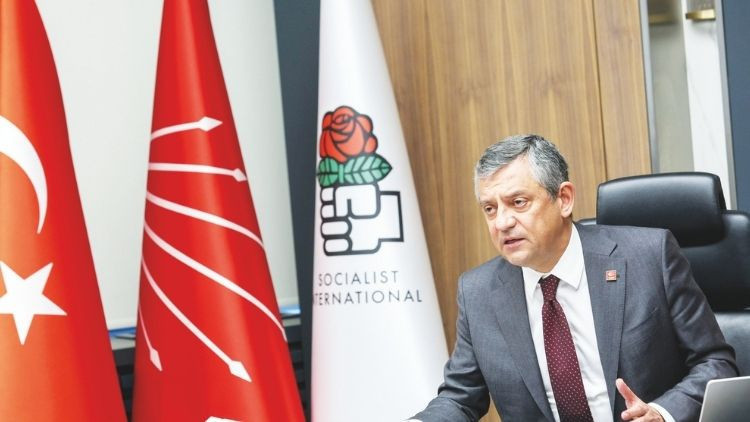
The speech by the leader of Turkey’s Republican People’s Party (CHP), Özgür Özel, at a meeting of the Socialist International provided the basis for an extended political analysis published in the Turkish outlet Hürriyet. Formally the topic is the Iranian crisis and the role of the US and Israel, but in fact the text constructs a typical “Ankara perspective”: discussion of the war is directly linked to security, the economy and democracy in Turkey itself.
The starting point is Özel’s key phrase: “Democracy cannot be imported with bombs. The future of Iran must be decided by its citizens.” This is not only an emotive slogan but a distillation of Turkey’s experience over recent decades — from the Iraq war and the devastation of Syria to deep internal polarization within Turkey.
Özel speaks online before the Socialist International and immediately sets a double frame: on one hand, a global crisis of the “normative, rules-based liberal system,” and on the other, the struggle for democracy in Turkey, which he sees as an integral part of European security. In his depiction, Turkey is not simply a country on the edge of the Middle East, but a “critical front” both for NATO/Europe’s security and for regional democratization. This continues the classic Turkish discourse of a “bridge between East and West” and a “front line,” but now packaged in an opposition, center-left framing.
Discussing Iran, Özel articulates a fundamentally anti-war stance: “Already in the first hours of the clashes we declared our opposition to war.” By this he emphasizes that the CHP opposes any scenarios of a military solution to the crisis, especially when such scenarios are presented as exporting democracy by force. He calls the Iranian regime “repressive, authoritarian, easily becoming violent toward its own citizens” — but immediately separates criticism of theocratic authoritarianism from support for external intervention.
In the same paragraph Özel refuses to consider the US and Israel as “apostles of democracy,” stressing that neither Washington nor Tel Aviv can claim a moral monopoly on issues of freedom and human rights. Thus he reproduces a persistent Turkish anti-Iraq and anti-Syria reflex: military operations under the slogans of democracy lead not to freedom but to chaos, civilian suffering and the undermining of regional stability.
The phrase “Democracy cannot be imported with bombs” in the Turkish context reads on several levels. It is a direct echo of 2003 and the US invasion of Iraq, which in Turkey is still perceived as a catastrophe for the whole region. It is the memory of the Syrian war, millions of refugees and the militarization of Turkey’s border policy. And it is a warning for the future: any talk of “restoring order” in Iran by military means evokes in Ankara the sense of a dangerous repeat scenario, the consequences of which neighboring countries — above all Turkey — will again have to bear.
A notable feature of Özel’s speech is that foreign policy constantly intertwines with domestic affairs. Discussing threats to global democracy, he turns to Turkey and says the CHP is “subject to very severe pressure and threats,” and that the country itself lives under “strengthening authoritarian governance.” Thus criticism of repression in Iran, of the “military democracy” of the US and Israel and of the global right-populist shift (including figures like Donald Trump and Benjamin Netanyahu) is woven together with criticism of the domestic “pressure regime” in Turkey during the rule of the Justice and Development Party.
In this construction the war in Iran and US strategy become not only a foreign policy problem but also a kind of mirror for Turkish society. Özel emphasizes: “Democracy is the least costly way of ensuring peace in all its dimensions.” This thought is directed both against the militarization of foreign policy and against justifying domestic repression by appeals to security, terrorism and regional wars.
A separate layer of analysis relates to Turkey’s concrete interests. From a security standpoint, a possible war with Iran is described as a risk “to set our region and the whole world on fire.” According to Özel, Turkey finds itself geographically and within NATO too close to the epicenter of the crisis to avoid bearing its costs, while lacking sufficient control over decision-making in Washington and Tel Aviv. His thesis that the US, from Turkey’s point of view, has “drifted away from the role of a reliable ally and increasingly becomes a source of strategic problems” echoes the growing skepticism in Ankara toward American policy in recent years, but it is presented in a more “European” key — through the prism of norms, international law and collective security.
In economic terms Özel stresses that war hits working people first. He links the potential conflict over Iran with rising energy prices, accelerating inflation and growing unemployment in Turkey. For a country already enduring a severe inflationary crisis and falling real incomes, any escalation in the Middle East means additional pressure on household budgets. Hence his formula: defending peace and democracy means simultaneously defending the economic well‑being of people and vulnerable groups. In this logic the CHP’s anti-war position is not only a moral gesture but also the defense of the interests of the working class, low-paid groups and youth suffering from unemployment and high costs.
Finally, the third component is the question of regime and legitimacy. Özel draws a direct link: domestic authoritarianism, the militarization of foreign policy and a general rollback from the “normative, liberal, rules-based world order” are elements of a single process. He speaks of a global wave of “authoritarian darkness,” linking it to the international rise of right‑wing populism, including trends like MAGA in the US and Netanyahu’s policies in Israel. In the Turkish context such references read as a veiled comparison with his own leadership: without naming names, Özel places the Turkish experience alongside the worldwide drift toward hardline, ethno‑nationalist and force-based politics.
A noteworthy moment in his speech is the simultaneous criticism of Islamophobia and anti-Semitism. By placing these phenomena in the same row, Özel attempts to build rhetoric in which Turkey is not reduced either to religious identity or the usual Middle Eastern clichés. The anti‑Islamophobia message combines with distancing from classic anti‑Semitic discourse. This is important in relation to criticism of Israel: he attacks not Jewish identity but the specific policy of Israel’s leadership, thereby trying to avoid the traps of nationalist rhetoric.
Within the center‑left Turkish tradition Özel’s position occupies a familiar but updated place. He presents a pronounced anti‑imperialist critique — questioning the right of the US and some to speak on behalf of democracy, doubting the “export of freedom” by force — yet he does not turn this into an overarching anti‑Western discourse. On the contrary, he appeals to the rule of law, free trade and liberal norms as principles that the West itself has betrayed and that, in his view, must be restored. In this combination of anti‑imperialism and reliance on European legal standards the characteristic line of the Turkish opposition appears: criticism of US policy and some European governments without renouncing the values of liberal democracy.
Equally important is the explicit domestic address of the entire speech. Although formally Özel speaks about the war, the Socialist International and the global liberal order, his foreign platform also serves as a channel to address Turkish voters. The thesis that “my country Turkey today is one of the most critical fronts of this global struggle for peace and democracy” effectively amounts to a claim by the CHP to be not merely an opposition party but one of the global actors fighting authoritarianism. In this construction, Turkey as a regional neighbor and NATO member is transformed into a political field where a broader global trend is being decided.
Thus a double message forms: outwardly — Turkey presents itself as a partner and a support for those who want to restore “norms and rules” in the world system; inwardly — the CHP portrays itself as the bearer of this mission, opposing the authorities which, in its view, are integrated into a global wave of authoritarianism. The war in Iran and the role of the US become for Özel a convenient backdrop to speak simultaneously about external and internal legitimacy, about peace and democracy, about justice in international relations and social justice in Turkey’s labor market.
As a result, the Hürriyet piece turns from a simple retelling of another round of tensions around Iran into a political manifesto of the opposition. It shows how in Turkey the debate over war long ceased to be purely foreign policy: each new crisis is read through the prism of national democracy, economic pain and the struggle for the country’s place in a changing world order. Against this background Özel’s formula “democracy does not come with bombs” sounds not only as a critique of other people’s wars but as a warning: any alliance of war and democracy is a dangerous illusion for which the peoples of the region, including the Turks, pay too high a price.
America, Iran and the “attrition trap”: how the Gulf reads the 2026 war
A TV analysis on the Arabic channel Al‑Ghad, devoted to the question “Have the US achieved its goals in the war against Iran?”, at first glance looks like another segment about a bold statement by Donald Trump. In reality, however, it is a typical Gulf perspective — primarily Saudi, even if the kingdom’s name is not explicitly mentioned in the broadcast. The focus is on the consequences of the large‑scale US strike on Iran in 2026 and the risk of this campaign turning from a demonstration of force into an attritional trap for the American empire itself. The video analysis is available on YouTube: https://www.youtube.com/watch?v=N5ahh86vidI.
The segment’s starting point is a speech by Donald Trump in which he describes the strike on Iran’s Khark Island as “one of the most powerful air strikes in the history of the Middle East.” Khark in the program is called the “oil pearl of Iran” — not accidentally: in the Gulf audience’s consciousness it is not just a point on the map but a key node of Iran’s oil infrastructure and of the entire regional energy security logic.
It is through this lens that the main question of the piece is constructed: are the US really approaching their goals, or does the 2026 war with Iran risk turning into an “attrition trap” where Washington becomes bogged down in a long confrontation while the real cost is paid by the Gulf states, above all Saudi Arabia.
For the Saudi‑Gulf perception the US–Iran conflict has never been merely a foreign policy story: it is a matter of “security and survival.” The fighting takes place in the literal “backyard” of the kingdom — in the waters of the Persian Gulf, around the Strait of Hormuz, in close proximity to the world’s largest oil terminals. Therefore, when Trump talks about “freedom of safe passage for ships through Hormuz” and hints that he has for now “refrained” from striking Iran’s oil infrastructure but might revise that decision if Tehran tries to block the strait, the Saudi listener automatically asks two additional questions.
First: what will happen if Iran’s response or the US response to that response affects Aramco facilities in eastern Saudi Arabia or export terminals in Kuwait, the UAE, Bahrain or Qatar? Second: what will even a short disruption of shipping through Hormuz cost the kingdom’s oil revenues and the sustainability of Vision 2030, which relies on predictability in the energy market and investor confidence?
Hence the tone of the analysis: it clearly aligns with the cautious, realistic Saudi‑Gulf approach. First, the danger of any large military adventure in the Persian Gulf and distrust of promises of a “quick and decisive” war against Iran are emphasized — Iran is a major power with territorial depth, a network of allies and proxy structures across the region. Second, there is concern that the Gulf will become the arena of a protracted, attritional confrontation between Washington and Tehran — and that both “small” and “large” regional states will pay the price for this scenario.
Notably, the studio invites a former US assistant secretary of state. This is not merely a professional move by producers — in the Gulf countries there is a long tradition of using former American officials and experts as a kind of “translator” of the real limits of American power for the local audience. Through such guests several key messages are conveyed to viewers.
First and foremost, American military power is not absolute. Even if the US can deliver “one of the most powerful strikes in the region’s history” on a target like Khark Island, that does not make the war against Iran a short surgical operation. In the guest’s remarks, claims often surface about the impossibility of “quickly changing the regime in Tehran,” about the high cost of a full-scale campaign for the dispersed US bases and forces in the Gulf, and about the risk of involving Israel and activating pro‑Iranian structures in Yemen, Iraq, Syria and Lebanon.
Next follows the motif of allies’ vulnerability in the Gulf. The American guest, prompted by the host’s questions, explains that US bases in Saudi Arabia, Bahrain, Qatar, the UAE and production and processing facilities are natural targets for Iran in case of escalation. In Saudi memory this immediately evokes the attacks on Aramco facilities in Abqaiq and Khurais in 2019, when the kingdom faced for hours the threat of a sharp drop in output.
Finally, through the ostensibly neutral question “Have the US achieved their goals?” a much more specific regional doubt is driven home: does the war achieve security goals for the Gulf states themselves? Does it weaken Iran as a source of threat, or rather push it toward greater radicalization and reliance on proxies? Is Washington ready to shoulder the burden of a prolonged campaign or, repeating the Afghan and Iraqi scenarios, will it ultimately withdraw, leaving behind chaos and a shattered balance of power?
An important node of reflection is the link between the war and Saudi Arabia’s own economic and strategic plans. In the logic of the piece, energy security is equated with the kingdom’s economic security. Saudi Arabia remains the world’s largest oil exporter, and a significant part of its shipments passes through the waters of the Persian Gulf and the Strait of Hormuz. Any serious disruption of navigation in this area means for Riyadh a sharp price spike, unstable contracts, possible shipment delays and, as a consequence, a blow to the pace of implementing Vision 2030, which relies on investment inflows, tourism development and large infrastructure projects.
Paradoxically, Trump’s statement that he has “for now” not touched Iran’s oil infrastructure, accompanied by a tough warning to Tehran about Hormuz, reads in Riyadh in both positive and negative terms. On one hand, direct pressure on Iran aimed at preventing a blockade of the strait aligns with the interests of Saudi Arabia and other Gulf exporters: their tankers must pass through the narrow maritime corridor unhindered. On the other hand — the prospect of the war expanding to mutual strikes on Iran’s oil facilities and, in response, on facilities in Saudi Arabia and neighboring monarchies paints a nightmare scenario for Riyadh: the Gulf turns into a zone of exchange of strikes against the region’s “oil heart.”
Against this backdrop, the segment also reflects a new line in Saudi foreign policy in recent years: the desire to secure for itself the role of mediator and architect of regional détente rather than the battlefield of somebody else’s war. Talks with Iran in Baghdad and the subsequent agreement signed in Beijing in 2023 are integrated into the kingdom’s growing posture: rely less solely on an “American force solution,” more on regional diplomatic channels, even with former rivals, and, where possible, avoid a frontal US‑Iran confrontation in close proximity to Saudi shores.
An integral part of this approach is the historical memory of previous American wars in the Middle East. This is not stated outright in the piece but the context is clear for the Saudi viewer. The Gulf War of 1991 removed the immediate military threat from Saddam Hussein’s regime but led to a long-term presence of a significant American contingent on Saudi soil, which later became one of the reasons for the radicalization of parts of society. The 2003 invasion of Iraq, on one hand, eliminated a regime hostile to Riyadh, and on the other — destroyed the balance of power, knocking Iraq out of an “Arab counterweight” to Iran and opening the way for Tehran’s dominance in Baghdad.
From this experience the kingdom concluded: an empire can easily destroy an existing regional arrangement but is far from guaranteed to build a stable new order on the ruins. In this logic the “war with Iran in 2026” referred to in the report dangerously resembles the Iraq scenario: perhaps a partial weakening of a hostile state, but simultaneously the risk of chaos, collapse of institutions, strengthening of unscrupulous actors and an unpredictable rearrangement of the balance of power.
A special place in the analysis is given to the cultural‑media aspect. Although Al‑Ghad is financed from Egypt and the UAE, it targets a broad Arab audience in which residents of Saudi Arabia and the Gulf countries are a key group. This is evident in the rhetoric and emphasis. Hosts and experts speak a language born of the experience of “managed stability” and the bitter lessons of “creative chaos” in Iraq, Syria, Libya and Yemen. Therefore, any phrasing like “one of the most powerful strikes in the history of the Middle East” in this discourse sounds not only as a slogan about US power but as an alarming signal about the potential loss of control over the situation.
Another important cultural note is the perception of the Strait of Hormuz as the shared fate of all Gulf monarchies. The Saudi viewer understands well that even a partial closure of the strait, let alone its mining or massive attacks on tankers, would lead to an instant jump in oil prices and the risk of export disruptions. The experience of the war in Yemen and attacks on ships in the Red Sea has only heightened the painful sensitivity to maritime transit routes.
The image of the United States in this media mirror is far from the former perception of an “almighty guarantor of security.” America is shown as a great power with its own constraints: domestic politics, the electoral cycle, Congress, public opinion tired of “endless wars.” For the Saudi elite and society this resonates with the evolution of views on Washington after 2011: the United States remains the most important partner but is no longer seen as an automatic and unconditional “umbrella” of security.
What distinguishes such analytical material from a simple news brief is above all the framing of questions. A news item would have confined itself to repeating Trump’s words about Khark, listing the struck targets and reactions from Tehran and Washington. The analysis turns this into the occasion for an internal Gulf conversation: not only “what did the US achieve?” but “what did we achieve, or what do we risk losing?” It uses the American expert figure not as a source of numbers and details but as a tool to demonstrate the limits of American willingness to engage in a protracted confrontation and its readiness to truly defend allies to the end.
Finally, attention is paid not only to the military but also to the economic rationale behind the strike on Khark Island. In news terms the island might appear only as a military target. Here it is embedded in the context of the global oil architecture: prices, flows of crude, production capacities, futures, investor confidence and the sustainability of economic transformation programs in Saudi Arabia and neighboring countries are discussed.
It is in this combination of military, economic and historical perspectives that the Gulf — and to a large extent Saudi — logic of the piece emerges: the US war with Iran is seen not only as a possible “attrition trap” for the American empire but as a far more immediate and dangerous trap for the states living in the shadow of this conflict. For the Gulf countries, and above all for Saudi Arabia, the bet today is to turn themselves from a battlefield into a venue for a deal and negotiations. And the louder statements like “the most powerful strike in the history of the region” sound, the more pressing Riyadh’s task becomes to keep its own space from once again becoming the arena of someone else’s war.