In mid‑May 2026, discussion of the United States in leading media spaces of China, Saudi Arabia and Germany revolves almost entirely around a trio of themes: Donald Trump’s visit to Beijing and the restart of U.S.‑China relations, the war with Iran and the crisis around the Strait of Hormuz, and a more general question — how reliable the American global leader and guarantor of security and an open economy still is. These themes intertwine: what in Beijing is presented as a transformation of the balance of power looks on the shores of the Persian Gulf like a risk of being dragged into someone else’s war, and in Berlin — like a painful reminder that European security remains tied to Washington’s decisions.
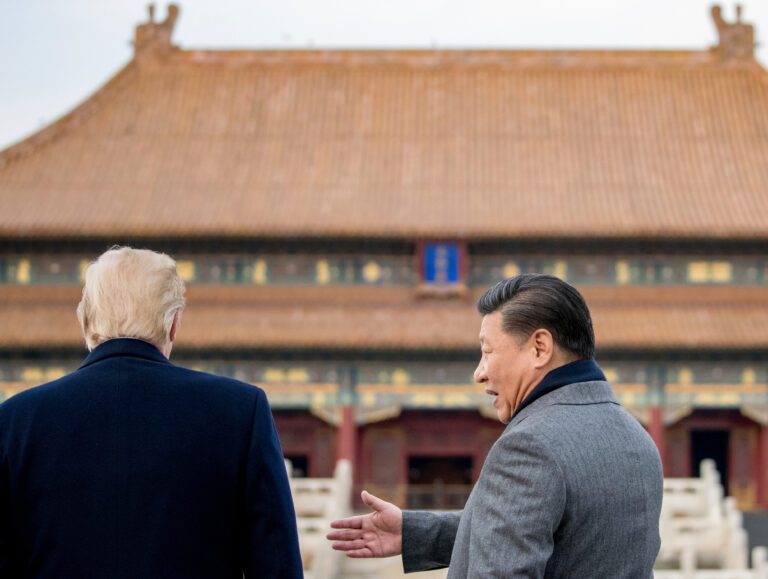
A starting point for many publications is Trump’s arrival in China on May 13 and his talks with Xi Jinping on trade, the war with Iran, the conflict in Ukraine and Taiwan.(zh.wikipedia.org) Around this visit a new narrative about the United States is being constructed: not simply a superpower, but a country simultaneously stuck in a protracted trade war with China, a hot conflict in the Middle East and in a state of “hegemonic fatigue,” shrinking its military presence in Europe and stepping back from multilateral agreements.(averin.com)
In the Chinese discussion, Trump’s visit is first and foremost interpreted as a moment when the “levers” in the relationship noticeably shift. Hong Kong’s Sing Tao describes preparations for the Beijing summit in terms of the “loss of American trumps”: according to experts, over the past year a “fundamental shift” in the balance has occurred, and China has, “through various subtle mechanisms,” gained more ability to influence even U.S. national security measures, up to a de facto “veto” on some Washington decisions.(singtaousa.com) This motif — America as a country that can no longer dictate the rules — is then repeated in both academic and journalistic Chinese materials.
Official and semi‑official Beijing mouthpieces use the visit to portray the U.S. as a power whose strategy increasingly relies not on its own development but on containing China at any cost. Thus, in a detailed column on a new report by American IT think tank ITIF, Chinese professor Bi Yantao emphasizes that Washington’s new line is “to slow China’s development even at the cost of self‑harm.”(borderlesscomm.com) The conclusion drawn is that the U.S. is shifting from a model of “becoming stronger itself” to a logic of “weakening a competitor,” which in Chinese public discourse is presented as a sign of strategic insecurity and decline.
Authorities cloak this in the language of global responsibility and technological justice. In a recent interview, China’s ambassador to the U.S., Xie Feng, commenting on AI competition, said that Beijing “opposes turning artificial intelligence into the plaything of a single country or a handful of wealthy people,” and that the world does not want to see an “AI iron curtain” or “a Star Wars‑style version of AI.”(news.sina.cn) Here the U.S. appears as a prototype of a closed, elitist project, to which China opposes “openness” and “inclusiveness” — not only technologically but geopolitically as well.
Against this backdrop, the 90‑day tariff truce between the U.S. and China reached in Geneva in early May is treated in Chinese analytical texts not as a goodwill gesture by Washington but as a forced pause. Economist Ruslan Averin, in his overview in Chinese, reminds readers that even after the “thaw” 30 percent tariffs remain — a “historically extremely high” level that continues to distort trade flows.(averin.com) Party media, such as the platform “观点中国,” emphasize that economic negotiations “go far beyond trade” and serve the search for a “new path of coexistence between two great powers,” while Trump primarily “yearns to show his domestic audience” the gains squeezed out of China.(china.com.cn) In this presentation the U.S. is a country hostage to its internal political cycles, sacrificing the stability of the world economy for electoral dividends.
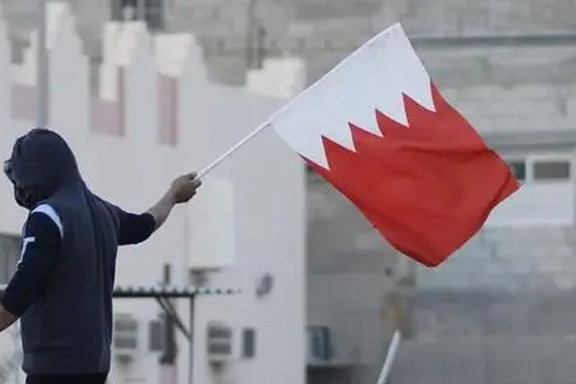
A very different, but related, debate is taking place in the Arab press, especially in Saudi Arabia and the Gulf. There the U.S. is discussed primarily as a military and energy power that has drawn the region into a major war with Iran while simultaneously depending on cooperation with Riyadh. The pretext was a series of sharp moves: from American operations in the Strait of Hormuz to Saudi Arabia’s decision to temporarily suspend U.S. access to bases and airspace, which, according to NBC, forced Trump to reconsider plans for escalation in the Hormuz.(china.org.cn)
In an interview with Fox News, Trump said he is considering resuming the “Freedom Project” in the Strait of Hormuz, but within a “broader military operation,” where directing American ships in the strait would be only a “small part.”(iranintl.com) In Saudi Al‑Arabiya and the government‑aligned Okaz, this rhetoric is accompanied by White House comments that Iran is “economically paralyzed” under strikes from Operation “Economic Wrath” and that Trump’s goal is “a deal that will protect U.S. national security in the long term and eliminate the Iranian nuclear threat.”(okaz.com.sa)
Notably, even in outlets friendly to Riyadh there is growing caution. In the Okaz column “Trump in Beijing and Hormuz at stake,” the author directly links the China summit to the war with Iran: in his words, world capitals are watching the meeting with “mixed feelings,” and Southeast Asia hopes for any deal that will “open Hormuz and ease the energy shock.”(okaz.com.sa) The conclusion drawn is that we are entering an era of “managed escalation” — a state of “neither open large‑scale war nor a truly sustainable peace,” where the situation is stuck in a gray zone. In this portrayal the U.S. is less a guarantor of order than the architect of a constantly smoldering crisis that keeps everyone on edge.
Another recurring motif in Middle Eastern publications is doubt about the stability of the American domestic scene. The Emirati Al‑Emarat Al‑Youm analyzes White House preparations for “worst‑case scenarios” amid the likely loss by Republicans of at least one chamber of Congress in the 2026 elections. The paper quotes sources who participated in closed briefings: “It is obvious to everyone that the likelihood of this is very high”; it cites a Washington Post / ABC / Ipsos poll showing Democrats leading Republicans by five points in the odds for the House of Representatives.(emaratalyoum.com) For Arab commentators this is further proof that Washington’s promises in the region can be quickly adjusted by an upcoming domestic political struggle. Implied in the subtext is the question: is it wise to bind one’s security too tightly to an administration that may change in a few months?
Against this background Saudi and broader Arab texts about the U.S. often take on an ambivalent tone. On the one hand, analysts stress that the American military presence and security guarantees in the Persian Gulf remain indispensable. On the other — after the temporary suspension of U.S. access to bases and airspace, many analysts argue that Riyadh seeks to turn the partnership with Washington from one of dependence into a more equal deal in which the U.S. is neither the sole nor the mandatory partner. Trump’s determination to “expand the military operation” in Hormuz is here read more as an element of bargaining than an inevitable scenario.
Discussion in Germany about the U.S. now centers on two axes — economic and military‑political. On the economic front, attention focuses on the sudden easing of the tariff conflict between the EU and Washington. The German government, via an official explanatory paper on the new tariff agreement, emphasizes that the “principled agreement” reached with the U.S. in May 2026 allows it to “preserve Germany’s key interests” and establish an overall framework for steel and aluminum goods, automobiles and some green technologies.(bundesregierung.de) German experts, however, note that this is more a temporary detangling than a final settlement: the risk is high that Washington will return to unilateral measures, relying on rhetoric about protecting “American jobs.”
The military‑political dimension is far more troubling. Trump’s recent statement that the U.S. will reduce its military presence in Germany “much more” than the initially announced withdrawal of 5,000 troops prompted a wave of commentary in German media.(euronews.com) Defense Minister Boris Pistorius reminded German outlets that the presence of American soldiers in Europe, “especially in Germany,” serves the interests of both the Federal Republic and the U.S. itself, stressing that American bases serve not only to protect Europe but also Washington’s global operations.(euronews.com)
In analytical columns this becomes a diagnosis: the U.S. no longer treats the European direction as an unconditional priority, reallocating resources toward the Middle East and the Indo‑Pacific. The German discussion thus echoes the Chinese one: both note that a significant portion of American resources previously tied to Northeast Asia and Europe is today being “consumed” by the war with Iran and related operations. Chinese experts explicitly write that the protracted conflict with Iran “could give Beijing more leverage” in negotiations with Trump, since part of U.S. potential that could have been deployed in a potential Taiwan crisis is bogged down in the Middle East.(zh.wikipedia.org) In Berlin the conclusion drawn is different: an accelerated buildup of Germany’s own defense capabilities is necessary because Washington no longer guarantees the previous level of protection.
If one brings these different national perspectives together, a fairly coherent but not very flattering picture of the U.S. emerges. In China the United States is increasingly described as a power that, having lost confidence in its economic and technological hegemony, is shifting to a policy of containment even at the cost of harming itself and the global system. In the Arab — primarily Saudi — debate America is a power center capable of simultaneously paralyzing Iran’s economy and provoking an energy shock for half the planet, but itself a hostage to internal electoral cycles and conflicts. In Germany — still an indispensable ally, but no longer the “anchor of stability” to which one could unconditionally tie both the economy and security.
Across all three cases one common thread emerges: the U.S. is no longer perceived as a self‑sufficient, predictable “center of the world” around which one needs only to align correctly. Rather, it is seen as one of several large but internally contradictory players in a system where China is trying to rewrite the rules, Arab monarchies seek room to manoeuvre between Washington, Beijing and regional rivals, and Germany together with the EU are forced to learn to live in a world where even basic things — from tariff rates to the number of U.S. troops on their soil — can change at the will of a single administration in Washington.
That, perhaps, is the main intrigue of today’s discussions about the U.S. beyond the English‑speaking world. It is not debated whether America will “fall” tomorrow — mass texts in China, Saudi Arabia and Germany assume its military and financial weight remains huge. A sharper question is this: how sensible, safe and profitable is it to shape one’s foreign and domestic strategy around a country that increasingly behaves like a “managed destroyer” of the existing order rather than its guarantor. That is why Trump’s visit to Beijing, the war in the Strait of Hormuz and disputes over tariffs and bases in Europe are perceived not as separate stories but as parts of one big test: can the U.S. adapt to a multipolar world in a way that leaves it to its partners not only a force but also a predictable, reliable anchor?