The United States remains the nervous center of global discussions — not only because of its own internal crises, but also due to the constant intertwining of American policy with regional conflicts, trade wars and energy deals. In Brazil, Saudi Arabia and Israel people talk about Washington quite differently today, but three major themes recur in these conversations: the role of the US in the Iran dossier and the Middle East balance of power, American domestic instability as a factor of global uncertainty, and, finally, a pragmatic interest in Washington's economic and technological solutions. What is often presented in American media as an internal struggle or doctrinal dispute is read abroad primarily through the lens of “what does this mean for us tomorrow morning.”
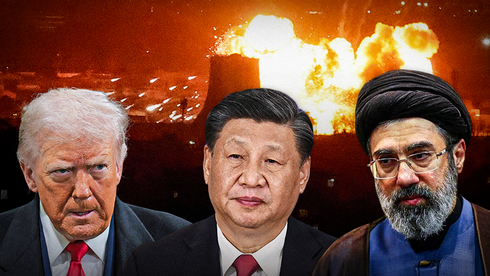
One of the hottest topics is the growing confrontation between the US and Iran, where Washington's foreign-policy moves are perceived not as abstract geopolitics but as a direct threat or opportunity. In the Saudi press and on pan-Arab channels, the crisis in Washington–Tehran relations is discussed as a question of regional security and the survival of the existing order. In a segment on Asharq News, the intensification between the US and Iran is described as a dangerous mix of “on-the-ground escalation and harsh rhetoric,” creating “a fog and uncertainty about the future of these relations”; guest journalist Alya Azz ad-Din from Washington stresses that the US president’s statements about “victory and a shift in the balance of power” directly contradict Iran’s denials of any negotiations, reinforcing a “complete lack of trust” between the parties. In this picture Washington is not a guarantor of stability but a source of risk, whose signals are contradictory even for the region’s closest partners. In a piece by Saudi Okaz about the collapse of a ceasefire and the threat of renewed US military action against Iran, the focus is on tough statements from American military and political leadership: the chairman of the Joint Chiefs of Staff asserts that the military is “ready to resume operations at any moment,” while a White House spokesperson, on the one hand, says the US is “closer than ever to an agreement” with Tehran, and on the other — emphasizes that the president “has several options and will not hesitate to use them.” Such a split — “we are almost at peace, but ready for war” — in the Saudi reading appears not as a delicate balance of pressure and diplomacy but as evidence that the administration in Washington itself has not decided on a final goal, and therefore risks for the region remain maximal. (okaz.com.sa)
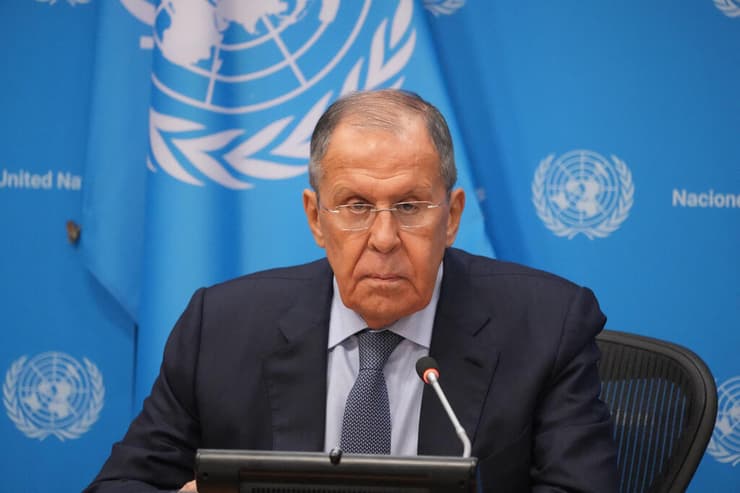
Israeli media view the same US–Iran knot from another angle, seeing the US simultaneously as a defender and as an actor capable, at a critical moment, of preferring a deal with Tehran over Jerusalem’s interests. An analytical piece on Ynet examining the stalling US–Iran talks emphasizes that Washington has “virtually frozen” the dialogue, while Tehran is increasing its demands up to ultimatums. Against this backdrop the remark by US Vice President J.D. Vance, who in a White House interview asserts that “we are making progress” on the Iran file, is striking — in the Israeli context this phrase sounds not as reassurance but as a signal of a possible willingness by the White House to make compromises that would be unacceptable to Israel. The same article quotes Russian Foreign Minister Sergey Lavrov saying that “the true goal of the US and Israel is to prevent a reconciliation between Shiites and Sunnis”; in the Israeli presentation this is not so much a literal acceptance of the Russian interpretation as a demonstration of how Washington’s actions are interpreted by other major regional players, complicating Israel’s diplomatic maneuvering. (ynet.co.il)
Interestingly, in the Saudi discourse the US–Iran theme is closely intertwined with the question of the future of regional deals and normalization. In Okaz’s piece about backroom talks in Washington it is emphasized that a possible major US agreement with Syria and a Saudi-supported new Syrian leadership would depend both on “Israel’s intentions” and on the US administration’s “willingness to believe in the seriousness of the Israeli side” regarding peaceful settlement. Thus, America appears as an architect trying to manage the conflict with Iran, tracks of normalization and the Syrian file at the same time; in the Saudi press there is noticeable distrust in Washington’s ability to hold all these threads without collapsing the fragile regional balance. (okaz.com.sa)
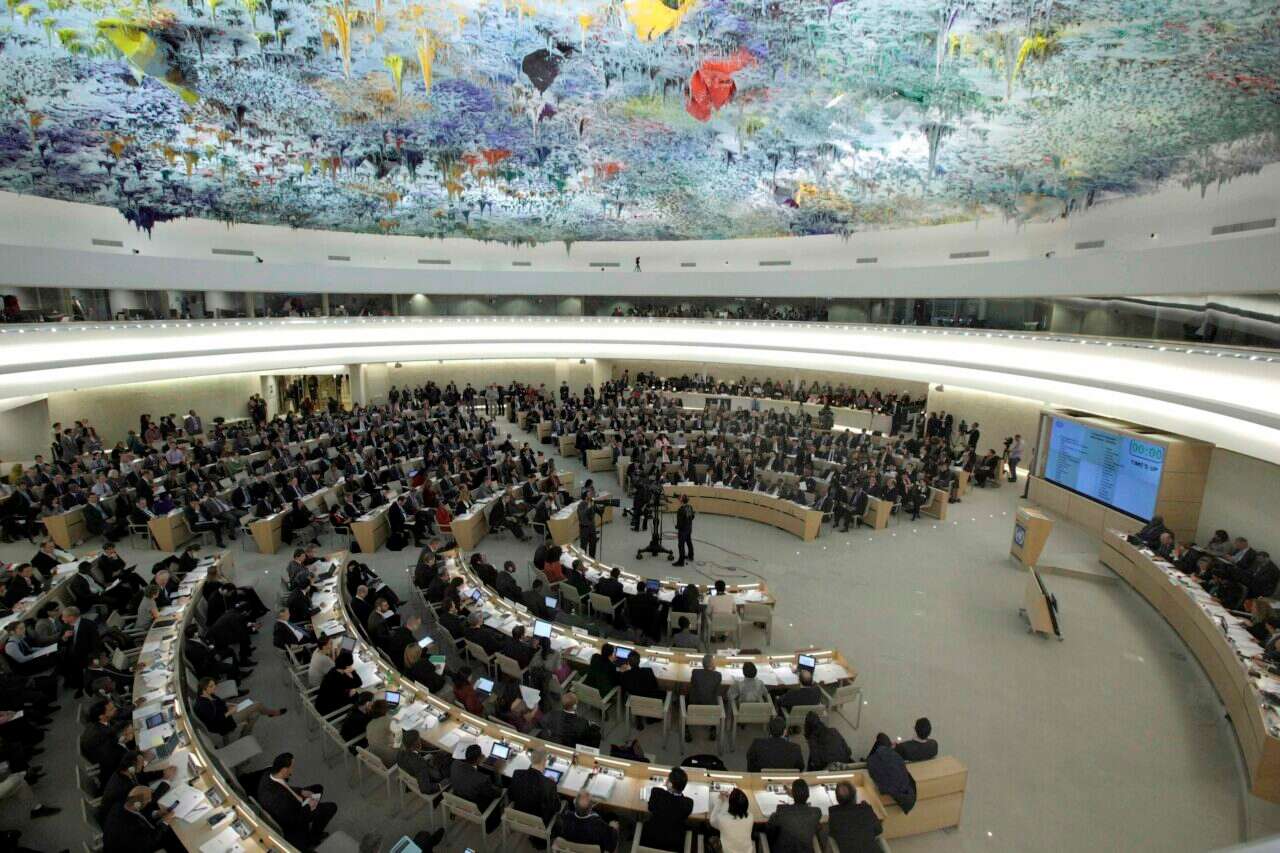
The Israeli agenda regarding the US, beyond the Iranian issue, is heavily focused on the triangle Washington–Jerusalem–international institutions. In Israeli right-wing outlets, such as Israel Hayom, episodes of active American intervention in debates about the UN’s role and “anti-Israel bias” in international structures are long remembered. A telling publication about a letter from one hundred US senators to the UN secretary-general calling to “stop bias against Israel” emphasizes: the United States, as the largest UN donor, demands a change in the format of discussions which, according to the letter’s authors, the Human Rights Council has turned into “permanent trials against Israel.” In the Israeli interpretation this episode serves as a reference point: even when the White House criticizes Israeli government policy, Tel Aviv and Jerusalem remember the power of the “bipartisan consensus” in the Senate, which periodically steps up to defend Israel on the international stage. (israelhayom.co.il)
If Middle Eastern media discuss the US primarily through the prism of security and war, in Brazil the American agenda more often appears linked to economics and institutional crises. In major Brazilian outlets such as Folha de S.Paulo or G1, pieces about the US traditionally connect Washington analysis with internal Brazilian disputes: American government shutdowns become an illustration of “what happens when budget policy is tied to extreme poles,” US trade wars with China form the backdrop for discussing the vulnerability of Brazilian exports, and disputes over presidential and judicial powers provide a convenient frame for comparisons with Brazil. A typical column in the Brazilian press analyzes the partial “halt” of the US federal government as a symptom of deep polarization: the American president insists on funding a controversial project (for example, strengthening the southern border), the opposition in Congress blocks the budget, and millions of civil servants become hostages of political games. In an Israeli article on this subject it is briefly described how Donald Trump’s fight to fund a wall on the Mexican border led to a prolonged federal shutdown; Brazilian commentators use such episodes to build arguments for the need for institutional safeguards that protect the state apparatus from being held hostage by political blackmail. (ynet.co.il)
For the Brazilian elite another line is important — the US relationship with China and high-tech supply chains. In a Saudi Okaz economic review a deal was examined under which China agrees to ease restrictions on exports of rare-earth metals in favor of American companies, and the US, in turn, extends partial tariff relief on Chinese imports and postpones the imposition of 100-percent duties on certain categories of goods. For a Brazilian audience such agreements matter not only in themselves but also as an indicator of how seriously America is prepared to use tariff pressure and technology access as tools of foreign policy. Brazil — a major supplier of raw materials and agricultural products to both China and the US — sees local analysts closely watching how the “trade war” between the two giants redistributes demand, opening or closing windows of opportunity for the Brazilian economy. The Saudi text presents this story as an example that even after years of escalation Beijing and Washington are capable of pragmatic “exchanges” — a point that suggests to Brazilian readers that the space for maneuver between the two superpowers remains, but depends on Brazil’s ability to play a more active multivector game. (okaz.com.sa)
Saudi Arabia, for its part, views US economic moves through the prism of its own oil- and gas-dependent transformation. Any Washington decision on sanctions against major producers — above all Iran and Russia — is immediately projected onto oil prices, budgetary targets and the kingdom’s internal reforms. Therefore Saudi analysts try to see in American policy a structure and predictability that would allow Riyadh to plan long-term energy strategies. Instead, they face a series of mutually contradictory messages: the White House tightens sanctions while simultaneously seeking workarounds to lower gasoline prices inside the US; threatens military strikes on Iran while signaling readiness for an agreement; pressures the oil cartel over production volumes while needing to preserve its stability. This generates a persistent theme in Saudi public discourse: without a clear American “doctrine” in the Middle East, the kingdom increasingly relies on its own multilateral combinations with China, Russia and regional partners, and the US evolves from the status of “sole guarantor” to “one important but not the only” actor.
In Israeli discourse, unlike the Brazilian and Saudi ones, the topic of American democratic institutions and scandals is presented with a note of recognition: Israeli politics itself has long been living in a mode of perpetual campaigns and legal battles. Publications about how the American president, under pressure from investigations or lawsuits, considers pardoning his associates remind Israeli readers of their own sagas about the judicial vicissitudes of politicians. In one older but illustrative Ynet piece it was told how Democrats in Congress insisted that the president should not pardon his aide convicted of perjury and obstruction of justice in a CIA “leak” case; in Israel such stories are read as a variation on the local theme of “where is the line between political loyalty and the rule of law.” For Israeli columnists the American experience is more a mirror than a model: it shows to what extent “politics has consumed institutions” even in the US, and how important societal and press pressure becomes to protect the judicial system. (ynet.co.il)
Finally, one should not underestimate the cultural and social image of the US that emerges in these three countries through strictly political stories. In the Brazilian imagination America remains a trendsetter — from digital platforms to debates about freedom of speech and morality. In the Israeli imagination it is a key ideological and military ally, but a capricious one, dependent on party changes in Washington. In the Saudi imagination it is still the most important military and technological pillar, but no longer a monopolist — rather a participant in a dense, multi‑angled game that also includes China, Russia, regional powers and supranational organizations. As one Brazilian columnist wrote in Folha de S.Paulo, discussing the American budget crisis and parallel trade maneuvers with China, the US “long ago ceased to be the ‘invisible hand’ of global stability and turned into a very visible, sometimes trembling hand that everyone tries to keep at a safe distance, but not let go completely.” A phrase born in a South American context unexpectedly describes well the feeling in Riyadh and the cautious skepticism in Tel Aviv.
As a result, a paradoxical image emerges: on the one hand, neither Brazil, nor Saudi Arabia, nor Israel are ready to seriously imagine a world without American involvement; on the other — in all three cases local elites and media increasingly speak of the need for “insurance” against Washington’s unpredictability. For Brazil this means diversifying trade and technology ties; for the Saudis — multi-move deals with the East and parallel tracks of regional settlement; for Israel — trying to preserve bipartisan support in Congress while simultaneously developing new axes of cooperation in the Middle East. America remains at the center of their attention, but no longer as an immovable axis of the world, rather as a large but unstable magnet around which each of these actors tries to build its own orbit.