Since the start of the US and Israeli war with Iran and against the backdrop of the continuing war in Ukraine, America has once again become the main axis of global discussions — but no longer in the familiar role of “leader of the liberal world,” rather as the center of a chain of crises that other countries must somehow endure and adjust their policies and economies to. In India there is debate over whether the country has lost its strategic autonomy by following in Washington’s wake. In Russia and Ukraine people discuss whether the American strategy can sustain a two‑theater war and how US involvement in the Ukrainian conflict will change. In Ukraine itself every nuance in statements by Trump and his circle is read carefully, as Kyiv tries to understand who in Washington prioritizes victory over Russia and who favors a quick “deal.” Three interlinked themes have come to the fore: the US war with Iran and the blockade of the Strait of Hormuz, a reassessment of the US role in the war in Ukraine, and a broader sense of the “overheating” of American leadership, which no longer guarantees allies either security or predictability.
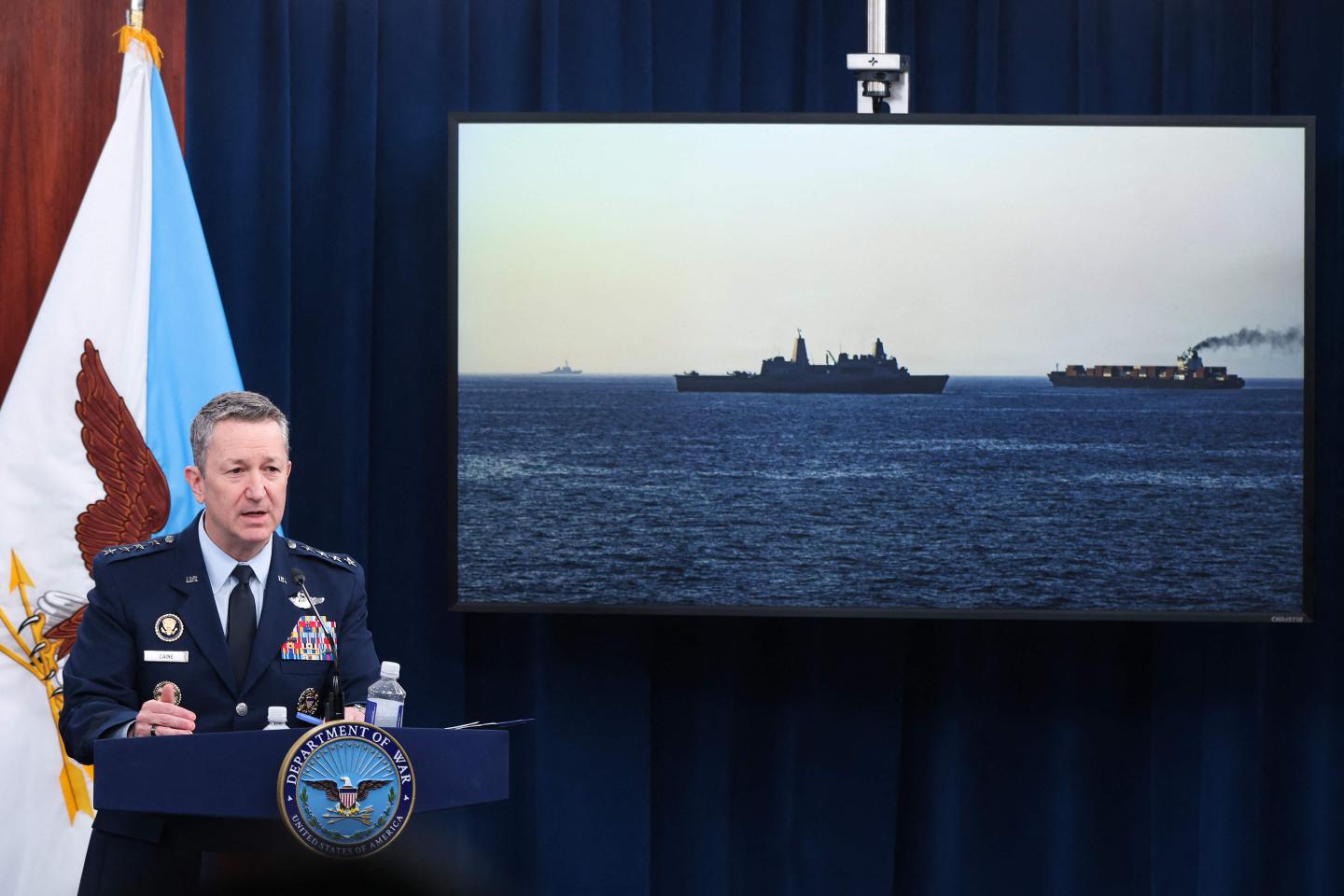
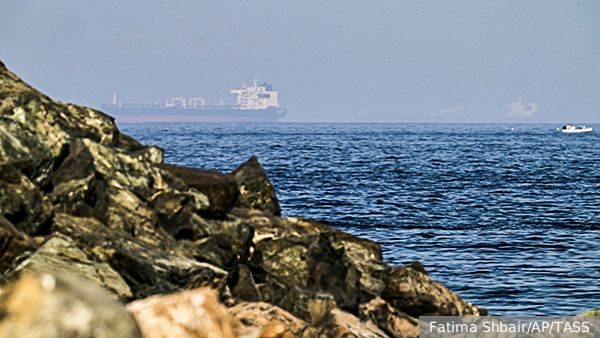
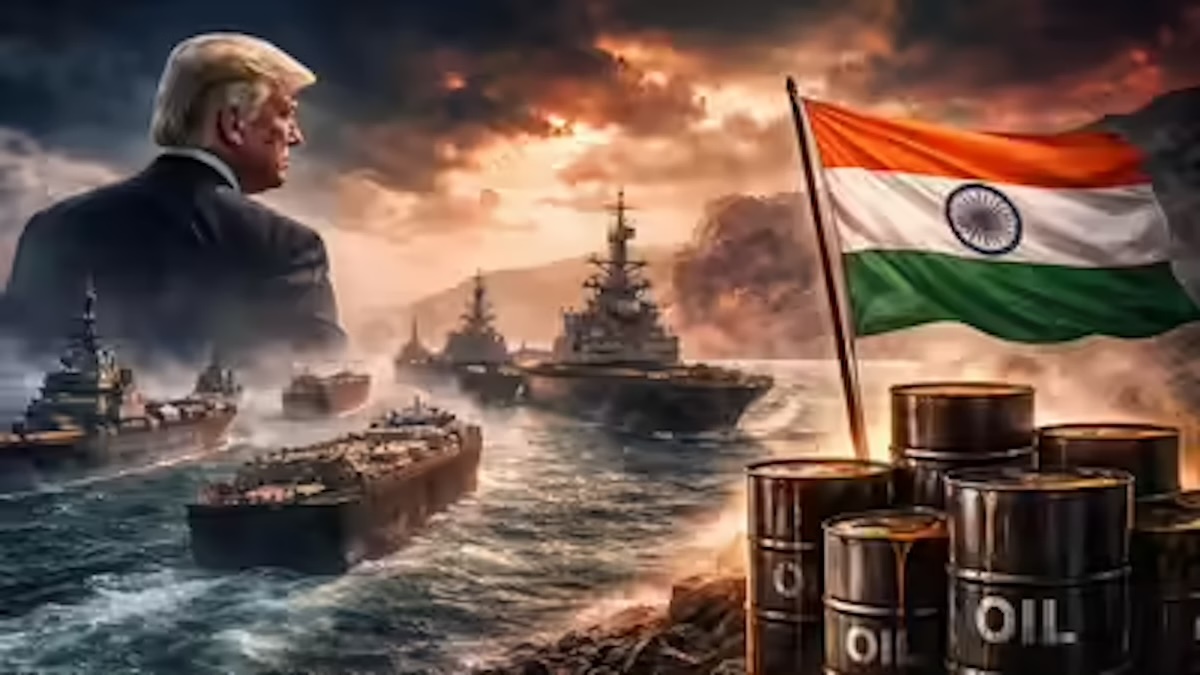
The first theme, dominating Indian, Russian and Ukrainian debates alike, is the US war with Iran and the struggle over the Strait of Hormuz. Tehran’s decision to close Hormuz and Washington’s response of large‑scale strikes and a naval blockade transformed the regional conflict into a knot in the global economy: millions of barrels of oil pass through the strait daily, and now dozens of ships are stuck there with thousands of sailors. A French column in Le Monde vividly describes the situation as a “duel of patience”: both Washington and Tehran are convinced that they “hold the clock” and can wait longer than their opponent while remaining in a winning position, but negotiations never truly start because both sides believe they have the “upper hand” in the bargaining over Iran’s future and its nuclear program, and any softening will be seen as weakness (Le Monde article).
In Russia the same crisis is primarily viewed as a test of the limits of American power. Russian analysts and pro‑regime experts openly say in commentaries that Donald Trump’s proclaimed “Project Freedom” — an operation to extract ships of “neutral countries” from Hormuz — is unlikely to end in real success. In one Gazeta.Ru column, an expert discussing new American steps in the strait argues that the US “does not have the strength for a real military operation, but also does not want to agree to Tehran’s terms,” reminding readers that dozens of Iranian tankers have already passed through the strait with transponders switched off and that the Americans were unable to stop them (Gazeta.ru). The logic is simple: the longer the crisis drags on, the more convincing Moscow’s thesis about the “decline of American hegemony” and the need to revise the entire postwar security order looks.
Against this backdrop, Trump’s harsh statements promising to “wipe Iran off the face of the earth” if it interferes with operations in Hormuz are cited by Russian and Ukrainian Russian‑language outlets not only as a threat to Tehran but also as a signal to allies: if the US president bets on military escalation in the Gulf, Washington will have fewer resources and less political attention for Europe and Ukraine. Russian media actively repeat his claims that during the war “all Iranian military aviation and 44 ships” have already been destroyed — presented to a domestic audience at once as a demonstration of American strength and as an example of an “irresponsible adventure” that could result in a strategic dead end for the US (Lenta.ru; Vzglyad). In the Russian worldview Trump acts with brute force but without a clear understanding of what will count as “victory,” and a prolonged war undermines his position at home and on world oil markets — and it is precisely this, many commentators believe, that opens a window of opportunity for Moscow and Tehran.
For India the same war looks very different: like geopolitical pincers that place the country between a long‑standing partner, Iran, vital for energy and trade, and a growing but asymmetrical partnership with the US. Indian commentators in the English‑ and Hindi‑language press actively debate whether the policy of “multi‑alignment” has reached a dead end. A column in The Diplomat analyzes how India’s participation in US‑centered security initiatives in West Asia, as well as its observer role in structures under CENTCOM’s auspices, has effectively tied New Delhi to the bloc now at war with Iran, a country historically close to India. The author emphasizes that negative public opinion in India is partly caused by the attack on Iran itself; no less angered are those who see India’s exclusion from key consultations on Hormuz as a humiliation and a “reminder of 1971,” when the US supported Pakistan against India (The Diplomat).
The discussion goes even further in economic and business outlets. In a collection of opinions in Business Standard, former foreign minister Shyam Saran writes that the war around Iran “exposed the fragility of stability in West Asia and at the same time narrowed India’s diplomatic options,” since deepening security integration under US leadership and the inclusion of leading Gulf states effectively draw Delhi into an architecture whose rules are written in Washington (Business Standard). Against this backdrop anxiety grows about energy vulnerability: Hormuz is not just a foreign strait but an artery of the Indian economy.
Ukrainian voices, unlike Russian and Indian ones, view the US war with Iran primarily through the prism of competition for Washington’s attention and resources. President Volodymyr Zelensky explicitly speaks to this, explaining that despite the US focus shifting to the Middle East, Kyiv has managed to “bring US attention back to the war against Russia” and to put Ukraine back at the center of talks with partners (UNN). Ukrainian analytical pieces and interviews emphasize that each new escalation in Hormuz automatically calls into question the priority of the Ukrainian direction in Washington and increases suspicion that the White House may want to “close the Ukrainian issue” via a compromise with Moscow in order to focus on Iran.
From here comes the second major theme that unites Ukraine, Russia and, in a sense, India — a reassessment of the US role in the Ukrainian war and the fate of American military aid. Ukrainian media and experts have lately been actively discussing reports that the Trump administration is preparing a new wave of pressure on Kyiv, proposing to lift sanctions on Russia in exchange for a ceasefire without solid security guarantees for Ukraine. In an RBC‑Ukraine piece sources describe this as a “new stage” of American tactics: Washington might try to sell removal of sanctions in return for some “ephemeral concessions” from the Kremlin, shifting responsibility onto Kyiv for refusing such an offer (РБК‑Україна). This is the logic of a Trump deal: not endless support for Ukraine but the possibility of using the Ukrainian front as a bargaining chip in a wider negotiation with Moscow and Tehran.
At the same time Ukrainian press and the Telegram space nervously react to reports that the US allegedly warned Kyiv: either an agreement is reached before Easter, or arms deliveries may stop thereafter. In Russian‑language discussions, including on popular forums, this is interpreted as evidence that Washington “is looking for a pretext not to deliver already purchased weapons” and is trying to “cover up” its own desire to exit the conflict with minimal political losses. The dubiousness of some sources does not change the fact that in Ukrainian society the sense is growing that American resources are not infinite, and Washington’s willingness to hold the line against Russia depends on the logic of US domestic politics far more than on Ukrainian arguments.
Russian media, both systemic and semi‑opposition, use the same narratives in the opposite key: as proof that American support for Kyiv is drying up and that without external infusions the Ukrainian army “won’t hold for even two days,” as one anonymous American source quoted by Russian sites put it. One publication even uses that phrase as a headline, claiming that US officials admit: Ukraine cannot wage sustained combat without international aid, and linking this to NATO’s PURL program — the priority Ukrainian requirements list launched under Trump and alliance secretary‑general Mark Rutte (SquareNews).
At the same time Russian commentators develop the line that Washington itself will soon want to “disavow the Ukrainian topic” if it decides on a ground operation against Iran. In an article for Gazeta.press political scientist Alexander Zaitsev openly suggests that the US might “completely distance itself from the Ukraine issue” if the Middle East escalation drags on and military resources are drawn to the Gulf (Gazeta.press). For the Russian domestic audience this is presented as confirmation of the Kremlin’s correct strategy: simply outlast what the American electorate and treasury are prepared to endure.
Ukraine, by contrast, seeks to turn this dependence into an argument in its favor. At the Sedona Forum of the McCain Institute, the head of the President’s Office (in Ukrainian publications his words are attributed to Kyrylo Budanov) stressed that “US strength is directly connected to the alliance with Ukraine and the ability to respond to global security challenges,” recalling the emerging “axis Russia–Iran–North Korea” that challenges American leadership (Inshe.tv). The logic here is the inverse of the Russian one: the US cannot afford to “get tired” of Ukraine because Kyiv’s defeat amid a war with Iran would destroy Washington’s image as a power capable of simultaneously containing different authoritarian regimes.
The third crosscutting theme running through Indian, Russian and Ukrainian debates is the feeling that Trump’s America is less and less like the former “architect of the rules” and more like a major tactical player that reacts to crises, improvises and seeks quick deals. This is especially apparent in how different countries discuss prospects for a “new security architecture” after the war. In Ukraine and Europe analysts are dissecting the idea of “NATO 3.0,” which, according to Pentagon leaks, the Trump administration would like to implement by 2027 by shifting the main responsibility for deterring Russia onto European allies. Ukrainian writers in European Pravda explicitly say that for Kyiv this means the need to build a “marriage of convenience” with both the EU and Trump’s America: the US remains a key source of high‑tech weaponry and a political umbrella, but one cannot count on the former automatic support, and Ukraine will have to offer Washington more mutually beneficial formats, such as postwar agreements to exchange Ukrainian drones for American systems (Европейская правда).
In India similar doubts are framed through Delhi’s traditional term “strategic autonomy.” In an Asia Times article the author asks whether “India has the will to lead an initiative to stabilize Hormuz,” given it is seen as “the only major player trusted both in Washington and Tehran” (Asia Times). But a key doubt follows: the more India joins the US‑built security architecture, the harder it is to act as a truly independent mediator. Indian press recalls episodes when the government blocked a documentary about a Palestinian girl killed by Israeli forces, justifying it as necessary to avoid spoiling relations with Israel “against the backdrop of the war with Iran” — for many, a symbol that foreign policy is increasingly adapting to someone else’s war and someone else’s information frame (Wikipedia overview of India’s role in the war with Iran).
In Russia debates about the “decline of American hegemony” and a “multipolar world” have long been part of the official mantra, but the war with Iran has given them new material. Orientalist Nikita Smagin in an interview with Meduza reminds readers that in recent years Moscow sharply increased arms supplies to Iran — from aircraft and armored cars to helicopters and Verba MANPADS — and that this military link had become much tighter even before the current war (Meduza). His conclusion: even if the US achieves “limited military successes” by destroying parts of Iranian infrastructure, politically the campaign will only push Tehran into an even closer alliance with Moscow and Beijing, strengthening the alternative centers of power Washington claims to be fighting.
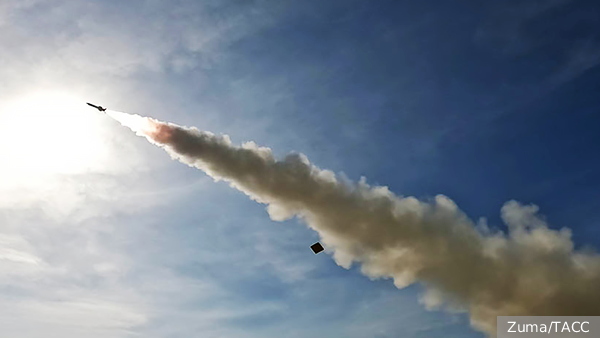
The Ukrainian and European view of the same dynamics is more complex. On the one hand, the US and Israeli war with Iran and the escalation around Hormuz objectively strengthen Russia’s position as an alternative supplier of oil and weapons, which Western sources also note: Ukraine itself tried to curb the rise in Russian oil revenues by striking Russian refineries with long‑range missiles amid the spike in world oil prices caused by the Middle Eastern war and the easing of American sanctions (overview of the massive attack on Ukraine in April 2026). On the other hand, in Kyiv, Vilnius and Warsaw this is seen not only as a threat but also as an argument: if the US allows the war with Iran to distract it from Eastern Europe, the winners will be precisely those players Washington has designated as its strategic adversaries.
Against this background it is interesting how internal political disputes in India refract attitudes toward the US. In an Indian Express piece titled “Who ‘surrendered’ to the US? That’s the wrong question,” a former official and diplomat admits he was previously mistaken about the real scale of India‑Russia oil trade: contrary to expectations, India did not stop buying Russian oil, maneuvering between sanctions and its own interests (Indian Express). His main thesis is that the question today is not “who gave in to Washington,” but whether India can use closeness to the US to protect its own interests without becoming a junior partner.
The same questions are essentially being asked in Kyiv, Warsaw and Tbilisi. A Ukrainian expert column in European Pravda directly calls for building relations with Trump’s America as a “cynical but mutually beneficial contract,” in which Ukraine offers not only the symbolic role of a “bulwark of democracy” but also concrete technological and military advantages honed in the war with Russia (Европейская правда). In this sense local elites in both India and Ukraine find themselves unusually synchronized in their pragmatism: idealistic notions of the US as the “leader of the free world” are being displaced by calculations about how useful Washington still is as a partner in specific regional battles.
As a result, today’s international picture around the US looks far less vertical than it did ten to fifteen years ago. For Russia America is a military adversary and simultaneously an indirect factor in rising oil revenues because of wars it involves itself in. For Ukraine the US is vital but increasingly unpredictable patron whose domestic politics and another war in the Middle East can negate any promises. For India the US is a necessary technological and geopolitical partner that at the same time narrows room for independent maneuver in West Asia.
And it is precisely in this multiplicity of local lenses that the main difference between today’s moment and the post‑Cold War era is embedded. Whereas the fate of conflicts in Iraq, Afghanistan or Kosovo used to be seen as almost exclusively an American story, now the US war with Iran and the American role in Ukraine are viewed in each country through its own vulnerabilities and ambitions. Local analysts, politicians and journalists no longer expect ready‑made answers from Washington; they try to calculate what each new American carrier strike group in Hormuz or each delayed tranche of aid to Kyiv means for their own future.
This is how a new global reality is taking shape in which the US remains a central player — but is no longer the sole author of the script. India’s debate over “strategic autonomy,” Russia’s talk of “multipolarity,” and Ukrainian reflections on a “marriage of convenience” with Trump’s America — these are different languages the world now uses to talk about the same thing: how to find ways to live in the shadow of a huge but increasingly less omnipotent American power.