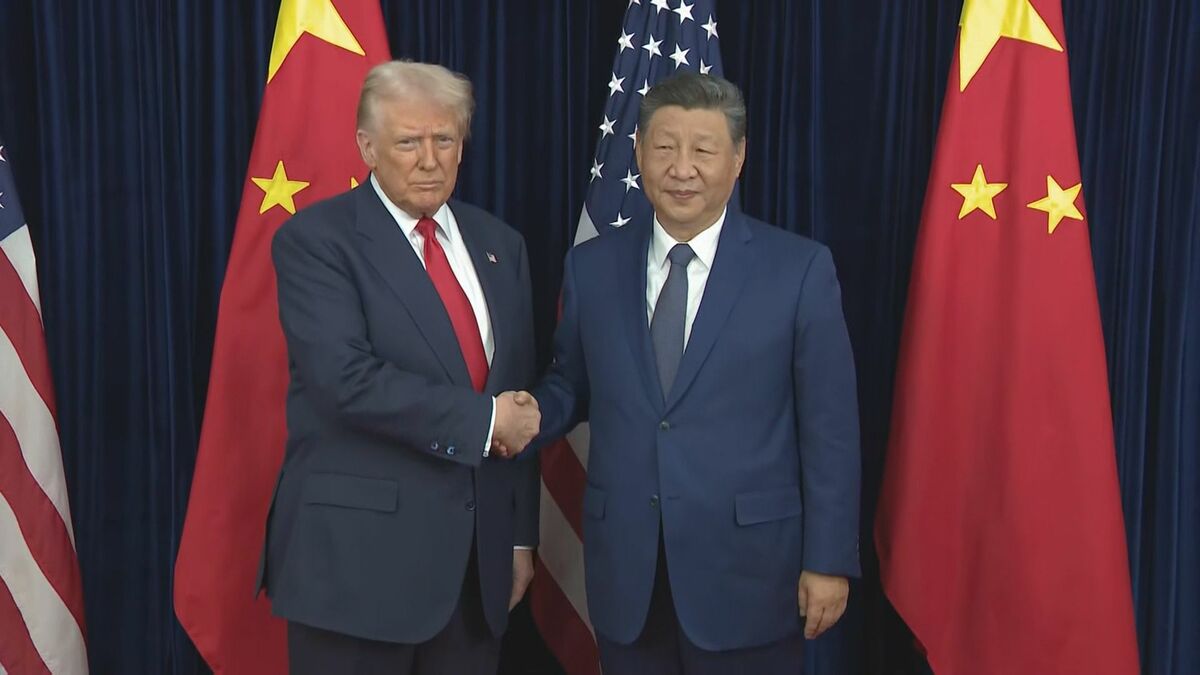
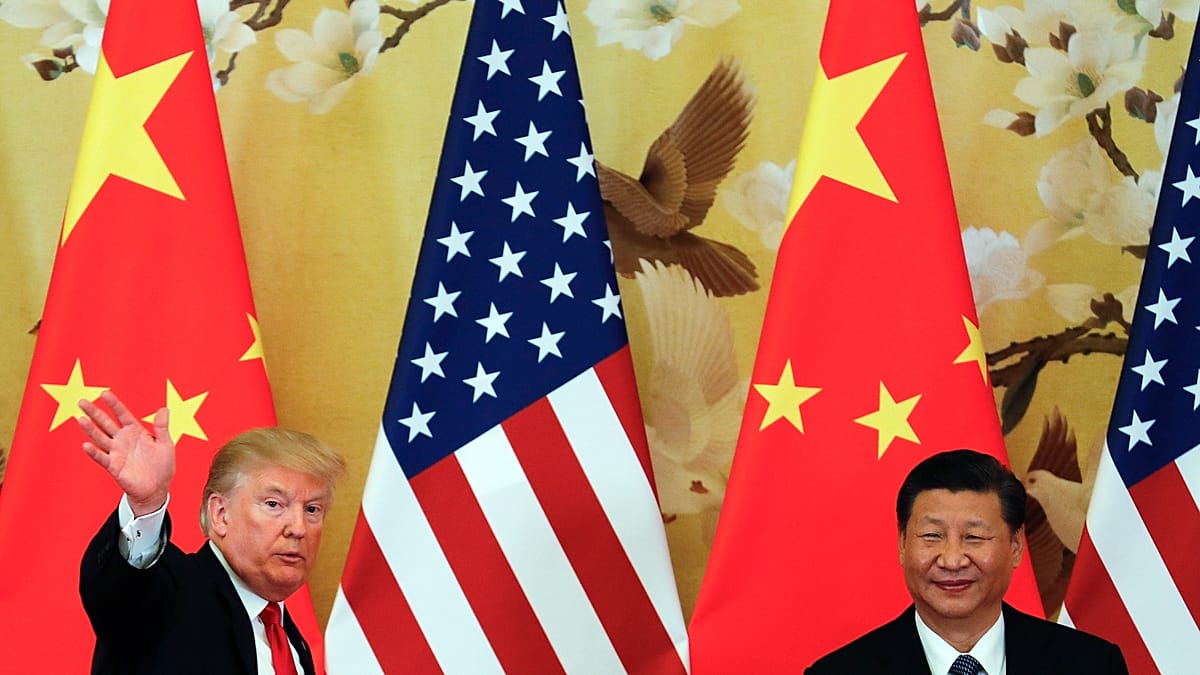
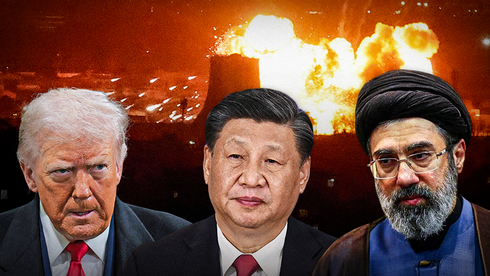
In mid‑May 2026 much of the world’s attention has again turned to the United States — not so much to Washington’s specific decisions as to how those decisions reverberate elsewhere. Donald Trump’s trip to Beijing, set against the backdrop of a protracted war with Iran and a series of assassination attempts on the president, has triggered a new wave of commentary in Japan, Israel and France. Here America is discussed no longer as the “default hegemon” but as a source of risk, economic pressure and political instability.
Three storylines run through the coverage. First, a redistribution of power between the US and China, seen particularly clearly in Tokyo and Paris and through which Trump’s current visit to China is viewed. Second, Washington’s economic and financial policies, provoking debate in France about whether the United States has turned from a “world insurer” into its extortioner. Third, the combination of domestic radicalization and external aggression, discussed in Israel through the prism of its own security and the war with Iran, and in France under the term “the destruction of the international order.”
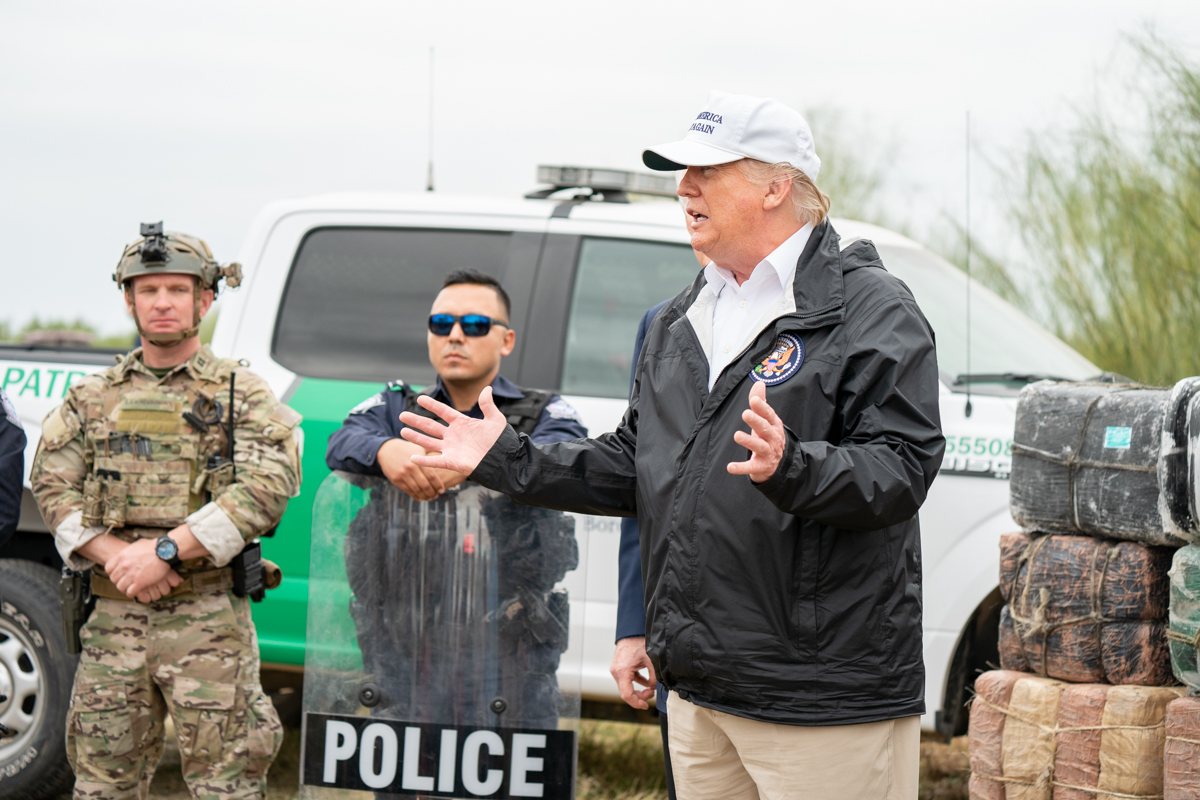
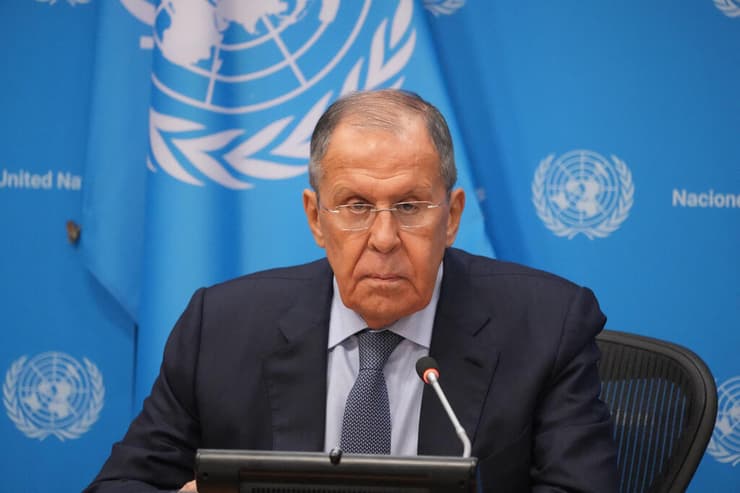
Japanese and French reactions to Trump’s trip to Beijing largely converge, though they emphasize different points. Japanese economic and international‑affairs outlets see the current summit in Beijing as another episode in the making of a G2 world — a kind of “directorate” of the US and China, where others, including Japan and Europe, risk becoming objects rather than subjects. In an analytical note by former Washington correspondent and now Meiji University professor Hiroki Sugita, published by the Japan Oil Institute for International Investments, 2026 is described as the moment when “the G2 world finally stops being a hypothesis” and becomes practice, and Japan is forced to learn “to live with two superpowers whose priorities increasingly disregard their allies.” See Sugita’s PDF analysis on the Japan Oil Institute for International Investments website. (joi.or.jp)
This prompts interest in the position from which Trump arrives in Beijing. Japanese economic media emphasize that the military campaign in Iran, which is consuming American resources, objectively weakens the US bargaining position. Bloomberg Japan, in a piece about the upcoming meeting at the end of April, noted that after the start of the war against Iran Trump is going to China “much weaker than six months ago,” when he met Xi in Korea: resources are diverted to the Middle East, inflationary pressure is rising, and US dependence on Chinese rare earths only increases vulnerability. (bloomberg.com)
At the same time, Japanese press describes the negotiations in a pointedly pragmatic way. CNN Japan’s reports that Apple, Tesla and Nvidia executives flew to Beijing with Trump are used to illustrate that despite rhetoric about “tech decoupling,” major American business still bets on China. The piece says that the presence of Tim Cook, Elon Musk and Jensen Huang alongside the president becomes a “silent signal to the markets” about the priority of maintaining access to Chinese consumers and production chains — even if restrictive duties and 25% “levies” on low‑performance chips intended for AI remain in place. (cnn.co.jp)
Japanese TV channels and agencies also focus on symbolism. TBS and TV Asahi point to the unusually “cordial” tone of opening statements in Beijing for the current relationship: Xi Jinping talks about a desire “to bring more stability and certainty to the world,” while Trump highlights a readiness “to expand cooperation and manage disagreements.” However, in Japan this mostly provokes skepticism: political reviews remind readers that the same rhetoric accompanied previous visits, while reality brings new tariffs and export controls. (newsdig.tbs.co.jp)
The French debate around the US‑China confrontation is less technocratic and far more emotional. For France, Trump’s visit to Beijing is only the tip of the iceberg; the main interest shifts to how that confrontation “squeezes” Europe. Euronews, in a piece about the “duel of economic superpowers” ahead of the visit, stressed that Europe long ago found itself a battleground for standards and supply chains: Washington accuses Beijing of “distorting competition” via subsidies and industrial policy, while Beijing replies that US controls on technology exports are an attempt to “slow down Chinese development.” In the same context, recent US measures — from sanctions to tariffs — are recalled as pushing European companies to take sides and destabilizing established trade patterns. (fr.euronews.com)
These sentiments are taken up by more politicized platforms. In PolitiqueMatin’s piece “Emmanuel Macron Confronting the US: Europe Must Open Its Eyes to Economic War,” France is urged to “stop behaving like the blind” and to acknowledge that the post–Cold War world in which the EU developed no longer exists. Author Adélaïde Mott explicitly calls the current US approach to Europe a form of economic coercion and warns that if Paris and Brussels do not develop their own strategy, Europe risks remaining “a prize in someone else’s struggle” rather than an independent actor. (politiquematin.fr)
From this follows one of the key French lines: under Trump the United States is no longer perceived as the “insurer” of the world order, willing to bear costs for common stability, but rather as a racketeer demanding tribute for security and market access. That is exactly how an analyst writing in Le Grand Continent frames the situation in an article with the striking headline that Trump has turned the US “from the world’s insurer into a racketeer.” The author argues that Washington no longer offers the world an insurance policy but sells “protection” at inflated prices, using the dollar, trade and military power as tools of pressure on partners. (legrandcontinent.eu)
This view naturally attaches to another hot topic in France — the American war with Iran and the broader dismantling of the liberal international order. In a January analysis in the Journal de Montréal devoted to “one year of destruction of the international order by Donald Trump,” it is noted that in a matter of months Washington has lifted or accelerated the dismantling of a number of postwar system principles — from the predictability of alliance commitments to codes of conduct in trade and the use of force. The author points out that by starting a costly new war against Iran while simultaneously promising a sharp increase in the military budget to 4.4% of GDP, the White House sends the world a signal: rules no longer restrain either the US or its opponents. (journaldemontreal.com)
Against this background concern grows about the economic foundations of American power. An analysis by the Geopolitique Institute Le Grand Continent on the US becoming an “inverse creditor” emphasizes that America’s external position, prolonged deficits and growing dependence on foreign capital, combined with a policy of magical thinking — the belief that one can simultaneously finance a huge deficit, wage a major war and still retain absolute financial “safe‑haven” status — make the system, in the eyes of European observers, much less stable. (legrandcontinent.eu)
This macro picture resonates with a more cultural‑psychological layer. In a recent Le Parisien piece headlined “A Former Model Country Has Turned into an Unpleasant Problem,” a French interlocutor returning from Silicon Valley says that “the characteristic American optimism and life force have evaporated,” replaced by fatigue and anxiety. French press increasingly asks: how should the world count on American leadership if Americans themselves no longer seem to believe in their model? (leparisien.fr)
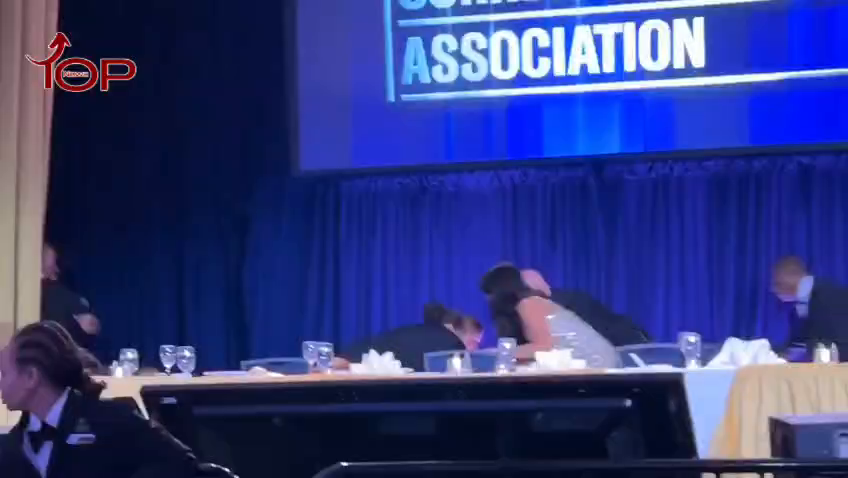
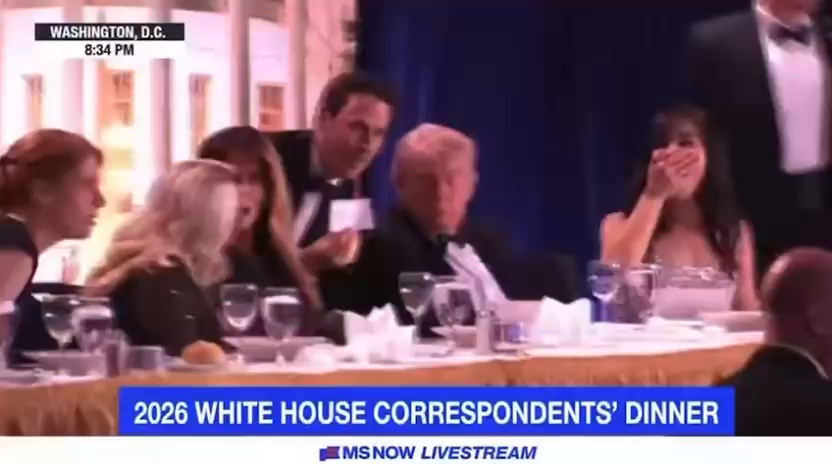
In Israel, by contrast, the focus is far more concrete and “sharp”: the United States is seen primarily as a warring superpower and decisive actor in the confrontation with Iran, as well as a country where political violence is rapidly normalizing. News of the recent assassination attempt on Donald Trump during the White House Correspondents’ Dinner at the Washington Hilton is not seen here as a distant incident but as an alarming symptom for an ally. Israeli outlets detail how the attacker, armed with a shotgun and a handgun, made it to a floor just one level above the hall where nearly two thousand people were gathered — from cabinet members to congressmen and journalists. It is emphasized that this is already the third case in recent years in which a sitting US president has been targeted, and comparisons to the attempt on Ronald Reagan in the same hotel in 1981 appear in the Israeli press for good reason. (mako.co.il)
Israeli analysts see this not merely as security lapses but as a sign of deeper radicalization. Israel Hayom, in an analytical piece about “vulnerabilities” in the security system, writes that less than two years after two assassination attempts during the 2024 campaign, the current incident reveals imperfections even in the world’s most powerful protection apparatus and raises the question: how resilient are America’s political institutions if even the president’s person is no longer protected in the literal sense? (israelhayom.co.il)
This storyline is directly tied to the US war against Iran, which Israeli press treats as part of the regional security equation for Israel. The assassination attempt on Trump occurred amid stalled talks between Washington and Tehran: religious‑political outlets like Hageula write of a “drama in Washington,” where on one evening an attempt is made on an ally and the Iranian regime — said, according to them, to have received military support from China and Russia — continues to demand hard terms for ending the conflict, from full lifting of sanctions and reparations to securing Iranian control over the Strait of Hormuz. (hageula.com)
In the Israeli discussion the United States occupies a dual position. On the one hand, it is an indispensable ally waging a war whose outcome directly affects Israel’s security. On the other, it is a system where rising domestic polarization, repeated attempts of violence against the president and legal uncertainty about the use of force abroad cause concern: might Israel become a hostage to American internal crises? Not for nothing do the pieces covering the events in Washington intersperse footage of those events with quotes about how instability in the US is read in Tehran and Beirut as an opportunity to increase pressure on the West.
Notably, the US‑China angle also appears in the Israeli agenda, but not in the European key of economic war; rather, it is seen as a factor affecting the war with Iran. Reports on Trump’s visit to Beijing emphasize that Western media simultaneously report arms deliveries to Iran via third countries involving China, and Prime Minister Benjamin Netanyahu told CBS that Beijing “supplied Iran with components for missile production,” which raises particular concern in Jerusalem. Ynet explains that revealing this “Beijing–Tehran–Moscow axis” makes the negotiations in Beijing a matter of intense attention for Israel: the degree of US firmness or leniency toward China could determine the pace and scale of military assistance to the Iranians. (ynet.co.il)
Despite differences in national optics, common motifs stand out in the three countries. The first is the image of the US as a power that is at once indispensable and dangerous. In France they say America is destroying the order it created and becoming “a problem Europeans must manage” rather than a reliable anchor. In Japan the US remains a key military and technological ally, but analysts increasingly describe Washington as one of the centers of power in a G2 world acting primarily in its own interests and capable of striking deals with Beijing over the heads of allies. In Israel America is still a pillar of security, but also a source of instability — externally because of the war with Iran, and internally because of escalating political violence.
The second motif is fatigue with American exceptionalism. French writers reflecting on the “inverse creditor” and US “racketeering” essentially question the idea that the world can continue to blindly trust the dollar and Washington’s military‑political umbrella. Japanese experts warn that the illusion that America will always come to the rescue and finance global leadership no longer corresponds to the reality of protracted wars and internal deficits. Israeli commentators, in their own terms, ask a similar question: how much can one rely on a superpower whose political institutions cannot guarantee the basic personal security of their own leader?
The third motif is a search for autonomy, expressed differently. In France this turns into the agenda of Europe’s “strategic autonomy”: the need to develop an economic and technological strategy independent of both the US and China, and not to make the EU an appendage of either camp. In Japan it results in a more cautious posture toward US‑China rivalry than before: political scientists advise Tokyo not to become an unconditional outpost of Washington in Asia but to craft its own line, taking into account China’s long‑term rise and Japan’s dependence on its market. In Israel it fuels debate on how to minimize vulnerability to American domestic turbulence, whether through diversifying military suppliers or pursuing more active independent diplomacy on the Iranian track.
Finally, important is what is almost invisible in Western — and especially American — self‑reflection, but is clear from these three vantage points. To Japanese, French and Israeli observers the United States no longer appears as a monolithic superpower conductor. Rather it is a heavy, split player: internally polarized, economically overstretched, simultaneously waging war and trying to outplay China in the tech race — yet still possessing resources no other country can replace.
This ambivalence sets the tone of current discussions. The world still looks at the US — but no longer with undisguised deference, as at an unquestioned model and guarantor; instead, it watches warily, as at a powerful but unpredictable neighbor whose moves should be anticipated and hedged rather than simply supported.