The American agenda has again become a leading topic for foreign columnists and experts — but today the conversation about the United States is torn across several fronts. In the Russian and Ukrainian press, attention is fixed on Washington’s role in the war with Iran and the “stalled” negotiations on Ukraine. In South Africa, the image of the US is currently shaped primarily through the prism of trade wars and 30-percent tariffs that have hit jobs and the country’s export model. Everywhere one question is heard: to what extent are the United States still capable of managing crises they themselves set in motion, and how do their current policies resonate with local interests?
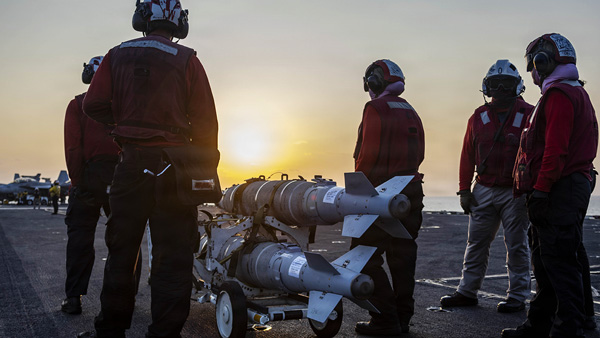
The central theme in Russia, Ukraine and much of the global press has become the US‑Israeli war with Iran, which began with massive strikes by the US and Israel on Iranian targets on February 28, 2026. Russian publications emphasize that this is not just an episode in the Middle East, but a conflict that will be “protracted” and will draw Washington into the region for a long time. A video commentary by the newspaper Vzglyad under the characteristic headline “War with Iran — this is for a long time” is built around the idea that the US and Israeli attack will inevitably grow into a war lasting months, not weeks, and is already drawing in other opponents of Washington: the authors cite analysis in The Washington Post noting that another major US rival has effectively entered the game. In their view, this demonstrates that American deterrence is cracking, and the circle of opponents is widening, even if they do not officially announce direct participation. (vz.ru)
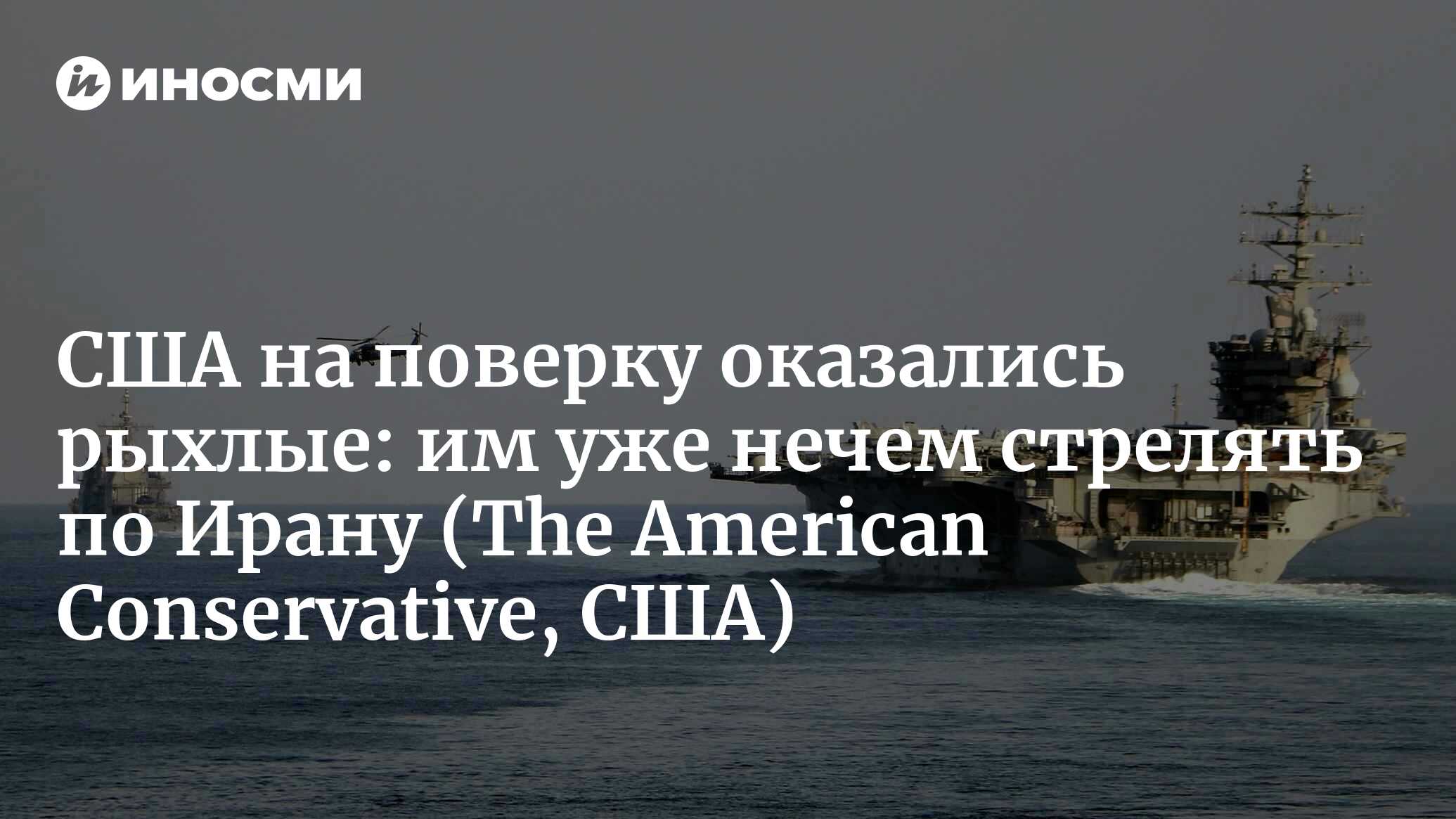
Russian translations of Western conservative authors view the events through the same prism. InoSMI retells an article in The American Conservative under the headline “A protracted war with Iran will weaken American deterrence of China and Russia,” which argues that at best Washington can expect a split within the Iranian armed forces and the risk of a civil war that will throw the region into even greater chaos. It also stresses that China, Russia and the DPRK are currently “detained” only because they consider direct aggression against the US too costly, but they are carefully looking for “the slightest signs of American weakness.” (inosmi.ru) In the Russian interpretation this reads as confirmation of a long‑standing narrative: the US is getting bogged down in unnecessary wars, losing its ability to pressure Moscow and Beijing.
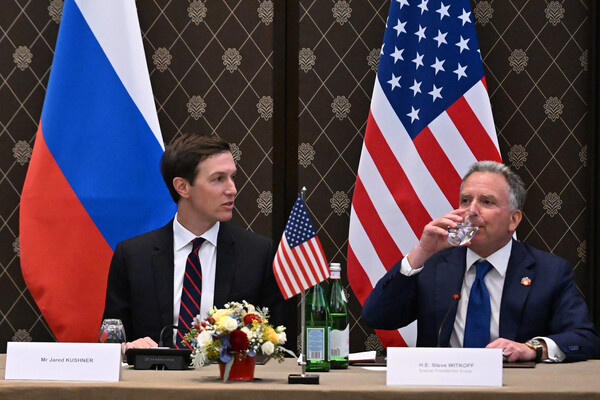
The Ukrainian agenda links the US‑Israeli war with Iran to a completely different set of fears — the fate of talks with Russia and the risk of a reduction in Western aid. Gazeta.ru, in a political analysis of the trilateral meeting of Russia, Ukraine and the US in Geneva, reminds that the new round of talks, which was to take place on March 5–6, was “put on pause” after Volodymyr Zelensky announced that the US and Israel had launched a military operation against Iran. (gazeta.ru) For the Ukrainian audience this appears as a painful confirmation of Kyiv’s vulnerability: a key ally can at any moment switch attention to another theater of military operations. Ukrainian and Russian Telegram channels cited in the local press are already speculating on how the new war will affect weapons deliveries, PAC‑3 interceptor stocks, and how long the West can simultaneously support Ukraine and the Middle Eastern campaign. A Russian translation of Morgan Stanley’s analysis published on Investing.com emphasizes that limited interceptor production and the need to replenish stocks will be among the factors that could prolong active hostilities with Iran. (ru.investing.com) In Kyiv this is read not only as a financial but also as a military‑technical signal: the resource “carpet” under Ukraine may gradually be drawn in.
A separate layer of discussion in Russia and Ukraine concerns how the current war with Iran fits into the ongoing Ukrainian conflict. Russian reviews of the progress of the “special military operation” emphasize that the negotiation process has “stalled in the fog,” and American arms supplies to Ukraine “could be minimized” because of the flare‑up in the Middle East. (tenchat.ru) For Russian commentators this is an argument for strategic patience: that is, a war of attrition while waiting for the US to be distracted and burn out. Ukrainian voices, by contrast, insist that precisely now, while the US is involved in multiple crises, it is dangerous for Kyiv to make concessions; in Ukrainian interviews with European media Volodymyr Zelensky emphasizes that Ukraine “does not intend to withdraw troops” from Donbas, signaling that the internal window for compromise is narrowing. (gazeta.ru)
Against this background, the South African angle appears unique: here the US is discussed primarily not as a military superpower but as a trade hegemon whose decisions affect tens of thousands of jobs. The perception of America in South Africa in recent months has been almost entirely dominated by the “liberating tariffs” of the Trump administration — 30‑percent duties on a wide range of South African goods that took effect in August 2025. Government structures in Pretoria, in a series of statements, emphasized that exports to the US accounted for about 8% of all South African shipments and called the tariffs “incomprehensible,” especially given that South Africa’s share of total US imports does not exceed a quarter of a percent. (parliament.gov.za) Official statements say such a high tariff “makes our goods less competitive” and undermines the country’s investment attractiveness as a manufacturing hub for the American market.
South African economists and business associations in columns for the local press go beyond dry statistics. Professor Raymond Parsons, in a comment for the Sunday Times Daily, notes that the US decision on a 30‑percent tariff “is not good news for the South African economy” and that its potential negative effect “should not be underestimated,” especially given already high unemployment. According to him, such duties are “a significant deterrent to foreign direct investment,” directly undermining South Africa’s role as a production base for the American consumer. (timeslive.co.za) Analysts at Economic Research Southern Africa, in a specialized study, model an increase in the weighted average tariff for South African exports to the US from 0.4% to 16.8% and warn that by mid‑2026 cumulative job losses could reach 30–50 thousand, increasing the risk of social tension in industrial regions. (econrsa.org)
Against this backdrop, a significant psychological milestone was the February news from Washington: the US Supreme Court ruled parts of the Trump administration’s global tariffs unlawful, opening the way for their reduction. South African media greeted this with cautious relief. Business outlet IOL wrote that after the court decision tariffs for South Africa could be adjusted to 15% rather than 30%, although business insists that “only 2026 will show the real impact” of this ruling. (iol.co.za) In a Semafor column South African business leaders are described as “relieved but not deluded”: yes, the shock is softened, but confidence in the predictability of American trade policy is undermined, and many companies are accelerating market diversification. (semafor.com) At the same time, there is a demonstrative turn to China: as Associated Press reported, Pretoria signed a framework agreement on a new trade deal with Beijing, hoping to compensate part of the losses in the American market through duty‑free access for a range of goods, including agricultural products, to the Chinese market. (apnews.com) As a result, in South African discourse the US is increasingly described not as a guarantor of open globalization but as a source of “tariff arbitrariness” pushing the country into the arms of alternative partners.
Notably, in South Africa the US‑Israeli war with Iran is discussed primarily through an economic prism, not through the moral‑political categories that dominate in Europe. BusinessTech, in its review of business confidence for Q1 2026, notes that when South African business seemed to be emerging from the prolonged Covid slump, the “US war in Iran” became a new external shock threatening oil prices around $100 per barrel. The authors reassure that this price spike is likely temporary and that the South African Reserve Bank “views it as a one‑off shock” not requiring an immediate rate hike. (businesstech.co.za) But the very framing is telling: while Moscow and Kyiv debate Washington’s strategy and the military balance, Johannesburg compares the impact of American wars and tariffs on petrol prices, the budget and unemployment levels.
There is one more quiet but important motif that links all three countries in their perception of the US: fatigue with American unpredictability. In the Russian and Ukrainian discourse this is expressed in skepticism about Washington’s ability to hold multiple fronts at once. The commentary relaying The American Conservative on InoSMI explicitly says that a prolonged war with Iran “undermines our power” at a moment when rivals look for signs of weakness; Russian analysts, citing this, essentially use an American conservative voice as justification for their own thesis: the US no longer controls the global chessboard. (inosmi.ru) In Kyiv this turns into anxiety: dependence on decisions by the US Congress, on internal American elections and now on the course of the Middle Eastern campaign makes the future of assistance extremely uncertain, and the possibility of “fatigue with Ukraine” more real.
In South Africa the same unpredictability is felt in a different dimension. First — the aggressive tariff move under rhetoric of “reciprocity” and “fairness for American workers,” then — a partial reversal after the Supreme Court decision, and simultaneously — debates in Washington about the future of the AGOA preferential program. For South African experts this is a signal that building long‑term strategies relying solely on the American market and a “rules‑based order” has become risky. In an analytical review BNP Paribas, on “South Africa’s resilience in the face of US tariffs,” explicitly states that despite an expected budget surplus and relative macro stability, the country is forced to accelerate export diversification and adapt to an “extremely volatile” trade environment. (economic-research.bnpparibas.com)
From this plurality of voices a single, if ambiguous, image emerges. For Russia, America is an overloaded hegemon stuck in wars, whose “hyperactivity” in Iran and Ukraine will only weaken it in the long run, opening space for Moscow and Beijing. For Ukraine, it remains an indispensable patron whose decisions determine the life of the front and the talks, but a patron who is tired, torn by internal conflicts and dragged into new wars. For South Africa, it is a partner capable of overnight upending economic conditions and thereby pushing the country to reorient toward other centers of power.
In all three cases attitudes toward the US rarely fit simple friend‑or‑foe schemas anymore. They increasingly resemble attitudes toward a force of nature: it can be feared, it can be tried to be used, but one cannot count on stability. And that is, perhaps, the main thing that unites current Russian, Ukrainian and South African conversations about America — the sense that the era of predictable American leadership is over, and what has replaced it so far brings more risks than reassurance.