America has once again become the central nerve of world politics, but how it is seen from Jerusalem, Tokyo or Riyadh differs markedly from the usual American‑media perspective. In all three countries the discussion is not about an abstract “Washington” but about a very specific set of issues: economic nationalism and US tariff policy, the resilience of American democracy in the face of a “Trump comeback,” a reassessment of alliance and military guarantees, and the balance in strategic partnerships with the United States. The local perspective makes these topics more grounded and self‑interested: what does this mean for us, for our security, our economy and our domestic politics.
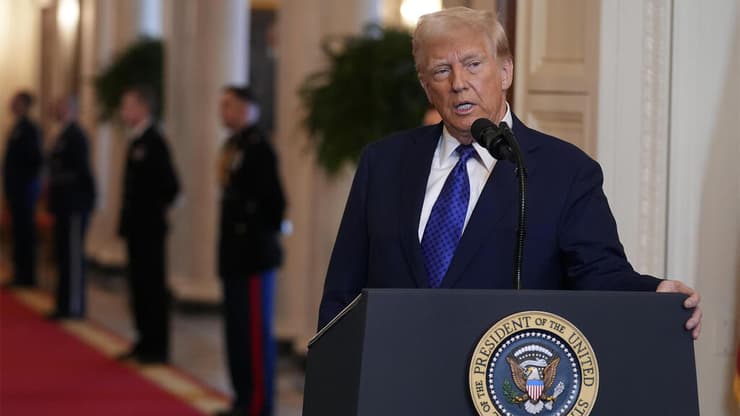
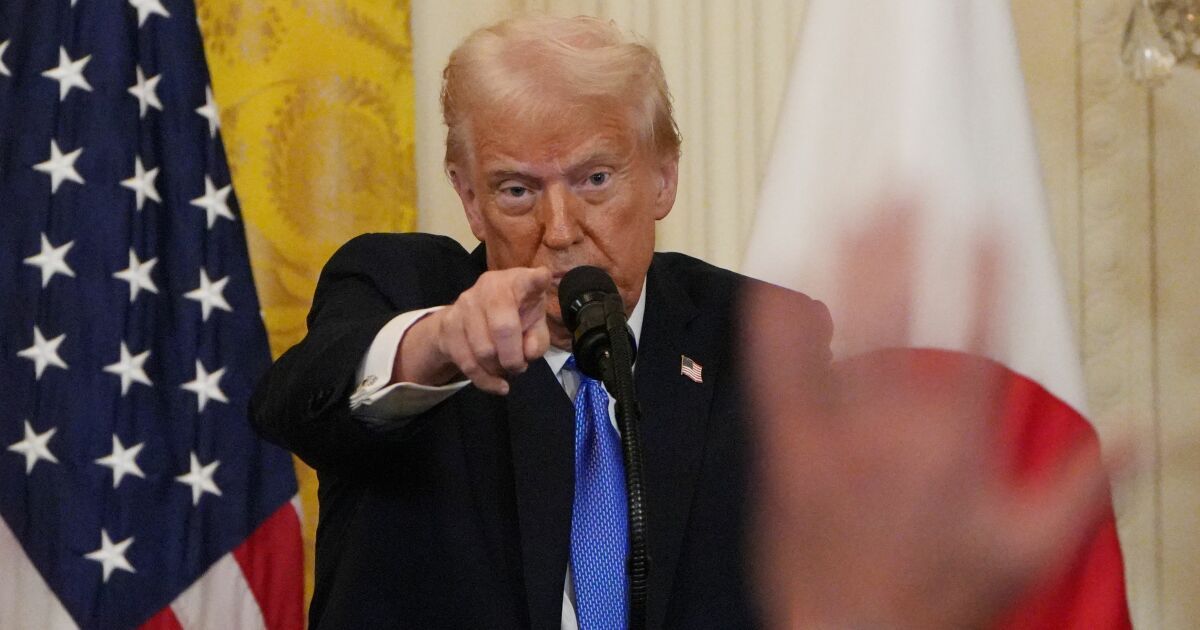
One of the most discussed topics in Israeli commentary has been the tariff offensive by the American administration. In an economic column by Saber Plotsker on Ynet, Donald Trump’s decision to impose 25 percent tariffs on imports from Canada and Mexico and 10 percent on goods from China is described as an “obsession with tariffs” that could set the US economy back 90 years and increase the expenses of the average American family by more than $3,000 a year. The author calls the move “bullying” outright and warns that Americans will end up paying for this policy, while linking it to the upcoming meeting between Netanyahu and the US president, implying that Israel will have to navigate between the interests of its exporters and the need not to spoil relations with Trump at a moment crucial for security. From the Israeli perspective, US trade protectionism is not an abstract theory of “de‑globalization” but a concrete risk to high‑tech exports and to the macroeconomic stability of a key ally on which security guarantees depend. (ynet.co.il)
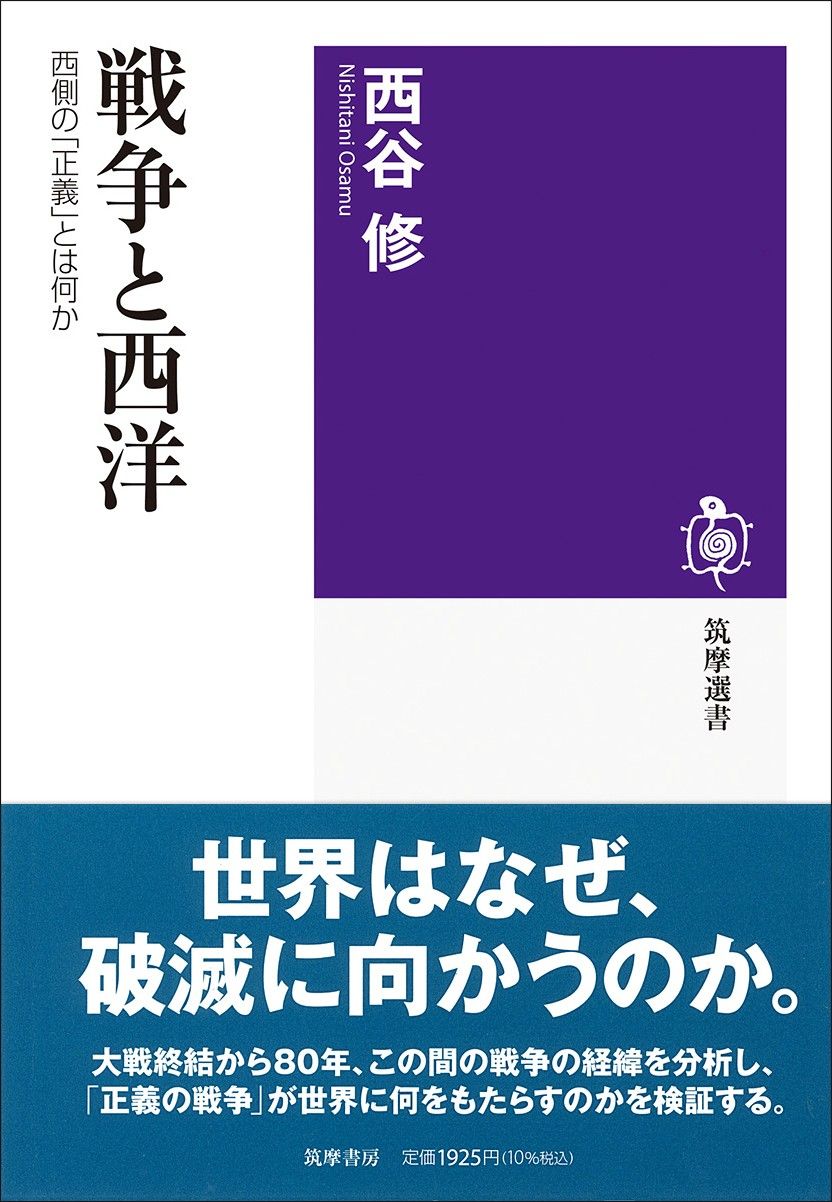
In Japanese debates, America primarily appears as a country that has entered a period of chronic political and value instability. In a lengthy excerpt from the philosopher Nishitani Osamu’s book War and the West, published in Asahi Shimbun, a second Trump term is described not as an accidental anomaly but as a logical expression of the deeper nature of the United States: Nishitani argues that “whether it’s Trump or Biden, America is a country organized this way,” emphasizing the structural character of aggressive individualism, militarization and a tendency to export crises outward. For the Japanese reader this is presented as a warning: one cannot build strategy on a return to a “normal America,” because such a thing does not exist. Instead the author speaks of a “rupture” between the US and Europe and the need for Japan to think about its own trajectory in a world where an American leader can radically change course while staying within what the US considers acceptable. (book.asahi.com)
Out of this grows a second Japanese theme: if America is unstable, what should an alliance with it look like? A few years ago analysts such as Ikata Akira in Asahi wrote that the “new era of the Japan‑US alliance” is first and foremost an era of “economic security,” where traditional military guarantees are supplemented by a deep linkage in supply chains, intellectual property protection and coordination in high technologies, including 5G, biotechnology, AI and quantum research. Such pieces stress that Japan’s dependence on the US is becoming less military and more technological and regulatory; at the same time they remind readers that domestic polarization in the US undermines the predictability of this partnership and forces Tokyo to diversify risks — from strengthening regional formats to engaging in cautious dialogue with China. (webronza.asahi.com)
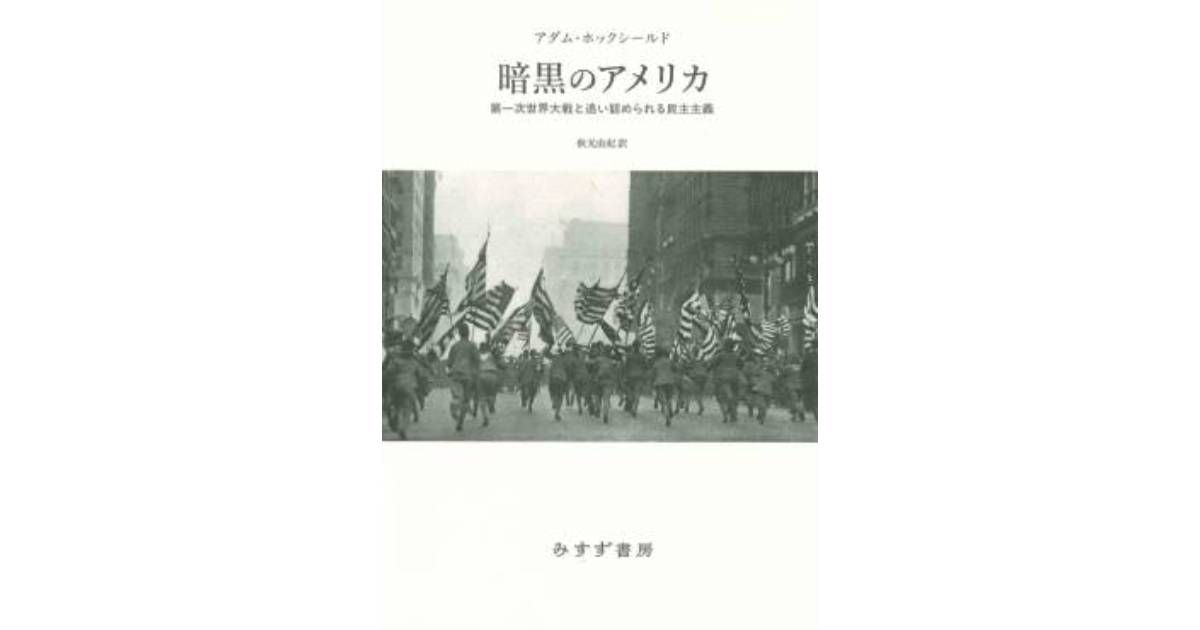
American democracy as a historically unstable phenomenon is another line of Japanese discussion. In a review of Adam Hochschild’s book Dark America, published on Asahi’s portal, a Japanese critic points out that already in Woodrow Wilson’s time, US participation in World War I — proclaimed as a “war for democracy” — became in the United States itself a justification for curtailing civil liberties. The book is described as a “warning about crises that could very well repeat,” and this resonates with Japanese anxieties about current blows to rights and institutions in the US. In such texts American democracy is not an exemplar but an object of historical analysis and cautious skepticism, which contrasts noticeably with a more idealized image that dominated Japanese mainstream discourse during the Cold War. (book.asahi.com)
Mirroring this, in Israel America is viewed through the prism of its own domestic polarization. Israeli commentators note that for their country — where the ruling coalition itself relies on a highly polarizing political course — the American example serves both as a warning and as a possible model. Columns in major Israeli outlets often portray the US as a country where a “divided society” has become the new norm, and where a change of administrations means not a smooth correction of course but a harsh pendulum swing. This forces the Israeli establishment to consider how much to bet on personal ties to a specific American president, as was done during Trump’s first term, and how necessary it is to “insure” relationships with cross‑party institutional dialogue in Congress.
Against this backdrop it is particularly telling how Saudi media describe the current phase of relations with Washington. In a long discussion published in Al‑Riyadh timed to the crown prince’s visit to the US, bilateral ties are characterized as an “established model of understanding and mutual respect,” built on decades of strategic cooperation. The authors emphasize that relations have now become “balanced” and are built on a principle of “agreement for agreement,” implying that the kingdom no longer sees itself as a junior partner automatically following the White House line. Instead Saudi Arabia positions itself as an equal player that maintains dialogue with the US while simultaneously building its own regional and global initiatives — from energy to Red Sea security. (alriyadh.com)
In another piece in the same paper the relations between the two countries are described as a “map of what bilateral relations between states should look like,” where “the formula of balance within these relations cannot be copied, nor can it be destroyed.” This is a very characteristic tone of today’s Saudi rhetoric: America remains the most important partner, but not the only center of gravity. Against the backdrop of Riyadh’s strengthening ties with Beijing and Moscow, stressing the “historical glory and greatness” of Saudi‑American relations serves not so much as an expression of loyalty to Washington as an argument that Saudi Arabia, not the US, sets the framework of this partnership in an era of “balance between the traditional alliance and a new coalition.” (alriyadh.com)
It is interesting that the theme of US economic policy resonates differently in the three countries. In Israel the focus is on the short‑term risks to the global and American economy from tariffs and trade wars that could hit high‑tech markets and investment flows vital to Israel’s startup sector. In Saudi Arabia, the same American economic nationalism is read differently: as an impetus to accelerate the kingdom’s own Vision 2030 diversification program and to build new economic ties outside the dollar‑centric system, while official commentary strives to maintain an explicitly positive tone toward Washington. In Japan, where memory of the structural trade conflicts of the 1980s is strong, the US protectionist turn fits into a broader trend of “economic security” and is seen as a factor that compels Japanese business and state to both deepen cooperation with America in critical sectors and cautiously insure against abrupt moves by any future administration.
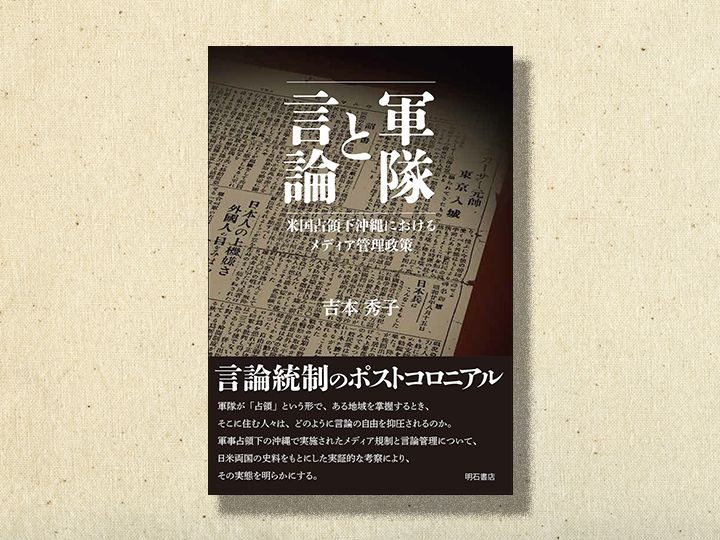
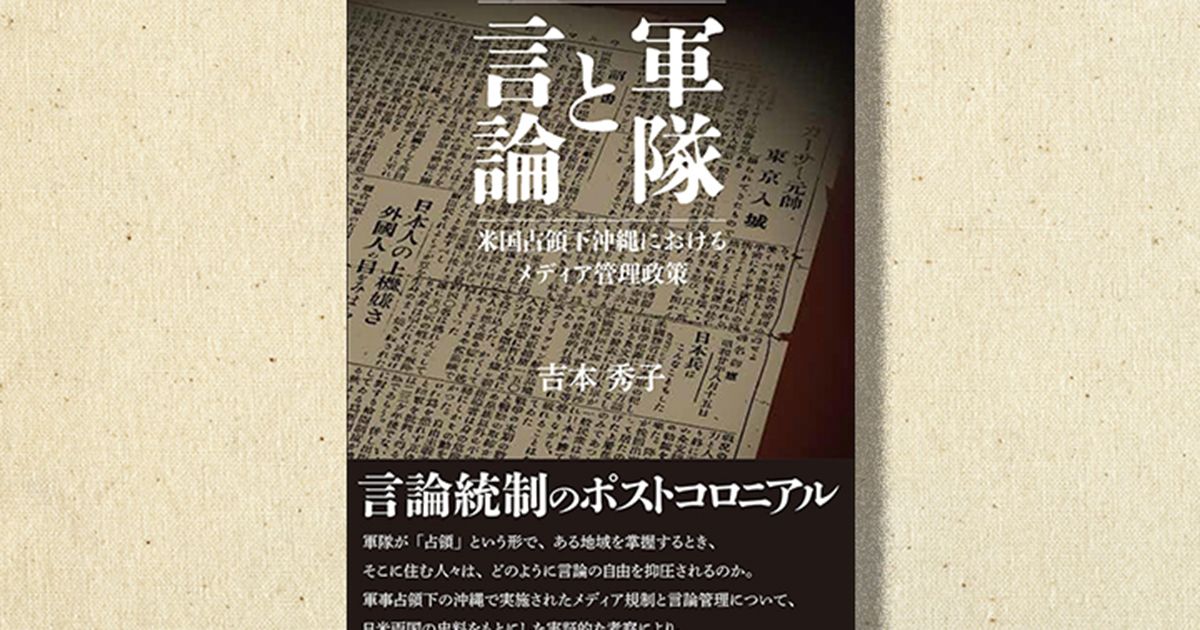
No less telling is the difference of perspective on American military presence. In Japan recent pieces on media control under the US occupation administration in Okinawa and on current crimes by American military personnel are used to question the completeness of Japanese sovereignty even in the 2020s: authors directly ask, “is this country really independent,” if some offenses remain outside the jurisdiction of Japanese courts. For the Japanese reader the current US presence in Okinawa appears as a continuation of an unfinished postwar period when “the war has not yet ended” in an institutional sense. (book.asahi.com)
In Saudi Arabia the theme of American troops and security hardly appears directly in public rhetoric, but it is constantly present beneath the surface. When Saudi writers note that the US “from the beginning understood that the kingdom’s rulers possess the wisdom and status necessary to provide the stability the world seeks,” this is read both as a reminder of the kingdom’s role in securing energy supplies and as a signal to Washington: the region’s new security cannot be built on one‑sided American decisions that ignore Riyadh’s regional initiatives. (alriyadh.com)
In Israel American military support is perceived as part of an almost existential narrative. Although in current Israeli columns the US more often appears in economic and political contexts, in the background there is always the question: will America remain willing to provide military and diplomatic cover to Israel amid American society’s fatigue with foreign conflicts and growing domestic pressure over Middle East policy? Israeli commentators’ anxiety grows when they look at internal American debates about arms supplies to allies and sanctions against states accused of human‑rights violations: in these discussions Israel increasingly sees a mirror for its own conflicts.
At the intersection of all three discourses one important common thread appears: America as a country whose domestic polarization, historical shadows and economic nationalism are becoming foreign‑policy risks for allies and partners. A Japanese philosopher, a Saudi columnist and an Israeli economic commentator — each speaking from their own realities — ask the same question: to what extent can one rely on the United States as a stable pillar of the world system? Answers differ. In Tokyo the emphasis is on the need to “insure” through diversification and strengthening strategic autonomy. In Riyadh they emphasize balance and reciprocity, showing that the kingdom has mentally shifted from the role of “client” to that of a co‑architect of regional security architecture. In Jerusalem, by contrast, they continue to bet on a deep bond with the US but increasingly discuss the risk of relying all on a single political figure in Washington.
These local voices, rarely appearing in the English‑language agenda, demonstrate that the era of a “single America” as an unquestioned center of gravity is over. The US remains a key player, but in Tokyo, Jerusalem and Riyadh the conversation increasingly is not about how to fit into the American order but about how to structure relations with Washington so as to survive its next political cycle — and, if necessary, to outlast America in its current form.