What is said about America in Washington itself is only a small part of the global conversation about the United States. In South Africa, Ukraine and China, the United States is discussed in very different terms: through the prism of each country’s own security, economy, domestic politics and even its future. If one tries to weave these fragments into a single picture, the result is not a “common image of America” but a set of contradictory expectations and fears, in which the US is simultaneously guarantor, adversary, partner and source of chaos.
The main backdrop shaping these views is the already completed 2024 US presidential election, with Donald Trump’s return and the subsequent radicalization of the American domestic scene. The outside world has long stopped seeing American elections as a “celebration of democracy”; now they are more a test of the predictability and governability of a superpower whose internal swings are painfully felt on other continents.(ru.wikipedia.org)
The first major cluster of narratives concerns the influence of the new American administration on the war in Ukraine and the architecture of European and Eurasian security. Ukrainian media and experts speak of the US primarily as a military and financial anchor: the pace of weapons deliveries, budgetary stability and even dynamics at the front depend on Washington’s decisions. Ukrainian analytical columns often advance a harsh thesis: Washington is not a benefactor but a rational actor that will support Kyiv only to the extent that it fits its own strategy of containing Russia. Hence a dual tone: on the one hand, marked gratitude for multibillion-dollar aid and high-tech weapons; on the other, growing irritation over delays in Congress, intra-party horse-trading and the use of Ukraine as an object of domestic American struggle.
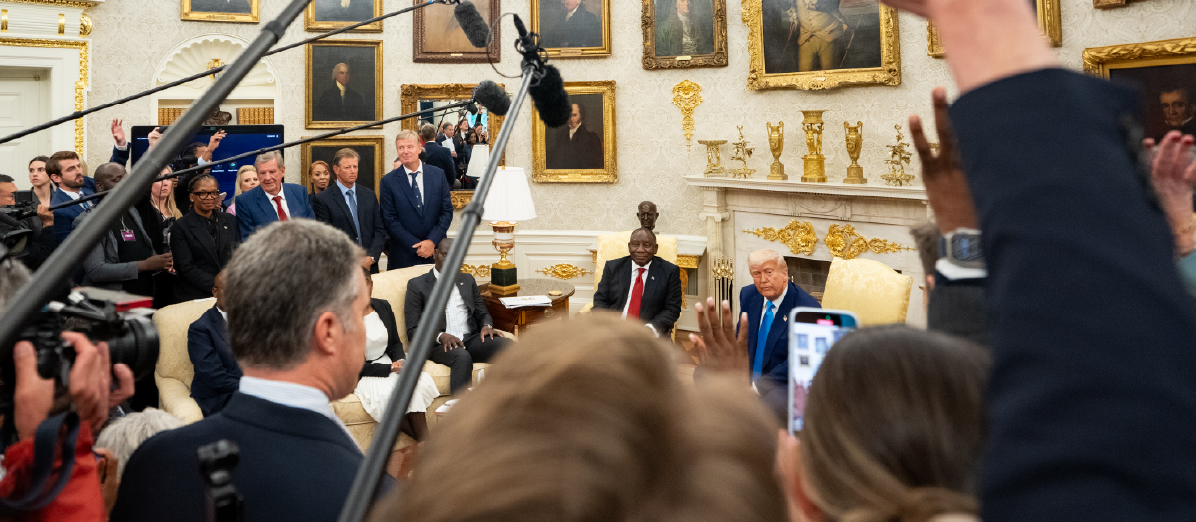
Trump’s return to the White House is described in the Ukrainian discourse almost as a geopolitical earthquake. Even during the campaign local commentators parsed his statements about a “quick peace” and that Europe should “deal with Russia itself” as a potential signal of reduced support. After the election the tone grew more pragmatic: less panic than discussion about how to make the Ukrainian case maximally attractive to the new administration, package it under the agenda of “containing China” and strengthening American leadership rather than “helping a foreign country.” In this sense Ukrainian authors read not only White House statements but also debates within the Republican Party, trying to understand where the real “red lines” lie — cessation of supplies, forcing negotiations, restrictions on strikes into Russian territory, etc.
The second cluster is the US–China rivalry and how it is refracted in Chinese public space. Interest in the US is particularly great here, and American domestic politics is viewed both as an object of criticism and as an important indicator of the rival’s weaknesses. In Chinese official and affiliated media the 2024 American electoral cycle was portrayed as a showcase of the “crisis of American democracy”: polarization, violence, distrust of institutions, and dependence of politics on big money and lobbyists were emphasized. In one analytical article on the People’s Daily portal the author dissects key pre-election debates — inflation, crime, migration, social inequality — and concludes that the American system is incapable of systematically solving any of these problems, only turning them into electoral slogans.(world.people.com.cn)
At the same time, a more nuanced conversation is ongoing within the Chinese expert community: not whether America is “bad,” but how sustainable its capacity for global leadership is. In analyses on specialized platforms like Fudan American Studies or China-US Focus, the American elections are examined through the lens of foreign policy: how will the course on Taiwan change, what will the configuration of sanctions and export controls be, will the line of “managed competition” persist or will Washington return to tougher confrontational rhetoric. One China-US Focus author highlights five key areas through which the US election outcome affects foreign policy: alliance relations, approach to international organizations, strategy for containing China, energy policy and the sanctions regime — and concludes that structural competition will remain in any case, but style and tactics may change noticeably.(cn.chinausfocus.com)
A significant part of Chinese commentary is devoted less to specific US actions than to the psychological portrait of Washington. In materials from Xinhua and CCTV there is a line about America’s “pride and anxiety”: about how Washington simultaneously displays confidence in its superiority and fear of losing status. Such texts explain American information campaigns and sanctions policy as an attempt to “construct reality,” in which China and other competitors are shown as sources of threat and the US as the only legitimate center of power.(news.cctv.com) A political scientist quoted by one Chinese TV channel puts it this way: “America still possesses colossal resources, but increasingly doubts that it can manage the world as it used to. Hence the nervousness, abrupt moves, cognitive warfare against everyone who doesn’t fit its picture.”
For a Chinese audience American policy is both a mirror of its own fears and hopes. In rare but telling texts by independent Chinese-speaking authors writing on foreign platforms, the 2024 American elections were called “almost Chinese elections” — such was the high level of interest inside China in the race’s outcome and in Trump as a figure. One such author noted that “Trumpism” paradoxically became a kind of meeting point for the interests of very different Chinese circles — from liberals to the patriotic camp: some see in him a chance for the American system’s “self-destruction,” some see an opportunity for détente and deals, others see confirmation of populism’s universality as a global phenomenon.(reddit.com)
The third narrative block is Africa, especially South Africa, where America is viewed through the lens of the struggle for influence and wars in other parts of the world. South African press and think tanks have in recent years regularly discussed the direction of American policy on the continent: is Washington’s interest in partnership with Africa growing, or are the US steadily ceding ground to China and Russia? A recent Foreign Policy Research Institute review on American influence in Africa emphasizes that US strategy “navigates” between attempts to check China’s and Russia’s growing presence and the need to build real economic and political partnerships rather than merely making declarations.(fpri.org)
In South African media space there is also a strong moral-political assessment of American foreign policy — primarily regarding the Middle East. The South African government’s decision to file a case against Israel in the International Court of Justice accusing it of genocide in Gaza became an important marker of distancing from the American line: after all, the US consistently shielded the Israeli operation diplomatically and blocked harsh resolutions.(ru.wikipedia.org) South African commentators often draw a contrast here: on the one hand Washington’s rhetoric about human rights and international law; on the other, its willingness to turn a blind eye to an ally’s actions. One column in a major South African newspaper flatly states: “Where it suits Washington, principles easily give way to realpolitik; South Africa, with its history of apartheid, cannot afford such cynicism.”
In this context South Africa’s reaction to symbolic gestures from Washington is notable. When one leading American politician sent a congratulatory message on South Africa’s Freedom Day, local commentators saw it as a potential signal of warming relations, but analysts urged caution: gestures should not substitute for discussion of real disagreements over Palestine, sanctions policy and the global financial architecture. A South African political scientist in an interview with local radio reminded listeners that “America knows how to say the right words, but it’s the votes in the UN and the sanctions regime that show whose side it’s on.”(ewn.co.za)
Interestingly, the theme of US–China rivalry reappears in South African analysis from a different angle: Africa is seen as a field where these two powers compete for infrastructure projects, access to resources, markets and political influence. For some South African experts the US remains an important partner in investment and security; for others it is a symbol of a neocolonial approach, while China is perceived as more respectful or at least more advantageous. Therefore any changes in American policy — from sanctions to development programs — are immediately evaluated through the question: who will be the real beneficiary, Africa or Washington?
The fourth cross-cutting theme linking the three countries is perceptions of American democracy itself. Ukrainian and South African commentators, drawing on their own painful political histories, view the US with a double optic. On the one hand, American institutions are a model of resilience: even after the Capitol assault, extreme polarization and the legal battles around Trump, the system nonetheless delivered an electoral process and a transfer of power. On the other hand, an increasingly frequent thought is that the “Washington standard” has clearly dimmed. In the Ukrainian discourse this manifests as skepticism toward the idea that the American model can be simply copied to the post-Soviet space: the financialization of politics, influence of lobbyists, crisis of trust and the use of foreign policy as a continuation of intra-party struggle are all too evident.
In China the “crisis of American democracy” has become an important element of the official narrative. An article on the central television site characterizes the US as a country that “politicized, instrumentalized and militarized its democracy model,” turning it into a tool to divide the world into “democracies” and “autocracies” and to justify sanctions, information wars and military blocs.(news.cctv.com) At the same time, more academic Chinese texts present a cooler analysis: yes, American democracy faces deep structural problems, but that does not automatically mean the collapse of American power; on the contrary, the system’s ability to adapt to crises remains an important factor in its resilience.
Finally, the fifth major motif is uncertainty and anxiety about how predictable the United States is as a global actor. What American journalism often describes as “swinging” between administrations is perceived abroad as a strategic risk. In China this is discussed in the sense that any agreements with Washington can be revised by the next administration, so the emphasis is on “hedging”: strengthening one’s own institutions, regional formats and alternative payment systems.(csis.org) In Ukraine the conversation is more nervous: how to survive a possible “rollback” of support and to what extent European partners are ready to compensate for American wavering. In South Africa the question is raised whether Africa should continue orienting itself toward American development and security programs if their planning horizons are limited by electoral cycles in Washington.
Across all three countries there is one important common feature: the US is almost never discussed in isolation from local context. For Ukraine America is above all arms, money and a diplomatic umbrella. For China it is the main systemic competitor through which the Chinese elite and society make sense of their own modernization and vulnerabilities. For South Africa it is one of the centers of power in a multipolar world, with which one must conduct a complex moral-political game, without abandoning one’s own historical memory and trying not to become simply a “battleground” for other people’s rivalries.
If you look only at American media, this polyphony is barely visible. But it is precisely in this multiplicity that the real standing of the US in the world is revealed: not as the “leader of the free world” nor as a “fading empire,” but as a central, yet no longer sole, actor in the global system, whose actions and domestic choices are instantly reworked into dozens of national contexts — sometimes into diametrically opposed assessments. And that is why the conversation about the future of world politics inevitably becomes a conversation not only about “what America does” but also about “how the world has learned to live constantly looking to Washington while relying on it less and less.”