A dense ring of interpretations, fears and hopes is closing in on the United States again. The trigger was several Washington moves at once: Donald Trump's high‑profile visit to China and an attempt to "reset" relations with Beijing, turning NATO into a tougher instrument of pressure on allies, and the continuation of a forceful line in the Middle East and Latin America. In China, Germany and Israel these events are discussed not as a set of unrelated episodes but as manifestations of an old‑new American strategy that the world will have to live with in the coming years.
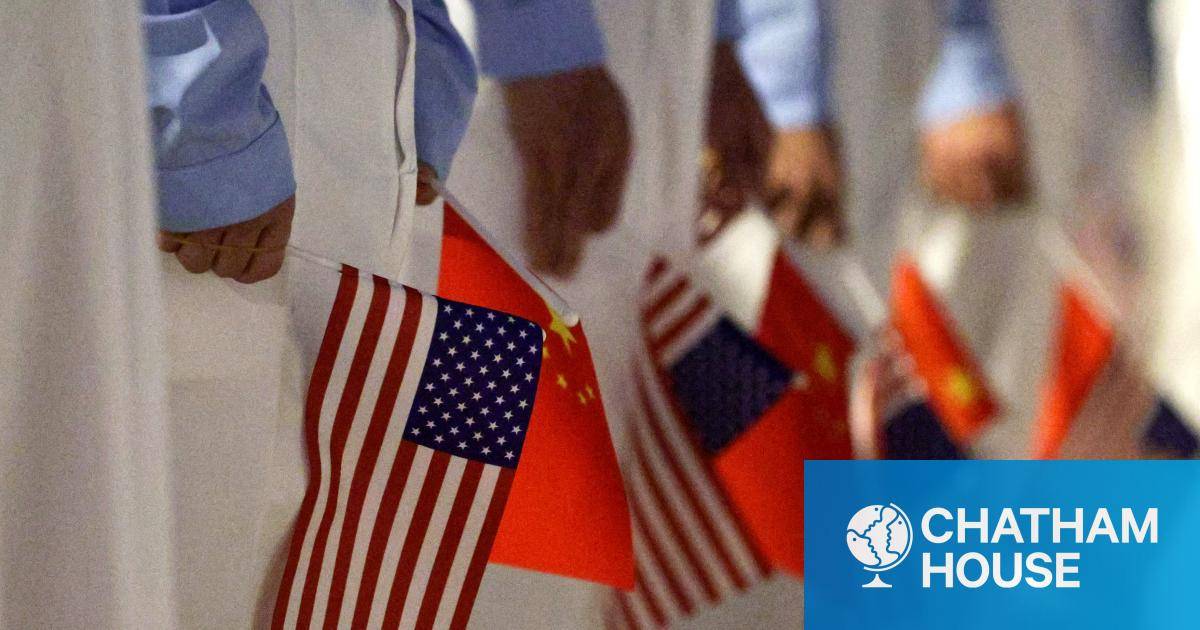
The recent Trump–Xi summit in Beijing became a central node. Western think tanks call it an attempt to "manage, not resolve" the US–China rivalry: this is not reconciliation but the construction of a temporary, fragile equilibrium in which each side recognizes the need for checks and balances without abandoning the struggle for supremacy (chathamhouse.org). Chinese sources present the same picture very differently — as a step toward "constructive strategic stability" and proof that the United States is forced to respect Beijing's red lines. The influential Fudan University policy center describes Trump's visit as an event that itself has become the subject of domestic dispute in the US: Republicans emphasize a "strong deal" and economic gains, while Democrats fear excessive concessions on chips, Taiwan and coordination with allies for short‑term political dividends (fddi.fudan.edu.cn). This internal American dilemma — tradeoffs between commerce and long‑term strategic pressure — is interpreted in China as a symptom that Washington can no longer pursue a consistently hard line on all fronts simultaneously.
The Chinese discussion about the US today has two key layers. The first is the official‑academic one, where the tone is set by "people's diplomacy" and major state media. The rhetoric here is deliberately measured, but confidence peeks through: the United States has entered an era of structural weakness and is forced to erratically "withdraw from groups" — leaving international organizations and agreements to preserve room for unilateral action. Chinese materials point to how in recent years Washington has exited UNESCO and a number of other cooperation mechanisms, for which it is criticized as an "irresponsible power" accustomed to remaking rules when they no longer suit it (zh.wikipedia.org). The second layer is analysis and commentary, where Trump's visit to China is described more straightforwardly: as a diplomatic victory for Beijing, which used the simultaneous US engagement in a war with Iran and pressure on Venezuela to strengthen its bargaining position. In the Chinese interpretation, the 2026 Iran war and American strikes on Venezuela are not merely episodes of regional policy but illustrations of a dangerous "overstretch" of American power, opening windows of opportunity for China on its own peripheries (zh.wikipedia.org).
Meanwhile, official media in Beijing actively construct an alternative global narrative in which the US is the source of instability and fragmentation of the world order, while China offers predictability. Recounting the recent speech by former Bank of England governor Mark Carney at the 2026 World Economic Forum, Chinese outlets stress his thesis that Washington's changing courses create "fault lines" in the global architecture, pushing medium and small powers to engage closely with one another to protect their interests (zh.wikipedia.org). In this framing America is an "unruly factor," and the PRC the chief beneficiary of new coalitions from Asia to Latin America.
The German conversation about the US sounds different, but the underlying anxiety is similar. There is less certainty and more perplexity. At the center of the debate is Washington's attitude toward NATO and Europe. Analysts at the Carnegie Europe Center write that Trump is turning the alliance into an "instrument of coercion," not only by demanding higher defense spending but by effectively using the threat of reduced American guarantees as leverage in trade and industrial disputes with the EU (carnegieendowment.org). For the German establishment and expert community this is a painful turn: for decades NATO was seen as a "public good" of security, not a bilateral contract to be renegotiated depending on the balance of payments and tariffs.
From this springs a dualistic view of the US in Germany. On one hand, America is still considered an indispensable security guarantor, especially in light of the war in Ukraine and tensions with Russia. On the other hand, the understanding grows that Washington can use this dependence to achieve economic goals. German commentators compare the current moment to the Trump‑1 era but stress that Europe is objectively weaker today: the energy crisis, industrial transformation and competition with the US over green subsidies make Berlin more vulnerable to American pressure than five to seven years ago. Hence the growing calls for "European strategic autonomy," which in German rhetoric no longer sound like an anti‑American slogan but as insurance against another abrupt turn in Washington.
Interestingly, German and Chinese commentaries converge in some respects: both describe the US as a power that has lost its former predictability. But while Beijing draws the conclusion of an imminent formation of a "post‑American" order, in Berlin they speak more of the need to learn to live with a "capricious but indispensable partner." For Germany the US is still the center around which its foreign and defense policy is organized. For China it is an important rival, but not the only pole.
The Israeli discussion about America goes from a different angle: the prism of dependence. Israeli think tanks and commentators view Washington's current line as a combination of a tough global confrontation with China and an almost unconditional security backing for Israel. A recent review on Trump's "second term" emphasizes that the US seeks both to limit technological dependence on Chinese supply chains and to strengthen partnerships in the Middle East, including with Israel, in the context of countering Iranian influence and terrorism (misgavins.org). For the Israeli establishment this creates a "rare window of opportunity": Washington is willing to turn a blind eye to many controversial moves by Jerusalem so long as it sees Israel as a linchpin in the fight against Iran and jihadist groups.
But at the level of public debate in Israel things are more complicated. Popular Hebrew platforms host a nervous line of discussion: "America is our main shield, and that is exactly why the worst thing is to lose it." Users discuss polls showing that after October 7 sympathy for Israel in the US fell noticeably among young Republicans and Democrats alike, and about 80% of Israelis fear a weakening of American support. Embedded in these conversations is the understanding that if the US truly "turns its back," European countries will find it much easier to impose sanctions and distance themselves from Israel without fearing a blow from Washington (reddit.com).
Paradoxically, the Israeli and German perspectives echo one another: in both places America is not so much an abstract hegemon as a system of guarantees whose absence exposes structural weaknesses of their own states. But while Germany debates how to limit this dependence without losing those guarantees, in Israel the main fear is that America itself, under pressure from internal divisions, will choose to withdraw them. In this context even traditionally pro‑American voices have begun seriously to argue that Israel should at least partially diversify its foreign relations — with India, some Arab states and, cautiously, with China — to reduce vulnerability to the American electoral pendulum.
At the intersection of all three national conversations common themes emerge that are rarely so clear if one follows only the American press. The first is fatigue with unpredictability. Carney calls this "fault lines" in the world order (zh.wikipedia.org); Chinese authors speak of a "chaotic unilateral US approach," Germans — of turning NATO into an "instrument of blackmail," Israelis — of their country becoming a pawn in the culture war between Republicans and Democrats. Everywhere runs the thought: America remains a colossus, but no longer the one whose word could be relied on unconditionally for decades to come.
The second shared line is the attempt to turn American instability into a resource. China is building an entire positive program around this: "if the US removes bricks from the old architecture, we propose a new, more inclusive one" — from the "community of shared destiny" initiative to large infrastructure projects with East and Southeast Asia. The German establishment says: if America prioritizes its industry's interests over allied solidarity anyway, Europe needs to build its own industrial policy rather than simply adapt to American norms. In Israel a portion of the expert community sees a chance to become for Washington not only a "pure recipient of security" but an active partner in technology, intelligence and regional diplomacy — in other words, to make a rupture more costly for the US itself.
The third is the realization that the "de‑Americanization" of the world, often touted in Beijing, is not unfolding in practice as ideologues depict it. The Chinese picture of the future is a change of hegemon and a shift to a multi‑centered world where the US is only one player. The German and Israeli pictures are more about recalibration: no one seriously believes that in the foreseeable future American military presence or financial power can be fully replaced. That is why debates in both societies are not about whether "we need America," but about what price is acceptable to pay to preserve relations in their current form.
In this hall of mirrors, the United States no longer looks like the confident superpower Americans have long seen themselves as, but a complex, contradictory country whose internal conflicts and elections directly determine the security of distant regions. For China it is a window of opportunity and simultaneously a source of risks: a radical US turn could crash markets and supply chains on which Chinese growth depends. For Germany it is a painful lesson that foreign policy cannot be entirely outsourced across the ocean. For Israel it is a reminder that relying on a single patron, however powerful, is always fraught.
Those who today read Chinese, German and Israeli texts about the US carefully see that the world already lives in an era when "America" can be discussed only in the plural — as a set of mismatching faces, interests and strategies. And it is precisely this plurality of images of the US, not abstract GDP curves or defense budgets, that will increasingly determine what global politics looks like in the coming decade.