With the change of power in Washington and sharp turns in US foreign policy in 2025–2026, international attention to America has become extremely intense again. In Brazil, Japan and Ukraine the debate is not about whether the United States matters, but about what kind of America the world will have to deal with: a superpower guarantor of order, a selfish hegemon, or an increasingly unpredictable partner. Several major themes intersect in the public debates of these three countries: Washington’s new approach to the war in Ukraine, the Trump‑2 administration’s course toward the world and China, the future of NATO and global security, and the domestic crisis of American democracy, which is viewed as a factor of external instability.
One of the most tangible storylines for Ukraine, and through it for other countries, has become a new format of negotiations between Kyiv and Washington on a peace settlement. Ukrainian media closely covered the March meeting of negotiating teams in Florida: on the American side the delegation was headed by the US president’s special representative Steve Whitkoff, who after the first day spoke of “constructive” talks focused on “resolving remaining issues to move closer to a comprehensive peace agreement” (eurointegration.com.ua). In Ukraine such formulations provoke mixed reactions: on the one hand, they confirm that the US remains a key player in any scenario to end the war; on the other, there is concern that a “comprehensive deal” may turn into a package of compromises dictated primarily by domestic American politics. Ukrainian analysts, such as Vadym Denysenko, write directly that in Washington the war in Ukraine is increasingly seen through the prism of a “burden” on the budget and the electorate: in one recent piece he reflects on the logic of the current US administration, which, he argues, bets on external factors and tries to “fit” the Ukrainian issue into a broader bargaining framework with Europe and China, up to exotic plots around Greenland and the potential collapse of the EU (my.ua). For Kyiv this means the battlefield is gradually shifting toward influence on US public opinion and the political class: “our only trump card now is American public opinion and the attitude of the US political establishment toward the war in Ukraine,” Denysenko writes in the same text.
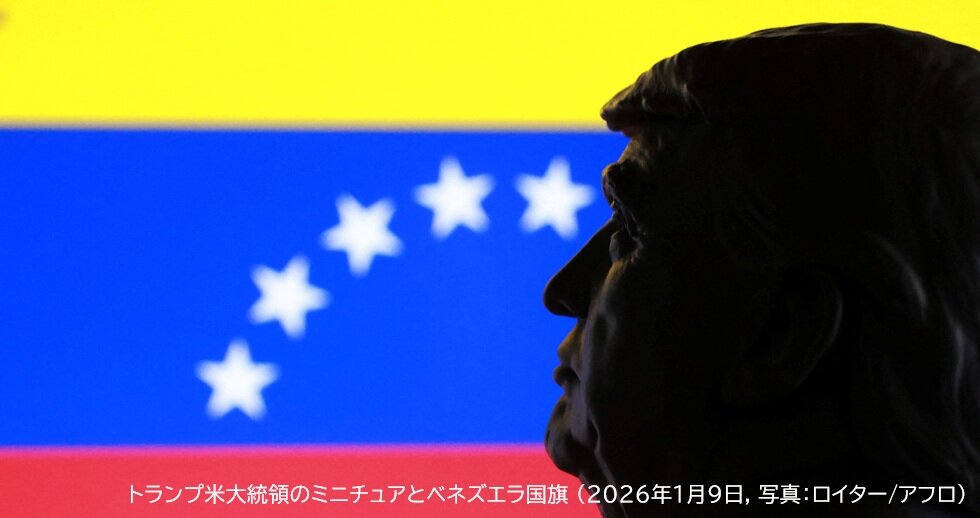
In Japan the same line of American foreign policy is discussed differently, through the prism of the global balance and the US role in Asia. Think tanks and academic circles in Japan are already producing systematic assessments of the new administration in Washington. A research report by the Japan Institute of International Affairs on Trump‑2’s foreign policy describes an updated National Security Strategy that gives the Western Hemisphere an unexpectedly priority position, and explicitly links the document to a “Trumpian interpretation of the Monroe Doctrine” — the idea that America again claims exclusive influence in its region and less involvement in distant conflicts (jiia.or.jp). Japanese authors note that US military intervention in Venezuela, around which global voices of critics, allies and fence‑sitters have been divided, has become a sort of “litmus test” for the new American power in the region. Through this lens Tokyo reads the Ukrainian storyline as well: if Washington is ready for tough unilateral actions in the Western Hemisphere, how far will it go in Eastern Europe and in the Indo‑Pacific?
At the same time, Japanese media and expert discussions debate the transformation of America as a superpower. In a popular dialogue format between journalist Akira Ikegami and former diplomat and intelligence officer Masaru Sato for Money Post, they discuss the “great pivot” of Trump‑2: abandoning the ambition to influence internal politics in China and Russia, betting on deals with authoritarian leaders, and the general “end of the era of superpower America” (moneypost.jp). Sato even warns of a growing risk of political violence and an assassination attempt on the president amid intensifying domestic conflict in the US, and for a Japanese audience this is not a sensation but another argument that relying on Washington as an anchor of stability is becoming harder. In another piece Professor Seiko Mimake of Josai University, an expert on American politics, analyzes “the split within the MAGA movement” and its influence on US policy toward Israel, China and Russia in an interview with Bungei Shunju, stressing that the White House’s foreign policy increasingly becomes hostage to intra‑party Republican battles and the radicalization of part of the electorate (bunshun.jp). For Japanese business and political circles this means that strategy toward the US should be based not on a stable “American course” but on many competing centers of influence inside America itself.
The same theme of the domestic crisis of American democracy and its consequences for the world is actively discussed in Japanese institutional publications. The Japanese Ministry of Finance in a series of analytical essays “American Democracy” describes increasing polarization in the US, the role of the First Amendment in legitimizing marginal and radical forms of political agitation, and the impact of the media ecosystem on trust in elections (mof.go.jp). The authors recall how defamation cases against Fox News by the Dominion company set a precedent, showing that even major media became involved in spreading narratives about election fraud. In the Japanese reading this is not only a legal oddity: it signals the weakness of American institutions on which perceptions of the “gold standard of democracy” were built for decades. That view is then projected onto foreign policy: if the United States itself cannot secure consensus on the legitimacy of elections, how stable are its long‑term international commitments?
The Ukrainian discussion about America, by contrast, is far more practically bound to the question of state survival and direct dependence on decisions in Washington. Ukraine does not just analyze the US — it is literally tied to it in court cases, intelligence reports and strategic documents. In one decision of the Supreme Court of Ukraine in the case of former MP Andriy Derkach, an analytical report of the US National Intelligence Council on Russian interference in the 2020 US elections is directly quoted; judges emphasize that the Kremlin, through such influence agents, tried “to change the foreign policy course of the United States with the aim of weakening support for Ukraine” (zakon.rada.gov.ua). For Ukraine’s legal and political elite this is not an abstract academic example but part of a larger picture: the resilience of American democracy and the US ability to resist foreign interference are seen as a matter of Ukrainian security.
Hence the close reading of any signals about a possible reduction in American engagement. In the English‑language European Pravda last autumn they described concern in Kyiv over statements by US Defense Secretary Pete Hegseth, a Trump appointee, who in Brussels spoke against returning Ukraine to its 2014 borders and against its NATO membership (eurointegration.com.ua). In the Ukrainian perception such words are not just the stance of one politician but an indicator of a possible turn of all Washington — and so Ukrainian commentators rightly link them to earlier and subsequent Trump statements about “deals” with Russia and China, ideas about “Greenland,” and pressure on Europe. Darker moods are heard in Ukrainian online debates: forum and social media participants speculate that with a slowing EU growth and faster US economic growth the gap in capacities will only widen, and Ukraine risks “slipping into the background” if Washington decides to bargain with Europe and Beijing, making the Ukrainian issue the subject of backstage compromises (reddit.com).
In recent months Brazil’s debate about the US has been more connected to the regional dimension of American policy and its influence on Latin America than directly to the Ukrainian theater of operations. Still, for Brazilian analysts the new US National Security Strategy, which highlights the Western Hemisphere as a priority region and effectively revives the Monroe Doctrine in updated form, is perceived as a signal: Washington is “returning” to Latin America not only through trade and sanctions but also through forceful options, as seen in the example of intervention in Venezuela, which Japanese and international experts have written about (jiia.or.jp). In this logic the Ukrainian conflict for Brazil is not a central storyline but a test of how far the US is willing to go in unilateral decisions and pressure, and how much it will take into account the position of the Global South, including the BRICS.
Across all three countries another level of discussion about the US emerges — more theoretical, concerning the American model of law and freedom of speech, but in practice closely tied to politics. Ukrainian legal journals publish comparative studies that dissect doctrines of the “marketplace of ideas” and “counter‑speech” in American law, the Brandenburg, Miller and O’Brien tests, and contrast them with the European Court of Human Rights’ “three‑part test” (lsej.org.ua). For Ukrainian lawyers such analysis is not an abstract interest in American doctrine but an attempt to understand how far one can go in restricting pro‑Russian propaganda without destroying one’s own democratic legitimacy, and where exactly in American experience the line between freedom of expression and national security lies. Similar studies in Ukraine are often accompanied by references to American and European documents on sanctions, non‑proliferation and cyber threats, which once again underscores: the US remains the main source of legal and political benchmarks, even when Ukrainian authors criticize or reinterpret that experience (dspace.onu.edu.ua).
A significant topic for the Japanese elite is the economic and technological dimension of the US‑Japan partnership. In Deloitte Tohmatsu’s analysis of “strategic investments by the US and Japan” for 2026, experts view America simultaneously as an “engine” of innovation and as a source of risk for fragmentation of global markets due to sanctions policy and geopolitical competition (faportal.deloitte.jp). Former Washington correspondent for Kyodo, now Meiji University professor Hiroki Sugita, in his essay “The Wind from America: The World of 2026” writes about the emerging “G2” — a de facto duumvirate of the US and China — in which Japan must find a niche between the two giants, cooperating on security with Washington while building economic ties with Beijing (joi.or.jp). In this context America appears not only as a guarantor but also as a source of uncertainty: should Japanese business commit to a long‑term alliance with the US if every four years the American electorate can radically change foreign policy?
Bringing together these multilingual debates, several common motives emerge. First, in all three countries the US remains indispensable but increasingly unpredictable. Ukraine sees Washington as a vital ally whose domestic instability and electoral swings translate directly into questions of war and peace. Japan sees a partner that no longer guarantees policy continuity and increasingly operates on transactional logic even in security matters. The Brazilian and wider Latin American perspective emphasizes the return of an old dilemma: how willing is Washington to respect the agency of regional countries if it again speaks the language of the Monroe Doctrine and forceful interventions.
Second, there is a shift in how these countries read American domestic politics. Whereas most foreign commentary used to be limited to a superficial “Republicans versus Democrats” framing, now Japanese researchers dissect the split within MAGA, Ukrainian courts and analysts cite American intelligence reports and cases of interference in US domestic politics, and lawyers and political scientists in Kyiv and Tokyo closely study US Supreme Court precedents and debates on media responsibility. In this new view America is both a set of legal doctrines and a battleground for interpreting democracy, and an object of foreign influence, not just an “exporter of values.”
Finally, a throughline of cautious pragmatism runs across all three countries. Ukrainian authors, while acknowledging critical dependence on the US, increasingly speak of the need to diversify sources of support and to influence not only the White House but also Congress, states and US civil society. Japanese experts call for avoiding idealization of the trans‑Pacific alliance and for building policies that can survive another change of administration. In Latin America, including Brazil, there is discussion about how to engage Washington without once again becoming the “backyard” of American policy.
These voices — from Kyiv, Tokyo, São Paulo and Brasília — rarely make it into the English‑language agenda, yet they reveal a genuine shift in the world’s perception of the US. America remains the center around which calculations and fears, hopes and accusations revolve, but fewer countries are willing to play the role of passive spectators of the “American drama.” For Ukraine, Japan and Brazil the discussion about the US today is not a commentary on foreign policy; it is part of their own choice of trajectory in a world where Washington is still powerful but no longer the sole author of the script.
/https%3A%2F%2Fs3.eu-central-1.amazonaws.com%2Fmedia.my.ua%2Ffeed%2F53%2F8060b59dbb979fe4cc6708ea44318c75.jpg)
/https%3A%2F%2Fs3.eu-central-1.amazonaws.com%2Fmedia.my.ua%2Ffeed%2F53%2F8060b59dbb979fe4cc6708ea44318c75.jpg)