In early June 2026, discussions about the United States in foreign media and expert circles resemble a polyphonic chorus: different countries hear different notes in Washington’s actions — from hope and pragmatism to irritation and concealed distrust. Three major storylines come to the fore: the new U.S. economic and tariff policy; the foreign policy course of the Trump‑2 administration — from Iran to China and Venezuela; and the technological and value competition around artificial intelligence and advanced technologies. Running through these themes are common threads: recognition that the U.S. still remains the center of the world system, and simultaneously a sense that this system is becoming increasingly unpredictable.
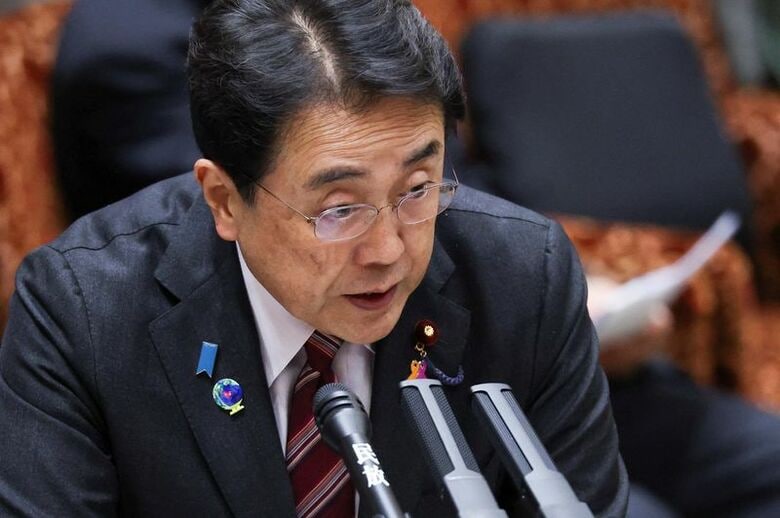
One of the liveliest stories in recent days is a new turn in Washington’s trade and tariff policy. In Japan, economic and political outlets are closely dissecting initiatives by the U.S. Trade Representative (USTR) to impose additional tariffs on goods from roughly 60 countries under the pretext of combating forced labor. In a draft widely discussed in the Japanese press, Japan formally appears in a group of countries facing a possible 12.5% surcharge, which has alarmed business circles. Against this backdrop, Economy, Trade and Industry Minister Ryomasu Akazawa felt compelled to publicly calm the public, saying on social media and through the media that he had received firm assurances from the American side: “There will be no additional tariffs on Japan beyond last year’s agreement.” This was reported, in particular, by Reuters’ Japanese bureau and outlets close to government circles, emphasizing that Tokyo perceives the American tariff initiatives as an element of political bargaining rather than as a predetermined economic reality. (mb.epochtimes.jp)
However, even the minister’s reassuring words do not remove the main theme of Japanese commentary: the growing “unpredictability” of American economic policy. In summary analytical pieces, for example in columns in Newsweek Japan, experts note that the current White House and USTR use tariffs as a flexible lever of pressure not only on rivals but also on allies, and that “the very fact of discussion” about comprehensive duties already creates an atmosphere of strategic uncertainty for companies integrated into American supply chains. (newsweekjapan.jp) The Japanese reaction is generally pragmatic: the U.S. is still seen as an indispensable economic and technological partner, but at the same time as a source of regulatory risk that must be constantly hedged via market diversification and strengthening regional ties, primarily with South Korea and ASEAN countries. English‑language pieces about the rapprochement between Tokyo and Seoul “amid fear of China and U.S. inconsistency,” frequently cited in Japanese discourse, point in the same direction. (washingtonpost.com)
The French conversation about Washington’s economic policy is less dramatic, but also woven into the theme of trust in American leadership. Against the backdrop of a large U.S. campaign to “bring industry home” and restart supply chains, the French press — including quality outlets like Le Monde and Les Échos — asks whether the new wave of American protectionism poses a threat to European industrial sovereignty. In analytical columns about “American‑style reindustrialization,” France sees Washington’s actions as both a challenge and a model: on the one hand, the U.S. unabashedly uses its financial and market power to reel in green and high‑tech projects from Europe; on the other hand, French authors acknowledge that Europe itself has not created comparably ambitious programs and is now forced to react rather than set the agenda.
China’s discussion of U.S. economic behavior is structurally far more critical. Chinese analytical platforms and state media have been actively comparing simultaneous changes in external economic regulation in both China and the U.S.: on the one hand, Beijing is clarifying rules for overseas investment by Chinese companies; on the other, Washington is tightening export controls, primarily on chips and related technologies. Legal‑economic reviews emphasize that “regulatory bilateral penetration” is turning the economy into an extension of geopolitics, and that American restrictions are an instrument of long‑term containment of China’s development. (sohu.com) At the same time, unlike more emotionally charged political pieces, economic commentaries often acknowledge that business in both countries is already adapting to the new normal and seeking “rules of the game” within a fragmenting yet still interdependent system.
The second major block provoking lively reaction is U.S. foreign policy and the personal style of Donald Trump’s second administration. Several themes intersect here: the war in Iran, the recent U.S. strike on Venezuela and its international resonance, and Trump’s May visit to Beijing and the effort to build “strategic stability” with China. For many countries these are links in a single chain: America remains a superpower, but acts increasingly situationally, forcing allies and rivals to reassess risks.
The Asian lens is especially sensitive to shifts in American policy. Japanese analysts in English‑ and Japanese‑language outlets viewed the May U.S.‑China meeting not only through the prism of bilateral relations between the U.S. and China but also in terms of its impact on the balance of power around Taiwan and Northeast Asia. In The Diplomat pieces by Japanese authors, it is argued that Tokyo watches the U.S. and Beijing’s attempt to construct “constructive strategic stability,” officially recorded in the summit communiqué, with interest but caution. (thediplomat.com) For Japanese experts the key question is not whether U.S.‑China ties will improve per se, but whether such improvements will come “at the expense of regional allies’ interests,” who might learn of major agreements only after the fact.
Chinese media discourse concentrates on another issue: how genuinely willing Trump‑2 is to compromise with Beijing and how to situate this dialogue within the still‑acute strategic competition. Commentary in major Chinese portals and newspapers draws attention to the dual nature of the message: on the one hand, official statements from both capitals stress the desire for “constructive strategic stability” and avoidance of conflict; on the other, actual U.S. policy still combines visits and roundtables with intensifying military contacts with allies in the Asia‑Pacific and continued sanctions‑and‑tariff pressure. (jetro.go.jp) Chinese analysts interpret this as Washington’s attempt to “manage competition” without abandoning a course of containment.
Paradoxically, voices of moderate realism toward the U.S. also appear within Chinese discourse. For example, reports on remarks by Secretary of State Marco Rubio at Senate hearings highlight his thesis that “on the Taiwan question the U.S. has no option other than dialogue,” and that the official Washington line remains the preservation of the status quo despite Trump’s rhetoric. (m.wenxuecity.com) For a Chinese audience this signals that American foreign policy is heterogeneous, containing both “hawkish” and more pragmatic voices with whom Beijing seeks to establish working channels.
In Europe, another aspect of American foreign policy has come into focus — the use of force, especially the February U.S. strike on Venezuela and the ongoing war in Iran. French commentators perceive this combination of moves as confirmation of an old thesis: “America remains a country of intervention.” Analytical pieces mention how Washington, acting without UN Security Council approval, used high‑tech weaponry to disable air defense systems made in Russia and China. According to some French experts, this demonstrates U.S. technological superiority but simultaneously undermines the very international norms Europe traditionally relies upon. (zh.wikipedia.org)
Chinese press coverage of the strike on Venezuela emphasizes a different point: the reaction of the “Global South” and Beijing’s posture as a “responsible player” opposing violations of state sovereignty. Chinese analytic pieces stress that Latin American officials, including Venezuelan leadership, publicly thanked China for its “brotherly solidarity” after the attack, and that Beijing carefully demonstrated that its support was not purely anti‑American but rooted in principles of international law. (zh.wikipedia.org) This theme — China as a supporter of multilateralism and a counterweight to unilateral U.S. actions — is repeatedly invoked in broader reviews of American “withdrawals” from international organizations and treaties, seen in Beijing as a factor fragmenting global governance. (zh.wikipedia.org)
The year 2026, as a year of war in Iran, adds particular sharpness to the international debate. Comments worldwide — from Asia to Europe — note that Washington’s domestic political logic, which seeks to show “resolve,” collides with growing war fatigue among allies. Analysis of reactions to the Iranian campaign recalls that the American political system itself is divided: it is no coincidence that in early June the U.S. House of Representatives voted on a resolution limiting President Trump’s authority to use force against Iran. Chinese business and political outlets relay this news with an implicit hint: skepticism about unchecked use of force is rising even inside the U.S., opening space for diplomacy by other players. (nbd.com.cn)
Against all these risks, the way different countries talk about the U.S. in the context of technology and artificial intelligence is heard especially clearly. Here, unlike the military and tariff agendas, the tone is noticeably more pragmatic and even cooperative, but deep value divergences lie beneath it.
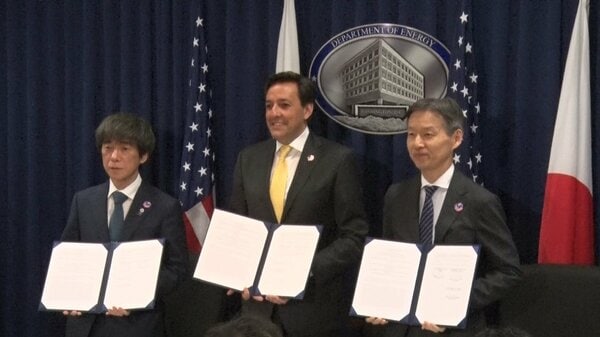
In Japan last week, one of the main stories was the announcement of a joint national AI project between the U.S. and Japan: over five years the parties intend to invest about $1 billion each — roughly $10 billion in total? (Note: original said 10 billion dollars total; keep as reported) (approximately ¥1600 billion) in AI development for science, biotechnology, and other advanced fields. Media coverage of the meeting between official representatives in Washington and program details emphasized that for Tokyo this is not only a technological but a strategic choice: anchoring Japan as a key American partner in “friendly” AI. (fnn.jp) In analytical commentary by Japanese experts, the U.S. is described as a “necessary but complicated” partner: American platforms and infrastructure allow Japan to keep pace in the AI race, but also raise concerns about dependency on Washington’s decisions regarding regulation, data, and safety standards.
The French conversation about American leadership in technology is more critical. Editorial columns in leading newspapers regularly raise the issue of Europe’s “digital sovereignty” and the dominance of American platforms. For French authors, especially intellectuals and legal scholars, the U.S. is the country that effectively sets global standards through its corporations and startup ecosystem, but it does not always take European conceptions of privacy, cultural diversity, or labor rights into account. EU discussions on AI regulation inevitably compare the American model, which in France is often characterized as an “initiative of Silicon Valley, not the state,” even despite Washington’s increasing role in shaping rules for AI and semiconductors.
China’s view of the U.S. in AI and high tech is particularly multilayered. On the one hand, specialized publications and academic papers acknowledge that large U.S. language models and the ecosystem around them remain powerful competitors: Chinese researchers compare the performance of American and Chinese AI systems on tasks related to Chinese culture and note mixed results — American models often demonstrate a decent understanding of Chinese cultural context but carry “Americentric” value orientations. (arxiv.org) In the Chinese reading, this confirms that technological competition with the U.S. is not only about algorithms but also about narratives.
On the other hand, in mainstream media and social networks American debates about energy, climate, and technology are closely read and interpreted through the lens of internal U.S. polarization. A characteristic example is discussion of a report by an American TV channel about Chinese solar farms in the Gansu desert: Chinese forums focus less on the report itself than on polarized American user comments, some of which praise China’s transition to solar energy, while others view any positive news about China as merely “a tool in domestic partisan struggle” in the U.S. (reddit.com) For Chinese audiences this further confirms that America simultaneously admires Chinese achievements and suspects “pro‑China” sympathies in each other, making any cooperation in climate technologies hostage to U.S. domestic politics.
Finally, overlaying all these thematic layers is the perception of the U.S. political system itself — with its contradictions but also with internal checks and balances. In China, official outlets do not miss opportunities to highlight criticism of Washington for unilateral military actions or withdrawals from international organizations, but they also carefully note episodes when American institutions constrain presidential power — as with Supreme Court decisions on tariff policy or actions by Congress seeking to control military powers regarding Iran. (zh.wikipedia.org) For Chinese political scientists this is an occasion to argue that the U.S. is a state where “the system still functions,” even if external policy as a result appears chaotic.
In France, America continues to occupy an almost symbolic place — a mirror in which the French examine their own politics. In columns on social protests, cultural conflicts, or elections, the names Trump, Washington and “the American model of capitalism” appear not so much to analyze America itself as rhetorical figures for internal debate: “Do we want to become like the U.S., or should we consciously take a different path?” For the French reader, the U.S. is simultaneously a warning and a source of inspiration — an example of how far liberal individualism can go and how powerfully an innovative economy can operate.
Japan, by contrast, views the U.S. primarily as a factor in its own security. Discussions of the U.S.‑China summit, the Iranian war, or sudden strikes on Venezuela inevitably return in Japanese commentary to the same question: how much can one rely on Washington’s “nuclear and political umbrella” if the same administration is capable of making risky decisions without consulting allies. This duality appears in analytical articles that call current relations with the U.S. an “almost golden age” in terms of formal closeness, but immediately add a caveat: “not quite golden” — as one Japan Times commentator put it — due to continued ambiguity about Washington’s long‑term strategy in Asia. (japantimes.co.jp)
China, in turn, sees the U.S. as both a principal competitor and an inevitable interlocutor. Beijing’s reaction to Trump’s May visit, to changes in U.S. rules for export of technology and investment, and to naval maneuvers near disputed waters — all are cast in a single key: “competition without rupture,” where harsh rhetoric coexists with an emphasized readiness for dialogue. It is no accident that in comments after the U.S.‑China summit Chinese officials and experts devote much attention to the term “strategic stability” — a kind of invitation to the U.S. for “rules of the game” that would reduce the risk of uncontrolled escalation, even if competition continues on other fronts. (jetro.go.jp)
Across all these conversations about America, the same motif sounds in different registers: the world is getting used to living with the U.S. not as an unconditional “hegemon,” but as a strong, indispensable, yet far from always predictable player. Japan is trying to turn closeness to Washington into technological and defense advantage while preparing for any twists in American policy. France uses America as a reference point for reflections on European sovereignty — economic, digital, strategic. China, as the main rival of the U.S., both criticizes and studies the American system carefully, seeking to build a “managed rivalry” with it.
For a reader accustomed to following the U.S. only through English‑language, predominantly American media, many of these intonations may be surprising. But it is precisely in these local conversations — Japanese texts about tariffs and the “almost golden age” of the alliance, French debates about protectionism and interventions, Chinese legal and technological analyses — that the world’s real perception of the United States emerges: not black‑and‑white, but contradictorily pragmatic, where criticism rarely excludes recognition of strength, and the desire to distance oneself coexists with awareness of unavoidable interdependence.
![Tamiyuki Kihara Yoshifumi Takemoto [Tokyo, 4th Reuters] - On the USTR’s announcement of a proposal to impose new additional tariffs on countries and regions including Japan, the Japanese government...](https://newsweekjapan.ismcdn.jp/mwimgs/9/7/1200x/img_97927382791e026efe74ced85474fd8963766.jpg)