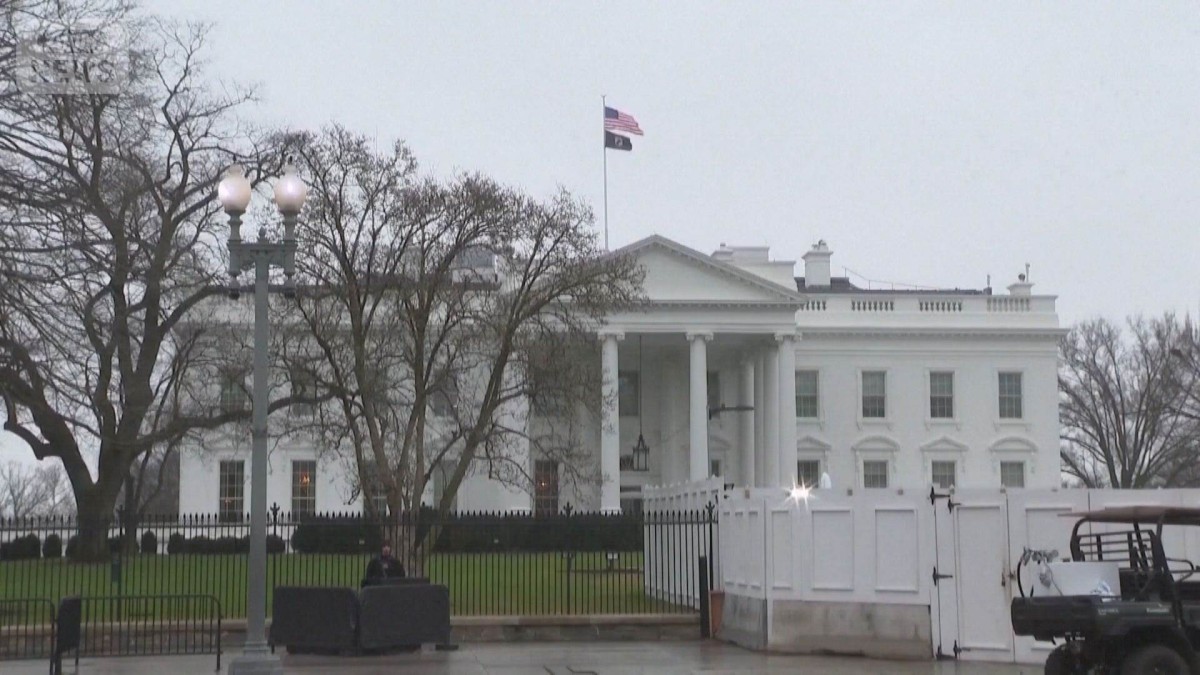
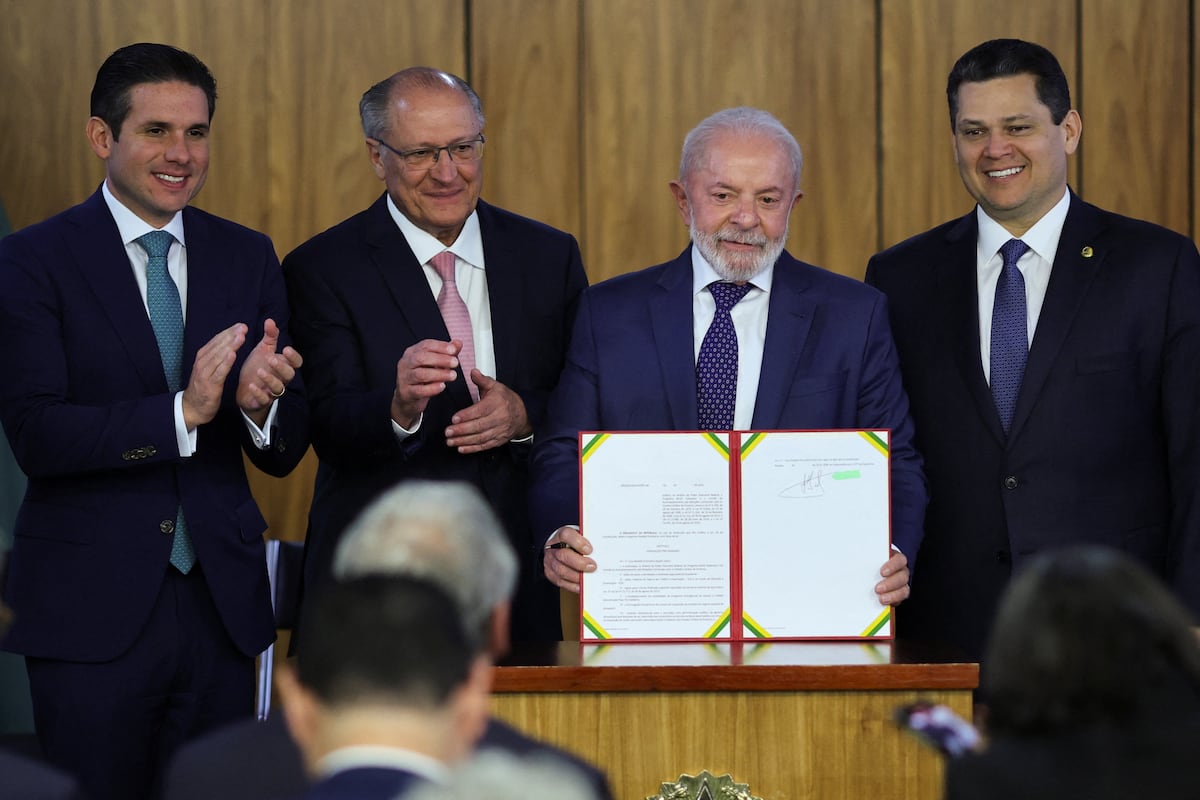
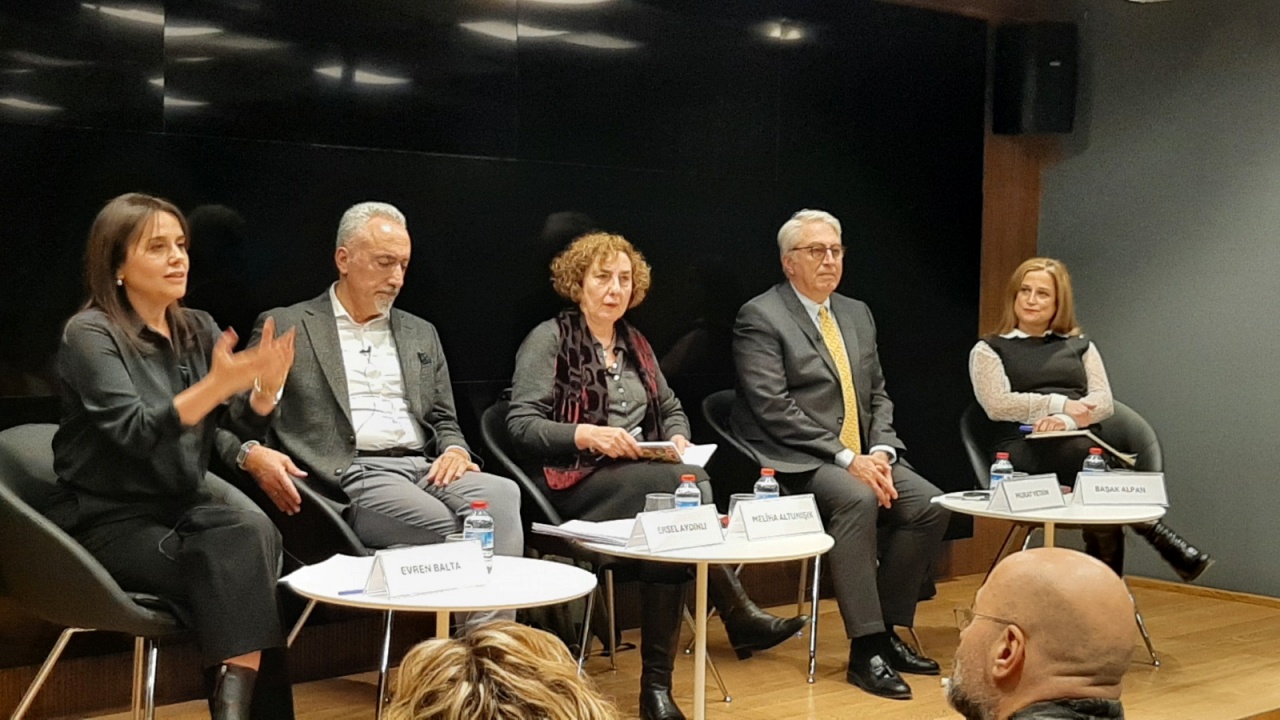
At the beginning of 2026 the United States again finds itself at the center of global debates, but the angle has noticeably shifted. For Japanese, Turkish and Brazilian commentators Washington is no longer simply a "hegemon" or "leader of the free world" — it is above all a source of instability: from sudden military strikes and withdrawal from international agreements to trade wars and internal budget crises that threaten a government shutdown. Different countries point to different episodes, but the through-line tone is surprisingly similar: distrust of U.S. predictability and a search for ways to live in a world where American power is increasingly used unilaterally and commitments increasingly appear unreliable.
The sharpest debates revolve around three interrelated themes. The first is Washington’s return to a logic of "power politics": using military force and economic pressure instead of diplomacy, especially in relations with Iran and in the Middle East, which in Turkey is discussed as a return to the 19th century. (assam.org.tr) The second is American protectionism and the "tariff weapon," which Brazil felt as 50 percent duties imposed by President Donald Trump for practically "personal reasons." (noticias.uol.com.br) The third is a strategic "withdrawal of space" in global security: from a possible weakening of the U.S. role in NATO to a reduced military presence in Iraq, Syria and Africa, which in Turkey and Japan is read not as "pacifism" but as a risky retreat pushing toward regional arms races. (aa.com.tr)
In the Middle East, and especially in Turkey, discussion of the U.S. goes through the prism of power and law. In the analysis of the Turkish strategic community the key formula is "geri dönen güç siyaseti" — the return of "power politics." International lawyer Ali Çoşar, in his work for the ASSAM association, writes directly that in Trump’s second term Washington is effectively "pushing aside" the UN Charter principles prohibiting the use of force (Article 2(4)) and peaceful settlement of disputes, returning to a 19th‑century model where states with greater military and economic power imposed their will on weaker ones through threat or use of force. (assam.org.tr) In Turkish discourse this is not abstract moralizing: every U.S. action is assessed through its possible impact on Turkey’s security, whether it is the Iran crisis, the Syrian theater or the Kurdish issue.
It is telling how Turkish authors describe American policy in Syria. In a detailed analysis for Anadolu Ajansı American political scientist Adam McConnel — an academic living in Turkey — calls the U.S. course in Syria a "çöküş" — a collapse, arguing that Washington has "reached the end of the road" in trying to create a quasi‑state based on an armed group and will soon be forced to fully withdraw its troops. (aa.com.tr) Against the backdrop of victories by pro‑Turkish Syrian opposition forces, McConnel writes, "the days of the U.S. in Syria are numbered," and Turkey unexpectedly becomes a de facto "neighbor of Israel," which radically changes the regional configuration. Such an assessment, on the one hand, emphasizes the failure of American strategy and, on the other, legitimizes Ankara’s increased role as a military and political architect of the region.
Turkish think tanks expand this picture to the global level. In studies on strategic transformations in U.S. policy in the Middle East authors stress that for decades the U.S. "redefined" the region relying on instruments of force — from the Gulf War and the invasion of Iraq to using the "Greater Middle East" and the Arab Spring as frames for intervention. (dergipark.org.tr) But now Ankara sees an opportunity: the crisis of American hegemony is interpreted not only as a source of chaos but also as a window of opportunity for Turkish "strategic autonomy" and even claims to leadership in the Islamic world. Therefore the decline of U.S. influence is perceived ambivalently: dangerous, but also advantageous.
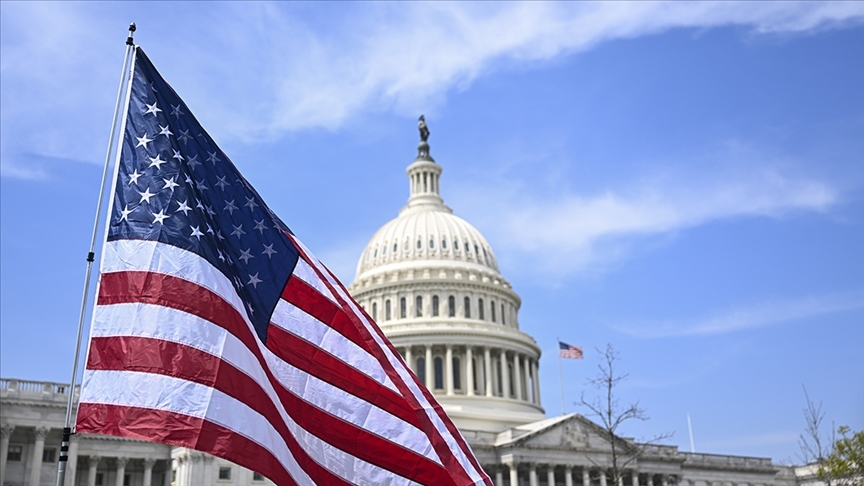
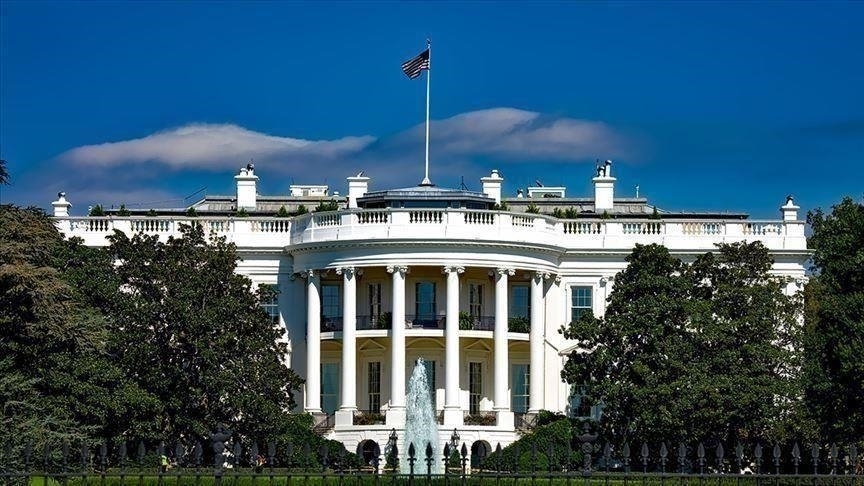
This duality is especially noticeable in discussions of a possible weakening of the American presence in NATO. In a column for Türkiye Araştırmaları Vakfı political scientist Enes Bayraklı asks bluntly: "ABD NATO’dan ayrılacak mı?" — "Will the U.S. leave NATO?" — after the unprecedented step by Secretary of State Marco Rubio, who did not attend the meeting of alliance foreign ministers in Brussels. (turkiyearastirmalari.org) The Turkish author describes a "cold wind" between Washington and Europe and "panic" on the continent at the prospect of being left face‑to‑face with Russia if America departs. On the one hand this pushes the EU to increase defense spending and military autonomy; on the other hand, Turkish commentary contains a hidden satisfaction: Ankara’s long calls for more equal relations and recognition of its contribution to security appear to be confirmed by American policy itself.
The Japanese conversation about America is less emotional but no less worrying. In the Japanese press American internal instability — constant threats of government shutdowns, battles in Congress over temporary budgets, "continuing resolutions" — has become a kind of indicator of an unreliable ally. A typical illustration is a corporate review that matter‑of‑factly notes: the Senate in March 2025 passed a temporary budget and "for a time" avoided a government shutdown, while stressing that the main budget for the period after September remains unresolved, so the risk of a shutdown on September 1 remains. (knak.jp) For a Japanese audience writers even explain the term "clean CR" — a "clean" continuing resolution without political conditions such as migration or defense programs — emphasizing that American budget policy has become hostage to domestic political conflicts.
Against this background Japanese economic and financial commentary reduces America to a combination of "world reserve currency + source of shocks." Thus, Asian currency market reviews periodically describe how another American shutdown prompts "caution" among investors in Asia, weakens some currencies, but at the same time strengthens the yen due to demand for a "safe haven." One such review noted that on the third day of the U.S. government closure the dollar index in Asia "froze," and the yen sharply strengthened as a避難通貨 — a defensive currency. (investing.com) In another piece, when the long shutdown finally ended, the author stated that the dollar "stabilized" while the yen hovered at levels at which Tokyo usually intervenes — presented as yet another reminder that internal American crises directly hit Japanese exchange‑rate and monetary policy. (investing.com)
From the security perspective Japanese commentators see in American behavior not only chaos but also a useful counterweight to China. When in late 2025 the U.S. Senate passed a bipartisan resolution supporting Japan amid deteriorating relations with China — condemning Beijing’s economic and military pressure, including travel restrictions and an incident in which radar was locked on a Japanese plane — Japanese media giants presented this as a signal of "steadfast support" for the alliance and approval of Tokyo’s tough stance on Taiwan. (news.tv-asahi.co.jp) But caution still shows through: despite gratitude to the Senate Japanese analysts cannot ignore the fact that American foreign policy increasingly depends on changing administrations and internal ideological wars, meaning the strategic reliability of the U.S. is a variable, not a constant.
If Japan tries to balance the benefits and risks of the U.S. alliance, Brazil in the past year has become a vivid victim of what there is already called the U.S. "tariff cudgel." On July 9, 2025 Donald Trump, in an open letter to President Luiz Inácio Lula da Silva, announced the imposition of 50 percent tariffs on all Brazilian goods, justifying it by "decades of unfair trade practices" and an alleged chronic U.S. deficit in trade with Brazil. (noticias.uol.com.br) Brazilian media and analysts quickly pointed out that the situation is in fact the opposite: according to Brazil’s own statistics the U.S. has had a surplus in bilateral trade for years, and in the first quarter of 2025 alone the American surplus reached hundreds of millions of dollars. (dcomercio.com.br)
What angers the Brazilian elite most is the deeply political character of these measures. In his letter Trump links the tariffs not to macroeconomics but to a "witch hunt" against Jair Bolsonaro, accused of attempting a coup, and to "hundreds of secret and unfair censorship orders" by Brazilian courts toward American social networks. (dcomercio.com.br) From Brazil’s perspective: the White House is using trade weapons to interfere in domestic judicial processes and to weaken Lula’s government, as well as to punish the country for its regulation of digital platforms. Senator Renan Calheiros at a meeting of the Senate Economic Committee called the U.S. decision "an attack on Brazilian trade, industry and agribusiness," motivated not by economics but by "electoral motives" in American politics. (www12.senado.leg.br)
Lula’s response forms a separate line of debate about the U.S. in Brazil. Almost immediately after the tariff announcement he promised to apply the "Lei de Reciprocidade Econômica" — the Economic Reciprocity Law — allowing for retaliatory measures, suspension of investment and even intellectual property agreements with countries that unilaterally harm Brazil’s competitiveness. (economia.uol.com.br) "O Brasil é um país soberano… que não aceitará ser tutelado por ninguém" — "Brazil is a sovereign country… that will not allow anyone to patronize it," Lula wrote, emphasizing that Trump’s reference to an American trade deficit is plainly "falsa informação" — false information — refuted by Washington’s own statistics. (economia.uol.com.br)
In the Chamber of Deputies the reaction was sharp and multicolored. Some opposition lawmakers blamed Lula and the Supreme Court for provoking Washington with their policies; others pointed to the role of Eduardo Bolsonaro, who actively built ties with Trumpists and, according to some deputies, may have facilitated the U.S. hard line. (camara.leg.br) In business publications leaders of the agribusiness and industrial sectors demanded from Lula a "reação firme, mas estratégica" — a firm but strategic reaction: to prevent escalation into a full trade war with the U.S., but also not to allow Brazil to become a "testbed" for American unilateral sanctions. (dcomercio.com.br)
Against this background the U.S. in the Brazilian view appears not as an abstract hegemon but as a very concrete source of economic pain: the extra duties struck exports of coffee, meat and other key goods, affecting, the government estimates, about a third of Brazil’s total export basket to the U.S. (noticias.uol.com.br) Lula’s response — a "Plano Brasil Soberano" aid package and active reorientation of exports to China, BRICS countries and European partners — is presented as a lesson: relying solely on the American market is dangerous when the White House is led by someone willing to use tariffs as a personal and ideological weapon. (elpais.com)
If Brazil’s conflict with the U.S. is sharply expressed on the trade plane, Turkey looks more broadly — at the crisis of the entire American hegemony. On the SDE analytical portal one of the key recent texts has a telling title: "ABD hegemonyasının krizi — Üç farklı bakış: Kaos mu, konsolidasyon mu, dönüşüm mü?" — "The crisis of American hegemony — three views: chaos, consolidation or transformation?" (sde.org.tr) Turkish authors model three scenarios: an uncontrolled disintegration of the old order in which the U.S. loses levers of influence and the world slides into multipolar chaos; a "constricted" hegemony in which Washington cuts excessive commitments but tries to more tightly control key regions; and finally a painful but constructive transformation into a more equal multipolarity where the U.S. is only one of several centers.
Through this lens the "winding down" of American presence in various regions is also examined. In Anadolu Ajansı analysis Bekir İlhan notes that the reduction of U.S. military and diplomatic activity in Syria, Iraq and Africa is not accidental but a continuation of a long‑term trend that began under Obama and accelerated under Trump: America has been trying to further reduce global military commitments, citing the absence of an equal rival and the growing influence of internal ideological and economic factors. (aa.com.tr) The Turkish interpretation: the U.S. is "leaving" not out of humanitarian motives but because it does not perceive existential threats; but this departure opens space for other players, and Turkey intends to be among those who occupy it.
The common denominator for Tokyo, Ankara and Brasília is that the United States increasingly appears not as a guarantor but as a variable — a risk factor that must be hedged. Japan is strengthening its own defense and discussing intervention mechanisms in case of American budget paralysis affecting military presence and the dollar’s course. Turkey speaks of "strategic exercises in autonomy" and readiness to act independently, especially in Syria and on NATO’s southern flank, understanding that the American line can shift sharply with each administration. (ekonomigazetesi.com) Brazil is building legal and economic infrastructure for retaliatory measures against U.S. protectionism while accelerating market diversification, treating the tariff conflict as a signal: one can no longer rely on Washington’s "reason" within the WTO and multilateral rules.
What in the American domestic discourse is often described as a normal reprioritization — "return to national interests," "rebalancing the burden of allies," "a tough response to unfair trade" — in the eyes of these three countries looks much less noble. In Turkish texts it is a "return to power politics" and disregard for international law. In Brazilian texts — crude interference in sovereign processes under the cover of rhetoric about free markets and free speech. In Japanese texts — a dangerous mix of financial and political populism undermining the predictability of the most important ally.
This is the main difference between the external view and the usual American optics: beyond the U.S., people increasingly discuss not only the "errors" of a particular administration but the structural unreliability of American power in a world where betting on force and unilateral steps has become normal again. And the more vigorously Washington asserts its "right" to such actions, the more intensely Tokyo, Ankara and Brasília seek ways to protect themselves from the next American decision which, as the experience of the past year shows, may be dictated not so much by calculation as by domestic political fever.



![Cold winds blow between the U.S. and Europe. There is a panic atmosphere in Europe, as there is serious fear that the U.S. will leave Europe alone with Russia. U.S. Secretary of State Marco Rubio did not attend the NATO Foreign Ministers’ Meeting in Brussels held last week. Such an event has never occurred in NATO’s history. The Trump administration clearly sent the message, “Stand on your own without the U.S.” […]](https://www.turkiyearastirmalari.org/wp-content/uploads/2025/12/thumbs_b_c_8f48e8fb6a68bf23befdf7e41c17e6be.jpg)