The American agenda is once again dominating the planet’s information airwaves, but the set of questions being asked in Berlin, Tokyo and Tel Aviv differs noticeably. For some, the US remains the main guarantor of security; for others, it is a source of economic instability and political radicalism; for still others, it is simultaneously an indispensable ally and an unpredictable leader capable of shifting the boundaries of war with a single social‑media post. Against the backdrop of Donald Trump’s second term, a US war with Iran and a military operation against Venezuela, trade conflicts with Europe and energy shocks, the whole world is forced to reassess what American leadership means and how much longer it can be relied upon.
The central axis of current debates is not abstract “anti‑Americanism” but a very pragmatic question: how to live alongside a power that simultaneously provides security, controls key trade and energy arteries, and increasingly demonstrates it is willing to act alone — against Iran, Venezuela and even against the instincts of its own allies.
The first major storyline that excites European, Israeli and Japanese audiences alike is Washington’s military hyperactivity. In Europe they are especially focused on the simultaneous escalation with Iran and the forceful action against Venezuela. German media and analysts refer to the now‑public description of the “US strike on Venezuela in 2026,” emphasizing that Washington justified the invasion and capture of Nicolás Maduro not only as a fight for democracy but also as a move to control energy resources and send a message to other oil regimes. German pieces constantly quote international law scholars such as Professor Holger Hestermayer from King’s College London, who reminds readers that sitting heads of state enjoy immunity, and that a US attempt to justify Maduro’s abduction by “not recognizing his legitimacy” undermines fundamental norms of international law. This argument is used more broadly in the German press: if a precedent is created for Caracas today, tomorrow it can be applied to any inconvenient capital. In an analytical review by Deutschlandfunk on the operation against Venezuela and Berlin’s muted response, the author writes bluntly that “the federal government missed the chance to call things by their names and clearly signal a violation of international law by the US” — which is already criticism not only of Washington but of the domestic political elite. (de.wikipedia.org)
The military campaign against Iran and the ensuing “Iran War of 2026” became an even more painful subject in Germany and Israel, though the tone differs. German analyses speak of a “massive US buildup in the Persian Gulf,” of a blockade of the Strait of Hormuz and of strikes on Iranian infrastructure that provoked not only Iranian retaliation but also serious disagreements within NATO. One subplot examines the episode when the German chancellor publicly stated there was a “lack of coherent US military strategy,” after which US officials talked about reducing American troop presence in Germany. This fits a broader European narrative: if previously the threat was the sudden withdrawal of US forces from the region, now more commentators warn of a different danger — Europe being dragged into wars driven purely by internal American political logic. (de.wikipedia.org)
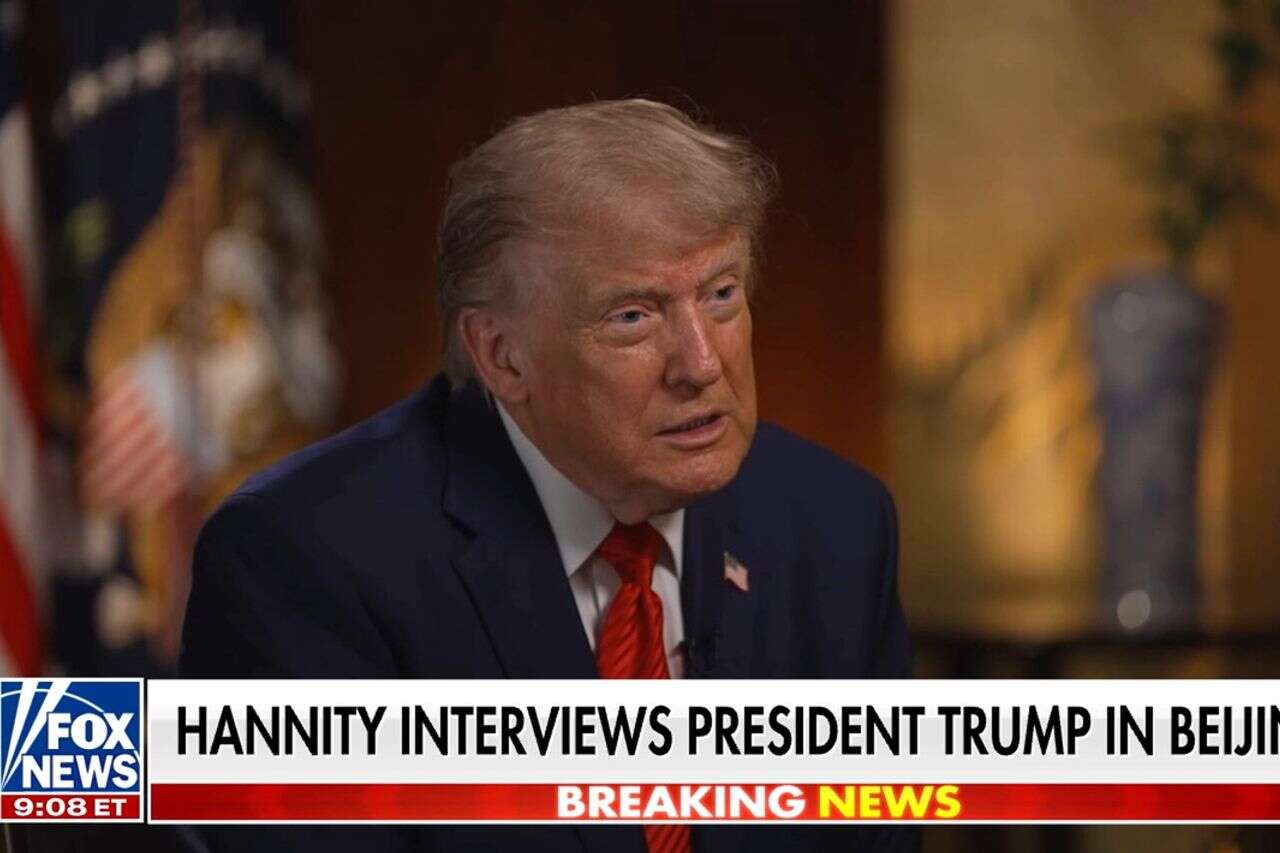
In Israel the focus is different: commentators there discuss not abstract legality of US actions but the direct impact of Trump’s trajectory on the country’s physical security. Against the background of American airstrikes on Iran, a naval blockade and threats to “completely destroy” Iran’s nuclear capability, Israeli analysts closely study every interview by the US president. An Israel Hayom piece quotes his words that the US “built the strongest army in the world, already proving its strength in Iran and in the Strait of Hormuz,” and his assurances that the war is “in the decisive phase,” while US media “paint a false narrative of defeat.” That tone in Israel provokes both relief and anxiety: on one hand, intense pressure on Iran is seen as a strategic plus for Israel; on the other, there is growing fear that Washington is using the Middle Eastern conflict as a stage to demonstrate force in a global confrontation, not always taking Israeli long‑term interests into account. (israelhayom.co.il)
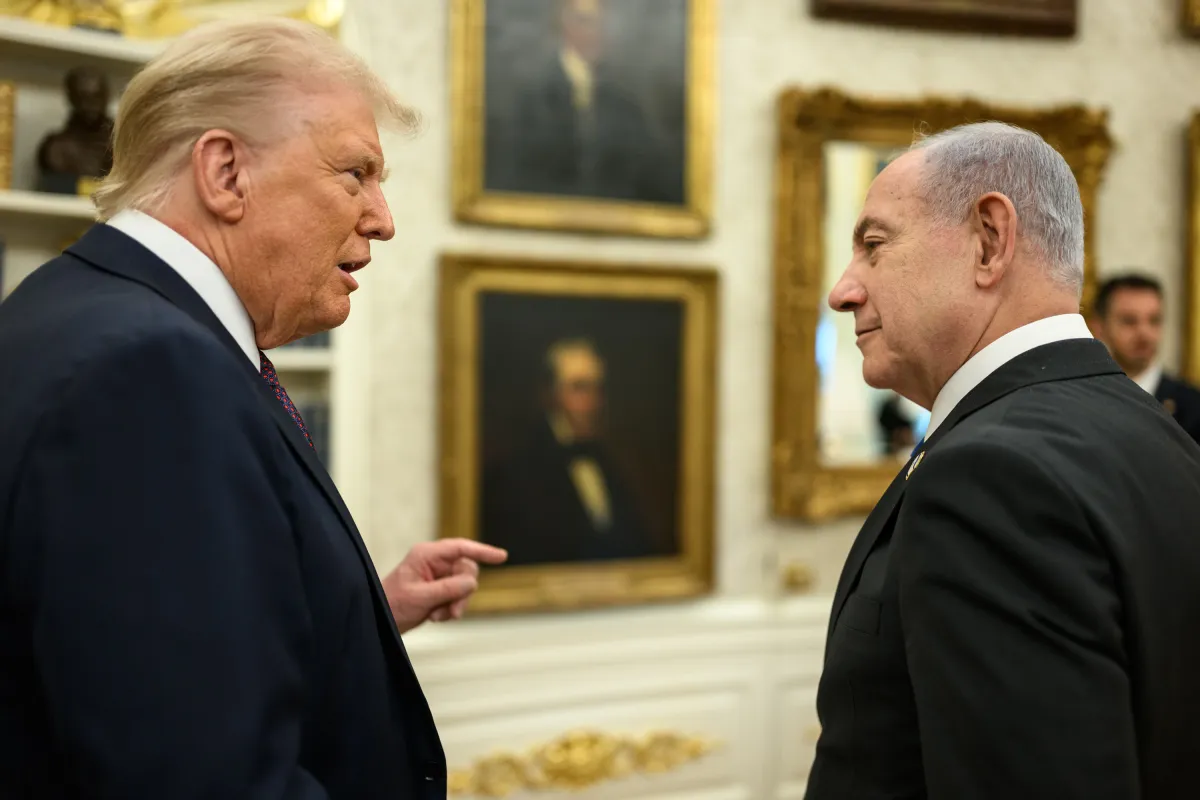
An unexpected shift is noticeable in how Israeli media write about the personal dynamics between Trump and Benjamin Netanyahu. Several outlets analyze fragments of the president’s recent New York Times interview, in which he describes the Israeli prime minister as “a very complicated person” who “should be much more grateful” that America “saved Israel from complete destruction.” The religious‑conservative JDN highlights Trump’s particularly blunt formulation: “without us Israel wouldn’t last two hours,” and his hint that the US could become “the overseer of the Middle East” in exchange for 20% of the region’s oil and gas revenues. Israeli commentators see this simultaneously as an attempt to barter over the future regional architecture and as a signal to the US domestic electorate that Trump monetizes victories abroad. As one observer notes, “for the first time we hear an American president openly valuing a partner’s security as a percentage of its regional GDP” — and that shifts the usual rhetoric of “strategic partnership” toward the language of a deal. (jdn.co.il)
The expansionist image of the US is sharply criticized in German and Japanese expert circles, though through different prisms. In a Japanese analytical piece prepared for the JOGMEC resource, American strategy is described through the lens of energy: the authors remind readers that historically the US restricted oil exports, making exceptions for free‑trade partner countries, and now, amid wars with oil states and blockades of strategic straits, Washington is effectively turning control over energy flows into an instrument of foreign policy. For Japan, which depends on imports of Iranian and Middle Eastern oil, the American military presence in the Strait of Hormuz is simultaneously protection and a risk, because any abrupt decision by Trump immediately hits the Japanese economy and domestic politics. (journal.jogmec.go.jp)
If in Berlin the main concern is Washington’s military and legal unpredictability, in Tokyo it overlays decades of experience in which Japan’s security was effectively built on the American nuclear and military umbrella. At a recent conference of the Japanese Association for American Studies, an entire section was devoted to how the “American empire” is changing in the Trump era: speakers returned to experiences from Vietnam and the Cold War but concluded that the current cycle is qualitatively different, because internal democratic erosion in the US combines with a more aggressive foreign‑policy use of military force and sanctions. At the same time Japanese specialists avoid anti‑American rhetoric: instead the formula “a necessary but risky alliance” is often heard. (jaas.gr.jp)
The second major thematic block running like a red thread through discussions in Germany and Japan is the economic and trade conflict with the US. For Europe this storyline has a very concrete dimension: new American tariffs and EU retaliatory measures. The German federal government website published clarifications in May about tariff agreements with the US, stressing that EU–US trade accounts for almost 30% of global turnover and that Germany managed to “defend its key interests.” At the same time fresh statistics show a sharp drop in German exports to the US alongside a small rise in imports, increasing nervousness among industrial lobbyists. Economic commentators point out that for an “export nation” like Germany the current configuration of “Trump plus tariffs” means not only the risk of losing markets but also undermining long‑term trust in the US as a predictable partner. (bundesregierung.de)
In Japanese economic and energy reviews the US is viewed in a similar light but adjusted for the Pacific balance: Washington simultaneously pressures Tokyo on trade imbalances, demands increased defense spending, and pushes for closer involvement in strategies to deter China. Official Japanese government rhetoric remains cautiously positive, but among experts awareness is growing that the model in which the United States guarantees security in exchange for political and economic loyalty is becoming too costly and unpredictable.
The third important storyline is the state of American democracy and the person of Donald Trump as a symbol of domestic transformations in the US. The European conversation is particularly telling here. A pan‑European poll cited by The Local records a new historic low of trust in the United States as an ally: respondents in key EU countries increasingly perceive the US not as a “defender of democracy” but as a country where democratic institutions themselves are eroding and where the president flirts with authoritarian rhetoric. German political scientists use phrases that ten years ago would have seemed unthinkable: “America has turned from a democratic hegemon into a revisionist autocratic superpower.” One analytical report, published in Hebrew and devoted to the “transformation of the US into a revisionist autocratic hegemon,” goes further, describing how Washington consciously weakens international institutions and re‑maps the world, expanding the Monroe Doctrine to global control over maritime chokepoints — from Hormuz to Arctic straits. These formulations, even if originating in academic or politically engaged circles, show how the tone of the conversation about the US has changed even in traditionally sympathetic environments. (thelocal.com)
The dispute over the character of American democracy is particularly lively among German and Israeli commentators. German outlets point to Freedom House data showing that the US political and civil liberties index under Trump has fallen to its lowest level in half a century; this statistic is used as an argument that Berlin should “distance itself from the American course and more actively shape its own European security strategy.” Meanwhile in Israel, where many political and media elites have historically been closely linked to the Republican camp in the US, the conflict over Trump is more ambivalent. On one hand, right‑wing and religious media continue to emphasize his contribution to “saving Israel” and his hard line against Iran; on the other hand, concern is growing that American polarization and the legal cases against Trump are making Washington’s foreign policy a hostage to domestic party struggles. One Israeli commentator noted on air that “today the best outcome for Iran and Russia is not a US defeat but endless internal chaos in America.”
Interestingly, in Germany criticism of Trump extends far beyond expert columns and even permeates the world of football. In a report on the 2026 World Cup, German official Oke Göttlich, representing fans’ interests within European structures, called the US government “partly fascist” and drew parallels between current American reality and historical periods in Germany. His comment that “we know how such trends end, and we cannot be silent as the German delegation” spread through German feeds as widely as the sporting results themselves. This episode is telling: criticism of the US for violating human rights and democratic norms has ceased to be the preserve of leftist activists and has entered the mainstream public debate. (web.de)
The fourth common theme is a rethinking of the alliance with the US and searches for strategic autonomy. In Germany this is especially loud against the backdrop of the Munich Security Conference, where Foreign Minister Johann Wadephul stated the need for a “more self‑confident line in relations with the US” and stressed that Berlin is not prepared to automatically follow Washington into every military adventure. At the same time he acknowledged that without American guarantees NATO remains weakened. German commentators describe this as “walking a tightrope”: the desire to preserve the US military umbrella without becoming an appendage of American global strategy. (zeit.de)
In Japan a similar conversation is quieter but no less nervous. Political scientists note that Trump’s sharp statements about allies, his long‑standing doubts whether “allies will come to America’s aid in a crisis,” and pressure to increase defense budgets are pushing Tokyo toward accelerated expansion of its own military capabilities. Historical memory of Hiroshima and Nagasaki and the pacifist constitution make any steps toward an independent military role extremely sensitive domestically. Japanese analytic reviews on the US often accompany the subject with two motives: fear of being dragged into conflicts over Taiwan and the Strait of Hormuz, and doubt that Washington at a critical moment would put Tokyo’s interests above its own domestic political calculations.
In Israel the issue is less about strategic “autonomy” and more about what price the country is willing to pay for a close alliance with Washington. When Trump in one interview effectively rebuked Netanyahu for ingratitude and questioned the necessity of certain Israeli military operations in Lebanon and Syria, part of the Israeli right‑wing commentary unexpectedly sided with their own prime minister against the American president. Authors stressed that Israel cannot fully subordinate its strategy to Washington, especially when facing direct threats from the north. On the other hand, almost everyone acknowledges that without the American diplomatic and military umbrella Israel would be in a far more vulnerable position than Germany or Japan.
Finally, a crosscutting, though less loud, motif for all three countries is the realization of the fragility of the current global order, in which the US long played the role of the “last arbiter.” German jurists, Japanese energy analysts and Israeli military commentators — each in their own language and with their own examples — arrive at a similar conclusion: America today is simultaneously an indispensable pillar of the system and a source of its erosion. On the one hand, it is the American fleet that opens and protects key maritime communications on which energy supplies to Europe and Asia depend. On the other, it is the White House that increasingly uses those communications as leverage, whether by blockading the Strait of Hormuz or effectively controlling supplies of Venezuelan oil.
It is in this duality that the current palette of global reactions is born. In Germany the tone ranges toward the coolly rational: “we must reduce dependence on the US while preserving the alliance out of necessity.” In Japan it is more anxiously pragmatic: “we cannot abandon the American umbrella, but we must minimize the risk of being turned into a bargaining chip in someone else’s game.” In Israel, where American intervention today is seen both as a shield and as a cause of new regional explosions, the guiding formula becomes: “we need the United States, but we cannot let it unilaterally determine our fate.”
The overall conclusion emerging from Berlin editorial columns, Tokyo conferences on American studies and Israeli political talk shows is simple and worrying: the world has entered an era when trust in the US as a predictable liberal hegemon is a thing of the past, but a new supporting structure has yet to emerge. That is why in Germany, Japan and Israel the conversation about America today is not only about Trump, wars and tariffs, but also a deeper debate about what world order will replace the one the United States helped build — and which it now appears ready to radically reshape according to increasingly narrowly construed interests.