Spring 2026 became a moment when the United States was once again at the center of global attention — but not as a universal arbiter, rather as the main source of turbulence. Views of Washington from Moscow, Ankara and Canberra differ sharply, but the themes are almost the same everywhere: the US and Israel’s war with Iran, Donald Trump’s second term and his sharp turn to isolationism, withdrawal from dozens of international organizations, and the question of whether anyone else can hold the world order together if America itself is pulling out supports from the architecture it built for decades.
It is telling that Russia, Turkey and Australia discuss the same American decisions, but each frames them through its own fears and interests. For Moscow this is another turn of Washington’s “unpredictable aggression,” which simultaneously gives Russia freer hands and creates the risk of a major war. For Ankara it is a dangerous US game in a region where Turkey lives and trades, and where every misstep by Washington can hit Turkish security and the economy. For Australia it is an existential question: how to remain a loyal US ally without becoming complicit in what a significant part of society and experts explicitly call “illegal aggression.”
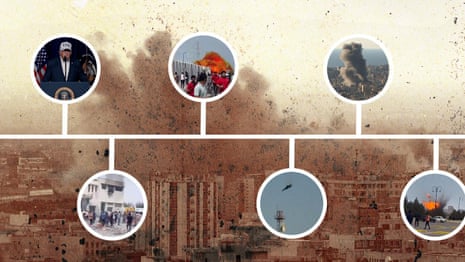
The central nerve of all these discussions is, of course, the US and Israel war with Iran, which began on 28 February 2026 with massive strikes on Iranian territory and has continued for several weeks, and the parallel decision by Trump to withdraw the United States from 66 international organizations, including UN structures on which the postwar system of multilateral diplomacy had relied.(ru.wikipedia.org)
It is around these two storylines — the Iranian campaign and the dismantling of the multilateral order — that today’s global discussion of America is built.
The first layer is, of course, the war in Iran itself. In Russian media and expert circles the US and Israeli strikes on Iranian infrastructure and nuclear facilities are described as the breaking of all “red lines” and the final collapse of the restraint regime that had existed since the Cuban Missile Crisis. On Russian-language analytical portals and in newspapers, from Izvestia to specialized blogs, the scale of the operation is emphasized: thousands of sorties, tens of thousands of rounds of munitions, destroyed depots, air-defense positions, ships in the Persian Gulf.(cdn.iz.ru) But the tone is far from celebratory. On the contrary, the prevailing mood is skepticism about American objectives and a tacit confidence that Washington has once again become embroiled in a conflict without a clear “endgame.”
Notable here are the voices of military experts whom Russian newspapers readily cite. One former naval officer, commenting on a possible US amphibious operation against the Iranian island of Khark, bluntly says that any large landing in the Persian Gulf would lead to “heavy losses” for the Americans and a collapse of logistics, since the Gulf is the artery through which up to 90 percent of Iranian oil exports flow.(cdn.iz.ru) Woven into such criticism is a traditional Russian motif: America “knows how to start wars but not how to finish them,” and each new crisis ultimately weakens its position and strengthens those Moscow considers US opponents.
At the same time Russian analysts closely watch the domestic-political context: Trump’s falling ratings amid a protracted campaign, concern within the Republican electorate about the prospect of “yet another endless Middle Eastern war,” and American voters’ reluctance to see a large-scale ground operation.(au.news.yahoo.com) In one business-focused review it is stated plainly: in conditions of war with Iran and high oil prices the Federal Reserve will have to tighten policy, which means a global rise in rates and pressure on commodity-exporting economies, including Russia’s.(finance.rambler.ru) Thus the image of an “aggressive America” paradoxically combines in Russian discourse with an image of “America undermining its own hegemony.”
The Turkish picture is much more nervous and contradictory. Turkey is geographically close to the theater of operations, historically integrated into Western security structures, and at the same time traditionally suspicious of any unilateral US use of force in the region. In Turkish media coverage and analysis the US–Israel war with Iran is presented as “one of the most dangerous escalations in the Middle East” since Iraq and Syria.(ekonomist.com.tr) The discussion constantly circles around the risk of strikes on energy infrastructure in the Persian Gulf, the fact that Iran is already launching missile-drone attacks on US and allied targets in Saudi Arabia and the UAE, and that the Strait of Hormuz is not an abstraction but a key artery for the global — and therefore Turkish — economy.(reddit.com)
In this context comments from Turkish politicians are especially noteworthy. President Recep Tayyip Erdoğan in one speech said plainly that “attacks on Iran poison the whole region” and increase the risk of dragging Turkey into a conflict it does not want.(turkiyegazetesi.com.tr) The Turkish Foreign Ministry, for its part, emphasizes that Ankara does not accept a policy in which the territory of neighboring states becomes a platform for American and Israeli operations against Tehran — here persistent criticism is voiced of the use of Iraqi and Syrian airspace for strikes.(turkgun.com)
And yet the Turkish conversation about America is not reduced to anti-American rhetoric. In mainstream outlets another motif regularly appears: the US remains a key player without whom no crisis, including the Iranian one, can be resolved. In an analytical column in the newspaper Star, for example, the US–Iran crisis is described as part of a “global chess game,” in which Washington is simultaneously sending a signal to Beijing, working out a scenario of pressure on the nuclear programs of “problematic” regimes and testing the limits of allies’ tolerance.(star.com.tr) Authors of such pieces stress the point: Turkey should coolly use great-power competition to its advantage, not merely condemn America emotionally.
Finally, the Australian view of the Iran war and the US is perhaps the most split. On the one hand, official Canberra conspicuously stands alongside Washington. Foreign Minister Penny Wong publicly stated that Australia “supports US strikes on Iran’s nuclear facilities,” while leaving the legal justification for the strikes to the consciences of Washington and Jerusalem — “let the United States and Israel speak of the legal basis.”(theguardian.com) The government at the same time calls for “restraint” and a “return to diplomacy,” fully aware that any further escalation will hit energy and construction-materials prices and thus the Australian economy.(unn.ua)
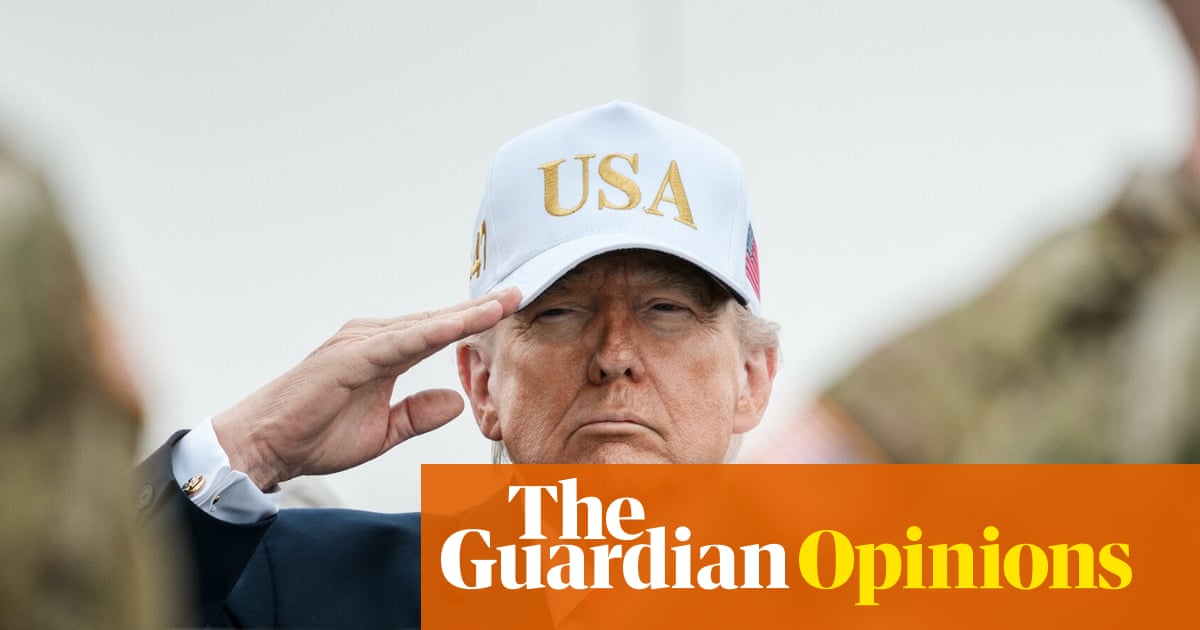
On the other hand, very harsh criticism is audible in the Australian public sphere. The Guardian Australia columnist Paul Daley writes that the “illegal US–Israeli air war against Iran” carries a virus of danger to the world, and Australia risks being drawn into “a hyper-macho Trump adventure with no clear endgame.”(theguardian.com) Around this a whole layer of discussion is built: international-law experts warn that Canberra’s support for US actions undermines Australia’s claim to be a supporter of international law; human-rights advocates point to reports of strikes on civilian targets in Iran, including girls’ schools; and anti-war marches from Melbourne to Sydney call the United States an “aggressor” and Trump the “instigator of catastrophe.”(reddit.com)
Notably, part of the Australian public debate is addressed not so much to Washington as to Australia’s own elite. In an ABC review of complaints about an allegedly “anti-American” bias on a channel, the corporation’s ombudsman, conversely, recognizes as legitimate a journalist’s question: how can Trump justify new strikes on Iran if not long ago he declared Iran’s nuclear program “destroyed,” while intermediaries reported progress in talks?(abc.net.au) This is not merely a technical dispute about balance on air — it is a question of trust in the motives of the American leader, which for many Australians determines whether to follow the US unconditionally.
If the war in Iran is an immediate crisis, Trump’s decision to withdraw the US from 66 international organizations has become for many observers a symbol of a long-term shift. Around the world this event is interpreted differently, but almost nowhere is it seen as trivial.
In Russian discourse the US withdrawal from dozens of institutions, including UN structures, formally looks like a Moscow triumph: the “globalist architecture” long criticized in Russia as an instrument of Western influence is now under attack. Russian-language analytical texts on the topic emphasize that Washington is “dismantling the system it built,” refusing to fund organizations where it has lost control, thereby freeing space for other centers of power — primarily China and, to a lesser extent, Russia.(smart-lab.ru)
But behind the sarcasm and schadenfreude there is also concern: if the US fully exits the multilateral rules regime, the familiar “rails” along which Moscow has built its foreign policy for decades disappear — from arms-control treaties to forums where Russia could block unwanted decisions relying on procedures and veto rights. An academic-format article devoted to the US exit from 66 bodies warns plainly: for Central Asia this means weakening mechanisms of collective security and counterterrorism, and for the world overall — increased chaos.(new.kgu.tj) In that logic America turns from “architect of order” into “chief demolisher,” to whom people nonetheless must still turn because there is no alternative.
In Turkey the same Trump move is fitted into a broader narrative about the “end of Western hegemony” and the growth of space for regional powers, including Turkey itself. Turkish think tanks and newspapers stress that the US exit from key forums weakens the collective West and gives Ankara more room for flexible maneuvering between Washington, Moscow and Beijing. Still, the caveat often heard is that institutional breakdown does not automatically strengthen Turkey; it also risks crises — from the Iranian to the East Mediterranean — being resolved not through negotiation but by force.(edam.org.tr)
Australia’s take on “America First 2.0” is largely different. In English-language pieces read and cited in Canberra and Sydney the US withdrawal from 66 organizations is described as a blow to multilateralism and an undermining of Washington’s role as guarantor of the global order. One Australian analysis summarized the point: “The US no longer plays first among equals — it is dramatically leaving clubs where rules are written by more than just them.”(amp.rnz.co.nz)
For Australia, whose security strategy traditionally combines reliance on the US alliance with active work through the UN, WTO and other institutions, this is a serious challenge. International-lawyers warn: if Washington itself undermines the legitimacy of structures it once appealed to in justifying actions from Iraq to Afghanistan, it will be much harder to convince partners that new campaigns — like the current war with Iran — are not just exercises of raw power lacking international sanction.(reddit.com)
At the intersection of the war with Iran and the US “exit” from international organizations another common theme emerges in Russian, Turkish and Australian debates — the question of where the fight against a threat ends and outright “regime change” and forcible redrawing of the map begins.
In Turkey this question is asked especially loudly. Journalists and commentators, recalling past US campaigns — from Iraq to Libya — note that Trump’s rhetoric about “demilitarizing” Iran and eliminating its nuclear potential goes hand in hand with calls for “capitulation” and talk that after the war Washington will “name who should govern Iran.”(abcgazetesi.com.tr) In Turkish opposition outlets this is explicitly called “regime-change under the carpet,” while pro-government sources, though more cautious, warn that a scenario of Iran’s disintegration could lead to an uncontrolled wave of refugees, new terrorist hotspots and ultimately a blow to Turkey.
In Russia the theme of “regime change” is tied to a broader narrative that the US continues a line of “democratization à la Trump” across the perimeter, from Venezuela to Iran, using forceful actions to distract from domestic problems and investigations surrounding the American president himself.(ru.wikipedia.org) In this context Russian texts increasingly include a motif that five years ago seemed marginal: America as an “unstable authoritarian state,” where under the pretext of external threats preparations are made to introduce “dictatorship at least in one state” and provocations on its own territory are not excluded.(t.me)
Australian voices add another dimension: a persistent fear that supporting US wars that lack a clear international-law mandate drags Australia along. In Australian discussions lawyers say plainly: “supporting illegal aggression against Iran is the worst thing Australia could do,” because it destroys the basic principle that small and middle powers should rely on rules, not on raw force.(reddit.com)
The common denominator of all these debates is this: even those countries and societies that are critical of American unilateralism still measure world security through the prism of the United States. In Russia they expect that Trump, venting steam in Iran and loudly slamming doors on international organizations, will ultimately weaken the American alliance system and give Moscow room to maneuver — and yet they watch with anxiety to see whether the US departure from institutional frameworks has removed the last brakes. In Turkey they balance condemnation of American “military adventurism” with the recognition that without the US the region would be left alone against Iran’s nuclear and missile program and China’s expanding influence. In Australia there is a painful debate about how to live in a world where the main ally remains an indispensable guarantor of security while increasingly acting in ways that undermine the very foundations of the international order.
In this sense today’s international discussion about America is not reducible to simple anti-Americanism. Russian commentators, Turkish strategists and Australian lawyers are talking about the same thing: a crisis of confidence in the United States as a country that once at least professed commitment to common rules and now increasingly speaks the language of “America First” and “we’ve done our job, now handle it yourselves.”(instaforex.eu)
The paradox is that those countries which rhetorically welcome the weakening of American hegemony are in practice most dependent on whether Washington can find a way to embed its interests in some new — even if tougher and more fragmented — system of rules. For now, judging by published columns, statements and editorials, from Moscow, Ankara and Canberra the United States is seen as a power whose decisions simultaneously set the world’s rhythm and make that rhythm ever more nervous and unpredictable.