In early May 2026, the image of the United States in foreign press is again assembled as if from shards: a military blockade of Iran and the maneuvers around the Strait of Hormuz, temporary relief from sanctions on Russian oil, Washington’s attempts to gather a coalition of allies while simultaneously threatening them with tariffs, and against that background — growing fatigue with American pressure and doubts about the effectiveness of force. Russia, Saudi Arabia and Australia look at the same US moves but see completely different things: for Moscow it is first and foremost a combination of geopolitics and control over commodity flows; for Riyadh — a risk of the war spreading into its own neighborhood and a test of the strategic alliance with Washington; and for Canberra — a question of where the line lies between allied solidarity and being dragged into someone else’s adventure.
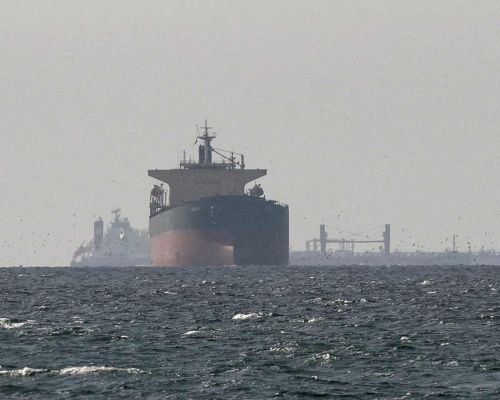
The largest common theme running through all three information ecosystems is the US–Israel war with Iran and the maritime blockade of the Strait of Hormuz. Russian commentators see Washington’s actions as an attempt at a forceful redivision of the world’s energy map and as an instrument of pressure on several competitors at once. Saudi media and politicians focus primarily on the security of their own ports and the risks of Iranian counterstrikes, openly warning the US against “choking” the strait. Australian analysts examine how the war and the American blockade affect global supply routes and prices for importers in the Asia‑Pacific region, as well as the dilemmas of Australian foreign policy, long reliant on the US but critically dependent on Asian markets.
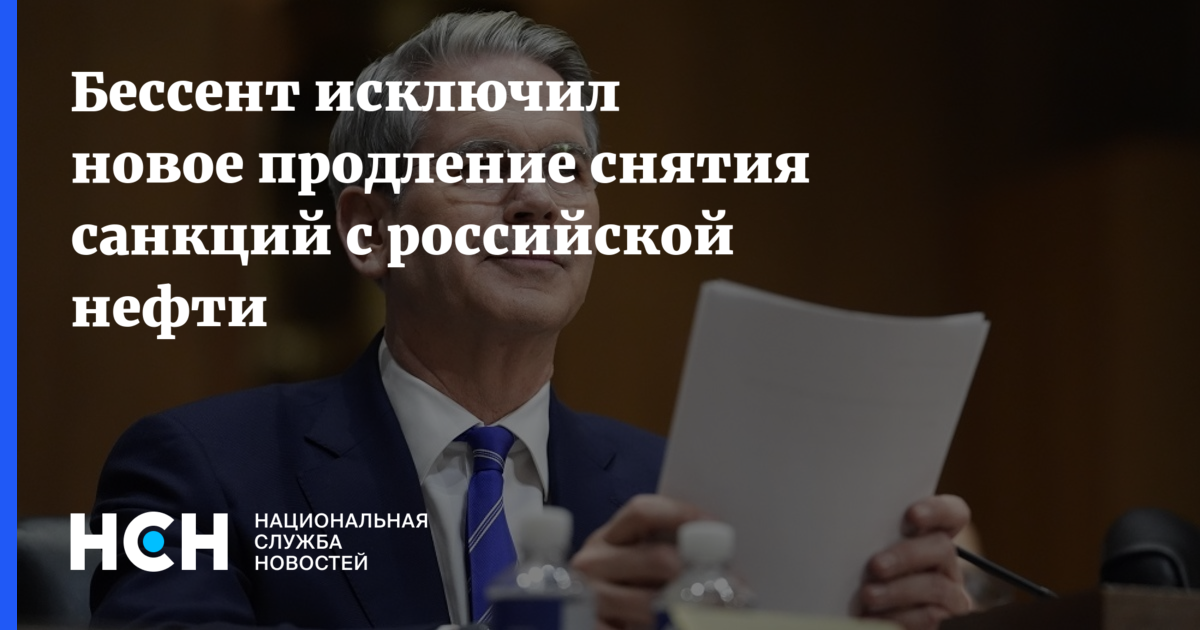
The military and economic lines are tightly intertwined. In Russia every US gesture regarding sanctions is read closely: when the US unexpectedly allows, until May 16, the sale and transport of previously loaded Russian oil and petroleum products, this is perceived as a forced acknowledgement of US and allied dependence on real commodity flows while Hormuz is blocked. Russian economist Tim Bessent, in a comment for NSN, emphasizes that this is not about US “kindness” but about cynical calculation: while the strait is closed, it benefits the American financial system not to crash the oil market or allow price spikes, and once it reopens the concessions will vanish as soon as the market deficit eases. He reminds that the extension of exemptions for Russian oil has already been announced as a “one‑off” and Washington rules out another extension. In the Russian agenda this move is not read as “humanitarian” but as American pragmatism and a temporary, situational dependence on those whom Washington itself has sanctioned. (nsn.fm)
The same line is developed by Igor Yushkov, an analyst at the National Energy Security Fund, in an EADaily piece titled “Americans Need Russian Oil While Hormuz Is Closed: Pros and Cons for the US.” According to him, the very existence of a US Treasury general license permitting transactions with already‑loaded Russian oil is direct evidence that the White House does not believe Hormuz will open soon and is unwilling to tolerate a market shortage. Yushkov suggests that as soon as the strait reopens, license renewals will stop: excess supply will push prices down and Washington will return to a hardline on sanctions. He echoes the idea that part of the Russian oil was kept in tankers not for political reasons but because owners expected higher prices, and the American “concessions” merely fit into that cycle. In the Russian discourse US steps are treated as tactical rather than ideological, once again underlining that sanction rhetoric easily bends under market pressure. (eadaily.com)
Alongside the economic block, Russian media and experts discuss the blockade strategy itself. On federal TV channels the voice of Senator Alexey Pushkov, former chair of the State Duma Committee on International Affairs, is heard explaining why, in his view, a US naval blockade “is unlikely to be total.” In a comment recounted by the Vesti.ru portal, Pushkov stresses that the Donald Trump administration is not interested in a sharp rise in oil prices: “that would mean going to $150–200 per barrel exactly according to the Iranian scenario, which Washington will not want to allow.” In another appearance he states that the declared objectives of the US war against Iran have not been achieved. The Russian audience receives a picture of a “limited war,” in which Washington, according to commentators, is forced to constrain its military machine within the bounds of energy and political risks. (vesti.ru)
Some Russian experts go further and see in US actions not only an attempt to “break” Iran but to build a new resource order. The Russian service of The Moscow Times publishes a text polemicizing with well‑known oil‑and‑gas analyst Mikhail Krutikhin: the author suggests looking at the war not through a geopolitical lens but through the prism of US material interests. In this reading, strikes on Iran, renewed interest in control over Greenland, and a course toward strengthening influence in the Arctic are all links in one chain — Washington’s desire to control key territories rich in resources and the transport arteries of the future. Not coincidentally, the author notes, the Trump administration temporarily softened the regime regarding Russian and even Iranian oil stranded in tankers, permitting specific deals to stabilize prices. For the Russian audience this builds an image of the US as an “empire of transit and resources,” whose ideological slogans step aside at any moment in favor of logic aimed at controlling flows. (ru.themoscowtimes.com)
Another major theme in the Russian discourse is the role of the US as a de facto detonator of a Europe‑wide crisis of trust and the strengthening of its isolationist instincts. Commenting on the administration’s decisions to withdraw from dozens of international organizations and raise import tariffs to 15% for all countries, Russian observers, not without glee, speak of “new isolationism.” Excerpts from analytical pieces on US foreign policy are widely quoted online, noting Washington’s turn from multilateral institutions to unilateral deals and “deals under pressure.” Russian media draw a direct line from this course to current ultimatums to allies: according to the Financial Times, Trump allegedly threatened European partners in the PURL program to halt arms supplies to Ukraine if they did not join the operation to unblock the Strait of Hormuz. The Ukrainian outlet European Pravda, recounting these stories, emphasizes that the White House uses even the war in Ukraine as leverage. In the Russian field this is presented as confirmation of an old mantra: in the US system of coordinates all alliances are instruments, not values. (eurointegration.com.ua)
If Russia views Washington through the lens of a Great Game over oil and institutions, Saudi Arabia views it through the prism of its own vulnerability and the complex balance between alliance with the US and the necessity of living next to Iran. The Arab and regional press paid much attention to Riyadh’s recent call for the US to abandon a “choking” blockade of the Strait of Hormuz. The Ukrainian site Korrespondent, citing Middle Eastern sources, relayed the Saudi position: they warn that if America pursues a prolonged closure of Hormuz, Tehran may respond by closing the Bab el‑Mandeb Strait — a critically important route for oil exports through the Red Sea. The Saudi side, these reports suggest, signals that too harsh a Washington line threatens not only Iran but Gulf Arab monarchies, for whom stable export routes are the basis of national security. (ua.korrespondent.net)
Against this background it is particularly notable how regional and Russian media intersect in portrayals of Saudi Arabia in Trump’s rhetoric. The Azerbaijani news resource Anews recounts his recent interview in which the American president, answering a question about Riyadh’s attitude toward continuing the war with Iran, said: “Saudi Arabia fights and helps the US everywhere… they help us in the strait, they help us everywhere.” Such a characterization, very favorable for the US domestic audience, is received ambivalently in the region: on one hand it confirms the kingdom’s status as a key US partner; on the other it reinforces the feeling that Saudi interests dissolve into American strategy rather than the opposite. Saudi authors writing in Arab outlets cautiously stress that Riyadh’s main goal is not war to the finish but a “controlled de‑escalation” that keeps the kingdom out of strikes. (anews.az)
Another line discussed particularly emotionally in the region is Washington’s direct linking of its stance toward Iran with economic levers aimed at other countries, including Russia and Gulf states. The Russian‑language resource focused on economics and crypto markets, BeInCrypto, relays Trump’s recent statement about imposing 50% tariffs on goods from any countries supplying arms to Iran — “no exceptions, no deals.” In the piece this is presented as a serious threat to Russia, but in the Arab discussion the same motive sounds as a reminder to all regional players: the US economic cudgel can be turned against anyone who steps outside the order it imposes. For Saudi elites, who themselves depend on trade with the US and EU, this is a signal that increases the desire to maneuver rather than enter into open confrontation with Iran on America’s terms. (ru.beincrypto.com)
Viewed from Australia, the emphases shift. For Canberra the Hormuz crisis and the US war with Iran are primarily about how deeply Australia should be involved in Washington’s strategy in the Indo‑Pacific and beyond. The Australian press, commenting on the bolstered US military presence in the Persian Gulf and the deployment of an aircraft carrier strike group off Iran’s coast, draws parallels with the growing US presence in the South China Sea. Analysts warn that if Washington simultaneously intensifies relations with Beijing and Tehran, the burden on the alliance system increases, and Australia will increasingly have to choose which operations to support and where to keep distance. At the same time Australia plays the role of a “rear player” in the war: its economy depends on stable sea routes through the Indian Ocean and on commodity prices, so any disruption in Hormuz inevitably hits import costs and export markets.
Australian commentators in local business publications note that the erosion of trust in the US in Europe and the Middle East is a factor Canberra cannot ignore. If US leadership blackmails European allies with military aid to Ukraine to secure participation in an operation to unblock Hormuz, Australian experts ask, what will stop similar blackmail in Asia tomorrow, linking, say, support for Taiwan with Australian participation in another “coalition of the willing”? This prospect turns the US into a figure not so much of “leader of the free world” as of a heavyweight partner whose initiatives must be approached with growing caution.
This turn to a critical optic is especially noticeable against the backdrop of domestic perceptions of Trump in the US itself. A Pew Research Center study records that Americans in 2026 have significantly less confidence in his decisions on the wars with Russia and Ukraine, while polarization over whether Russia is an enemy or a competitor persists, though Republicans and Democrats have drawn slightly closer in views. For foreign analysts, including Russian and Australian ones, this is a signal: US foreign policy in the coming years will remain unpredictable because there is no solid domestic consensus about priorities or how to achieve them. (pewresearch.org)
Against this background attention should be paid to rare but telling “voices of disappointment” within the US that foreign outlets pick up. The Russian portal Kapital Strany cites American commentators asking why Russia and China, which have levers of influence over Iran, appear passive. In comments under an interview recounted from American sources, users note that no one knows the real arrangements between Moscow, Beijing and Tehran, and if assistance is provided it will not be publicized. For the Russian audience this sounds like an indirect admission: even inside the US there is a growing sense that Washington is losing control over the architecture of global influence and that its adversaries and “conditional partners” have learned to play a longer, less transparent game. (kapital-rus.ru)
A curious detail is the reaction to Trump’s new, more aggressive statements about Russia. Interfax quotes him saying Russia “fears the US and the army he has built,” while European countries supposedly do not frighten Moscow. In the Russian press this is presented ironically: commentators note that such rhetoric is aimed at a domestic political effect in the US but changes little in the real balance of power. For Saudi Arabia and Australia such statements are a reminder that the current Washington administration thinks in military categories of force and fear rather than long‑term trust; therefore, it treats others as objects that either “fear” or “should fear” it if they do not follow the American line. (interfax.ru)
Finally, a special place in the foreign discussion is occupied by the line “show versus diplomacy.” The liberal Russian‑language outlet Meduza, in a long interview with former Russian diplomat Boris Bondarev who worked at the MFA, dissects US–Iran talks in Islamabad. Commenting on US Vice‑President J. D. Vance’s visit for talks with Iranian and Pakistani sides and parallel statements about maintaining the blockade, Bondarev notes: “Show and diplomacy are opposite things.” He points to an obvious paradox: Washington publicly speaks of a ceasefire and willingness to compromise but continues the maritime blockade, expecting Tehran’s capitulation. For the Russian audience this fits the long‑standing narrative of the US as a power that practices “diplomacy through pressure,” and for readers in the Middle East — as a partner whose promises must be constantly checked against real actions. (meduza.io)
To sum up, the common denominator in the reactions of Russia, Saudi Arabia and Australia to current US policy is not an attitude toward America per se but toward the way Washington attempts to resolve crises. For Moscow the main grievance is the instrumentalization of war and sanctions to control markets and supply arteries. For Riyadh — disregard for the complex regional security ecology in favor of forceful steps that turn the Gulf not merely into a zone of risk but into a field for a series of harsh Iranian responses. For Canberra — the danger that a US strategy that simultaneously sharpens conflicts in Europe, the Middle East and the Indo‑Pacific will prove unsustainable even for such a superpower and will automatically pull allies into configurations they are not ready for.
The most interesting thing is that similar themes sound through these different lenses: distrust of American promises, fatigue with sanctions and military pressure as universal tools, and an awareness that the world is no longer ready to follow Washington unquestioningly when the price is one’s own security or economic stability. In this sense the current crisis around the Strait of Hormuz and the US war with Iran has become litmus paper: it has shown how the conversation about the US beyond America has changed. Not whether Washington is for or against peace in principle, but what the cost of its leadership is — and whether countries are willing to keep paying it.