At the start of 2026, conversations about the United States in Tokyo, Seoul and Pretoria carry surprisingly similar themes, although each country invests them with its own fears and expectations. On the surface, everyone is discussing the same things: Donald Trump’s second presidency, Washington’s sharp turn toward protectionism and unilateral diplomacy. But listening to local voices makes it clear that this is not just about a “Trump America,” but about a much deeper question: can the U.S. still be perceived as a predictable center of the world system, or is it already one among many poles that often act according to the logic of a short electoral cycle rather than long‑term alliances.
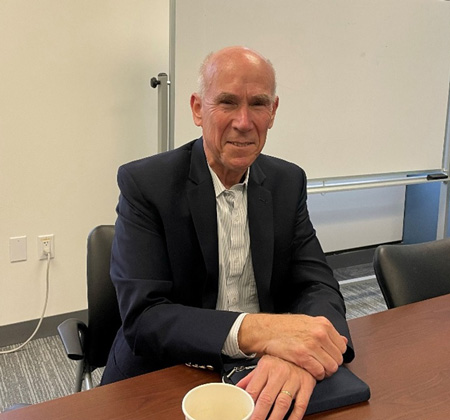
In Japanese debate, American policy is perceived primarily as a factor of economic and military security. Here Trump 2.0 is viewed through the lens of tariffs, supply chains and the Japan–U.S. military alliance. Economist Kiyoyuchi Nobuey of Nomura Research Institute (NRI), in a long interview about the world after the midterm and presidential elections, speaks of a “turning point,” when additional U.S. duties and political instability in Washington force Japanese business to radically rethink the structure of exports and production, diversify markets and stop relying on the old predictability of the U.S. He warns bluntly that under a protectionist White House Japan can no longer regard the American market as a guaranteed growth anchor, and must prepare for new waves of tariffs and pressure for bilateral deals on Washington’s terms — a shift that radically changes investor calculations and the strategies of large corporations. Analysts at JETRO, surveying American experts and looking at the issue from a more applied business angle, make similar points: in a second Trump term, former senior U.S. diplomat Larry Greenwood tells JETRO that Japan will need to account for the risk of new tariffs and the politicized use of trade instruments, which is already forcing Japanese firms to revise logistics and insure against risks by relocating production and changing the currency structure of their businesses.
But Japanese commentators view the U.S. not only as a market and security guarantor, but also as a political phenomenon. Research centers such as 日本国際問題研究所 and 日本国際フォーラム analyze the American elections as a symptom of changes in the nature of Western democracy itself. Professor Umekawa Ken of the University of Tokyo, analyzing the transformation of candidates in the American electoral process in a report for 日本国際問題研究所, speaks of the “democratization” of the procedure — an explosion in the number of participants and the simplification of nominations — but at the same time of a fall in the “qualitative bar” for contenders. In Japanese discourse this is often linked to the question: what does an alliance with a state mean when a system increasingly produces leaders who bet on polarization rather than consensus. Professor Okayama Yutaka of Keio, in his talk for 日本国際フォーラム, emphasizes that after the 2024 elections the U.S. two‑party system has entered a phase of hard ideological segregation, and Tokyo must plan relationships not only with the current administration but also with a potentially radically different government four years from now. This creates in the Japanese elite a feeling that the U.S. is no longer so much the “leader of the liberal order” as a large but internally unstable actor whose domestic dynamics directly affect regional security, including Taiwan and North Korea.
In South Korea, attention to the U.S. is more emotionally charged: American policy is perceived both as a vital military shield and as a source of chronic vulnerability. Korean columnists and experts discuss not only possible changes in tariffs or conditions of access for Korean goods to the U.S. market, but also the prospects for the presence of U.S. troops and “extended nuclear deterrence.” For the local audience the question is whether another outbreak of American isolationism might result in a deal with North Korea “over the heads of allies” — a fear that Seoul never forgot after the first Trump–Kim meetings. Korean newspaper columns and television debates regularly voice the idea that Washington increasingly views Northeast Asia through the prism of competition with China, rather than through the security of South Korea per se. Therefore some experts call to “hedge” — to develop their own defense capabilities, including discussions about a possible independent nuclear option, while simultaneously deepening ties with Japan and the EU so as not to be fully dependent on fluctuations in American policy.
Interestingly, in both Japan and South Korea American elections and domestic polarization in the U.S. are increasingly discussed comparatively: as a mirror of their own problems. Japanese authors in outlets like 朝日新聞 and on academic platforms of the University of Tokyo emphasize that the rise of populism in the U.S. is not an “American anomaly” but part of a global trend of crisis in party systems. In one column Professor Fujiiwara Kiichi of international politics, whose article on a possible “Trump return” the University of Tokyo summarized on its research center website, warned that if democratic procedures produce leaders willing to opt for military solutions, this reflects a societal demand rather than just the charisma of individual politicians. For Japanese readers this prompts reflection on how resilient their own political system is to similar shifts.
The South Korean discussion follows a similar line: columnists of leading newspapers note that American divides over immigration, racial justice and inequality resemble Korean conflicts around housing, regional and generational differences. Thus America is often portrayed not as a “teacher of democracy” but as a warning: if social fissures deepen, politics quickly radicalizes and begins to conduct foreign policy in fits and starts, deal by deal, without a stable strategy. In this sense both in Tokyo and Seoul voices are growing that propose treating the U.S. not as a moral compass but as an important yet ordinary state whose interests can sharply diverge from those of its allies.
South Africa looks at America from another end of the global spectrum, and its discussions are much more conflictual. There the U.S. is long no longer perceived as a guarantor of order or a key economic partner; rather, as a power that oscillates between cooperation and harsh pressure, and sometimes — outright interference in sensitive domestic matters. Trump’s second presidency has become a trigger for a series of crises, and local analysts view them as interconnected: a trade war, a program to admit white South Africans as refugees, diplomatic scandals over accusations of “white genocide,” and the threat of personal sanctions against the elite.
South African commentators see an economic calculation behind American policy toward their country as well as ideology. Trade analyses stress that new tariffs under the Trump administration — including 25 percent duties on steel and aluminum and subsequent increases up to 30 percent — have effectively nullified the benefits South Africa derived from participation in AGOA. As noted in a review of tariff policy under a second Trump term, taxes on South African exports were introduced in 2025 and accompanied by negotiations in which President Cyril Ramaphosa proposed long‑term purchases of U.S. LNG in exchange for tariff‑free quotas for exports of steel, aluminum and automobiles; the deal was harshly criticized domestically as jeopardizing energy security and the interests of local industry, and analysts emphasized that the main beneficiaries of such concessions would be a handful of foreign multinational corporations rather than South African producers. This was recounted in detail in an English‑language article on tariffs on the Wikipedia site, which cited estimates that up to 90% of the benefits from the previous AGOA regime flowed to a limited number of foreign firms, not the broader South African economy.
This trade thread is directly linked to the political one. In Washington some think tanks portray South African policy as undermining U.S. interests. For example, a May 2025 review by the Foundation for Defense of Democracies, titled “5 Ways South Africa Undermines U.S. Interests — and What Must Change,” argued that Pretoria’s strengthening ties with China, pressure on Taiwan and participation in BRICS create a “multichannel course of collision” with the U.S., and that Washington should seek to change South Africa’s foreign policy by linking it to trade and sanctions. The authors proposed using levers — from tariffs to targeted restrictions against individual figures of the South African elite — to “reset” Pretoria’s course and reduce Beijing’s influence. For the South African expert community such formulations look like an attempt to restore a Cold War–era hierarchy, and many analysts have responded with harsh criticism.
Within South Africa itself reactions to these U.S. steps are not uniform. In a column for TimesLIVE political commentator Michael Walsh in January 2025 strongly opposed the naive view that U.S. elections would “minimally” affect bilateral relations. On the contrary, he argued, Trump’s arrival creates a real risk of personal sanctions against South African elites, which could become a “winter period” in bilateral ties. He noted that the Trump administration, like Biden’s, is interested in preventing the complete collapse of the national unity government and the African National Congress, but is far less inclined to turn a blind eye to Pretoria’s closer ties with China and Russia and to Pretoria’s rhetoric on Palestine and Ukraine; in this logic sanctions against individuals appear to Washington as a convenient tool of targeted pressure that does not collapse the whole system but signals displeasure.
Particular irritation in South Africa is caused by the American program to admit white South Africans and the rhetoric of “white genocide” that comes out of Washington and from figures close to it. Officially this line in U.S. policy took the form of the Mission South Africa initiative — a program to provide asylum to white South Africans, primarily Afrikaners, on the pretext of “systematic violence and racial discrimination” related to land reform. As described in detail in the English‑language article “White South African refugee program,” the Trump administration presented this as a humanitarian step in response to an alleged “genocide” of white farmers, although such claims were thoroughly refuted by South African authorities and independent studies. President Cyril Ramaphosa publicly rejected the premise of the program, reminding that the white minority is not being persecuted on the basis of race and still owns a disproportionate share of land and wealth inherited from apartheid.
In local discourse this American initiative is viewed less as a migration issue than as an assault on sovereignty and the legitimacy of the post‑apartheid order. In December 2025, The Guardian reported, Ramaphosa strongly condemned the spread of the myth of “persecution of Afrikaners,” stressing that such narratives, fed by ideas of white supremacy, pose a serious threat to South Africa’s sovereignty and international relations. He explicitly linked the campaign to statements by President Trump and billionaire Elon Musk, warning that turning a distorted picture of South African reality into an element of American domestic politics undermines trust and creates security risks. Against this backdrop U.S. Secretary of State Marco Rubio’s decision to declare former South African ambassador to Washington Ebrahim Rasool persona non grata after Rasool accused Trump and Musk of promoting white supremacism became in Pretoria a symbol of U.S. unilateral diktat. As noted in a biographical note on Rasool, South African authorities called the step “regrettable” and urged “diplomatic decorum,” while the largest trade union federation COSATU promised to hold a “heroic meeting” and the opposition party COPE demanded the expulsion of the Chargé d’Affaires.
This conflict around “white genocide” and refugees intersects with another line of South African criticism of the U.S. — accusations of selective humanitarian agendas. South Africa’s foreign ministry reports recounted how the government sharply rejected the U.S. State Department’s human rights report on South Africa as “deeply flawed” and based on discredited data. The report accused South Africa of deteriorating human rights and unfairly targeted aspects of land reform against white Afrikaners. Pretoria insisted in response that its law on expropriation without compensation in particular cases is a constitutionally calibrated instrument for correcting historic inequalities and has support from U.N. structures, and argued that the United States, which has its own unresolved problems with refugee policy and domestic racism, is hardly in a position to preach. Against this background additional tariffs, cuts in aid and expedited visas for Afrikaners claiming persecution are described in the South African press as part of a single line: according to many authors, Washington is trying to use humanitarian rhetoric to advance its economic and geopolitical interests and to weaken South Africa’s independent course within BRICS and the African Union.
However, the South African conversation about America is not reducible to antagonism. In an analytical piece for the Institute for Global Dialogue, “South Africa’s Evolving Global Stance after the 2024 Elections,” researcher Sanusha Naidu reminds readers that within South Africa there is no consensus about the direction to take — toward closer ties with the Global South and China or toward more pragmatic, if complicated, relations with the U.S. She writes that the shift to a national unity government after the 2024 elections turned foreign policy into an arena of domestic political struggle: different parties have different views on the balance between principle and pragmatism. Using the example of the dismissal of a deputy minister from the Democratic Alliance for an unsanctioned visit to the U.S., Naidu shows that even within the coalition there are divergent ideas about how far to move toward Washington and where the “red line” in relations with the American administration lies. She emphasizes that the fragility of relations with the U.S. has revealed the absence of a clearly defined common foreign policy framework in the coalition agreement — each side interprets it in its own way, leading to improvisation and nervousness among partners.
This ambivalence is also visible in public opinion. As the FW de Klerk Foundation noted, citing Pew Research poll data, as late as the mid‑2020s almost half of South Africans expressed a favorable view of the U.S., higher than in some European countries. But trust in specific leaders — both Trump and Biden — was significantly lower, especially compared with the Obama period. This creates an interesting gap: America as a country, source of technology and culture, is generally seen positively, but American leadership is viewed as an unpredictable and sometimes hypocritical partner. In this respect South Africa in an odd way converges with Japan and South Korea, where young people continue to enjoy American pop culture and universities, while elites speak louder about the need to “insure” against Washington’s strategic unpredictability.
If one tries to connect these three very different regional perspectives, a fairly coherent picture emerges. For Japan and South Korea the U.S. remains an indispensable element of security and the economy, but its domestic political drift — toward populism, protectionism and cyclical reversals in foreign policy — turns the alliance into a source of risks as well as guarantees. Hence the growing trend toward strategic autonomy: not in the form of a break with Washington, but as a gradual strengthening of maneuverability and insurance against another sharp pivot in the White House.
For South Africa the U.S. is no longer a “custodial center” but one of the major external players that, according to many local analysts, tends to view Pretoria through the prism of rivalry with China and America’s own domestic cultural wars. The program to admit white refugees, the rhetoric of “white genocide” and harsh export tariffs are seen not as isolated initiatives but as a logical continuation of an American course in which human rights and democracy are applied selectively and economic and political levers are used without much regard for consequences for partners.
But all three countries raise a deeper question at once: if the United States is less willing or able to play the role of a predictable architect of the world order, who and how will fill that vacuum. In Tokyo and Seoul the answer most often invoked is strengthening regional ties and greater autonomy within the same Western institutions; in Pretoria — reorientation toward BRICS, the African Union and the Global South. Yet, as Japanese, South African and Korean authors alike emphasize, virtually no one is ready to push the U.S. entirely away: its economic power is too great, its markets and technologies too significant, and its military presence too consequential.
Perhaps the main thing that unites discussions of America in Japan, South Korea and South Africa today is the end of illusions. The U.S. is no longer seen as an immaculate moral beacon or a timeless guarantor of stability. It is an important, powerful but deeply contradictory actor whose domestic politics and cultural battles are projected directly onto the external stage. And the clearer this becomes in Tokyo, Seoul and Pretoria, the more their own foreign‑policy strategies cease to be derivatives of the American course and turn instead into attempts to build an independent, if complicated, life in the world after the “sole hegemon.”