At the end of April 2026, the United States again finds itself at the center of foreign news — not as an abstract superpower, but as a very concrete, sometimes nervous partner whose decisions directly reverberate through domestic debates in Brazil, South Africa and South Korea. There the conversation is not only about another round of the Middle East crisis and trade frictions, but also about how the very character of American power has changed under Donald Trump’s second term and his “America First” line in a more aggressive, sanction‑punitive form.
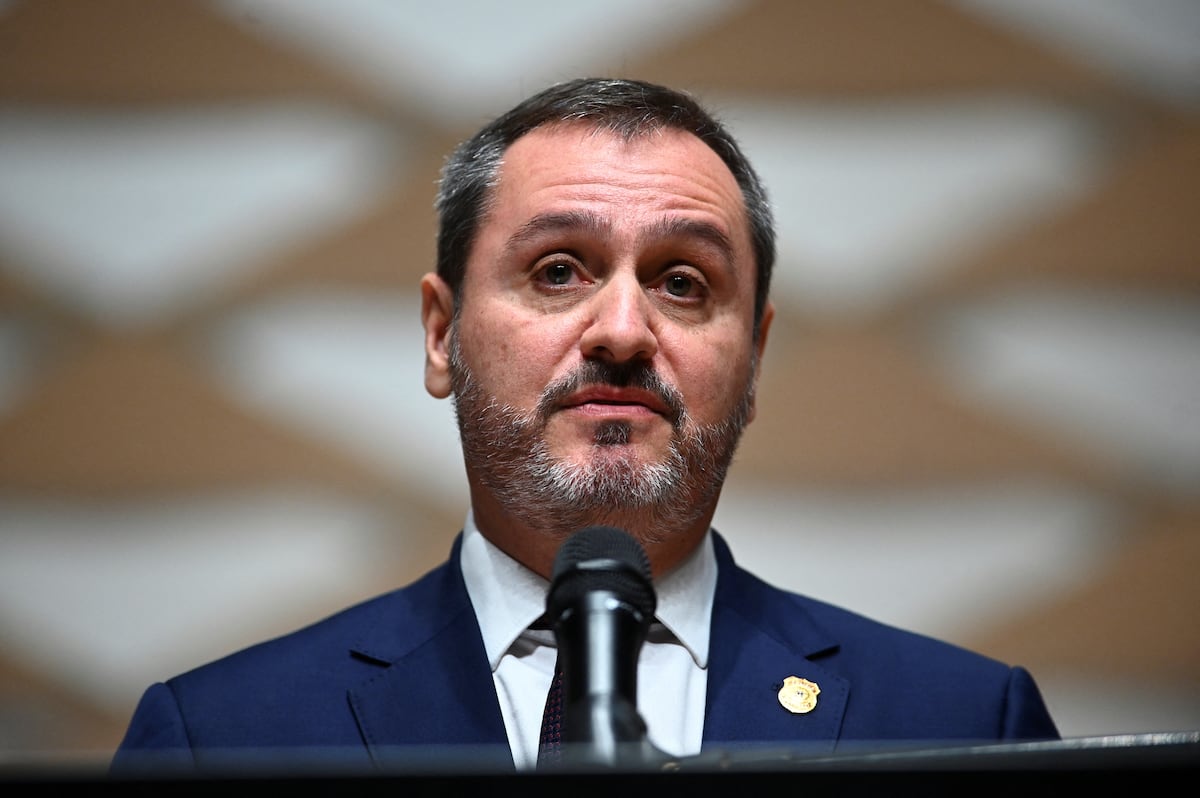
In Brazil these days America is above all a diplomatic scandal around the fugitive Bolsonarist Alexandre Ramagem and Lula’s response. Frayed nerves and mutual suspicions of politically motivated law‑enforcement actions have turned a story about police cooperation between the two countries into a symbol of a broader struggle for sovereignty. A Spanish‑language account of this episode, published by El País, describes in detail how the US first detained and then almost inexplicably released Ramagem, convicted in Brazil for participation in an attempted coup, and almost simultaneously effectively expelled a Brazilian ICE liaison, accusing him of “manipulating the immigration system” and “exporting political persecution to US territory.” In response Brazil withdrew the accreditation of an American police officer at the embassy, citing reciprocity, and Federal Police director Andrei Rodrigues emphasized in an interview that he did so “with great regret,” but “cannot accept such interference and abuse of power by certain American personalities.” This line is not an episode but part of Lula’s broader campaign to demonstrate an independent foreign policy: the left‑wing outlet Brasil 247 explicitly writes of “growing tension with the US” and interprets the government’s response as a conscious strategy to protect sovereignty and defend a multipolar order, a key theme of Lula’s third term. (elpais.com)
Brazilian commentators see Washington today less as an ally than as a nervous and unpredictable hegemon, especially after a series of tough tariffs by Trump on Brazilian imports in 2025, when duties of up to 50% were raised on a wide range of goods under the pretext of “protecting American workers” and alleged commercial imbalance, despite the US actually running a surplus in bilateral trade. This “crisis” episode has already been described in analytical pieces as the 2025 diplomatic conflict, which crystallized an anti‑Trump consensus among Brazil’s center‑left elite: in their view, US foreign policy had become an instrument of Trump’s domestic campaign, with Brazil a convenient target. (pt.wikipedia.org)
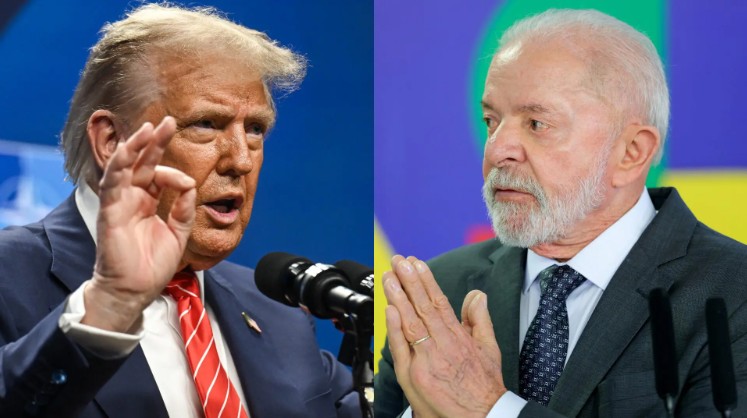
Hence a popular theme in commentary: Lula deliberately makes Trump an “external enemy” to rally his base and shift the conversation from domestic problems to national pride. The center‑right Gazeta do Povo notes that the president “raises the level of provocations against Trump, betting on the image of an external enemy,” linking this to the 2025 experience when harsh rhetoric against American tariffs even helped him somewhat recover his ratings. In the same logic many in the right‑wing opposition see the countermeasures in the Ramagem case as not only defending sovereignty but also an electoral calculation. (gazetadopovo.com.br)
At the same time the left‑patriotic camp does not hide that it sees current US moves in the region — from economic pressure to the capture of Venezuelan president Nicolás Maduro in January 2026 — as a return to the worst forms of interventionism. In one review of foreign policy prepared by a Brazilian research center quoting Brazil’s representative to the OAS, the US seizure of Maduro is described directly as undermining international law and creating a troubling precedent for all of Latin America. In Brazil this is compared to its own military dictatorship and the support Washington provided to anti‑communist regimes in the region then. (gedes-unesp.org)
Thus the first major throughline in perceptions of the US is the “hard, personalized America of Trump,” combining trade wars, politically charged law‑enforcement decisions and a demonstrative disregard for multilateral norms. For the Brazilian public this image hits an old sensitivity about dependence on the US and revives memories of periods when Washington was seen as the chief architect of Latin American crises.
The second major throughline links Brazil and South Africa: a perception of American global policy through the lens of the war with Iran and a broader crisis of confidence in the US role as the “responsible leader” of the international order. In Brazil’s media space the US‑Israel war against Iran, which began in late February 2026, serves as the backdrop for many stories — from rising fuel prices and macroeconomic risks to parliamentary debates about foreign policy. On the program “A Voz do Brasil” one left‑wing deputy bluntly said that US foreign policy “stokes violence, attacks humanitarian values and threatens the peaceful coexistence of peoples,” tying this not only to the Middle East but to Trump’s broader line. For the federal government the war in Iran is primarily a factor of inflation, budget adjustments and potential global economic slowdown, but in commentary it quickly becomes a moral issue: are unilateral US actions acceptable even if formally justified as counter‑terrorism and ally protection? (reddit.com)
The South African discourse goes further, overlaying the Middle East and other episodes onto its own history of dependence on foreign financing and political pressure. In a report by South African and international human‑rights groups on the fate of US investments in South Africa’s health system, published in April 2026, the “America First” policy in global health is described as a course toward the practical winding down of previous partnership‑based aid programs and their replacement by a more conditional, unilateral model. The authors stress that South Africa is a unique case: a country that for decades was a testing ground for cooperation with the US in the fight against HIV/AIDS now risks losing “virtually all investments” because of shifting priorities in the Trump administration. The text says that by April 2026 Washington “was on a trajectory of withdrawing almost all of its investments,” without offering a full agreement or memorandum of understanding, which is perceived as an underestimation of South Africa’s role and a disregard for African agency. (parliament.gov.za)
In South African political analysis the thesis of “declining trust in the US government” now appears at many levels. A briefing from the parliamentary budget office, examining global and national perspectives, links the erosion of trust to the US role not only in the war with Iran but also in the dramatic episode of President Maduro’s abduction, which African diplomacy qualifies as a violation of the principle of sovereign equality. The document cites the position of the African Union’s 39th session, which “expressed deep concern” about such actions. In this view the US becomes not a guarantor but a source of global instability, including for Africa, which is formally far from the Middle East frontlines. (parliament.gov.za)
This theme also reverberates in Brazil’s South Atlantic context. In April 2026 Rio de Janeiro hosted the 9th ministerial meeting of the Zone of Peace and Cooperation in the South Atlantic — a forum of African and South American countries created to keep the region free from great‑power military rivalry. The final declaration and adopted strategy are directly aimed at strengthening regional cooperation and reducing external military activity in the South Atlantic — and although the US is not named, for many South American and African analysts the shadow of Washington and NATO is obvious. Against this background interest grows in the idea of a “southern peace,” where these countries could play a more active role without looking to American priorities. (pt.wikipedia.org)
The third major storyline is the image of America as an internally unstable, polarized country whose crises now provoke not only concern but a weary sense of déjà vu. In Brazilian media the recent shooting at the entrance to the White House Correspondents’ Dinner in Washington — a traditionally social and in some sense symbolic ritual of American democracy — is seen as yet another confirmation that “violence in the US has become commonplace.” Even encyclopedic entries in Portuguese describing the April 25, 2026 event emphasize the paradox: the attack occurs not on some periphery, but at the entrance to an event attended by the country’s political and media elite. For a Brazilian audience living with its own problem of armed violence, the United States in this respect becomes less a model and more a warning — an example of how even a developed state can lose control of public safety. (pt.wikipedia.org)
In South Africa domestic American conflicts are most often discussed through the prism of race and migration policy. In a Mail & Guardian column Professor Adekeye Adebajo of the University of Pretoria analyzes Trump’s campaign against Somali migrants and the personalized attack on Representative Ilhan Omar, herself a former Somali refugee. The author asks why the US president “is waging war on Somali immigrants,” drawing parallels with apartheid and xenophobic sentiments in South Africa, where migrants from other African countries have become targets of violence and stigma. This perspective flips the optic: America ceases to be a distant model of democracy and instead becomes a laboratory of the same issues facing South Africa — xenophobia, inequality, and the political exploitation of fears. (mg.co.za)
The South Korean discussion of the US at first glance is less explosive and far more pragmatic. In Korean news and educational outlets America still appears as a key ally and simultaneously a source of risks because of global instability: mentions of the US‑Iran war appear in world‑affairs overviews for schoolchildren and students in the context of a “re‑escalating Middle East” and how this affects the economy and security. In a popular educational magazine for students the US‑Iran war is placed in a column “events that again strain the Middle East,” alongside discussions of price increases and global energy worries. This is a typically Korean down‑to‑earth perspective: the main concern is how it will affect prices, exports, and the security of sea lanes, not a moral assessment of America’s role. (yes24.com)
Nevertheless a more critical view of American policy is gradually emerging in Korean media. In analytical pieces about a future “sixth technological wave” and the rise of “physical AI,” the US figures as one of the leaders, but scenarios increasingly describe a world where Washington is no longer the sole center of power: China, the EU and Asian states themselves loom on the horizon. While European leaders openly speak of weakening American alliances and the need to build a new order themselves, in South Korea this is for now framed more gently — as a necessity to “diversify” partnerships without severing ties to the US. This line is echoed in statements by European politicians, for example Polish Prime Minister Donald Tusk calling South Korea “the most important ally after the US” amid claims that “American alliances are weakening”; such formulations are widely quoted in Korean media, reinforcing the sense of a tectonic shift in the alliance system where Washington is no longer the unquestioned center. (washingtonpost.com)
South Africa’s view of alliance with the US is changing too, albeit differently. Recent remarks by US Secretary of State Marco Rubio on the occasion of Freedom Day, April 27, 2026, sounded like an attempt at a “reset”: Washington “sends warm greetings to the people of South Africa” and speaks of readiness for dialogue. But against a backdrop of growing criticism over cuts to health‑care investments and divergences on international issues — including Africa’s position on the war in Iran and the Maduro episode — such words are perceived more as a belated gesture than the basis for a new partnership. African analysts point to asymmetry: the US continues to play a global game that pays little heed to the collective position of the African Union, while South Africa tries to balance between BRICS, Western partners and domestic pressure. (chimpreports.com)
Against this backdrop one telling detail unites discussions in Brazil and South Africa: both countries increasingly speak of the need to build their own regional security and economic architectures in which the United States would be not the center but one external actor among others. For Brazil that means the South Atlantic and Latin America; for South Africa it means SADC, the African Union and BRICS. In both cases Trump’s America acts as a powerful accelerator of this search for alternatives.
Finally, there is a less visible but important line — attitudes toward the US as a cultural and normative force. In South Korea America still remains a source of cultural codes — from films and TV series to political debates adapted to local contexts. At the same time reflection grows: publications about how American polarization, fake news and the crisis of trust in institutions are eroding democracy are used as a cautionary example for Korea itself, where digital divides and political radicalism are also on the rise. In South Africa cultural criticism of the US often overlaps with conversations about racism and media double standards: the example of the scandal over the CBS report on white South African “refugees” in the US, in which American editorial choices are seen as an attempt not to antagonize Trump, shows how the American media environment itself becomes dependent on aggressive presidential rhetoric — a dynamic South Africans read through their own experience of pressure on the press. (en.wikipedia.org)
Thus, when these fragments are assembled, a multi‑layered portrait of today’s America emerges through the eyes of Brazil, South Korea and South Africa. For Brazil the US is an aggressive trading partner, a politically motivated sheriff interfering in allies’ affairs, and a convenient external enemy for mobilizing the electorate. For South Africa it is at once a long‑standing donor in health care and a new source of instability because of arbitrary decisions — from winding down programs to violating other countries’ sovereignty — and an example of a society that has not resolved racial and migration challenges. For South Korea it remains an indispensable ally and technological partner, but no longer the only center of the world — rather one pole in a system where diversification increasingly must be considered.
Common to these perspectives is fatigue with Washington’s unilateralism and unpredictability, especially under Trump, and a growing desire among Global South countries and middle powers not only to react to American policy but to build their own regional and global orders. The difference lies in degrees of dependence and strategic choice: some, like Brazil and South Africa, openly speak of multipolarity and sovereignty, sometimes entering sharp conflict; others, like South Korea, for now prefer softer language that preserves room for maneuver. But in all three cases America ceases to be an untouchable center and increasingly becomes one of, if still one of the loudest, voices in the noisy chorus of global politics.