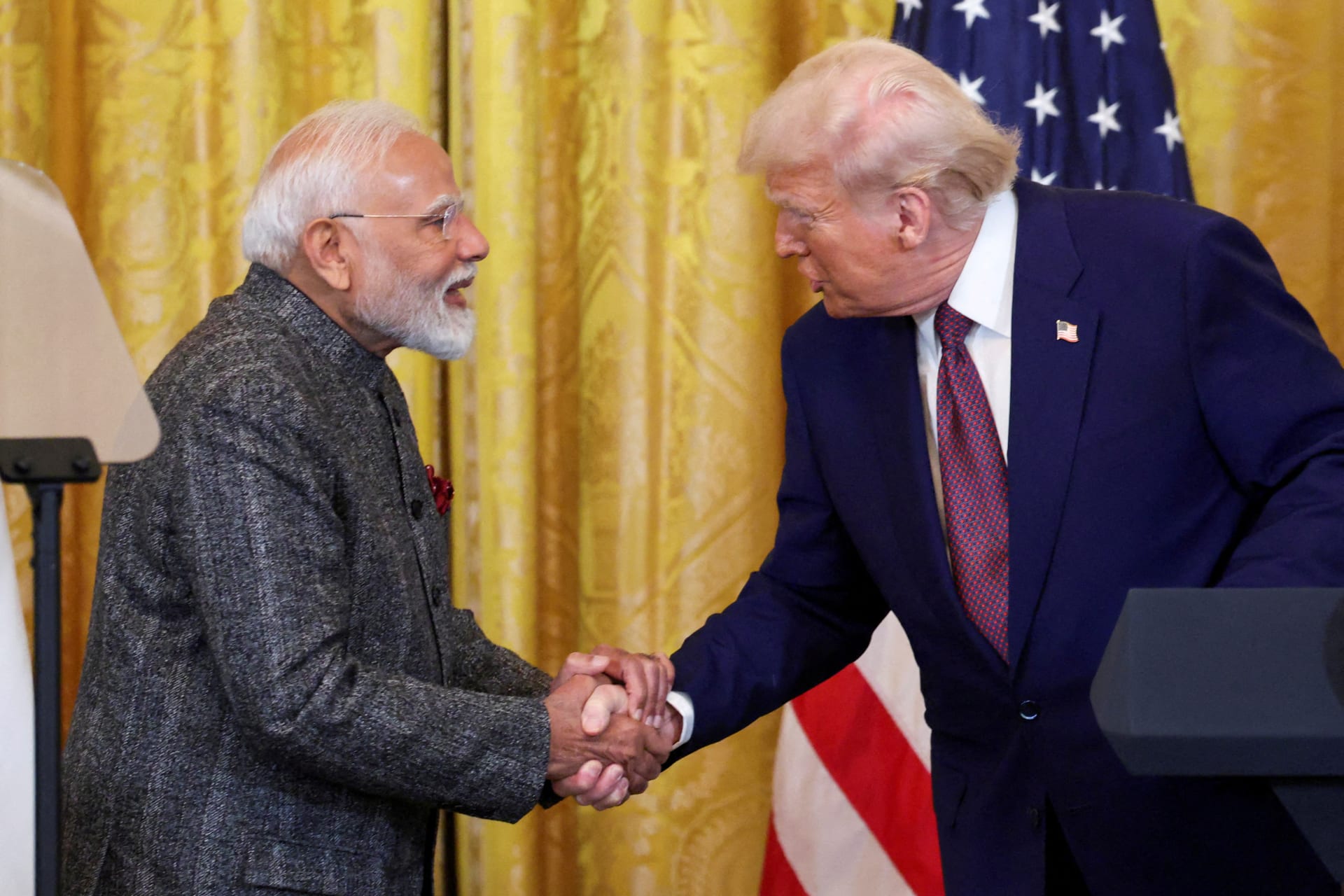
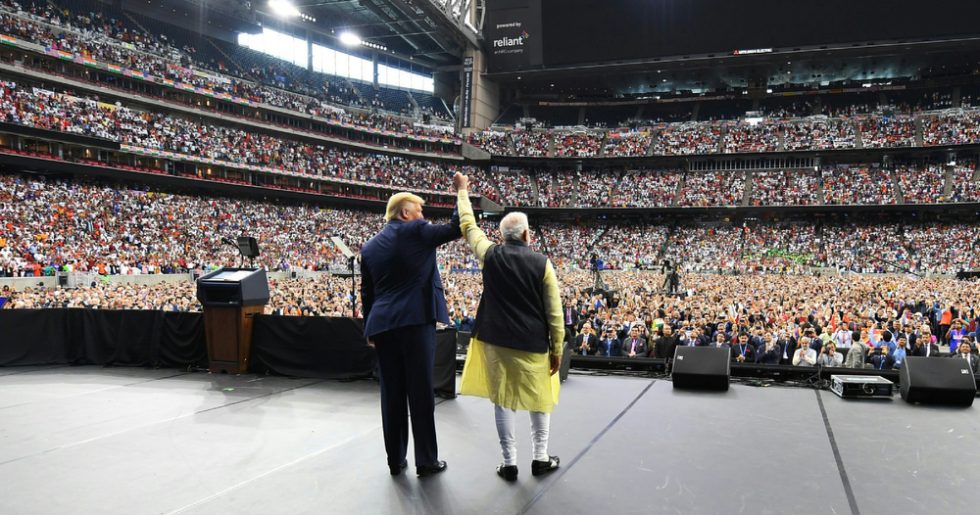
Around the United States a dense cloud of foreign reactions is gathering again, but if you look not from Washington, but from New Delhi, Pretoria or Seoul, a very different image of America emerges. It is not only a “world leader” or a “beacon of democracy,” but above all an unpredictable risk factor: an ally that can easily turn partners into hostages of its own wars, a financial superstate capable of punishing an inconvenient country with a single market move, and a political actor whose domestic convulsions undermine trust in its promises. In the Indian, South African and South Korean discussions about the US today, three major themes converge: a new war with Iran and the involvement of allies, the “weaponization” of debt and sanctions, and the erosion of America’s liberal authority against the backdrop of its own domestic turbulence.
The first major nerve is the 2026 Iran war, which began on February 28 with strikes by the US and Israel. In India this war is discussed primarily not as an abstract Middle Eastern conflict, but as a test of India’s sovereignty and status. Indian analysts painfully reacted to the episode of the sinking of the Iranian frigate IRIS Dena shortly after the ship’s participation in an Indian international naval review in Visakhapatnam: Indian military expert Brahma Chellaney called the US actions “a bit of treachery” and emphasized that Washington, by attacking a ship that had returned from an event India had presented as a showcase of its security in the Indian Ocean, “turned its maritime region into a war zone” and undermined India’s reputation as a preferred security partner. He wrote this in a commentary widely cited in Indian and English-language press, including material compiled in the English Wikipedia article on the sinking of IRIS Dena, where his wording and the assessment of US “treachery” are quoted. (en.wikipedia.org)
Indian columns draw a parallel between this incident and a broader picture: according to an analytical article from Carnegie, the Trump administration in its second term has already used tariffs and trade pressure against India — including 25 percent duties imposed over purchases of Russian oil and only lifted in February 2026 as part of a new deal. In Indian discourse this is read not as a “nervous episode” but as a demonstration of Washington’s readiness to apply economic coercion even against a “strategic partner.” (carnegieendowment.org)
The Indian conversation about the US in connection with the war with Iran is complicated by another factor: for the first time in a long while the role of regional mediator was taken not by India but by Pakistan. According to the English Wikipedia overview of India’s role in the war with Iran, it was Islamabad that became the venue through which a two‑week ceasefire was agreed, and it is Pakistan that international press cites as the main mediator between Tehran and Washington. The Straits Times of Singapore, as that overview reports, noted that in New Delhi “there is a burning” over Pakistan’s growing weight as mediator — this is perceived as a blow to India’s claims to be the chief South Asian player. (en.wikipedia.org) In Indian opposition and progressive media the refrain is increasingly heard that Modi’s foreign policy has “failed,” and that dependence on Washington’s goodwill limits the country’s manoeuvrability: a column in Foreign Policy in Focus even speaks of a “surrender” of India’s foreign policy and stresses that the recent trade deal merely formalized a structural shift in favor of the US. (fpif.org)
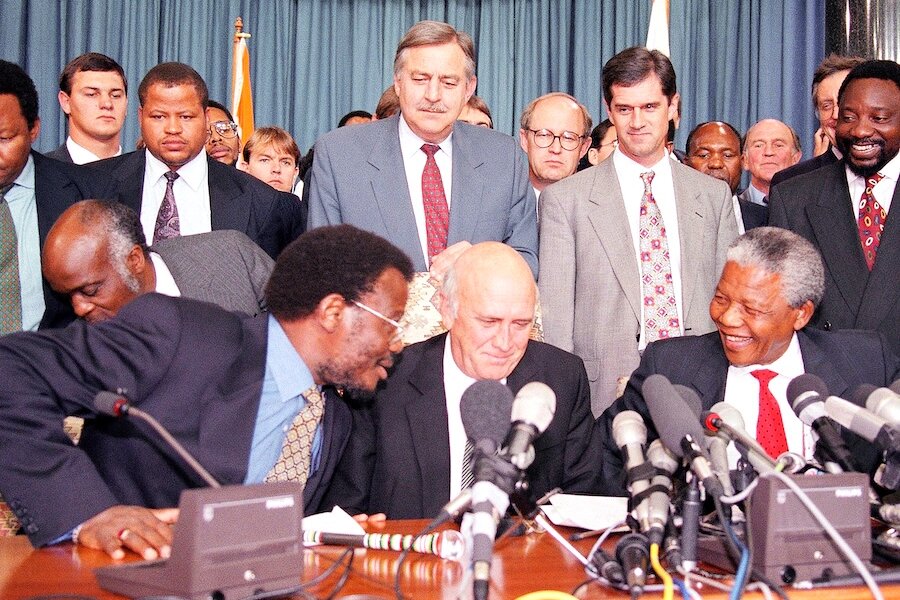
South Africa views the Iran war and American policy through a completely different prism: this is less a story about status than about survival in the jaws of others’ geopolitical games. Here the focus of discussion is not the frontline map but the question: will the country become a hostage to a new global split and the cudgel of American sanctions? Renowned South African economist Dawie Roodt warns in an interview with the business portal BusinessTech that the US still has “one key weapon” against South Africa — its debt securities. A significant share of rand‑denominated bonds is held by foreign investors, and as Roodt reminds readers, Washington, if it wished, could trigger a rapid capital flight, effectively launching a financial attack on the country. (businesstech.co.za) Combined with recent threats in the US Congress to “revisit” bilateral relations over Pretoria’s alleged closeness to Russia and Iran, this forms an image of America as a power whose smile can always potentially turn into a whip. (en.wikipedia.org)
Against this backdrop South African media cautiously welcome signs of thaw: The Citizen calls the recent meeting between President Cyril Ramaphosa and US Ambassador Brent Bozell III and the resumption of dialogue after periods of sharp statements and threats “a positive sign.” However, the same editorial advises a cautious, wait‑and‑see posture toward Trump’s second term and American foreign policy more broadly. It bluntly states: it is unclear which way Washington’s line will swing, and South Africa cannot base its strategy on the assumption of US “reliability.” (citizen.co.za)
The South Korean agenda regarding the US is much less dramatic, but there too a new restraint is noticeable. In major Korean newspapers — from Hankyoreh to Chosun Ilbo — recent coverage has focused less on Washington’s specific steps on Iran and more on accumulated fatigue with American domestic political turbulence: how climate, trade or technology policy in the US changes with administrations is perceived in Seoul as a direct risk to long‑term planning. This is visible in the English‑language analytical pieces read by Korean experts: a recent Council on Foreign Relations review emphasizes that with the arrival of Trump‑2 Washington bet on expanding fossil fuel extraction and rolling back support for renewables, creating tensions with partners like India that publicly tied their development to a green agenda. (cfr.org) In Korea this is translated into worries: how much can one rely on American promises on climate and technology if the White House “pendulum” swings to the opposite course every four years?
The second major block of foreign conversations about the US concerns debt, sanctions and the “weaponization of the financial system.” In South Africa, beyond the already mentioned Roodt, the question of potential American financial pressure is part of a wider debate about whom the country should align with externally. Recent polls cited by the analytical site The Common Sense show: South Africans do not want either “pro‑the West” or “anti‑the West” — a majority is against hard alignment with any camp, especially if it entails economic risks or deepens internal divisions. (thecommonsense.co.za) The US here figures as a symbol of the “West,” whose sanctions and demands for political loyalty arouse suspicion no less than offers from Moscow or Beijing.
For Indian debate the topic of sanctions against Russia and their secondary effects on India has long been a sore point. Academic and expert materials, such as a recent preprint on “the vulnerability of the Indian economy to foreign sanctions,” directly model scenarios in which US export restrictions or broad multilateral sanctions hit Indian supply chains in critical sectors. (arxiv.org) Commentators in Indian opposition media remind readers that the US has already “tested” trade pressure in the form of tariffs and threats to restrict access to technology, and they warn: the more India relies on American capital and infrastructure, the easier it will be for Washington to dictate terms in the future — from UN votes to positions on China and Russia. This line is especially pronounced in progressive outlets and English‑language Indian platforms, where February’s trade and technology deal with the US is read as trading away some autonomy for short‑term relief from pressure. (carnegieendowment.org)
South Africa, for its part, perceives the threat of financial pressure not as an abstraction but as a continuation of concrete US steps in recent years — from a House bill to revisit relations to loud statements by American congressmen about possible sanctions for Pretoria’s alleged “pro‑Russian” stance. (en.wikipedia.org) The South African expert journal Focus emphasizes that while the US does not impose as many duties on African goods as the EU, the very discourse of threats and the “conditionality” of partnership undermines the image of America as a reliable economic partner — the power asymmetry is too great for Washington’s “goodwill” not to be seen as revocable at any moment. (hsf.org.za)
The third major theme in which the US figures in discussions in India, South Africa and South Korea is the domestic crisis of American democracy and its export consequences. This is not just about Capitol riots or culture wars, but primarily about what has become obvious to partners: there is no consensus inside the US on basic questions — from the country’s role in the world to attitudes toward international law — and this makes any long‑term agreements fragile.
In South African press and English‑language analytical columns one increasingly finds dark irony: “America lecturing us on reconciliation and racial justice while declaring Afrikaner whites in South Africa victims of persecution and opening a special refugee corridor for them.” Such wording can be found, for example, in an editorial in the Christian Science Monitor, which discusses the appointment of Rolf Meyer as the new ambassador to Washington — a former minister in the apartheid government — as Pretoria’s attempt to demonstrate its commitment to reconciliation and to show Washington that the country is not conducting a “hunt for whites,” despite American accusations. (csmonitor.com) For South African commentators this is an example of how an ideologically polarized American discourse about “white genocide” directly affects bilateral relations, forcing Pretoria to play on the turf of someone else’s culture wars.
In India many commentators view Trump‑2 primarily through the lens of “reliability”: columns in Indian and global think‑tank media emphasize that during the 2025 escalation with Pakistan Washington effectively assumed the role of mediator in the Kashmir crisis, publicly crossing India’s long‑standing “red line” against any external mediation on Kashmir. (carnegieendowment.org) For a significant part of the Indian establishment this was a sign that American domestic politics and the president’s ambitions outweigh caution regarding issues sensitive to a partner. This explains New Delhi’s present vacillation: on the one hand India needs the US as a counterweight to China and as a source of technology; on the other hand the thesis that foreign policy “autonomy” cannot be reduced to a pretty word is being heard more loudly, since Washington repeatedly shows readiness to use both trade and political levers.
South Korea, although not at the center of these conflicts, watches closely how American domestic polarization affects regional security and the economy. Korean analysis foregrounds the question: will the US continue to guarantee Seoul’s security in light of rising costs and populist demands that “they should pay more for our protection”? At the same time Korean authors, citing Western think tanks like the CFR, note that America’s abandonment of consistent climate and multilateral policies also hits Korea’s “green” transition and its export of high technology, which depends on American subsidies and supply chains. (cfr.org) The attitude toward the US here is primarily pragmatic: an indispensable but increasingly unpredictable partner, from whom one needs to be maximally insured by developing autonomous defense and technological capabilities.
Against this backdrop a subtler but important line of discussion emerges, especially noticeable in India: what to do with American leadership in global rule‑making — from climate to artificial intelligence. One Indian analytical overview, prepared for exam courses and widely cited in local press, speaks of the formation of three incompatible regulatory regimes for AI — in the US, the EU and China — leading to fragmentation of the digital space. (drishtiias.com) Indian authors see both a threat and an opportunity in this: on the one hand, US pressure to align India’s digital economy with American norms, including data transfer requirements, raises fears of losing digital sovereignty; on the other hand, amid this competition India is trying to promote its own agenda, organizing events such as the India AI Impact Summit 2026 and positioning itself as a “fourth center of power” between Washington, Brussels and Beijing. (en.wikipedia.org)
What unites all these, at first glance different, stories — from a sunken Iranian frigate in the Indian Ocean to South African fears about the “weaponization of debt” and Korean doubts about the reliability of the US climate agenda? In each of the three countries America simultaneously appears as a partner and a structural threat. Indian experts fear Washington will turn their strategic autonomy into a fiction, using trade and security as levers of influence. South African commentators soberly recognize that even with a “thaw” in relations one sharp turn in Congress could result in sanctions or a financial blow. South Korean analysts increasingly speak of the need for an “insurance policy” in case American policy once again radically changes under pressure from domestic populism.
At the same time local texts also express something seldom heard within the US itself: fatigue with American exceptionalism as an explanatory model. An Indian column on the “surrender” of foreign policy asserts plainly: one cannot endlessly justify Washington’s unilateral moves by appealing to its special role when those moves systematically undermine partners’ autonomy. (fpif.org) The South African discourse of “neither pro‑West nor anti‑West” expresses the same sentiment in another language: middle‑weight countries are no longer prepared to build their fate around the axis “with the US or against the US.” (thecommonsense.co.za)
The resulting picture looks like this: America is still the center of global attention, but not as an unconditional leader, rather as the main source of geopolitical uncertainty. In New Delhi, Pretoria and Seoul people are learning to live with that uncertainty: they diversify ties, build up autonomy, critically reassess their “friendship” with Washington even as pragmatism pushes them toward cooperation. And perhaps it is from these cities today that one can best see how much the image of the US itself has changed over the past decade — from an “anchor” of order to a factor partners try to keep at a distance without cutting the rope.

![Since 2004, the US fundedPEPFAR programhas helped to stabilize theAIDS pandemic in South Africa.[36]](https://upload.wikimedia.org/wikipedia/commons/thumb/c/c3/Annual_South_Africa_AIDS_deaths.svg/500px-Annual_South_Africa_AIDS_deaths.svg.png)