Debates about the role of the United States in the world have returned to the forefront — but if you look not from Washington, but from Riyadh, New Delhi or Canberra, the picture is very different from that inside the United States. The intensification of the US–Israel war against Iran, the uncertain outcome of negotiations, Donald Trump’s meeting with Xi Jinping in Beijing, Washington’s pressure on security, AI and semiconductors — all of this is woven into different countries’ own narratives about what America is for the world today: a threat, a guarantor, a partner or a source of instability.
Saudi and more broadly Arab media view the current crisis through the prism of the war with Iran and energy market security. Indian outlets — through the contradictory mix of strategic partnership with the US and American criticism of Delhi’s domestic policy. In Australia the focus shifts toward long-term defense strategy, the China factor and dependence on the US in technology and security. These themes often overlap: Iran, China, technology, and underlying all of that — the question of whether Washington is still capable of conducting careful, predictable foreign policy.
The main through-line of the discussions is the new stage of the US–Iran war that began in February 2026 with active Israeli involvement. Arab press dissects it almost as an internal regional drama in which the US plays an external but decisive role. Saudi publication Okaaz, in a recent piece, describes the situation as a moment when “US–Iran negotiations have entered a decisive stage” and at the same time emphasizes that Donald Trump keeps the “large-scale strike” scenario on the table despite the announced postponement of an already nearly ready attack. The paper relays in detail the conditions Washington is demanding, including written guarantees that Tehran will renounce nuclear weapons, and Iran’s counter-demands — recognition of its right to uranium enrichment, lifting of sanctions, withdrawal of American forces from the region and compensation for war damages. Such detailing of negotiating positions shows that for a Saudi audience the practical architecture of regional security matters more than ideology, since any American decision immediately resonates on the kingdom’s borders and in oil prices. That is why, when analyzing the postponed strike, Okaaz’s authors stress Trump’s duality: he speaks of readiness to reach an agreement, yet conspicuously does not remove the military option from the table, thereby leaving the region suspended.
A similar motif of uncertainty and fatigue with the US–Iran confrontation appears in more ideologically charged Arab commentaries. Jordanian outlet Al-Balad, in its assessment of “Trump’s war,” calls American actions a “tactical success” without strategic result and leads readers to the conclusion that Washington’s main and unchanged priority remains the alliance with Israel — even to the point of asserting that “American America” in the region acts through a “colony” intermediary. This angle fundamentally differs from rhetoric in the US, where the alliance with Israel is presented as a natural outgrowth of shared values: for writers in Amman it is an instrument that allows America to project power in the Middle East, often at the expense of Arab interests. The editorial conclusion, addressed not only to Saudi or Jordanian audiences but more broadly to the Arab world, is that relying on the US as a security guarantor brings the region “harm instead of protection” and that Arab states have sufficient resources — geography, oil and gas, capital and markets — to build their own collective security system and alliances, instead of endlessly integrating into American schemes.
Egyptian commentators, discussing the same war, add another stroke: fear that US concessions to Iran to end the conflict may undermine the remnants of American hegemony. In one column on an Egyptian portal the author draws a direct parallel between the current crisis and the Suez War of 1956, after which British and French influence finally declined. The logic is simple: if Washington is forced to “swallow” Iranian terms while preserving Tehran’s military power, then for many regional capitals this will signal that the “US empire” is historically exhausting itself, as colonial powers once did. But another danger is also acknowledged: Iran, “too strong to be broken and too dangerous to leave unchecked,” could use its preserved power for further regional expansion. Thus the American military line toward Iran is criticized from both sides at once: for being destructive to the region and to US authority, and because its possible rollback could lead to a new wave of instability.
Saudi commentators take a more pragmatic and less ideological stance than their counterparts in Amman or Cairo. For them the central question is not a moral assessment of American policy, but whether current US–Iran negotiations will lead to a durable balance that reduces the risk of strikes on Gulf infrastructure and spikes in energy prices. A kind of “skeptical pragmatism” in Saudi texts contrasts with the harsher conclusions of Al-Balad, where, influenced by the Palestinian issue and criticism of the Israeli operation in Lebanon, the thesis is voiced that “America’s very presence in our region brings harm, not protection” to the Arab world and that the response should be Arab consolidation and independent multilateral alliances.
In India, US actions in the Middle East are barely discussed in the mainstream: the US agenda there runs on two other tracks — partnership and pressure. On one hand, recent coverage of the US–India summit in Washington emphasizes that the relationship is at a “tipping point” or “watershed moment,” with bipartisan consensus in the US about deepening defense and technological cooperation coexisting with concerns about growing frictions. Indian diplomats on such platforms speak primarily not about values but about opportunities: India’s ambassador to the US stresses the role of the Indian diaspora as a “fundamental pillar” of the partnership, while parliamentarians and experts talk about key areas — from defense industry to technology supply chains.
On the other hand, in neighboring countries and parts of India’s English-language debates it is clear how painfully US criticism of India’s domestic policy is perceived. A recent report by the US Commission on International Religious Freedom, again recommending that the State Department designate India as a “country of particular concern” for “systematic and egregious violations of religious freedom,” sparked lively debates in Pakistani and Indian media. Pakistan’s Business Recorder saw in it a signal of “how far the world’s largest democracy has drifted from its professed secular ideals” and pointed to “the capitulation of key institutions, including the judiciary.” For Indian audiences such reports serve as a reminder of the “dark side” of partnership with the US: the very American bodies that call India a bulwark of democracy in Asia and a key counterweight to China can, in the next paragraph, sharply criticize it over the rights of religious minorities.
This duality also manifested at the recent India AI Impact summit in New Delhi, where India presented itself as a rising “AI power” of the Global South. According to Indian and international outlets, Prime Minister Narendra Modi used the platform to declare the country’s global ambitions, whereas the American delegation, according to several analysts, came with an agenda oriented more toward “dominance” than cooperation, framing AI development as another front in the geopolitical competition with China. This perception reinforces an old question in Indian discourse: will the US treat India as an equal strategic partner or see it merely as a tool in a broader confrontation with Beijing?
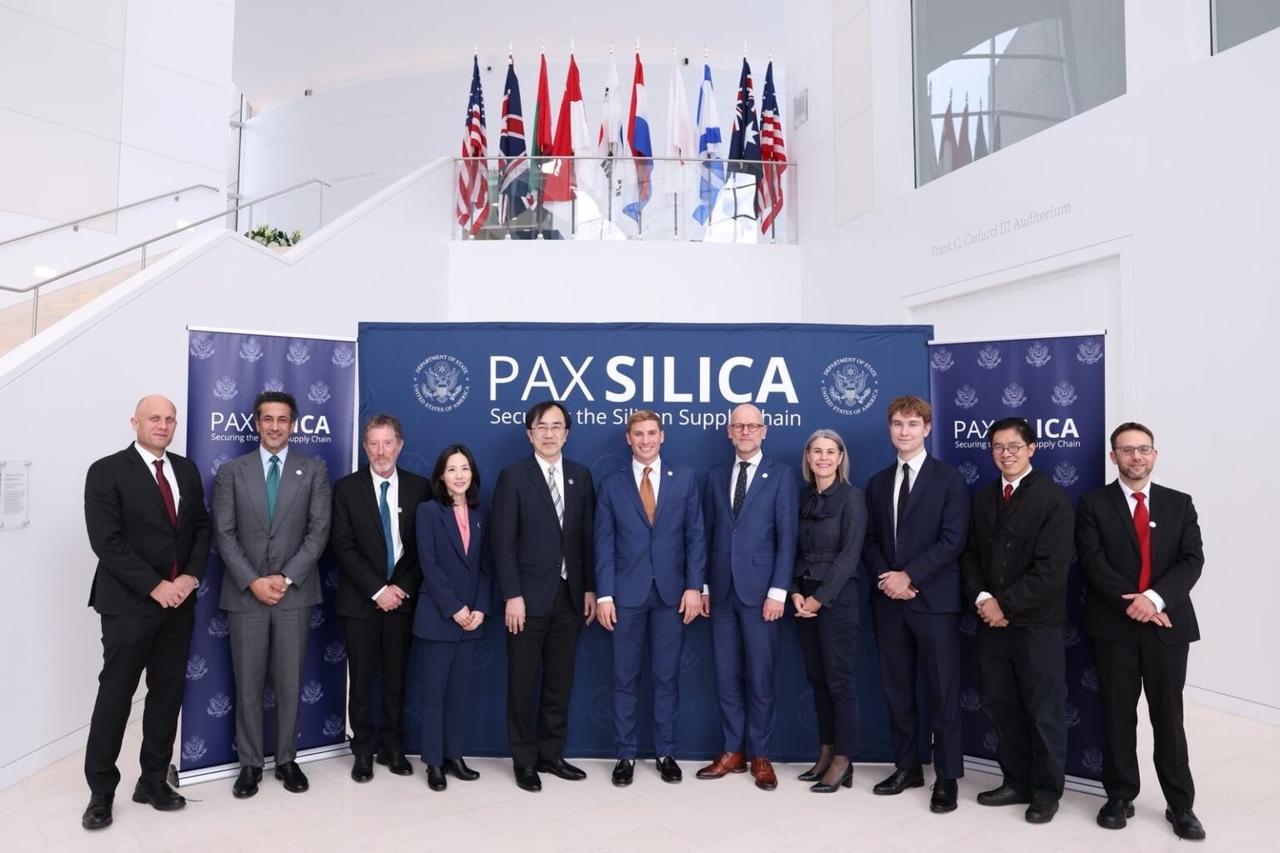
The Australian picture differs significantly in tone and planning horizon. There the discussion of the US is embedded in a much broader debate about what the country should prepare for in the coming decades. Australia’s National Defence Strategy, published in April 2026, sets an ambitious goal to raise military spending to three percent of GDP by 2033, emphasizing long-range strike capabilities, missile defense and unmanned systems. Washington does not always appear directly in the document, but it is present as an implied hub of the alliance web — from AUKUS and bilateral agreements to the actively discussed “Pax Silica” initiative, i.e., the construction of a new security regime around the global semiconductor industry.
One Washington think tank, describing the Pax Silica Declaration, explicitly notes that the initiative formalized in January 2026 brings together the US, the UK, Australia, Japan, India, Gulf states and several European countries in a network where chip supply chain security is declared a component of the geopolitical struggle for leadership in AI. For Australian experts this is a double-edged story. On one hand, Canberra’s participation in such an architecture is seen as a way to raise the country’s strategic weight and strengthen its technological sovereignty in critical areas. On the other — critics point out that such a “chip bloc discipline” ties Australia even more closely to American foreign policy in the Indo-Pacific, leaving less room for independent maneuver, especially in relations with China, which remains its most important trading partner.
In commentary on the new defence strategy and related programs, Australian observers often point out that Washington itself is undergoing a period of turbulence in relations with its allies, which undermines its negotiating position vis-à-vis Beijing. Chatham House, analyzing the results of Donald Trump’s meeting with Xi Jinping in Beijing, writes bluntly that Trump’s harsh treatment of traditional allies weakened his position in talks and allowed China to benefit from greater economic cohesion with US partners and the weakening of multilateral structures meant to contain Beijing. In this context Australian debate balances between acknowledging that without the US its own “deterrence through denial” strategy is unlikely to be feasible and growing concern that American domestic politics and the White House’s abrupt zigzags can turn regional security into a hostage of US internal political battles.
A common theme across all three countries is the sense that the US increasingly pursues a policy of “pressure and maximum leverage,” not always with a clear and realistic end goal. Egyptian international relations expert Ismail Turki, in an interview with a Cairo outlet, aptly describes the American approach as “negotiations under pressure”: Washington, especially under Trump, combines economic sanctions, military escalation and diplomatic signals, but the opposing side — be it Iran or China — itself holds significant levers, including control over vital sea lanes or roles in global supply chains. As a result, the “maximum pressure” strategy does not produce a conclusive outcome, but drags out the conflict, multiplies unpredictability and creates belts of risk for US allies that they must manage on their own.
In India the same motif is refracted through the agenda of human rights and democracy. Some commentators point out that American statements about religious freedom and minority rights addressed to New Delhi sound particularly sharp against the backdrop of Washington’s willingness to ignore such issues when working with authoritarian allies in the Middle East or Southeast Asia. Pakistan-based Business Recorder, commenting on the US Commission on International Religious Freedom’s report on India, uses it as an argument against Delhi’s claims to be a “model democracy” and as an example that the US can at any moment turn the values agenda into leverage over a partner. For Indian audiences such texts, even when originating in a rival country, further raise the question: how compatible are India’s long-term national projects and its ambition to be a “leading power of the Global South” with deep integration into an American strategy of containing China and controlling AI technologies?
Australians, in turn, when discussing the American course in Asia, often look not only at China but at Taiwan and the growing interdependence of the US and Taiwan in chip manufacturing. Washington think tanks, assessing the risk of military conflict over Taiwan, note that the United States “is not fully prepared for a protracted war,” citing shortages of a number of key systems — from unmanned underwater vehicles to long-range missiles and modern air defense systems. In Australian discourse this is seen as an additional argument for accelerating the buildup of national capabilities: if even the US acknowledges resource deficits and overcommitments, allies cannot rely solely on American “umbrella security.” But there is also a reverse conversation: participation in AUKUS, Pax Silica and regional defense initiatives means that in the event of a crisis in the Taiwan Strait Australia would be drawn into a conflict whose scale is hard to foresee.
Against this backdrop it is particularly interesting to note differences in how countries speak about the future of American leadership. Arab press often voices the idea that the current confrontation with Iran and support for Israel accelerate the “historical decline” of American hegemony and open a window of opportunity to form a more autonomous regional architecture based on Arab resources and new cooperation formats — from the Organization of Islamic Cooperation to a strengthened role for OPEC+ in global politics. Indian commentators, especially those focused on economics and technology, tend to view the US as an indispensable partner and a source of capital, market access and scientific-technical exchange, but increasingly raise the question of how not to become a junior partner in relations where the security and technology agenda is written in Washington. In Australia the tone is more measured: the US is still seen as the main guarantor of regional balance, but there is serious discussion of scenarios in which the country will have to act more autonomously if internal upheavals in America or a prolonged conflict with China weaken its real ability to fulfill alliance obligations.
If you bring these disparate voices together, you get a sober and at times severe view of the United States — one rarely heard within the US itself. For Middle Eastern writers America increasingly appears as an external actor whose interventions and wars create more instability than protection, and whose loyalty to allies is determined not by shared values but by the logic of serving Israeli interests and controlling energy flows. For India the US is both a strategic anchor and a potential meddler in domestic politics, and a partner in AI and technology that has not yet decided whether it is ready to truly share power. For Australia Washington remains necessary but no longer sufficient for security: Canberra looks to a future in which it must simultaneously strengthen defense, plug into American technological and military blocs and seek ways to minimize dependence on political fluctuations in the US.
It is in this mosaic of perspectives that the main feature of the current moment becomes apparent: the US remains a central pillar of the international system, but more and more countries — from Riyadh to New Delhi and Canberra — discuss Washington not as the undisputed “center of the world” but as a complex, contradictory and not always reliable partner, around which they need to build their own safeguards and alternatives.