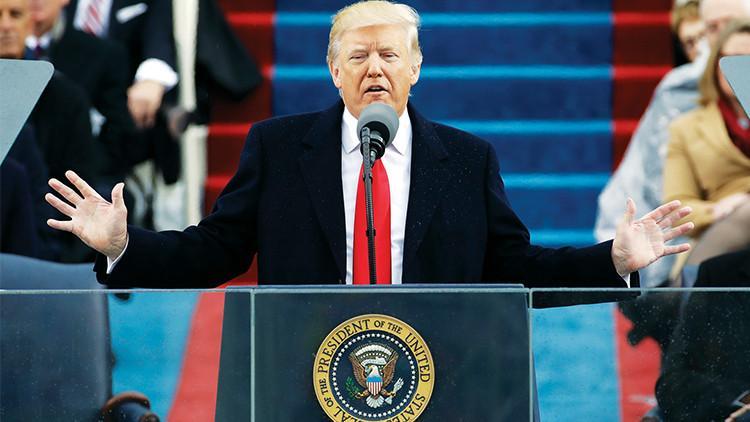
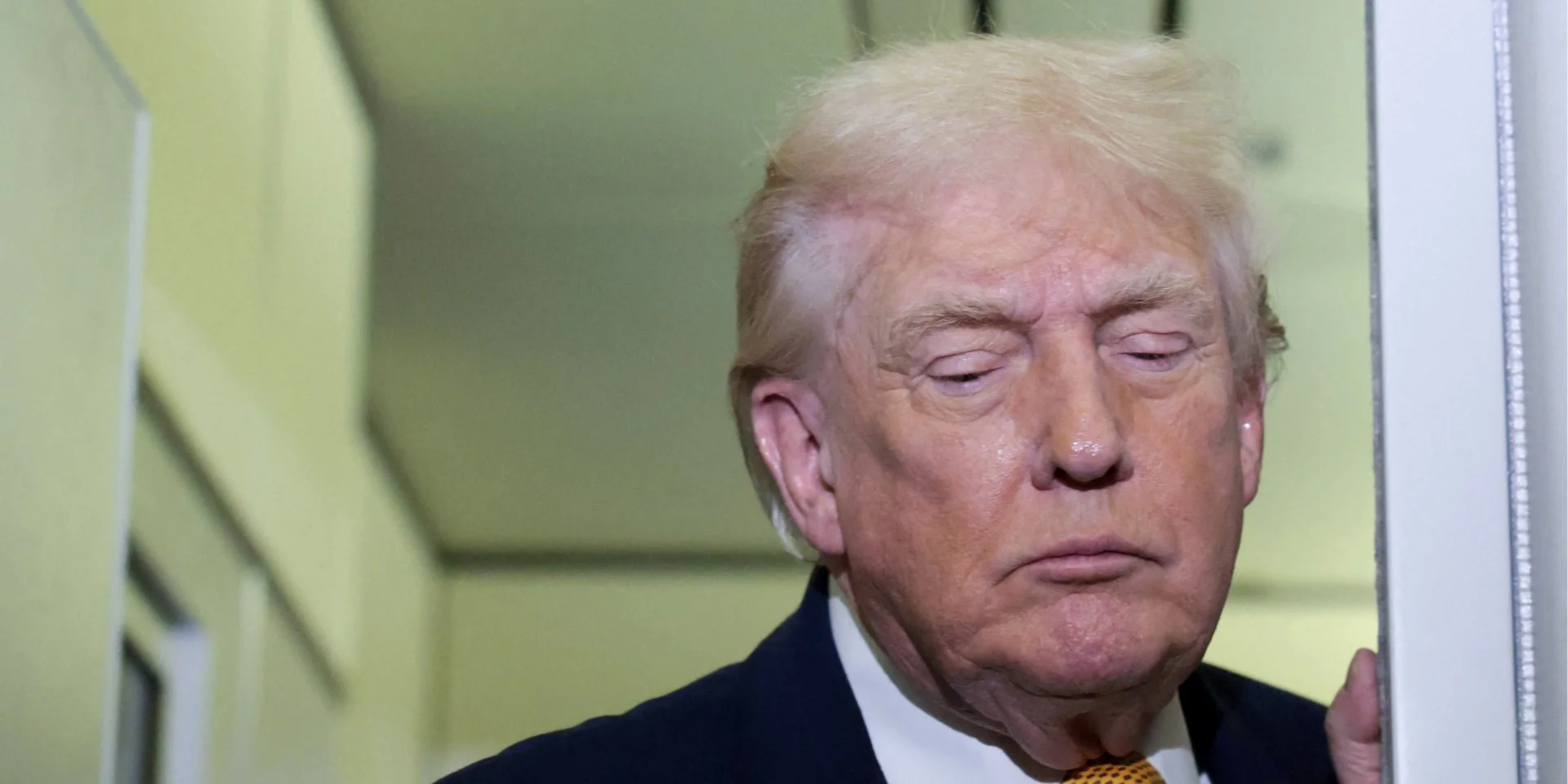
The United States is again at the center of global discussion, but the image of America at the start of 2026 is very different from what the last generation was used to. Donald Trump’s return to the White House, large-scale tariff wars, attempts to reshape the security architecture and pressure on allies make Washington not simply the “leader of the West” but a source of hopes, fears and irritation at the same time. In Turkey, Ukraine and Australia people talk about the U.S. every day, but each country’s agenda is its own: from budget crises and tariffs to the prospects of war and the fate of the world order.
One of the fresh topics was the end of a new mini-shutdown in the U.S.: Turkish economic outlets detailed how Trump signed a budget package that ended a four-day partial shutdown of the federal government, providing funding for key departments until the end of September and only a temporary two-week “patch” for homeland security. Turkish commentators see this not only as a domestic American story but as a symptom of wider budgetary and political instability in a country whose decisions still set the tone for the global economy and security. In Ukrainian and Australian media, far more attention is drawn to two pairings: “U.S. — trade wars and tariffs” and “U.S. — the war in Ukraine and a new understanding of alliance.”
The first major theme uniting all three countries is economic nationalism and the tariff war the Trump administration has launched against practically the entire world. Ukrainian economic commentators are already calculating the consequences: by some estimates, the average rate of American tariffs rose by autumn 2025 to historic highs, which the International Monetary Fund and private analysts interpret as the largest tariff shock since the 1930s, with expected slower growth both in the U.S. and globally. One Ukrainian analyst, in a column on global forecasts for 2026, states: “The Trump administration has launched the largest tariff war since the Great Depression, and this has already put a negative mark on global GDP growth for the coming years,” citing calculations on the drop in U.S. growth and the IMF’s downgraded forecast.(glavcom.ua)
The Australian discussion sounds more down-to-earth and concrete: local media literally measure Trump tariffs in dollars per kilogram of beef and in tenths of a percentage point of national GDP. When Trump’s “day of liberation” in 2025 brought a 10 percent tariff on Australian beef, it seemed this would hit a key export sector. But the result was the opposite: a shortage of U.S. cattle, record demand for “lean” meat and a favorable exchange rate led to a historic record — Australia increased shipments to the U.S. by more than 30 percent in volume and significantly in price, and by year-end beef exports overall approached 1.5 million tonnes for the first time. Meat analyst Simon Quilty told ABC that the tariff “changed almost nothing”: “If tariffs were supposed to discourage shipments to the U.S., the opposite happened with Australia: Americans need our lean beef because they simply don’t have enough of their own.”(abc.net.au)
However, that local success conceals a broader anxiety. In ABC’s analytical pieces and economic commentaries, a repeated thought is that ordinary Australians and businesses are adapting to another round of American protectionism, but the strategic dependence on the U.S. remains a vulnerability. Local experts read IMF forecasts closely, which explicitly warn of a “substantial slowdown” in global growth, including Australia, due to Washington’s tariff policy, and note that in those reports the U.S. is described as “the main sufferer from its own tariffs.”(abc.net.au)
The Ukrainian view of the same U.S. tariff policy is much less pragmatic and far more politicized. For Kyiv, American economic confrontation with China and several other countries is part of a larger picture in which Washington simultaneously pressures adversaries, negotiates with allies and reassembles the rules of the global game. Ukrainian authors link this to Trump’s attempt to build a world where the U.S. is not so much the “leader of the free world” as a “heavy center of gravity,” forcing each neighbor to pay for access to markets and security.
The second major theme is the war in Ukraine and how the U.S. is trying to define its end from its own position. Here the Ukrainian discussion is, naturally, the sharpest and most detailed. In one recent segment Ukrainian TV channels relayed Volodymyr Zelenskyy’s statement that Washington would like to see the war end by the summer of 2026; behind that thesis lies a whole layer of reports about behind-the-scenes consultations between the U.S. and European capitals, as well as rumors of a “roadmap” for ending the war being discussed between American and Russian representatives.(ukr.net)
Ukrainian analysts and invited Western experts respond to these publications with noticeable skepticism. First, it is emphasized that Moscow, through its Foreign Ministry spokeswoman Maria Zakharova, publicly denies receiving any official offers from the U.S., meaning the talks are more likely informal probes. Second, an idea is increasingly voiced that Trump’s “peace plan” would mean pressure on Kyiv for a deal that benefits the White House primarily, not Ukraine. In an interview with a Ukrainian channel, U.S. military expert Mark Cancian bluntly says the Trump administration will continue its current line — selling arms to Europeans while avoiding direct funding, and pushing Europe toward greater responsibility for its own security. “From his point of view, arms sales are good for the U.S. economy and American manufacturing,” Cancian explains, suggesting that the value of Ukraine to Washington is largely seen through economic and domestic-political lenses.(tsn.ua)
For Ukraine’s political class and society, such ally pragmatism is painful. Analytical columns even discuss the prospect of a 2026 Nobel Peace Prize for Trump for a possible “ending of the war” — a scenario many in Kyiv view more as a threat: to secure such a prize, Trump would need a quick and spectacular result, which critics say would almost certainly mean imposing compromises on Ukraine over territory and status. Political scientist Volodymyr Fesenko, in a column on “Trump and the Nobel,” reminds readers that the deadline for nominations for the 2026 Peace Prize is still ahead and predicts that the American president could indeed be a contender if he demonstrates the end of several wars. But in the Ukrainian context this forecast is read as a warning: “peace” in Trump’s version is not necessarily a just peace.(glavcom.ua)
In Turkey, discussion of America’s role in the war in Ukraine is more often woven into a broader knot of topics: Ankara’s competition with Washington in the Black Sea, the fate of the grain deal, the balance within NATO, and the Syrian agenda. At the same time, among the general public attention is currently drawn more to domestic American storylines — from the brief shutdown to financial markets and the dollar exchange rate, which directly affect the Turkish economy. Coverage of the end of the partial federal closure through the signing of the budget package is presented as a reminder: even the chief issuer of the world’s reserve currency is not immune to political paralysis, which means Turkey must be ready for volatility in dollar flows and demand for its exports.(bigpara.hurriyet.com.tr)
The third cross-cutting dimension is the perception of America’s internal stability and political future. Ukrainian media have published translations and adaptations of Western pieces pondering the “future of the U.S. by 2026” and the fears that the founders felt in the 18th–19th centuries, doubting whether the republic would survive serious trials. A piece based on The Economist draws parallels between the anxieties of George Washington and Thomas Jefferson and current doubts about the American system’s ability to withstand Trump’s second term, endless budget wars and bitter polarization.(nv.ua)
Ukrainian commentators read these texts through their own experience: a country whose security critically depends on the U.S. suddenly sees that its pillar itself is cracking. Hence the growing debate about the need to diversify sources of support and to bolster ties not only with Washington but also with Europe. In an interview a Western expert, Scott Lucas, notes that Trump sees the world primarily as a set of deals and economic levers, and predicts a continued course in which the U.S. will tighten sanctions on Russia while expecting allies to finance Ukraine’s defense themselves by buying American weapons.(24tv.ua)
The Australian conversation about America’s political future is less existential but no less attentive. Local trade and security experts argue that the era of postwar “open” American leadership is over, and Canberra now has to work with Washington as a tough, transactional partner. ABC analyses emphasize that China, despite the tariff war, finished 2025 with a record trade surplus of about $1.2 trillion, reorienting exports to Southeast Asia, Africa and Latin America — and this is read as a sign that Trump’s strategy not so much breaks as fragments the world order, opening a niche for China outside the American orbit.(abc.net.au)
For Australia, geographically and economically tied to Asia, this is especially important: American protectionism and confrontation with Beijing push the region toward a new balance in which Canberra will have to navigate between U.S. interests as a security guarantor and China as its main trading partner. Thus discussion of American tariffs and trade wars inevitably turns there into a broader conversation about whether Washington in its new role can still be a reliable “anchor” in the Indo-Pacific.
Turkey has its own unique angles that rarely make the English-language agenda. Here the image of the U.S. is formed simultaneously by experience of working together in NATO, sharp conflicts (from U.S. support for Kurdish forces in Syria to disputes over purchases of Russian S-400s) and watchful attention to American influence in the Black Sea region. Turkish newspapers, largely aimed at a domestic audience, present American budget dramas, trade conflicts and confrontation with China as further confirmation that the world has entered a “multipolar era,” in which Ankara wants to play an independent role without dissolving into either the American or Chinese orbit. Therefore any manifestation of weakness or chaos in Washington — from a shutdown to protracted trade wars — is read in Turkey as an argument for a more independent course.
There is also a subtler layer of perception of the U.S. — cultural and political. In Ukraine, recent high-profile criminal cases in America, including the resonant murder of a Ukrainian refugee, became the occasion to discuss American racial and migration problems and how the U.S. itself copes with polarization and violence. In a piece about how that murder was turned into a “weapon of political wars” and sparked a racial scandal, Ukrainian journalists emphasize the ambiguity of America’s image: a country that helps Ukraine fight for democracy is itself mired in fierce cultural wars and vulnerable to its own prejudices.(tsn.ua)
If you try to bring these different voices into a single chorus, a complex, contradictory picture emerges. For Ukraine, the U.S. remains a vital but increasingly unpredictable ally, one to be argued and bargained with, not only thanked for support. For Australia, America is a powerful but not omnipotent economic and military partner whose protectionist policy simultaneously brings short-term gains to certain sectors and creates long-term risks for the whole global trading system. For Turkey, the U.S. is an important but no longer dominant pole whose internal chaos and external jolts are used by Ankara as arguments for a more independent, “nationalized” foreign policy.
What unites all these countries and discussions is that no one looks at the U.S. anymore as a homogeneous, reliable and predictable center of the world order. Trump’s America is a bundle of deals, blackmail, impulsive decisions and, at the same time, colossal economic and military weight. Turkish, Ukrainian and Australian authors are learning to read this new America pragmatically: to count tariffs and GDP percentages, analyze Nobel Committee deadlines and electoral cycles in Washington, weigh how much military support costs and what concessions will be asked for it. This is no longer naive faith in the “city on a hill,” but neither is it simple anti-American rhetoric: we face a world in which each country, from Ankara to Kyiv and Canberra, builds its own increasingly complex and critical relations with the U.S. — understanding that without America they cannot do for now, but they also cannot rely on it “as before.”