At the beginning of 2026, the United States appears in the headlines of Brazilian, French and Russian media along several lines of conflict and influence. This is not a single big scandal but an overlay of several narratives: the rapid deployment of US forces in the Middle East, a new wave of Washington protectionism and tariff wars, a hard line against Venezuela and China, and — more deeply — a debate about whether the US is turning into the "United States of the World," reshaping the global order to suit its interests. In Brazil this is viewed through the prism of Global South sovereignty and economic vulnerability; in France — through fear of the collapse of the multilateral trading system and pressure on European manufacturers; in Russia — through the traditional lens of resisting American hegemony and security threats.
One of the most discussed topics across all three spheres has been US military activity in the Persian Gulf amid the crisis in Iran. In the Russian-language segment they examine in detail the January deployment of a US carrier strike group led by the Abraham Lincoln and the incident with a downed Iranian drone, which was destroyed by an F‑35C fighter with no US losses. Russian materials emphasize that this is a link in a chain of escalation rather than an isolated episode: the deployment is presented as a step toward consolidating US military presence in a zone where war rages and internal protests are flaring in Iran. In this logic, Washington appears not as a guarantor of stability but as a factor that increases the risk of direct confrontation.(ru.wikipedia.org)
Brazilian analysts, discussing the conflicts of 2026 "from the perspective of Latin America," draw parallels between the current US display of force in the Persian Gulf and a tradition of more than a century of Washington's interventions in the politics of the Western Hemisphere. In a Portuguese-language piece by Vatican News devoted to historical crises of the early 20th century, they recall how the Monroe Doctrine and later Roosevelt's "corollary" legitimized "preventive" US interventions in the Caribbean under the pretext of protecting against European powers — and how this became a long-term mechanism of domination. The piece also makes a transparent hint that contemporary military operations and blockade logic toward "unwanted" regimes in other regions of the world are a continuation of that same tradition, shifted from the Caribbean to the Persian Gulf.(vaticannews.va)
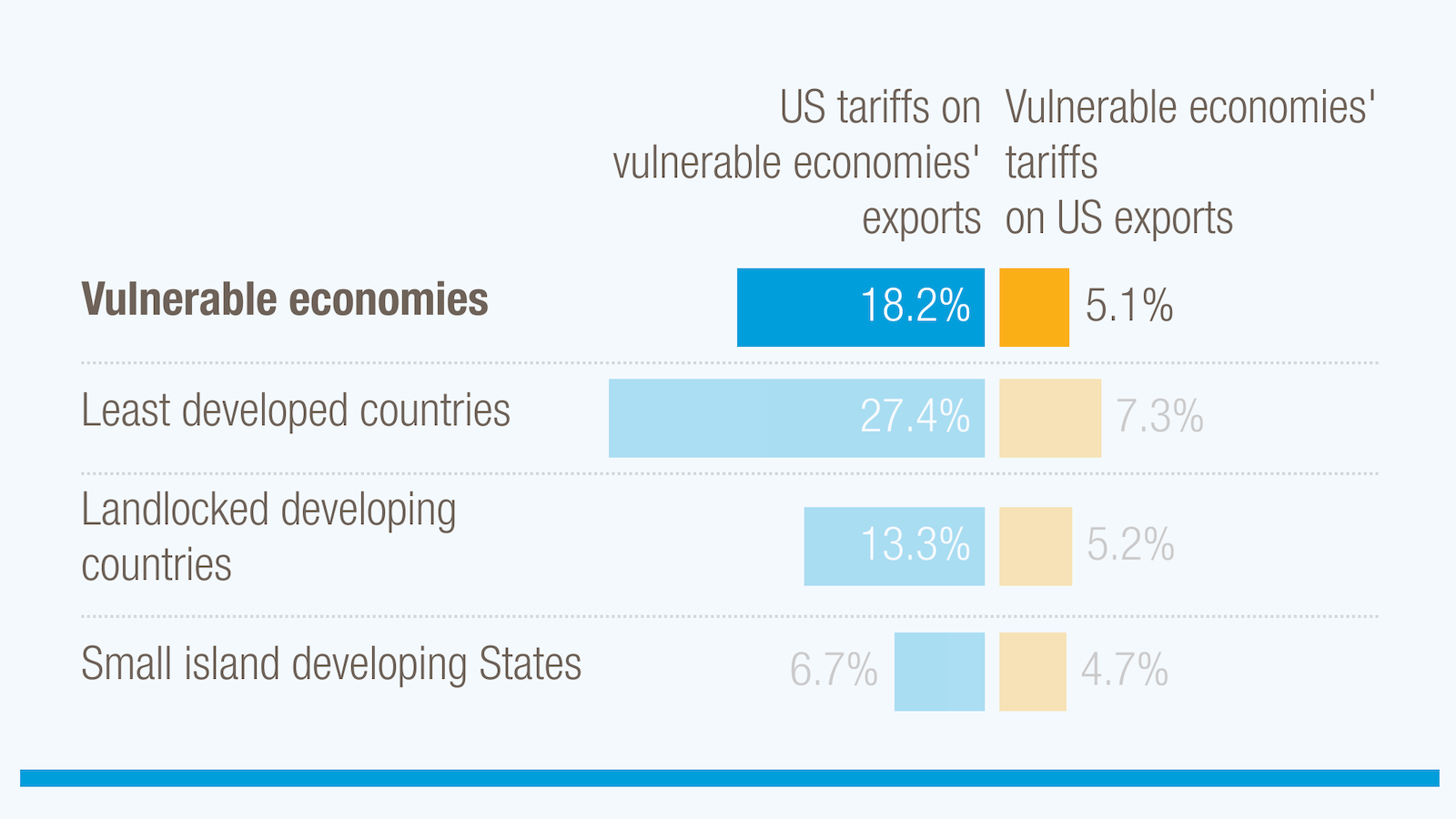
In France, the Middle East in the current cycle of discussions is linked to another key theme — the US trade and economic wars. Military deployments in the East are described as an element of a broader strategy of pressure and coercion, where tariffs and sanctions are as important a weapon as aircraft carriers. It is Washington's tariff policy that particularly worries Paris and Brussels now, and French experts analyze it as a "radical change of course" in which security and economic agendas have merged. Under UN and French government reviews they examine in detail how the Washington administration uses the International Emergency Economic Powers Act to justify additional duties, including under the pretexts of combating illegal migration and fentanyl.(unctad.org)
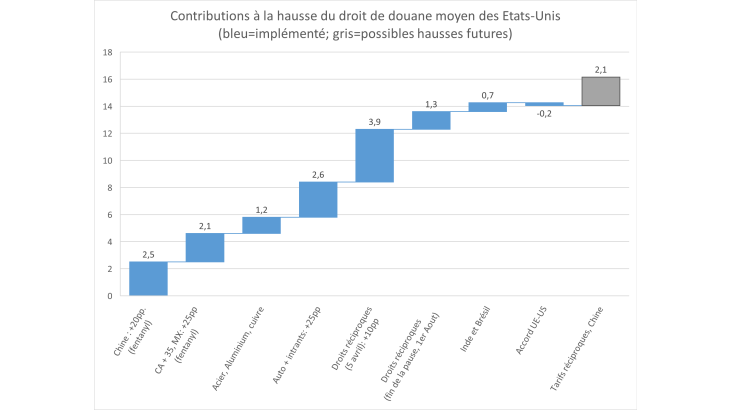
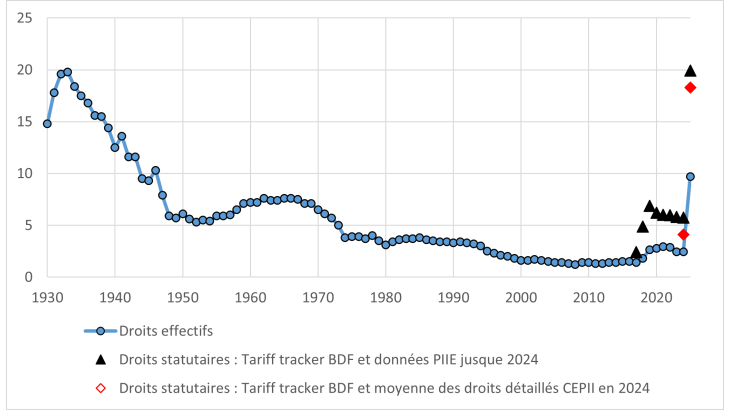
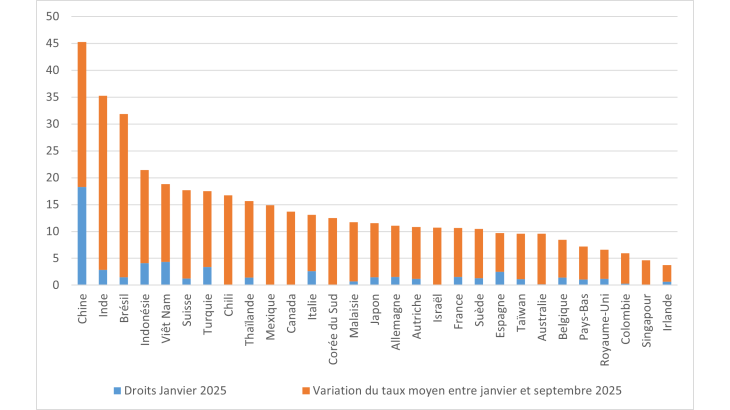
Trade wars and tariffs are the second major linking theme for Brazil, France and Russia. From the French point of view, the US has become the center of a historically unprecedented protectionist turn. A Banque de France study notes that since January 2025 the US average effective tariff has risen sharply, reaching about 45% vis‑à‑vis China, with hits falling on steel, aluminum, automobiles and other sectors in which both China and European manufacturers are strong. The authors stress that exporters have had to partly "absorb" the price increases — cutting their own margins to avoid losing the American market.(banque-france.fr)
French and pan‑European commercial analysts paint a similar picture from another angle. In an Allianz Trade study, US tariff policy with Donald Trump's return to the White House is described as a "resumption of trade war at a new rate." Economist Ana Boata warns that the planned increase of tariffs to 25% on Chinese goods and an additional 5% on the "rest of the world" (excluding Mexico and Canada) could cost world trade 0.6 percentage points of growth in 2026 alone, and in a hypothetical "total trade war" scenario losses would be much more severe. In this narrative the US appears not merely as another protectionist player but as a global shock generator upon whose decisions EU value chains depend.(allianz-trade.com)
In Russia, Washington's trade policy resonates primarily through currency and commodity channels. Russian and Russia‑aligned business media explain to readers that new US duties against European allies, as well as against China and NAFTA countries, will most likely lead to a stronger dollar and increased volatility in financial markets. In one such analytical commentary published on the Seldon platform, the introduction of new tariffs is directly described as a "classic trade war scenario" that slows European economies and creates short‑ and medium‑term support for the US currency. They also cite Goldman Sachs estimates suggesting that a sharp dollar weakening should not be expected in 2026 despite cyclical risks.(myseldon.com)
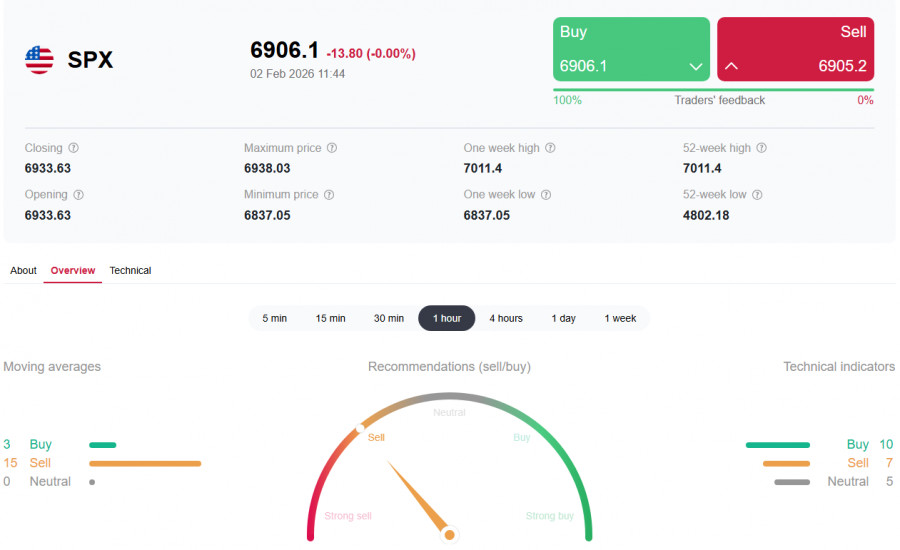
Against this background Russian forex analysts closely monitor the Fed's actions and the "unpredictability of Trump and the White House." In one recent review of the S&P 500 it is noted that the market prices in continued tightening to control inflation and a stronger dollar, but at the same time fears "geopolitical events happening in the world and unexpected, for the most part, actions by Trump and the White House." For Russian investors, in this discourse the US is not a stable anchor of the global economy but a source of political risk to which they must adapt.(instaspot.com)
Brazilian business discourse gives yet another facet to the same storyline. In January clippings by the Steel Institute (INDA) Brazilian industrialists and foreign trade experts discuss how a new wave of international conflicts and an election year in Brazil could create an "explosive mix" for the real exchange rate and trading conditions. They also emphasize that the trade balance with the US in 2025 shifted from a small surplus to a significant deficit of $7.5 billion, while relations with China and the EU also deteriorated, partly under the influence of the global tariff climate. In a column on the expected conclusion of the Mercosur–EU agreement, former Portuguese prime minister António Costa, responding to a Brazilian journalist, calls the deal "a message in favor of multilateralism and free trade" against Donald Trump's "tarifaço" — a term the Brazilian author picks up almost ironically: "tarifaço imposto pelo presidente Trump – digo eu".(inda.org.br)
For a Brazilian audience, the US in this narrative is not only a giant market but a partner capable at any moment of reshaping the rules of the game. Therefore support for the Mercosur–EU agreement in the local press is explained not only by economic benefits but also by the desire to reduce structural dependence on the US and China, using Europe as a counterweight to Washington's protectionist impulses. Hence the special attention to France's position: Paris, acting as a brake on ratification of the deal, simultaneously criticizes American protectionism but fears cheap agricultural imports from South America that could undermine French farmers. To Brazilian commentators this appears as another example of Western double standards, in which the US sets the tone while the EU is stuck between the desire to shield itself and the ambition to lead on free trade.
A third important theme, where reactions are particularly sharp in Brazil and Russia, is the US hard line toward Venezuela and, more broadly, the sovereignty of Global South countries. In an analytical essay on the Brazilian portal A Pátria, "United States Military Intervention in Venezuela, 2026" is considered the culmination of years of escalation. The author describes in detail how in 2025 the Donald Trump administration intensified strikes on targets in the Caribbean and the Pacific, linking them to alleged "narcoterrorist" structures, and used blockade and sanctions to achieve regime change in Caracas. The text states that many international lawyers and human rights organizations regarded these actions as a gross violation of the principles of sovereignty and territorial integrity enshrined in the UN Charter, and as a dangerous precedent for "unitary use of force by a hegemon."(apatria.org)
For the Brazilian reader this criticism of the US is particularly sensitive: intervention in the internal affairs of neighboring Venezuela is perceived not only as a trauma for Caracas but as a threat to the regional order built around Latin America's autonomy. Washington's rhetoric about fighting corruption and drug trafficking is, in this interpretation, seen as a convenient moral veneer for classic regime‑change policy. Threads are tied to recent historical memory of American support for coups and military dictatorships in the region, so the 2026 military operation easily fits into a long line of suspicions.
Russian commentators, for their part, see in the Venezuelan case and the broader US sanction pressure confirmation of the thesis about the "United States of the World." In EADaily analysis about how Western corporations use peripheral economies, expert Musabayev argues that outside actors — primarily from the US and the UK — arrive in resource‑rich countries with a prewritten agenda, dictate conditions and turn local assets into appendages of global financial schemes. His conclusion is sharp: on the eve of a new global financial crisis "one should not rely on Washington or London," and countries like Kyrgyzstan need to learn to develop projects themselves and take them to international markets, otherwise they will remain raw‑material appendages to someone else's agenda.(eadaily.com)
Through the prism of Venezuela and similar cases, Russian commentators portray the US as the center of a network where military, financial and legal power operate in sync: first sanctions and legal constructs like extraterritorial norms on anti‑corruption and drug enforcement, then economic strangulation, and if necessary, limited military actions. This resonates strongly both among parts of Russian society and in elite circles, where the theme of "color revolutions under the American umbrella" remains a basic explanatory scheme of world politics.
In France the Venezuelan case is less visible and far weaker than the story of tariffs and protectionism, but another original line appears here — discussion of the transformation of the United States itself on the occasion of its 250th anniversary. A Brazilian piece about the much‑discussed cover of The Economist's "The World Ahead 2026" was a reason in Brazilian discourse to consider what American democracy means for the rest of the world today. On the cover, as journalist Ediogley Levi writes for ACNoticia68, the planet is depicted as a "caustic ball" of wars, AI and crises, and a giant cake with the number "250" — a celebration of US independence — from which a "blue fist in handcuffs" emerges next to a cracked judge's gavel. This is, in essence, a visual comment on the idea that America celebrates its anniversary while trapped in its own polarization and the judicial battle around Trump.(acnoticia68.net.br)
The Brazilian author notes that alongside symbols of crisis stand images of Lula and Trump as two poles of the "chaos of 2026" — one representing Global South politics, the other the return of populist nationalism in the heart of the West. This is a rare example of Brazilian press putting Brazil and the US on the same symbolic plane, showing: from Washington to Brasília democratic institutions face similar strains — disinformation, leader personalization, social networks, and an increasing role of courts in politics. In this discourse the US is no longer only a source of threats and protectionism but also a "mirror" in which the Global South sees its own problems.
French analysis adds a purely economic dimension to that mirror. In a Ministry of Finance publication on the "stability of the import price index since Trump's return," an interesting conclusion is drawn: despite rising tariffs and a weakening dollar, US import prices in 2025 hardly rose because foreign suppliers were forced to compress their own margins. That is, American consumers and businesses are relatively protected in the short term, while the burden of the trade war falls on exporters — including from the EU. This feeds a sense in Paris of injustice and asymmetry: Washington can afford "strategic protectionism" because its market is so large that partners are willing to swallow part of the costs just to keep access.(tresor.economie.gouv.fr)
In Russia this is overlaid with the perception of the US as an economic "crisis magnet." Financial commentaries emphasize that in 2026 the US small‑cap market, measured by the Russell 2000 index, became the main beneficiary of expectations of a domestic economic boom in the US, while cryptocurrency lost part of its alluring halo. One analytical review notes that the Russell 2000 in January exceeded 2,600 points for the first time and rose roughly 7–8% year‑to‑date, while bitcoin fell below the psychological $75k mark and the crypto "fear and greed index" entered an "extreme fear" zone. The author's conclusion: under tight monetary policy investors again prefer "understandable" American assets rather than speculative crypto.(teletype.in)
This coincides with assessments by several international houses that are revising US GDP growth forecasts upward thanks to resilient consumer demand and tax refunds, expecting only a gradual easing of monetary policy. Russia views this shift pragmatically: on one hand a strong US economy means higher rates and a strong dollar, worsening external conditions for emerging markets; on the other hand it confirms the multivector nature of American influence: Washington can simultaneously ramp up protectionism and remain a magnet for capital.(fxstreet.ru.com)
Bringing together these three perspectives — Brazilian, French and Russian — a complex and contradictory international image of the United States in early 2026 emerges. In Brazil the dominant themes are Global South sovereignty and vulnerability: the US is both a key trading partner and a source of tariff and military shocks in the region, from Venezuela to the Caribbean. At the same time American democracy is seen as a symptomatic example of how even old republics can drown in their own polarization — a lesson Latin America projects onto itself. In France the focus is the protectionist revolution of Washington and its consequences for European manufacturers: the US is seen not as the backbone of the liberal order but as an increasingly selfish hegemon using tariffs and sanctions as instruments of coercive policy. In Russia, alongside traditional narratives about US military threat and interference, there is an image of a financial and technological "center of gravity" on which world markets, the fate of the dollar and the investment cycle in artificial intelligence depend.
The common denominator of these three views is that the US is no longer perceived as a predictable "anchor" of the world system. For Brazil Washington is a partner whose decisions can upend regional balance; for France a NATO ally whose tariffs and sanctions hit the European economy; for Russia the main systemic rival whose military and financial activity is viewed as a threat. Yet despite the differences, almost nowhere is the US still seen as a neutral arbiter or a "world policeman" for the good of all humanity; rather it is a superpower waging "wars of choice" — tariff, currency, military — and forcing others to adapt to its domestic politics and electoral cycles. In that sense, when a Russian analyst writes about the transformation of the United States of America into the "United States of the World," he may capture not only the military but also the regulatory, financial and cultural scale of American presence most accurately — which is why disputes about the US today are so acute from Rio to Paris and from Moscow to Bishkek.



![The relationship between the United States and Venezuela entered a new and deep phase of tension and geopolitical transformation from early 2026, after a sequence of events that redefined not only the bilateral context but also global repercussions on sovereignty, international law, energy markets and strategic alliances. The point […]](https://apatria.org/wp-content/uploads/2026/01/matthias-mullie-F4LHE4PBWEA-unsplash.jpg)


![Lula and Trump become opposite poles on the enigmatic cover of The Economist's 'The World Ahead 2026', which turns the planet into a chaotic ball of economic, military and technological symbols. The illustration functions as a visual editorial: it suggests the year will be marked by disputes between competing power projects, in a scenario […]](https://acnoticia68.net.br/wp-content/uploads/2026/01/Captura-de-tela-2026-01-04-110703.png)