In early June 2026 the United States is simultaneously present in almost all of the world's key crises — from the war in Ukraine to the conflict with Iran and trade wars with Brazil. But viewed not from Washington, but from Kyiv, Ankara or Brasília, the picture looks very different. Local commentators, politicians and experts are not discussing the abstract "role of America in the world," but a very concrete question: how current US policy hits their security, economy and domestic politics. Over the past week several major themes have emerged in Ukrainian, Turkish and Brazilian media: Washington’s pressure on Kyiv to finish the war by June, the US prioritizing a campaign against Iran rather than Russia, and a sharp tariff escalation toward Brazil perceived as a "coordinated hostile action." Against this backdrop the classic debate about "American isolationism" and Washington's unilateralism has returned to the fore.
One of the central nerves of the debates is Washington's effort under Donald Trump to push through peace agreements on Ukraine by June 2026. Last winter Volodymyr Zelensky publicly stated that the US had proposed "to finish all necessary negotiations and sign the documents to end the war" precisely by June, tying this to American domestic politics and the election calendar. In Ukrainian social media and media this deadline is repeatedly recalled with anxiety: it seems Washington cares more about its own electoral cycles than about the terms on which Kyiv will sit at the negotiating table. Ukrainian commentators in English-language and local formats discuss that the near-complete cessation of US military aid in 2025 and its minimal level in 2026 effectively pushed Kyiv into dependence on Europe, and thus into greater vulnerability to American pressure. Many Ukrainian analytical pieces emphasize that Trump is using the negotiation deadline as a lever against both Kyiv and Moscow at once, offering a "deal" that neither side is currently ready to accept.
Against this backdrop another topic in Ukraine is how the US is reallocating attention between the war with Russia and the conflict with Iran. In the Brazilian press, analyzing the Middle Eastern front, it is explicitly said that Trump "needs to finish the war, but Iran does not give up," highlighting the continued American military presence off Iranian shores and the risk of a total blockade of the Strait of Hormuz, which would threaten catastrophe for the global economy, including Brazil's. In Ukrainian discourse this is read differently: a line is forming that Washington is effectively "diluting" resources and attention between Tehran and Moscow, which weakens support for Kyiv and could benefit Russia. Ukrainian experts irritably remind that their country accumulated four years of unique experience fighting drones and missiles — experience the West used — and now the US is repeating many old mistakes in the Persian Gulf, spending millions of dollars to intercept single-use drones and rockets while simultaneously cutting critical weaponry for Kyiv itself.
There is both irritation and pragmatism in the Ukrainian information space. On the one hand there is an understanding that without American military and political weight the "anti-ballistic coalition" Zelensky presented as a priority to stabilize the front in 2026 would move even more slowly. Kyiv and diaspora experts acknowledge that Washington's pressure on European allies to increase funding and supplies is bearing fruit, partially compensating for the reduction in direct US assistance. On the other hand, analytical pieces emphasize that the current Trump administration does not show strategic consistency on Ukraine: decisions appear as "jerks," dependent on the White House's current agenda and domestic political considerations. One recent forecast study on Ukraine states plainly that "the near-complete cessation of US support increased uncertainty" and forced Kyiv's authorities to build scenarios in case of America's final withdrawal from the conflict as an active actor. All this feeds a dual line in Ukrainian society: gratitude for what has been done and growing distrust of Washington’s current political course.
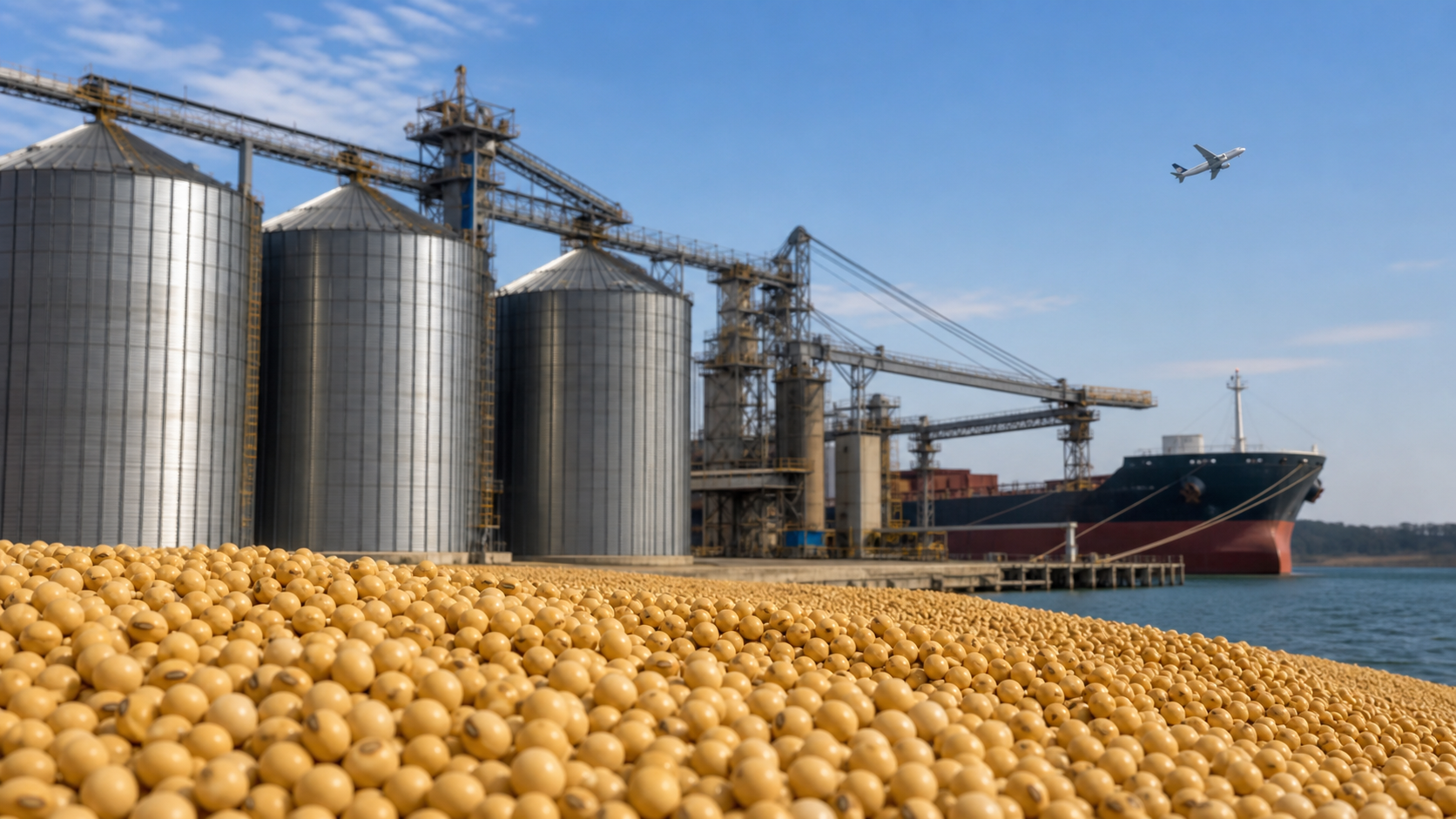
In Brazil the issue is not about war but pocketbooks, yet the emotional temperature is no lower. A major Brazilian online column stressed that within three days the US took three "hostile steps" toward Brazil: accused the country of harboring international terrorist organizations, published a report recommending that 21% of all Brazilian export goods be subject to an additional 25% tariff, and declared the current government "not friendly," comparing it to the regimes of Cuba, Nicaragua and Venezuela. As commentator João Paulo Charleaux notes in his column for UOL, such a concentration of negative signals from Washington across economy, security and politics "is atypical for a country considered a friend." The commentator interprets this as a conscious strategy of pressure by the Trump administration and a return to Cold War language in which Brazil is assigned the role of suspect rather than partner.
Brazilian economists and business representatives are trying to adopt a more pragmatic stance. The head of the largest export association, Ciro Reis, in an interview with CNN Brasil called what is happening "the new normal of tariff wars" and noted that the geoeconomic landscape is being "redrawn," so Brazil's task is to adapt to an era of "punitive" tariffs introduced suddenly and sharply. His assessment is notable because he does not reduce the problem solely to Trump or the US: he speaks of a global tendency toward trade fragmentation and regionalization of value chains. But the tone of the interview shows that Washington's recent step is perceived as particularly sharp and disrespectful toward Latin America's largest economy.
Within Brazil the tariff conflict has already become a battlefield between supporters of President Lula and the Bolsonaro camp. Political commentator Igor Maciel wrote in his column for Jornal do Commercio that "Trump handed Lula back the banner of sovereignty," because now the sitting president can portray himself as the defender of national interests in the face of American tariff threats. The opposition, closely associated with Trump and American right-wingers, finds itself in an awkward position: it is difficult for them to criticize Washington without abandoning their own rhetoric of "strategic partnership" with the Trump administration. In this sense the US decision to strike at Brazilian exports unexpectedly reorients the domestic political landscape: anti-American rhetoric, so familiar to the Latin American left, once again becomes a mobilization resource — but now in a context of much more complex economic interdependence.
The Turkish debate about the US is less scandalous in tone than Brazil’s but no less stern in substance. In Turkish commentary on US foreign policy the key motif remains distrust of American strategy across the "huge arc of instability" from the Black Sea to the Persian Gulf. Projecting the war in Ukraine and the conflict with Iran onto their own interests, Turkish analysts emphasize that Washington still prefers forceful instruments and unilateral solutions over multilateral diplomacy. Ankara has its own particular angle: Turkey is simultaneously a NATO member, Russia’s neighbor and economic partner, a player in the Black Sea region and a critically important energy transit country. So when Washington discusses new sanction schemes against Russia or tactical steps in the Strait of Hormuz, Turkish observers primarily ask: how will this affect Turkey's energy security, its exports and the position of the Turkish lira?
Turkish columns on US foreign policy in recent months constantly return to the theme of Washington’s "selective commitment" to international norms. Observers recall how the Trump administration exited dozens of international organizations and agreements already in January 2026, which several analysts described as an intensification of isolationist tendencies. Turkish commentators draw parallels between that step and the current ignoring of Ankara’s positions on a host of issues — from arms supplies to Kurdish formations in Syria to tensions in the Eastern Mediterranean. Unlike in Brazil, where criticism of the US is sharply politicized, in Turkish discourse the US often appears as an inevitable but unreliable partner: publicly criticized, yet simultaneously recognized as necessary for close cooperation on defense and the economy. This "double consciousness" is visible in Turkish analytical articles, where harsh rhetoric sits alongside pragmatic recommendations not to sever relations but to learn to use contradictions in American policy.
Interestingly, in all three countries — Ukraine, Turkey and Brazil — the long shadow of Donald Trump is applied to current US actions. In the Brazilian press he is often described as a leader who himself inspired the attempted coup in his own parliament on January 6, 2021, and who is now returning international politics to a logic of "friend-or-foe" without subtleties. In Brazilian columns this is directly linked to the course of Bolsonaro and his circle, for whom Trump served as a model of an "anti-system" conservative leader. Now, according to some commentators, this image has become a burden for the Brazilian right: they must justify an American policy that strikes at the wallets of Brazilian producers and workers.
In Ukraine Trump is perceived far more tragically. Ukrainian discussions on social networks and in analytical articles advance the thesis that the cessation of a significant portion of US military aid and the imposed negotiation deadline of June 2026 effectively "provide a breather" for Russia, allowing Moscow to continue missile and drone strikes on Ukrainian infrastructure without the risk of sharp escalation by the US. At the same time Kyiv cannot afford an open conflict with Washington — the price is too high. Therefore official rhetoric remains restrained: Zelensky in public speeches thanks the American people and Congress, emphasizes that "real security and the end of the war require increased international pressure on Russia and expanded support for Ukraine by partners," but within the expert community the scenario is increasingly discussed whereby the US is effectively pushing Ukraine toward a peace on terms far from Ukrainian red lines.
In Turkey Trump is more a symbol of the unpredictability of American policy. Turkish analysts point out that Washington's jumpy decisions on sanctions, withdrawal from international organizations and tactics in Ukraine and the Middle East undermine confidence in the very idea of "American leadership." Yet Ankara does not draw from this the conclusion that it must fully distance itself: on the contrary, many Turkish commentators see in Washington's chaos a window of opportunity for regional players who can maneuver between the US, Russia, Iran and the EU. In this sense Turkey, unlike Ukraine and Brazil, perceives American wavering not only as a threat but also as a chance to strengthen its own autonomy.
The common denominator across all three debates is fatigue with American monologism. Ukrainian experts believe the US too readily ties the fate of the war to the logic of its own elections and internal alignments; Brazilian commentators see Washington's tariff policy not as concern for "fair trade" but as unilateral rule-setting that ignores Brazil's status as a major regional power; Turkish analysts criticize the American penchant for forceful solutions and simultaneous retreat from multilateral institutions. At the same time none of these countries harbors illusions that a "world without the US" would automatically be safer or fairer. On the contrary, a paradox is clearly audible in Ukrainian, Turkish and Brazilian discourse: America remains indispensable — as a military guarantor, economic market, source of technology and investment — but the more indispensable the US is, the more painfully its inconsistency and unilateral steps are perceived.
This ambivalence is key to understanding current international reactions to the US. In Kyiv, Ankara and Brasília they simultaneously want American involvement and fear its form; they hope for protection and express resentment; they criticize Washington and at the same time measure their foreign policies by whether they managed to influence US decisions. From the outside this may look like simple anti-Americanism, but close reading of local columns and analyses reveals a much more complex picture: the world is not so much rejecting America as demanding maturity, predictability and respect for the agency of partners. For now Ukraine is arguing with Washington over the price of peace with Russia, Brazil over the price of access to the American market, and Turkey over the price of security in a region where the United States still sets the tone.