In recent weeks news has reached various parts of the globe from Washington: US and Israeli strikes on Iran, tricky manoeuvres around trade in Russian oil, the US president's visit to Beijing and an attempt to reboot relations with China, pressure on partners over sanctions and at the same time — searches for deals in trade and technology. Russia, Brazil and India are responding very differently, but several themes clearly run through all three countries: fear of uncontrolled escalation in the Middle East, fatigue with US sanction policy, attempts to carve out room to manoeuvre between Washington and Beijing, and debate over how reliable and predictable the United States is as a partner.
The first major node of discussion is the US–Israeli strike on Iran on 28 February 2026, which for many became a symbol of Washington’s unpredictability. In Brazil major media directly write that “a guerra no Irã paralisa a reaproximação de Lula com Trump e trava negociações comerciais” — the war in Iran paralyses Lula and Trump’s rapprochement and effectively freezes trade negotiations. An analytical piece for UOL emphasizes that after an attempt at détente — amid tariff removals and signals of dialogue — a single American strike on Iran “flipped the page” of the international system, bringing back the old question: can long‑term plans be made if each new administration in Washington radically changes course? (noticias.uol.com.br)
In Indian debates the Iran war is discussed primarily through the prism of energy and sea lanes. The blocking or partial blocking of the Strait of Hormuz, through which a significant share of oil to Asia flows, is seen as a blow to India’s “strategic autonomy,” which has been used to manoeuvre between suppliers including Iran and Russia. Indian experts in economic outlets recall that New Delhi for decades sought to preserve access to Iranian oil, even under US sanctions, and now — pressured by Washington and because of risks in the Persian Gulf — is forced to tie itself even more closely to Saudi and US oil and LNG. Analysts in India and the West note that such heavy strikes by the US and Israel on Iran push India toward even more cautious, multi‑pronged diplomacy in the region, including attempts to act as a mediator, but with a significantly reduced margin for manoeuvre. (fortune.com)
In Russia the same conflict in Iran fits into a long‑standing narrative of “aggressive American hegemony.” Official and pro‑government expert discourse emphasizes that US and Israeli strikes without a UN Security Council mandate are a continuation of a line of “unilateral uses of force,” from Yugoslavia and Iraq to Syria. Publications in journals close to the Ministry of Foreign Affairs interpret the situation as both a threat and an opportunity: on one hand, instability in the Strait of Hormuz and the Middle East hits world oil markets and thus Russia; on the other, it increases the value of Russian routes, including Arctic and Iran–Russia alternatives to traditional paths. In this context Russian analysts explicitly write that any unilateral US strikes only accelerate the formation of an “anti‑hegemonic bloc” of Moscow, Beijing and Tehran. (ru.wikipedia.org)
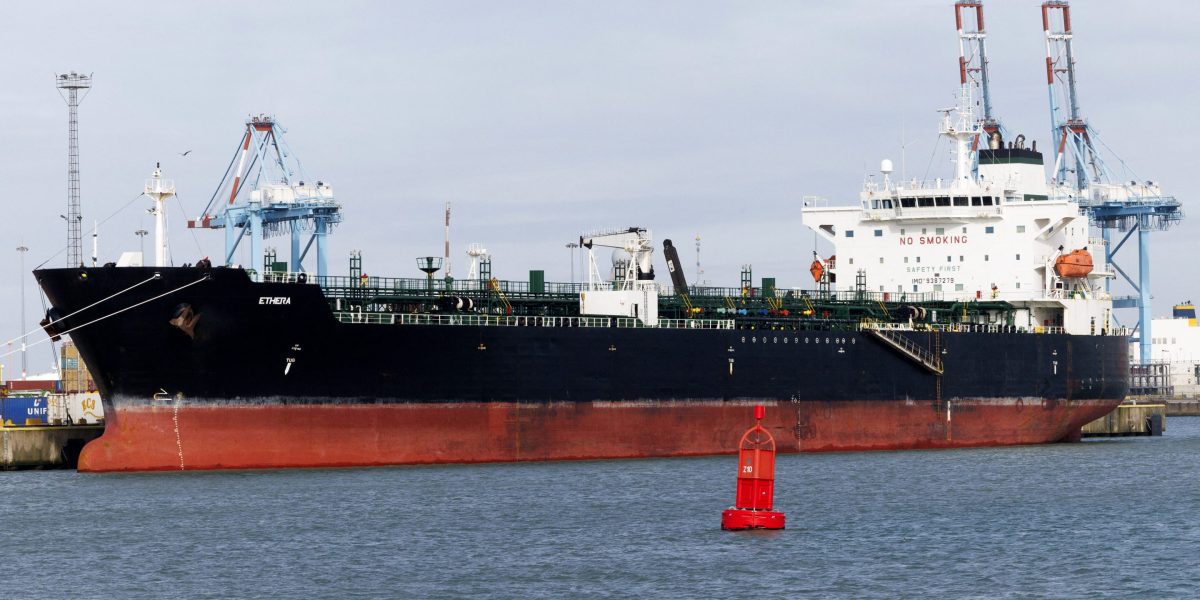
A second recurring theme is American sanction policy, primarily concerning Russian oil and secondary buyers. In recent days the US allowed one of the key sanction waivers that had simplified some deals in Russian oil to expire, despite an already tense market where supply is tightened by the war in Iran and shipping risks. Earlier there had also been discussion of the opposite — the possibility of extending certain waivers under pressure from importing countries, including India and Indonesia, which feared another spike in prices. (theguardian.com)
In India this issue almost automatically turns into a debate about the country's right to buy Russian oil “at a discount.” On economic and political platforms Western reports are widely quoted that New Delhi, together with Jakarta, lobbied to extend certain exceptions in the sanction regime, arguing they were necessary to contain domestic fuel prices. On social media and forums Indians quip: “Can't even buy oil from Russia unless Trump agrees” — “you can't even buy oil from Russia unless Trump allows it,” underlining dependence on decisions by the Washington administration, even though India’s official line is “strategic autonomy.” Some commentators see in this an illustration that India, despite its growth and proud rhetoric, is still integrated into American sanction and financial architectures; others, conversely, believe that the ability to extract exceptions from Washington is a sign of the country’s growing clout. (fortune.com)
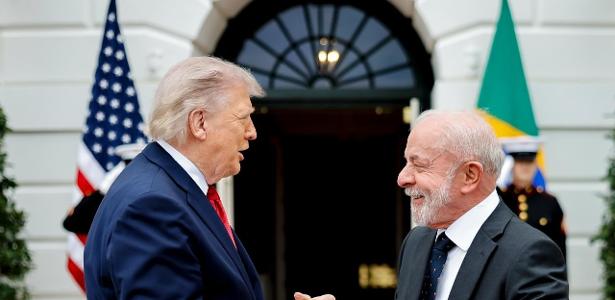
In Brazil the sanctions theme is tinged with more personal tones. Brazilians remember how in 2025 the US hit Brazil with tariffs up to 50% on a range of goods and even imposed Magnitsky‑style sanctions on Supreme Court Justice Alexandre de Moraes. In Brazilian press and expert columns this is presented as an example that Washington’s sanctions can be applied not only against “traditional enemies” but also against major democracies of the Global South if their domestic policies, fight against disinformation or platform regulation do not align with the preferences of the American administration. That is why Lula’s current attempts to build more pragmatic relations with Trump are viewed through the prism of a “truce that can be broken at any moment” — by a single signature on a new tariff package. (bol.uol.com.br)
Russia, which has been hit by the harshest sanctions, discusses US sanction policy as a backdrop that has become the “new normal.” Russian officials and media present any sign of easing or extending exceptions as proof of Washington’s cynicism: “when it’s advantageous — they create loopholes, when needed — they squeeze to the end.” In MGIMO and Foreign Ministry journals analyzing the policy of the Trump‑2 administration it is emphasized that even formal concessions to Russia in the oil sphere will always be subordinated to US interests in Iran, China and domestic American politics, rather than to any “objective economic criteria.” From this follows a popular conclusion in Russia: relying on the idea that the US will “behave rationally” is a dangerous illusion; one must proceed from a scenario of constant pressure and build alternative financial and logistical infrastructure. (theguardian.com)
A third major storyline is the sharp revival of US–China dialogue and its possible consequences. In India the post‑nine‑year‑hiatus visit of the US president to China is being analyzed closely. Indian think tanks such as Drishti IAS note that a new “strategic détente” between Washington and Beijing could redistribute the balance of power in Asia, pushing India to the periphery if it cannot offer the US and the region a clear agenda of its own. One Indian expert, commenting on the summit’s results, wrote that “a bipolar deal between the US and China directly challenges India’s vision of a democratic and decentralised world order” and that Washington still has not found a place for India in its global strategy that would satisfy its ambitions and sense of national dignity. (drishtiias.com)
This unease is amplified against the backdrop of a complicated state of US–India relations. On the one hand, Washington continues to speak of an “inflection point” in the partnership, of the need for a “second most important” alliance after NATO, and of joint projects in defence technology, semiconductors and green energy. On the other hand, Indian commentators point out that despite the provisional trade agreement signed in February 2026, many tariff and visa problems remain unresolved, and US policy toward Pakistan, Russia and several sensitive issues regularly provokes irritation in New Delhi. (nationpress.com)
In Russia US–China rapprochement is perceived through a darker lens. On the one hand, Moscow traditionally fears any deal between Washington and Beijing “over Russia’s head,” worrying that Moscow might become a bargaining chip in talks between the two superpowers. On the other — following Trump’s visit to Beijing and then Putin’s visit — Western and Russian analysts interpret this as a demonstration that Beijing is becoming the real centre of gravity in world politics, and that the US and Russia in some sense are already “supplicants” in relations with China. Russian press and the expert community are engaged in a debate: should the possible US–China détente be seen as a threat, or does it create space for Moscow to manoeuvre, allowing it to play off contradictions between the two giants. (washingtonpost.com)
In Brazil China and the US feature primarily in economic discussions. For Brazilian agriexporters and industrialists the main question is not ideology but access to markets. If Washington and Beijing manage to agree on mutual tariffs and standards, Brazil risks becoming the “odd one out,” with shrinking room to manoeuvre between the two largest markets in the world. At the same time Lula da Silva seeks to position the country as one of the pillars of the “Global South,” which leads the Brazilian press to constantly compare his course with India’s: in both places the word “autonomy” is used, but India is far more deeply integrated into American defence and technology chains, whereas Brazil remains primarily an agricultural‑commodity partner for China and an increasingly fraught partner for the US. (bol.uol.com.br)
A fourth, subtler but no less important motif is the question of the reliability and predictability of the US as a partner. Social surveys and online discussions reveal an interesting picture: according to the global “Global Pulse 2026” survey conducted in nearly a hundred countries, the United States is often perceived as one of the key threats to world security — not only in traditionally critical countries but also, for example, in Taiwan, where there is fear that a sharp change of course in Washington could provoke risky moves by China. In discussions on international forums users from Brazil note that despite deals, US policy toward their country can swing from friendly rhetoric to sanctions against ministers and back in a couple of years. (reddit.com)
In India this theme is mixed with its own experience: from the disappointments of the “sanctions for nuclear tests” era to euphoria about the “world’s largest partnership of democracies” and back to cautious scepticism. Indian strategists, whose publications are widely quoted by local media today, remind readers that Washington’s rhetoric can shift very quickly — depending on domestic political conjuncture, attitudes toward China or a change of administration. From this comes the idea that India should craft its policy as if the US is an important but not guaranteed partner, while simultaneously keeping channels open with Russia, Iran and China. (drishtiias.com)
In Russia the question of trust in the US is effectively closed in public discourse — the dominant view is that American policy is by definition hostile and will change only with a deep transformation of the American system itself. However, on more professional platforms — in academic journals and expert clubs — a more nuanced discussion is underway: to what extent can (and should) Russia exploit intra‑American contradictions and swings between “nationalist isolationism” and “interventionist globalism” to reduce risks to itself. At the same time almost all interlocutors agree on one point: any agreements with Washington must be either legally as tightly bound as possible and supported by other centres of power, or treated from the outset as temporary and conditional. (interaffairs.ru)
Finally, in all three countries it is noticeable that discussions about the US increasingly proceed not in the logic of “love/hate America” but through a more complex mosaic: in some places the US is perceived as a necessary technological and military partner (India), in others as a potential market and source of investment but also of trade wars (Brazil), and elsewhere as a principal strategic adversary and simultaneously a system‑forming player without whom no major crisis can be resolved (Russia). Meanwhile, in all three societies there is growing recognition that the world is no longer reducible to a simple axis of “Washington — the rest of the world”: Beijing, Moscow, Delhi and Tehran have entered the game, and the United States increasingly find themselves reacting rather than setting the rules.
Paradoxically, but the common refrain in Moscow, Brasília and New Delhi sounds almost identical: “We want to deal with America, but we do not want our fate to depend solely on its decisions.” Russian analysts speak of the need to build an “anti‑hegemonic architecture,” Brazilians — of expanding space for independent foreign trade and regional integration, Indians — of “multi‑vector strategic autonomy.” As a result the United States finds itself in the position of a country that is still watched closely — but no longer as the “sole centre of power,” rather as one of several heavyweights whose moves are carefully weighed and with whom states are increasingly reluctant to bind their future without reservations and safeguards.