Today the image of the United States beyond the West is formed less through classic narratives of "American democracy" and more through the prism of wars, sanctions, energy and the struggle for influence in Eurasia. In Ankara Washington is discussed as a difficult but necessary partner; in Moscow — as a tired hegemon trying to hold on to a fading advantage; in Beijing — as the main strategic rival whose domestic problems only expose the weak points of the "American model." An important nuance: all three countries perceive the US not abstractly but through very specific conflicts and corridors — from Ukraine and Iran to the South China Sea and the South Caucasus.
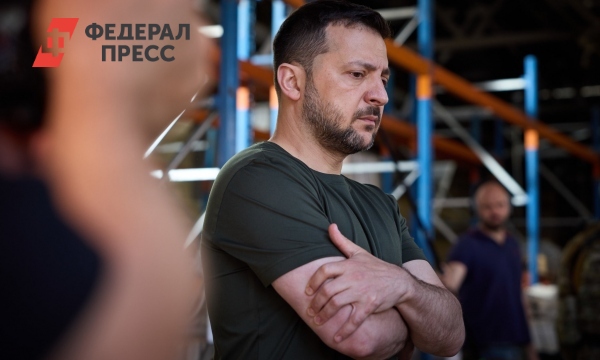
The first major storyline around which Turkish, Russian and Chinese discussions converge is US involvement in armed conflicts in the Middle East and around Ukraine. Russian commentators interpret Washington’s current line as a deliberate strategy of protracted attrition against opponents. Thus, former CIA analyst Larry Johnson, whose words were widely circulated in Russian media, bluntly states that the goal of US policy on the Ukrainian front was to provoke Moscow into retaliatory action for its "strategic defeat." Russian outlets readily cite this thesis as confirmation of a long‑standing accusation: that the US allegedly deliberately turns other countries' territories into proxy-war zones, avoiding paying the own price for escalation. (fedpress.ru)
Russian expert circles analyze American involvement in the Iran‑Israel confrontation with similar skepticism. Analytical pieces emphasize that dragging Washington into confrontation with Iran supposedly weakens its resource base for supporting Kyiv and ultimately forces the US into a painful choice between multiple theaters of tension. This idea links to a broader picture: US, in the assessment of Russian authors, is no longer capable of fighting "two big wars" while simultaneously containing China as it did during the Cold War; therefore, each new crisis accelerates the erosion of American hegemony. (newpressa.pressa.ru)
Chinese observers, for their part, view American foreign policy as an attempt to play on two fronts at once — against Beijing in the Indo‑Pacific and against Moscow in Europe. In the Global Times, often cited by Russian media, it is noted that the White House formula of readiness to concentrate simultaneously on "two theaters" — the European and the Asian — is perceived in China as a dangerous delusion of strength. Beijing experts effectively question the US ability to sustain a long confrontation with two major powers at once, reminding readers that Washington’s resources are no longer commensurate with the era of postwar dominance. (mk.ru)
Against this backdrop, the Turkish discussion about the US is built around a different lens — Washington’s role in the complex energy and transport hub of Eurasia. American support for projects aimed at bypassing Russia and Iran, for example in the South Caucasus, is seen in Turkey both as an opportunity and a risk. The US‑promoted transport corridor through the South Caucasus, intended to link Turkey and Azerbaijan with Central Asia while bypassing Russian and Iranian territory, is viewed in Ankara as part of a broader game: Washington seeks to limit the influence of Moscow and Tehran, while Ankara aims to consolidate its own role as a key bridge between Europe and the Turkic world. For Turkey this is an opportunity to strengthen its autonomy, but also a source of pressure: any abrupt US move risks destabilizing a region where Turkish, Russian, Iranian and Chinese interests are tightly interwoven. (en.wikipedia.org)
The second major thematic block is sanctions and economic pressure as the main instrument of American foreign policy. In Russia this is described as "sanctioned neocolonialism" and an attempt to retain control over the global financial architecture. Russian economic analysts examine in detail the history of petrodollars and US agreements with key energy producers, arguing that this is what allowed Washington for decades to export internal imbalances and finance a global military presence. Against this backdrop, the current sanctions campaign against Russia is interpreted as part of a struggle to preserve the dollar core of the world economy, in which Moscow and its partners are trying to build alternative payment mechanisms. (konoplyanik.ru)
In China the emphasis is different: US sanctions and export controls are seen as an attempt to slow China’s technological development and prevent the formation of independent supply chains. Beijing authors often note that Washington is effectively turning the global economy into a field of geopolitical confrontation, forcing third countries to choose between American and Chinese standards and markets. At the same time, the Chinese press emphasizes that such tactics only spur accelerated development of domestic technologies and the strengthening of ties with Russia and countries of the global South. (i-sng.ru)
Turkey brings a particular angle: it has become a target of American sanctions over trade with Russia and several other incidents. In Turkish debates the US is often described as a partner that readily resorts to financial and trade pressure even against formal NATO allies. Against this background the idea of Ankara’s "strategic autonomy" is strengthening as it navigates between Moscow, Washington and Beijing while building its own energy and logistics combinations. Turkish commentators see the US sanctions policy not only as a threat but also as an opening: sanctions push middle powers to create regional cooperation formats less dependent on American rules of the game. (reddit.com)
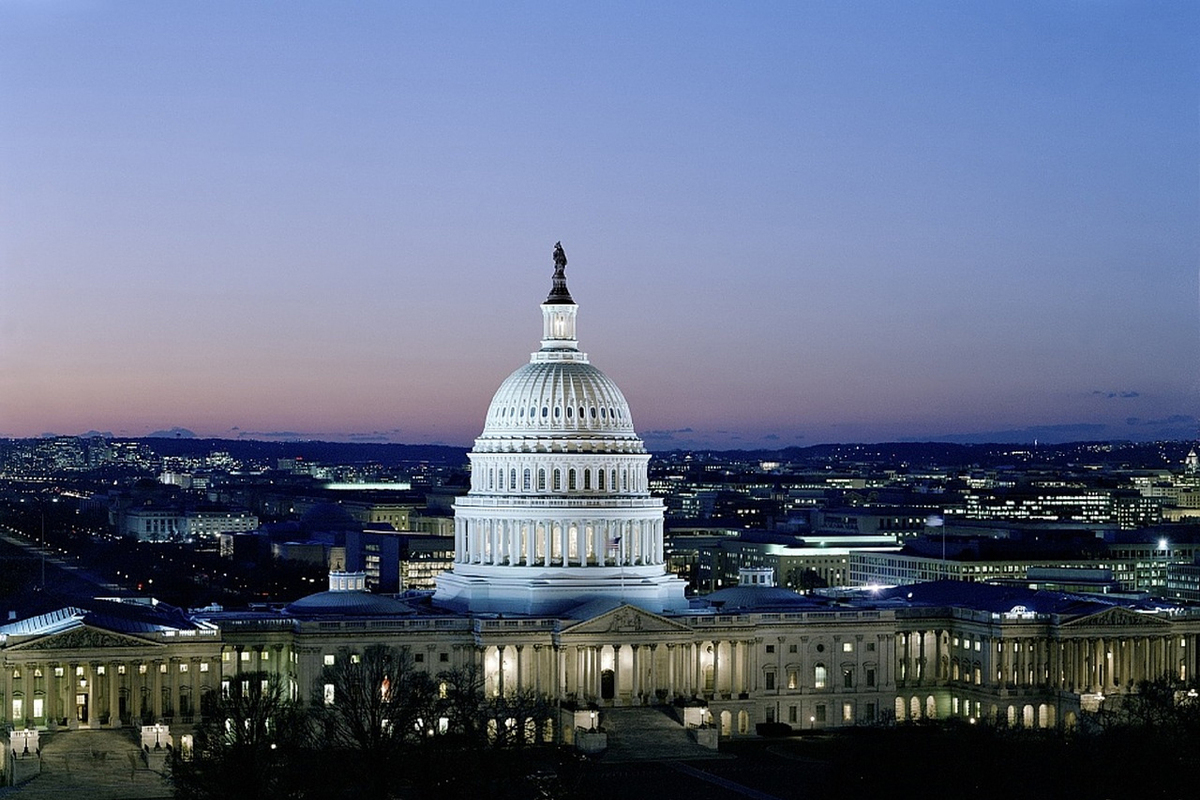
The third important theme is the image of the US as an internally unstable society that has lost the moral authority to lecture others. Here the Chinese discourse is the most severe. Official and pro‑government outlets regularly use mass shootings, racial tension and social inequality in the US as an argument against the "American human rights narrative." In one piece by a Chinese foreign policy body the epidemic of armed violence is described as a "fatal disease" that the American political system cannot cope with because of corporate lobbying. Protests in Washington, where activists laid out hundreds of black body bags on the Capitol lawn, are interpreted as a vivid illustration of elite hypocrisy who limit themselves to "thoughts and prayers" after each new tragedy. (idcpc.gov.cn)
In Russia US domestic problems are also widely covered, but the emphasis differs: attention is focused on political polarization, the crisis of trust in institutions and the rise of extreme radicalism. Russian commentators like to remind audiences of stories related to conspiracy movements, protests in Washington and the bitter struggle between Republicans and Democrats to show that "American democracy" is no longer a model to emulate. At the same time, in expert journals a more sober assessment appears: internal conflict in the US is recognized as a factor limiting its capacity for long‑term strategic planning on external fronts — from Ukraine to the Indo‑Pacific. (mk.ru)
Chinese and Russian readers receive an additional stroke to this portrait through stories about corporate influence on US media and politics. The Chinese press, reporting on mass layoffs at the Washington Post and the influence of billionaire owners on editorial policy, builds the line that even major American media are increasingly dependent on the interests of economic and political elites and less and less play the role of an independent "fourth estate." This conveniently fits into the broader critique of "American standards" of free speech. (usa.people.com.cn)
A fourth cross‑cutting motif is the long‑term redistribution of influence and the formation of informal blocs around and against the US. In Russia the concept labeled by Western analysts with the acronym CRINK — an axis of China, Russia, Iran and the DPRK, presented as a "new axis of evil" or an "axis of autocracies" — is widely discussed. Russian authors point out that this construct itself originated in the American analytical community and reflects Washington’s fear of the consolidation of states that do not fit into the liberal order. For the Russian audience this is presented as evidence that the US still thinks in terms of bloc confrontation rather than seeking more flexible coexistence formats. (en.wikipedia.org)
In Beijing such labels are seen as a convenient propaganda tool but not as an accurate description of Chinese foreign policy. Chinese commentators constantly emphasize that the PRC does not seek to create military blocs and that it is the US that builds systems of "exclusive alliances" — from AUKUS to configurations involving Japan and the Philippines — aimed at containing China. From Beijing’s perspective, the main contradiction of the future world order lies in whether it will continue to be run by Washington or become polycentric. In this logic the US is portrayed not as a guarantor of stability but as a country painfully experiencing the loss of its monopoly on making key decisions. (mk.ru)
The Turkish angle on this global reshuffle is also interesting. In expert discussions in Ankara the idea increasingly heard is that the era of the "unipolar American moment" is over and is being replaced by a mosaic of regional centers of power. Turkey aspires to become one of these centers — through the Organization of Turkic States, initiatives on a unified Turkic alphabet, and the creation of transport and energy corridors from Central Asia to the Mediterranean. In these discussions the US appears sometimes as a potential partner interested in reducing the influence of Russia, Iran and China, and sometimes as an external actor whose steps could upset the fragile balance among Ankara, Moscow and Tehran. Turkish analysts stress that any American bet in Eurasia must inevitably take into account the increased subjectivity of regional powers — otherwise Washington risks pushing them into even closer ties with each other. (en.wikipedia.org)
Against all this, local voices in the three countries often formulate a similar, if differently shaded, conclusion: the US remains a key actor without whom no major international crisis can be resolved, but trust in its intentions and its ability to act as an honest arbiter is at a minimum. In Moscow this is expressed in rhetoric about Washington’s "unreliability" as a negotiating partner: Russian officials and experts constantly remind audiences of NATO enlargement, US unilateral withdrawals from arms control treaties and sanction practices which, in their view, undermine the foundations of mutual trust. (fedpress.ru)
In Beijing doubts are formulated in more restrained terms, but the essence is the same: the United States is seen as a power that speaks on behalf of the "international community" but in practice often ignores the interests of the majority of countries in the global South when they do not coincide with the American agenda. It is advantageous for China to emphasize the contrast between Washington’s declared universalism and its selective responses to crises — from Palestine to Asia. In Turkish discourse distrust turns into constant comparison of US policy with the approaches of other partners: Ankara watches closely who is ready to take Turkish interests into account in Syria, the Caucasus and the Black Sea, and who seeks to limit its maneuverability under the rhetoric of "collective security."
All this creates a paradoxical effect. As the US loses the status of an unambiguous moral authority, its factual significance in the calculations of Ankara, Moscow and Beijing does not diminish but becomes more complex. Turkey uses the competition among the US, Russia and China to strengthen its own regional role. Russia, criticizing Washington as a tired hegemon, simultaneously structures a significant part of its foreign policy rhetoric precisely around confrontation with it — thereby indirectly confirming that the American factor remains central. China, questioning the US ability to fight on two fronts and exposing its internal problems, nonetheless builds a long‑term strategy as if rivalry with Washington is the main structural factor of the 21st century.
Three countries, three different political regimes and three different historical experiences converge on one point: the role of the US is no longer described by simple formulas like "leader of the free world" or "empire of evil." In Turkey, Russia and China Washington is seen as a complex and contradictory player whose power remains enormous but whose ability to set the rules of the game single‑handedly is increasingly the subject of heated debate. These national conversations — in Ankara, Moscow and Beijing — are to a large extent determining what the world order after the American century will look like: a world of competing blocs or a network of intersecting centers of power in which the US is only one of several.