Around the United States a dense wave of international reactions is once again gathering — from concern to outright irritation, from pragmatic calculation to cautious satisfaction at the prospect of a “weaker America.” In France there is debate about how to live with NATO “with less America” and what to do about President Trump, who at the same time is cutting troops in Europe and demanding more loyalty. In China discussions center on whether the United States has entered an era of “low‑cost hegemony,” which is beginning to show dangerous cracks in the face of war with Iran, the crisis in the Strait of Hormuz and the unresolved Ukraine storyline. In India leading media and experts read every gesture from Washington — from Iran to China and Russia — trying to understand where a window for Indian autonomy opens and where pressure is growing to be a “junior partner” of the US.
Several common themes come to the fore. The first is the image of America as an unreliable and increasingly unpopular ally: fresh polls in Europe record a record‑poor image of the US, and not only because of Donald Trump but also because of structural shifts in American policy. (tf1info.fr) The second is the effect of the war with Iran and the related energy and maritime risks: for Paris this is a reason to talk about strategic autonomy, for Beijing an example of how “cheap hegemony” turns into an expensive trap, and for Delhi both a chance and a risk. (thepaper.cn) The third is the redefinition of NATO and European security in conditions where voices in Paris increasingly say: “Europe must learn to defend itself with less America.” (agenceurope.eu) Finally, a new round of US‑China talks and its impact on Taiwan, Asia and the global balance are being closely analyzed in both Chinese and Indian press. (wenxuecity.com)
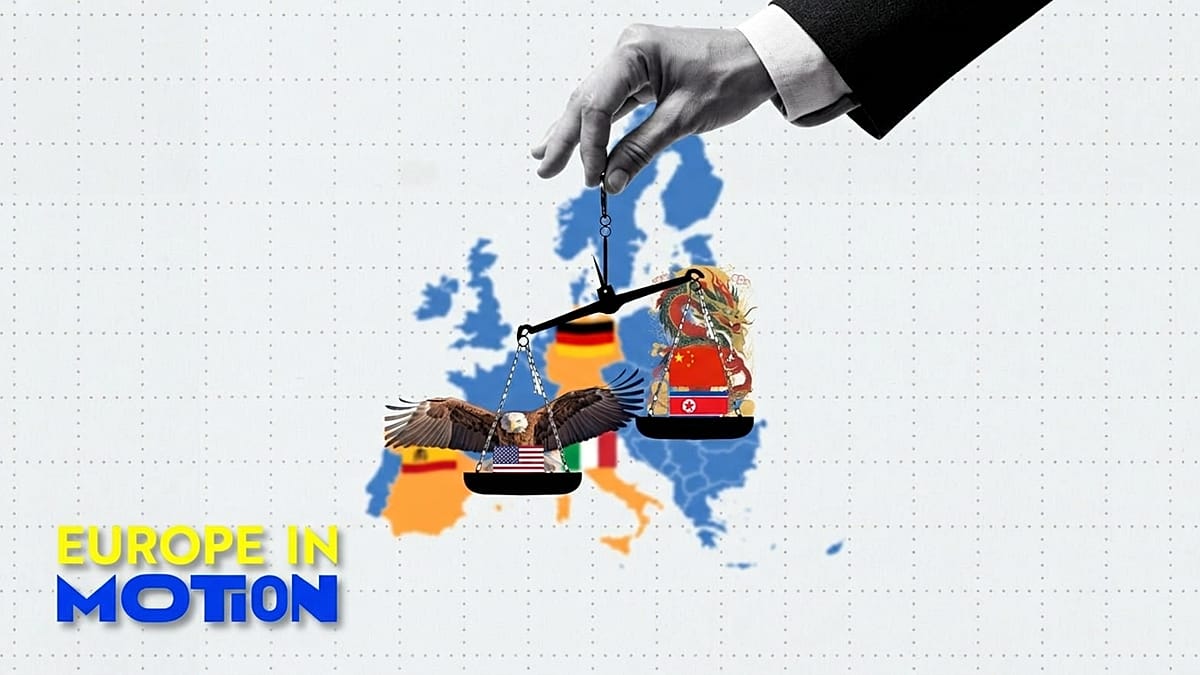
Two layers are clearly audible in French debates today. The first is emotional‑symbolic: a recent poll, widely cited by TF1 and other media, shows that almost three‑quarters of Europeans have a poor opinion of the US; in France, Spain, Italy and several other countries the share of those who view the US as a “threat” is growing and in places already exceeds the similar figure for North Korea. (tf1info.fr) This is not simply an anti‑Trump effect: many commentators talk about “fatigue with America” as it is — with its new wave of protectionism, tariffs on European cars and threats of new duties, with opaque decisions on Iran and the Middle East.
The second layer is a cold strategic calculation. An analytical Euronews piece emphasizes that for some European elites China is beginning to be seen not merely as an economic partner but as an “alternative pole,” against the background that “one in five” respondents in six key EU countries already sees the US as the “main threat.” (fr.euronews.com) Against this backdrop, French and Brussels discussions about the “Europeanization of NATO” take on special meaning: the Agence Europe bulletin notes that allies are discussing strengthening the European component of the alliance precisely “at the moment when the US is rethinking its level of engagement and presence on the continent.” (agenceurope.eu)
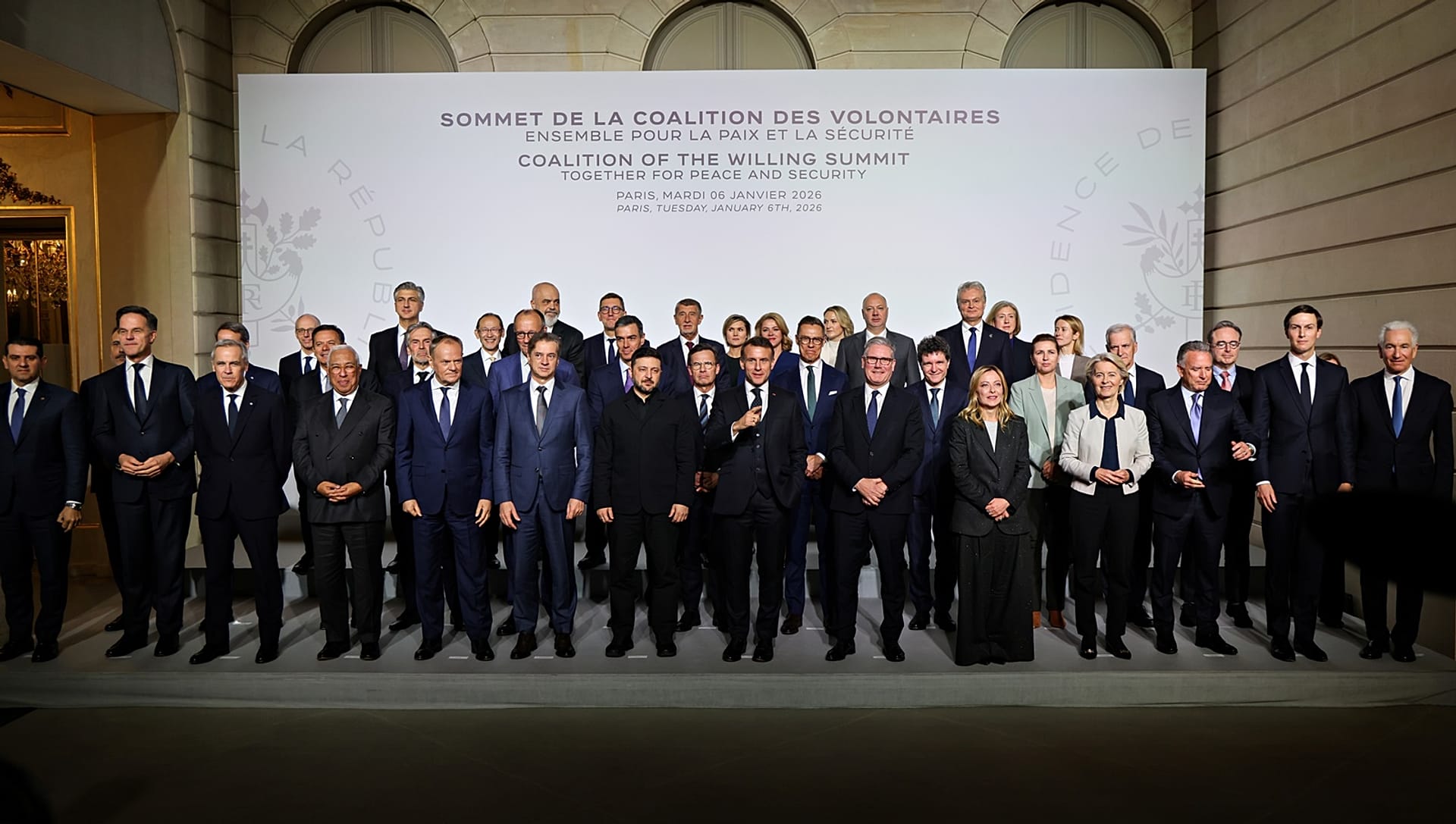
Camille Grand, former NATO deputy secretary general, in an interview with Le Parisien puts explicitly what many had until now said in whispers: Europe must learn to defend itself “with less America,” because what is happening today is not a temporary flare of Trumpism, but a long‑term “trend of US disengagement from European affairs.” (leparisien.fr) Hence the interest in the idea of deploying a Franco‑British contingent to Ukraine in the event of a durable ceasefire — as part of a “European pillar” of security that complements but does not duplicate American guarantees. Euronews recalls that the new package of guarantees for Kyiv is built around “multinational forces led by France and the UK” and an “American‑led verification mechanism,” which in practice means a more complex, multipolar architecture where the US is no longer the only unchallenged defender. (euronews.com)
Interestingly, the same French pieces on Trump also contain a pragmatic motive: “We can afford neither a break with America nor total submission to its whims,” writes one columnist for TF1 Info, discussing his statements about a ceasefire between Russia and Ukraine and the hard bargaining over the Strait of Hormuz. (tf1info.fr) This well demonstrates Europe’s ambivalence: simultaneous disappointment and dependency, irritation and the necessity to build some modus vivendi with the US, which is still needed to deter Russia and stabilize Middle Eastern oil supply routes.
The Chinese angle is different but also surprisingly coherent. On a number of influential platforms — from China‑US Focus to analytical columns on Chinese portals — the concept of “low‑cost US hegemony” is actively discussed, the essence being that Washington for many years tried to extract maximum geopolitical dividends from minimal direct costs, relying on allies and the dollar’s financial dominance. (cn.chinausfocus.com) In a column for China‑US Focus the author writes that America’s reliance on “remote management” in the Middle East, without deep engagement, led to a situation where the war with Iran, which began as another “pinpoint operation,” struck at the very foundation of American hegemony — from reputation to economic consequences. (cn.chinausfocus.com)
A harsher diagnosis comes from an analytical piece in The Paper, which judges the so‑called US “freedom operation” in the Strait of Hormuz as a “hastily aborted project” that exposed the limits of American resources and allies’ willingness to support risky missions only in words. The author calls the “Hormuz moment” the point when the world realized: America cannot wage a large war painlessly while at the same time deterring Russia in Europe and China in Asia. (thepaper.cn) This view fits neatly into a broader Chinese discussion of US “fatigue” with the role of global policeman — a theme that regularly appears in academic journals and party press alike. (cas.fudan.edu.cn)
At the same time official Beijing rhetoric remains deliberately restrained. People’s Daily coverage of Trump’s May visit to Beijing frames it as a “responsible dialogue between two great powers,” focusing on the economy, climate and humanitarian ties, and largely avoiding sharp angles. (paper.people.com.cn) Yet alongside this, discussions in Chinese — and especially Taiwanese — expert circles are hot over what his remarks on Taiwan changed: an informal recognition that “there are forces on the island seeking independence,” a refusal to treat China’s warning about a “confrontation” as a direct threat, and a reluctance to explicitly promise new arms supplies. Guancha columnist Shi Yang calls this “rewriting US Taiwan policy without formally changing its content,” implying that Washington’s tone and emphasis have become noticeably less comforting for independence supporters. (guancha.cn)
Chinese discourse interestingly mixes skepticism and pragmatism. On the one hand Beijing uses every US mistake — from mass deportations and police violence scandals to withdrawals from international organizations — as an argument for the thesis of a “crisis of American democracy” and the “collapse of the unipolar world.” (zh.wikipedia.org) On the other, Chinese economists and foreign policy experts whose assessments appear in the same state outlets stress: “Nothing in the short term will replace the global role of the US,” and therefore Beijing prefers “managed American weakness” to its collapse. That is why People’s Daily commentary calls for “constantly injecting new impetus into China‑US relations” while simultaneously reminding readers of the “red line on Taiwan.” (paper.people.com.cn)
Indian voices are the least emotional and perhaps the most ambivalent. Leading English‑language newspapers, from The Indian Express to Hindustan Times, in recent editorials emphasize that a US war with Iran and disruptions to transit through the Strait of Hormuz hit New Delhi particularly hard: India still depends heavily on Middle Eastern oil. Against this backdrop American calls to “support freedom of navigation” are seen both as an opportunity to strengthen India’s presence in the Indian Ocean and as a risk of being drawn into someone else’s war. Many commentators draw a parallel with Washington’s attempt to consolidate the QUAD against China: “First Iran, tomorrow — Taiwan: how many more fronts will they ask us to open?” asks one rhetorical columnist in the Hindustan Times, noting that the Indian navy is already operating at the limit of its capacities.
At the same time India watches the cooling of Europe‑US relations closely, seeing an opening. If Paris and Berlin reduce strategic dependence on Washington, Delhi could more flexibly maneuver between blocs, making its own deals with both the EU and the US. Indian commentary often stresses that “Europe and America are no longer synonymous” and that it suits India to maintain good relations with both without formally tying itself to any camp. This is evident in how the Indian press simultaneously criticizes US sanctions that hinder imports of Russian oil and welcomes American pressure on Pakistan over security.
Also notable is how India interprets US domestic upheavals. While in European and Chinese press the story of mass deportations, aggressive ICE actions and a surge in police violence is often presented as proof of the “hypocrisy” of American democracy, Indian commentators tend to view these phenomena through the prism of their own debates on law and migration. One column in The Indian Express, discussing two high‑profile ICE shootings that spawned the internet meme “American Cowards,” writes that “the American dilemma is an inverted reflection of India’s: there, too much weaponry and too little collective action; here, little weaponry but an excess of spontaneous violence.” (zh.wikipedia.org) This is a rare perspective almost absent in European press, where the focus is primarily moral condemnation.
If one tries to distill these disparate voices into common motifs, an interesting configuration emerges. First, all three countries largely agree that the US is undergoing a period of structural turbulence — from legal constraints on the tariff policies of the Trump administration to wars that are provoking growing skepticism among allies and American society alike. (zh.wikipedia.org) But beyond that the paths diverge.
In French and broader European discourse the key emotion is disappointed distrust. The dominant feeling is that America “has become like any other power,” pursuing its interests and no longer able to claim moral leadership. The strategic conclusion is therefore: build Europe as an independent, albeit connected, center of power. Thus pieces like Le Parisien’s “L’Europe doit apprendre à se défendre avec moins d’Amérique” become a kind of manifesto of a new realism. (leparisien.fr)
In China, by contrast, the mood is less disappointment than calculating observation: American mistakes are seen as confirmation of a long‑term trend of US “relative decline,” but hardly anywhere is there a serious argument for an imminent “change of hegemon.” Chinese authors instead discuss how to use this decline to expand maneuvering space in Asia, the Middle East and global governance — without destroying the remaining global architecture that the US still largely controls. (thepaper.cn)
The Indian perspective occupies an intermediate position: the US is at times a necessary partner to balance China, at times a source of risk of being dragged into others’ conflicts. The discussion is not about being “for” or “against” America but about how much autonomy can be preserved while using American power for India’s own interests. Hence the constant comparisons: “We are not Europe to rely on NATO, nor China to vie for hegemony; our task is to avoid being turned into a pawn by Washington or Beijing.”
Interestingly, the sharpest intellectual formulations about the US are today emerging outside the West. The “American Cowards” meme, which Chinese and Indian commentators discuss as a symptom of America’s “deep fatigue” with addressing its own problems, is a product of the American internet but now has a life of its own in foreign media spaces. (zh.wikipedia.org) The Chinese concept of “low‑cost hegemony,” which has spread across analytical platforms, unexpectedly resonates in French debates about the US increasingly demanding more contributions from allies while refusing to pay the political and material price of leadership. (fr.euronews.com) And Indian reflections on how to live in a world where America does not disappear but no longer determines everything alone are among the first attempts to conceptualize a post‑unipolar order not from the standpoint of revanchism but from the pragmatism of a medium‑power actor.
Reading these French, Chinese and Indian texts makes it clear: the conversation about the US has long since ceased to be only about America. It is a conversation about what the world will look like where Washington is still very powerful but no longer omnipotent; where alliance with it is both beneficial and dangerous; where criticism of American policy is no longer regarded as marginal anti‑Americanism but becomes part of mainstream debate about the future international order. And it is in these “local” replies — from Parisian columns on NATO without America to Beijing pieces on the “Hormuz moment” and Indian essays on multivector policy — that an honest portrait of the US is being born today, seen by a world gradually weaning itself off viewing America as its inevitable destiny.




![[VIDEO] Donald Trump again answered questions from LCI on Saturday, May 9. He noted having 'obtained' the temporary ceasefire between Ukraine and Russia, saying 'it would be a good thing' for the truce to be extended. Asked about the Middle East, the US president says Iran 'really wants to reach an agreement.' - Ceasefire between Ukraine and Russia, American proposal to Iran: Trump responds to LCI (International).](https://photos.tf1info.fr/images/1280/720/trump-lci-telephone-9c0e06-0@1x.jpeg?overlayImage=bG9nby10ZjFpbmZvLWRlZmF1bHQucG5n&overlayWidth=18&overlayGravity=northwest&s=78c802)