In March 2026, discussions about America outside the United States unexpectedly coalesced around an almost unified agenda. In Turkey, France and China the debate is less about Donald Trump or the upcoming Congressional elections than about what American power is turning into after the joint US–Israel strike on Iran on February 28, how much longer the world will pay for American debt, and how long Europe and the Middle East will remain hostages to Washington’s decisions. Against this backdrop, familiar topics — the state of democracy in the United States, culture wars, technological rivalry with China — only underscore the main point: in the eyes of others American power is increasingly associated less with order and more with managed chaos.
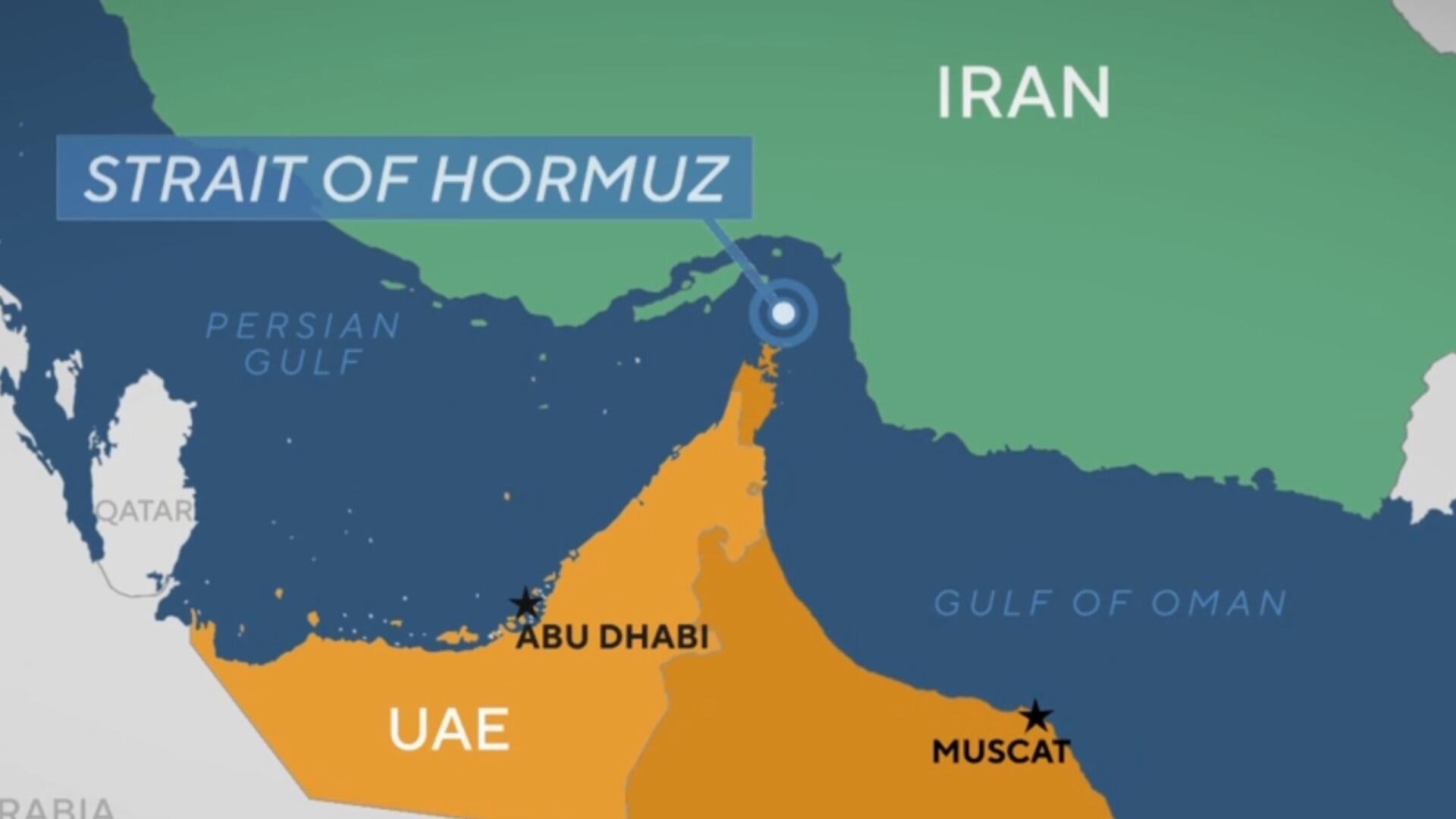
The central theme in all three countries has become the US and Israeli war against Iran. Chinese commentators call the operation 史诗怒火 — “Epic Fury” — after the official American code name, and at the same time emphasize: this strike turned the Iranian crisis from a prolonged standoff into an open war, already getting a stable name in Chinese materials as 美以伊战争 — “the US–Israel war with Iran.” (zh.wikipedia.org) Turkish economic and market analysts view the same events through a different prism: a closed Strait of Hormuz, a jump in oil prices, risks for Turkish inflation and the lira exchange rate. (bmd.com.tr) The French debate is less loud so far, but there too the war fits into a broader conception of the US as one of the “resurgent empires” pushing the world into a long period of instability. (reddit.com)
In China the reaction to the war with Iran is most articulated both officially and in the expert community. On the Sina portal a commentary by commentator Jiang Limeng was published under the headline “Why the sudden US and Israeli strike on Iran is ‘unacceptable’.” The author relies on a statement by Chinese Foreign Minister Wang Yi, who in a phone call with Russian Foreign Minister Sergey Lavrov said that “US and Israeli strikes on Iran in the midst of negotiations are unacceptable, the open killing of the leader of a sovereign state and incitement to regime change are unacceptable.” (news.sina.com.cn) In the Chinese view this is not just another US Middle East campaign but a demonstrative rejection by Washington of any norms of international law, a refusal that, analysts stress, repeats the 2025 precedents when US and Israeli air strikes already disrupted negotiations with Tehran. (news.sina.com.cn)
Chinese experts in specialized institutes, such as the Shenzhen Advanced Institute of International Affairs, speak about the war in highly pragmatic terms, through the lens of energy markets and global supply chains. In the review “美以对伊朗发动大规模空袭,引发跨区域反击行动” (“Massive US and Israeli air strikes on Iran provoke cross-regional retaliatory actions”) it is emphasized that the military operation unfolds against the backdrop of US primaries already underway in March, and that the strike is meant “to simultaneously achieve regional influence redistribution and internal mobilization of American society.” (qiia.org) Analysts point out that Washington’s bet is not only on destroying Iran’s defensive infrastructure but, essentially, on regime change, although the experiences of Iraq and Afghanistan show: “America knows how to start wars, but does not know how to finish them.”
In China’s economic and business media the war is also viewed as a blow to China itself. In the piece “美以空袭伊朗影响全球经济 中共损失惨重” (“US and Israeli air strikes on Iran hit the global economy; the CCP suffers heavy losses”) the conclusion is drawn that a blockade of the Strait of Hormuz, rising freight rates and oil prices are particularly painful for China as the largest importer of energy resources and as a country whose infrastructure and investment projects in Iran and along the Belt and Road are directly threatened. (aboluowang.com) Therefore official Beijing, on the one hand, strongly condemns the strike as “unacceptable,” and on the other — tries to avoid a full polarization of the conflict around the US–China confrontation.
Interestingly, in Chinese texts the United States is rarely criticized alone: Israel almost always appears alongside it. But it is Washington that is accused of strategic short-sightedness. In one analytical article on the Iran war the author writes that “the US–Israeli bloc destroys trust in diplomacy as a tool for resolving conflicts” and thereby “pushes middle powers — Turkey, Saudi Arabia, Egypt — to develop more autonomous, partly antagonistic strategies toward the United States.” (finance.sina.com.cn) In this logic Beijing essentially positions itself as a moderate arbiter, criticizing the American “empire of force,” while avoiding direct confrontation and at the same time gaining as an anchor of stability for the Global South.
The Turkish public debate about the United States in March looks less ideological but no less sharp. In news and analytical bulletins of major brokerage and investment houses the war with Iran appears in almost every daily market review. In publications by Şeker Yatırım or BMD the war “ABD ve İsrail’in İran’a yönelik saldırıları” (“US and Israeli attacks on Iran”) is described alongside the Central Bank of Turkey’s decision and inflation statistics: as a factor directly affecting the cost of oil, gas supplies and therefore Turkey’s balance of payments and the government’s chances to rein in inflation. (sekeryatirim.com.tr)
These texts reveal a typically Ankara ambivalence toward America. On the one hand Turkey is a NATO member and an important US partner; on the other, every new Middle Eastern war is perceived in Ankara as a blow to Turkey’s regional agenda and as a reminder that Washington remains willing to act while ignoring the interests of middle powers. An investor-focused analysis contains a characteristic formulation: “Nükleer silaha sahip bir İran ABD için…” — “An Iran with nuclear weapons for the US is…,” the author continues explaining that for Washington and Tel Aviv it is an existential threat, but for Turkey it is primarily a regional balance-of-power issue and a risk of a new round of sanctions and turmoil. (bmd.com.tr) The subtext reads: American policy on Iran is again built around its own fears and domestic electoral calculations, rather than around a sustainable security architecture.
Besides the war, Turkey is actively debating the condition of the American economy itself, primarily through the lens of financial markets. An economic columnist Eral Karayazıcı’s piece “2026 Yılında Piyasalar” in Hürriyet’s business supplement speaks about the US with cold calculation: the outcome of America’s midterm elections and the dynamics of US consumer confidence will determine whether the Turkish market has a chance for a strong rally in 2027. The author writes directly that Republicans “need consumer expectations index to rise to 75–80 points by the end of 2026,” reminding readers that such low values as now in the US were previously seen only during the 1979 oil crisis, the 1991 Gulf War, the 2008 mortgage crisis and the COVID‑19 pandemic. (bigpara.hurriyet.com.tr) The Turkish view here is paradoxical: America is criticized for debt expansion and wars, yet is simultaneously seen as the main generator of moods on global markets on which both Ankara and the Istanbul exchange depend.
The French debate about the United States in March 2026 is less concentrated on Iran than the Chinese or Turkish debates, but it is no less ideological. For Paris the key question is not only another Middle Eastern operation, but the kind of world Europe is being drawn into between three “empires” — the United States, China and Russia. In a collective forum piece published in Le Monde back in 2024 and still actively quoted in French discussions, a group of politicians and intellectuals spoke of the formation of an “internationale impériale” — an “imperial international” that includes China, Russia and the United States. According to them, the United States under Donald Trump “is taking the first step toward transforming its federation into an empire,” and Europe finds itself “surrounded by resurgent empires that have no concern for Europeans.” (reddit.com) Today, against the backdrop of the war with Iran, these formulations sound especially relevant: to the French public the United States increasingly appears less as a guarantor of the liberal order and more as one of the actors driven by national interests and ready for coercive pressure.
This connects to narrower topics that trouble French media. First, the trajectory of US debt. Chinese and European sources alike closely cite the IMF’s February assessment that the American deficit, having slightly decreased in 2025 to 5.9% of GDP, will in 2026 again rise to 6.1% and continue to grow to 6.3% by 2028. (world.people.com.cn) For the French and broader European elite this is another sign: America increasingly lives on debt, financing both social obligations and global military presence at the expense of the dollar’s status. Thus the old fear of the “Americanization” of European budgets and policies grows: if Washington can afford a 6% GDP deficit, why does Brussels demand strict austerity from Paris?
Second, in France they are once again reminded of America’s internal contradictions — from book-banning campaigns to polarization on cultural issues. Articles about rising censorship and wars around school libraries, similar to reviews on “interdiction de livres aux États‑Unis” (book bans in the United States), fit into a broader critique: America, which teaches Europe about freedom of speech and liberal values, is itself increasingly sliding into moral panic and politicized control over education. (fr.wikipedia.org) This overlaps with the war debate: when the same country initiates forcible regime change abroad, French leftists and some centrists see not so much a “fight for democracy” as the export of domestic culture war to the external front.
Despite the differences among the three national perspectives, several common themes associated with the United States in current discussions stand out.
First — the transformation of America from the “world’s sheriff” into the “world’s arsonist.” In China this is phrased more carefully, but the essence is the same: the United States is ready to launch military campaigns without clear postwar plans, “边谈边打” — “negotiate while bombing,” destroying the remaining trust in diplomacy. (news.sina.com.cn) In Turkey this is felt through markets: every new Washington decision in the Persian Gulf is another turn of inflation and pressure on weak economies. In France this is seen as another step toward a “new Cold War,” in which Europe risks becoming not an actor but a territory where foreign imperial interests intersect.
Second — US debt as a global risk. Chinese state media emphasize IMF estimates that the American deficit will grow and warn of possible medium‑term consequences for global financial stability. (world.people.com.cn) Turkish economists in business columns remind readers that any sharp correction in the US Treasury market will immediately hit emerging markets, and thus Turkey. In France US debts become a convenient argument for those who criticize Brussels’ “double standards”: Washington is forgiven a 6% GDP deficit, while Paris and Rome are forced into strict fiscal discipline.
Third — America’s internal fragility. Chinese materials on the Iran war already include mentions of an Austin shooting resembling a terror attack that occurred the day after the strikes on Iran, and that the FBI is checking a possible revenge motive linked specifically to the war. (zh.wikipedia.org) The same reports mention disagreements within the US leadership, including the resignation of the head of the National Counterterrorism Center Joe Kent over differences about the Iran war. (zh.wikipedia.org) For Chinese readers this is a signal: even within the United States there is no unity about the chosen course. In French commentary, continuing an old tradition of skepticism toward American “soft power,” researchers and journalists speak of the “marmite américaine” — the American “boiling pot” of racial, class and regional fissures that could one day explode. (reddit.com)
Finally, the fourth theme — a rethinking of the United States’ role as “leader of democracy.” For part of the French elite, especially those close to Jean‑Luc Mélenchon and La France Insoumise, American calls for an “alliance of democracies” look hypocritical against the backdrop of close Western ties with authoritarian Gulf regimes and now — in light of another Middle Eastern war. (reddit.com) Turkish commentators, situated between pragmatism and an anti‑Western reflex, see this not as a question of values but of power: whoever can afford to ignore international law determines what is called “democracy.” In China the public rhetoric is more restrained, but the line is clear: Beijing opposes American “unilateral coercion” with its image of a “responsible great power” advocating negotiations and opposing forcible regime change — even if in reality Chinese policy is far from altruistic.
The most curious thing about all this is that outside the United States people today speak of America primarily not as a “land of freedom” or a “cradle of innovation,” but as a source of risks: military, financial, political. But assessments are not one-dimensional. For Turkey the United States is both the main factor of instability and the key market reference without which planning the future of its own exchange is impossible. For France — both a threat in the form of a “resurgent empire” and still an indispensable security partner. For China — both a strategic rival whose actions undermine the economic order built by Beijing and an inevitable counterpart with whom it is necessary to negotiate to contain chaos.
This ambivalence may be the main diagnosis of the current moment. America has ceased to be an unequivocal symbol of either good or evil. For world opinion it has become a superpower whose decisions are at once necessary and dangerous, without which one still cannot do — but one that is trusted less and less. And each new “Epic Fury,” like the current war with Iran, only widens this gap between necessity and distrust.