In early summer 2026 the United States again found itself at the center of global debates — but the tone of those conversations has noticeably changed compared with how Washington was discussed just a few years ago. In Moscow, Delhi and Beijing, America is no longer seen as an omnipotent hegemon but as a power whose actions are simultaneously dangerous and internally contradictory, and whose influence — though vast — is increasingly unstable. Triggers have included the US war with Iran, the strike on Venezuela, a sharp expansion of tariffs and withdrawals from international agreements, and a growing internal crisis in American society itself. A recurring theme in commentaries across all three countries is structural fatigue with unipolarity and an attempt to fit American moves into a narrative of the “long decline” of American hegemony.
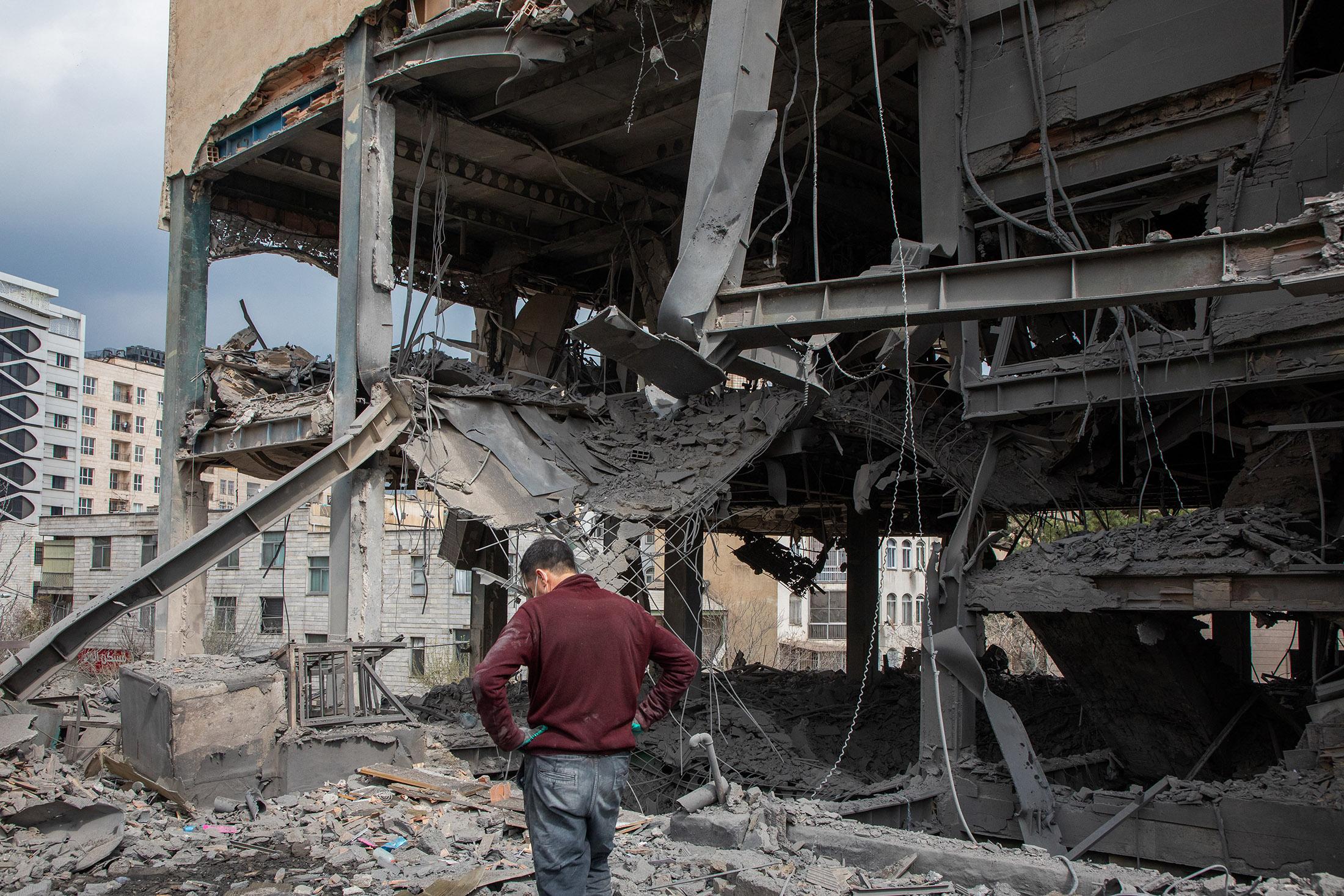
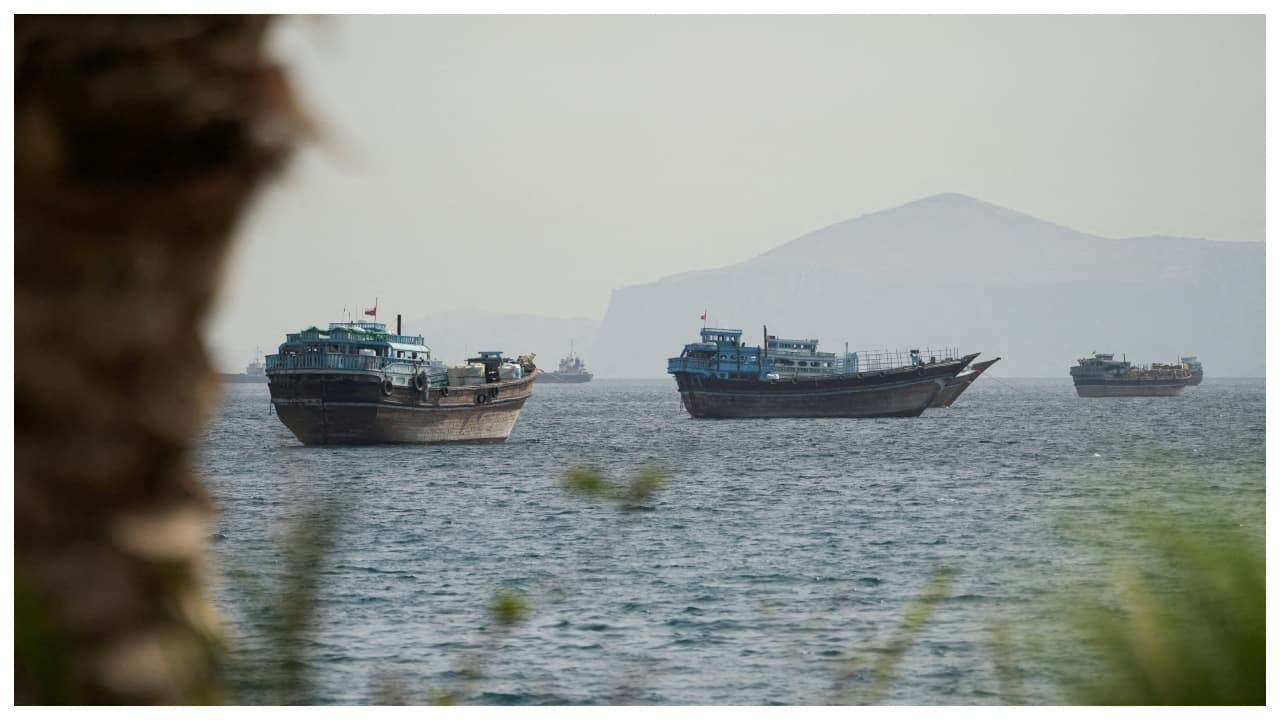
The central storyline around which Russian, Indian and Chinese interpretations converge is the US campaign against Iran and the protracted war in the Strait of Hormuz. In Russia, leading outlets describe it as another episode of “aggressive US actions in different parts of the world,” against the backdrop of which Moscow, in the words of Vedomosti, sees “signs of a forming multipolar world” and the growing role of alternative centers of power — China, Russia and the SCO. (vedomosti.ru) Russian experts, such as MGIMO’s dean of the Faculty of International Relations Andrey Sushentsov, explain the Iran war by the American inability to accept new formulas of strategic stability, including China’s concept of “constructive strategic stability,” which Beijing offered to Washington. (vedomosti.ru) In this logic, the US is not merely conducting a local campaign but is convulsively trying to preserve the old balance of power by force of arms and sanctions.
The Indian discussion of the Iran war is structured differently: here the center is not abstract criticism of hegemony but a very concrete question — how US tactics in the Strait of Hormuz undermine India’s strategic interests. An editorial in the business newspaper Business Standard notes that the protracted war around the strait is already changing the global security architecture and undermining the stability of energy routes on which the Indian economy critically depends. The authors stress that US President Donald Trump is now more occupied with finding a “face‑saving exit” from a “poorly planned strike on Iran” than with a coherent regional strategy. (business-standard.com) On the analytical portal Moneycontrol, an article titled “The Limits of Strategic Convergence: Hormuz and the New Fault Lines in US‑India Relations” states outright that the Iran campaign “exposed the limits of Delhi‑Washington convergence”: when it comes to oil and maritime communications, India must maneuver rather than follow in the US wake. (moneycontrol.com)
In China the Iran war has long been integrated into a broader discourse on the “crisis of American strategy.” In commentary in party and regional press, US military actions against Iran are framed as an example of how Washington is undermining its own alliance system and eroding trust by acting without consulting partners and “substituting multilateral mechanisms with unilateral force.” It is in this vein that a Shandong newspaper describes allied reactions to the US and street protests within the United States against White House policy: protests against the war and immigration policy are read as a symptom of a growing rift between society and power in America. (shm.com.cn) For Chinese commentators this conveniently demonstrates that the American model of foreign policy has become a “strategic trap” — a series of crises that Washington can no longer control or resolve to its advantage.
Another recurring theme is the general sense that the US is shaking the very foundations of the postwar international order. The Chinese perspective on this is particularly pronounced. Chinese analytical resources and even semi‑documentary reviews such as “A Comprehensive Assessment of the Structural Decline of American Hegemony” describe recent years as a sequence of Washington actions accelerating the disintegration of global governance: from US withdrawals from a number of international organizations and agreements to trade wars and sanction campaigns. (zh.wikipedia.org) Commentators emphasize that the mass “withdrawals” of the US from international institutions are seen at the UN and WHO as “a blow to multilateralism and international law” and in effect as an abandonment of the role of responsible leader. (zh.wikipedia.org) Against this backdrop Chinese official and semi‑official texts promote the idea of a “Chinese plan” as a more predictable and inclusive alternative, implicitly contrasting Beijing with an “impulsive” Washington.
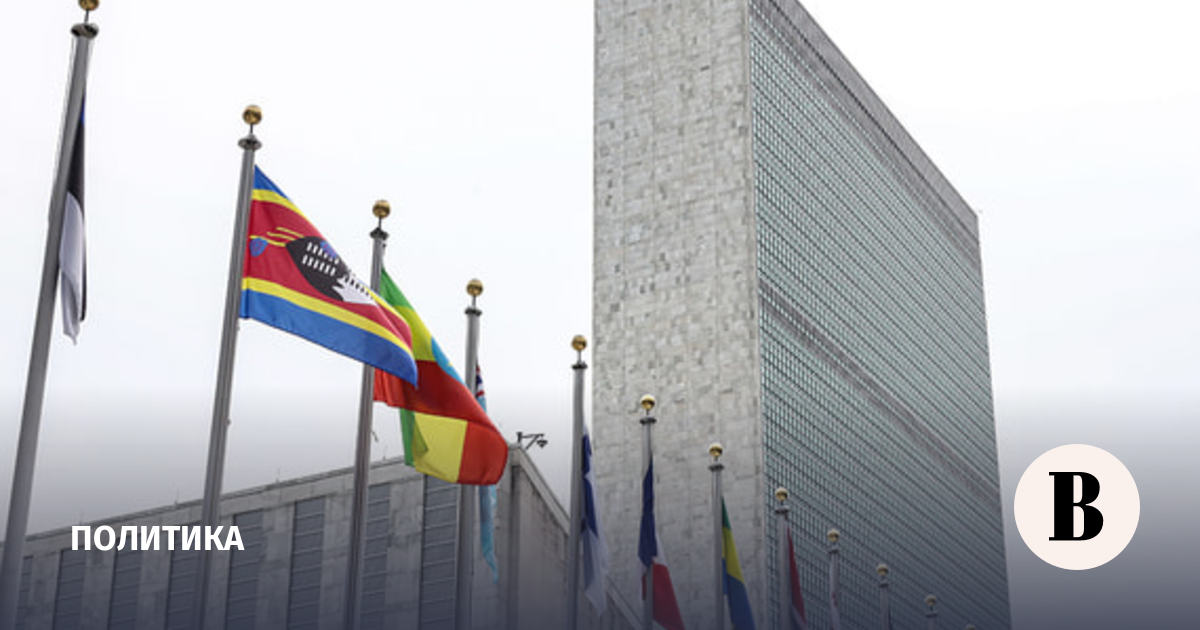
In Russia this line is voiced in the political key of multipolarity. The article “In What Ways Russia Sees Signs of a Multipolar World” in Vedomosti links American “aggressive actions” — from Iran to pressure on other regions — with an acceleration of the consolidation of alternative blocs, primarily the SCO and BRICS. (vedomosti.ru) Russian experts emphasize that even traditional US allies in Europe and Asia now respond to American initiatives increasingly cautiously, and sometimes critically, especially when it comes to military operations without UN Security Council sanction. This is presented as the main proof: the era of unquestioned unipolarity is over, and even if the US retains colossal resources, its ability to set the rules without regard for others has been irreversibly weakened.
For India the main nerve in relations with the US today is the intersection of strategic partnership and a growing sense of competition. Some Indian commentaries note that Washington increasingly behaves in the region as an autonomous actor, ignoring Delhi’s sensitivities. In a Japan Times column by an Indian author widely cited in Indian debates, it is argued that the US and India have become “regional rivals”: as China expands influence in the Indian Ocean, Washington pursues policies that directly contradict Indian interests in its “strategic backyard” — from Pakistan to the Persian Gulf. (japantimes.co.jp)
On the other hand, Indian analytical centers stress that a split with the US is impossible and disadvantageous for Delhi. Stimson Center materials discussing the US‑India nuclear deal and the current state of the partnership emphasize that despite frictions both sides remain bound by mutual interest in containing China and developing technological exchange. (stimson.org) Indian economists note that “integrating India into trusted supply chains and American technology ecosystems” offers enormous opportunities but at the same time increases vulnerability to Washington’s political and tariff zigzags. (ieefa.org) Thus a specific Indian view of the US emerges: a strategic partner India cannot afford to lose, and at the same time a source of risks with which distance must be maintained.
A separate strand of Indian discussion concerns the future of the Quad format (US, India, Japan, Australia). According to the analytical portal InsightsIAS, which treats the subject for civil service candidates, the Quad is experiencing a “structural inflection”: amid a “waning US enthusiasm,” Tokyo, Delhi and Canberra are forced to take on a larger share of diplomatic efforts in the Indo‑Pacific. (insightsonindia.com) In the Indian interpretation this is not only a weakening of American leadership but also an opportunity for India to transform from a “junior partner” into a co‑architect of regional architecture where the US remains important but is no longer the sole center of gravity.
Chinese debate focuses primarily on the question: do a series of US foreign policy crises and internal shocks mark the start of a “structural decline” of American power, or are they merely a complex but reversible cycle? In several analytic pieces aimed at an expert audience the conclusion is drawn that a long‑term structural decline is indeed underway — from erosion of political consensus and a crisis in elite recruitment to undermining of the dollar’s authority and the Federal Reserve. (blog.leowang.net) At the same time authors stress that even a weakened America remains the main variable in the world system, meaning China’s task is not to seek the “fall of the US” but to “manage its decline” so as to avoid chaotic destabilization of the global economy and security.
A key element of the Chinese narrative is the contrast between US military power and the internal weakness of American society. This is especially visible in discussions of the internet meme phenomenon “美国懦夫” — “American cowards,” which went viral in the Chinese internet at the start of 2026. The term arose as a sarcastic comment on a series of police and immigration shootings in Minnesota: according to a Chinese piece, poet Lane Nicole Good and nurse Alexa Pretty were shot by ICE agents under disputed circumstances, after which authorities justified the agents’ actions by citing “violent resistance,” while major newspapers like The New York Times showed videos that diverged from the official account. (zh.wikipedia.org) Chinese authors present mass but peaceful protest in the US as an example of “ritualized discontent”: despite record levels of civilian armament, Americans, in their view, are not prepared for real resistance to systemic injustice. Thus US internal conflicts become material for a cautionary narrative about a “pseudo‑democracy” where freedom exists at the level of slogans but not practice.
In the Russian public space the US social crisis is also actively discussed but through a different lens. Russian commentators write extensively about the rise of political radicalism, the exacerbation of racial issues, and polarization of elites and society — while emphasizing that the American establishment, despite internal storms, continues to pursue a unified external line, primarily toward Russia and the post‑Soviet space. From this arises a twofold view: the US is potentially fragile yet retains enormous external leverage. Expert reviews for Russian audiences regularly underscore that even if Washington weakens, the vacuum will not automatically be filled by Moscow — hence the bet should be on coalitions with China and Global South countries, not on illusions of a “quick victory” over America.
Particular attention is deserved by how Russia, India and China read the US military strikes on Venezuela and their international consequences. Chinese summaries aggregating global reactions emphasize that even US allies in the EU and Latin America preferred to distance themselves or limit themselves to cautious criticism of the legal basis of the operation, while many Global South governments openly spoke of a “grave violation of international law.” (zh.wikipedia.org) For Chinese writers this illustrates the “erosion of the US’s moral capital”: even when the fall of an unfriendly regime, such as Caracas, brings relief to part of the population, the very method of overthrow by external intervention provokes far wider rejection.
In Indian debate the Venezuelan episode appears less often and more as part of the broader outline: Washington continues to use military force on the other side of the world, disregarding international institutions, yet expects unconditional support from Asian partners on issues affecting their vital interests — from China to Hormuz. This reinforces in Delhi the conviction that dealings with the US must be pragmatic and selective, avoiding “automatic assent” even within a strategic partnership.
Put together, these three perspectives produce a curious picture. Russia, India and China converge on the main diagnosis: the current America is a superpower with a growing gap between its military and economic power on the one hand and its political, moral and institutional authority on the other. But their conclusions differ. For Moscow it is an opportunity to accelerate formation of a multipolar system under the aegis of alternative groupings where the US will be one of several centers but no longer “the world’s policeman.” (vedomosti.ru) For Delhi it is a reason to rebalance risk: deepen cooperation with Washington where it strengthens Indian autonomy and curb American initiatives where they turn India into an instrument of someone else’s agenda. (moneycontrol.com) For Beijing it is an opportunity to promote its own initiatives as a more predictable alternative while preparing for the turbulence that any “managed decline” of a hegemon entails. (zh.wikipedia.org)
It may seem that all these debates are just variations on the familiar theme of “anti‑Americanism.” But on closer reading it becomes clear: this is not simple hatred of the US but a complex recalibration of attitudes toward America as a system‑forming factor in world politics. In Russian, Indian and Chinese press the words about the “fall” of the US are heard less often and increasingly replaced by arguments for the need to adapt to a world in which the United States will remain strong but will cease to be the sole source of rules and guarantees. In that sense the Iran war, the strike on Venezuela, tariff wars and even domestic crises in the US are perceived not as isolated episodes but as chapters of one large story — the story of a slow, contradictory but already irreversible end of the unipolar moment.