In June 2026, discussion of the United States in the foreign press and among experts noticeably shifted: the foreground is no longer the abstract “role of America in the world,” but a very specific set of actions — a new wave of tariff protectionism under moral slogans, a forceful escalation against Iran and a broader buildup of military presence in the Middle East, as well as continued unilateral steps regarding Venezuela. In Brazil these themes intertwine with anxiety about dependence on the US and threats to export industries; in the Arab press read in Saudi Arabia, with the question of whether Washington can exit the Iranian conflict at all without losing face; in Australia, with the traditional balancing between alliance loyalty and fears of trade wars and destabilization of global markets. Layered over this is a softer layer — debates about visas, football and the US image, which alternately intensifies or smooths irritation about hardline policies.
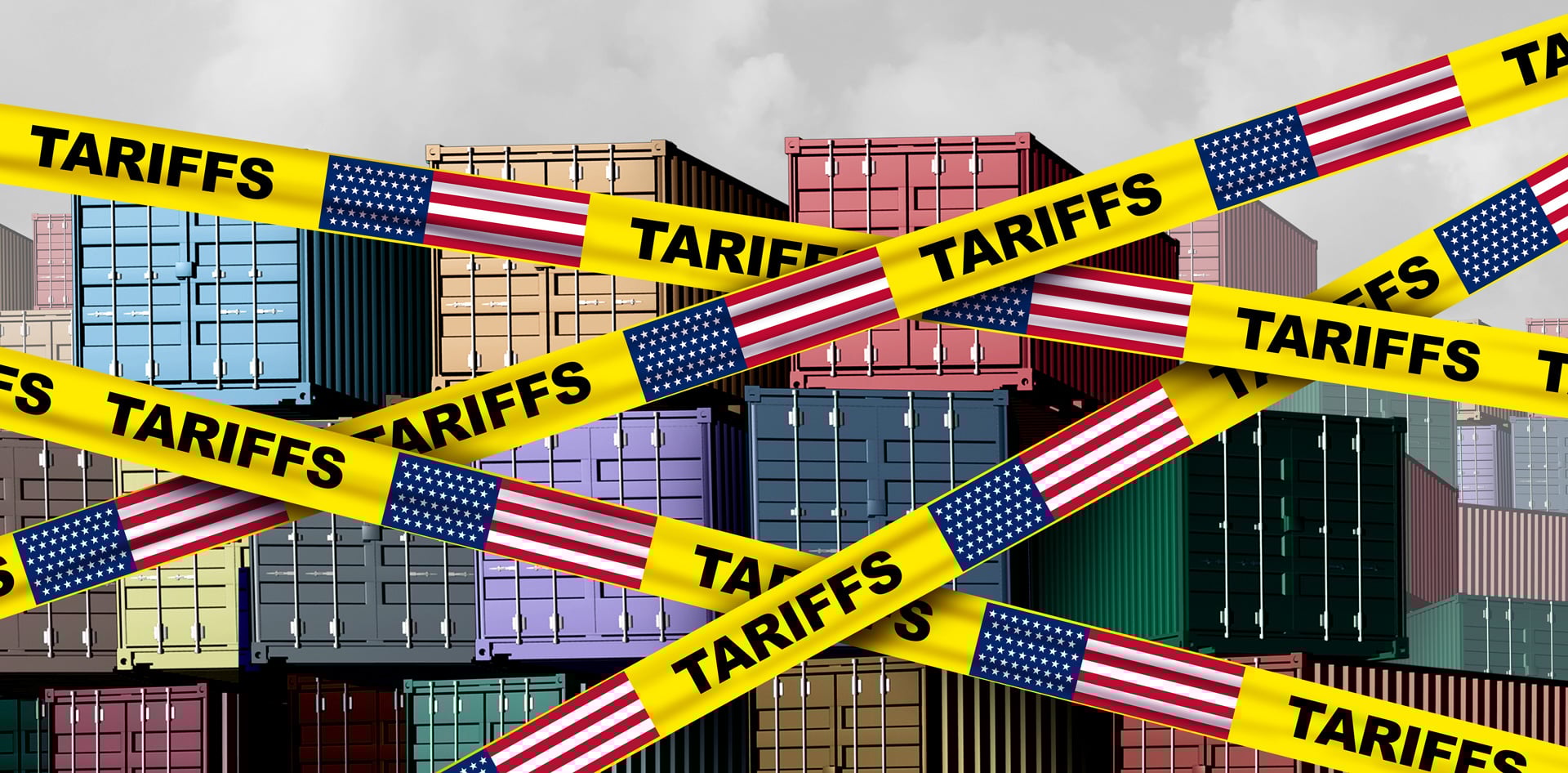
One of the hottest topics in Brazil is the new US tariffs, formally justified as a fight against forced labor. Journalist and labor researcher Leonardo Sakamoto, in an article for Repórter Brasil reprinted by the Institute of Humanistic Studies Unisinos, characterizes this White House line as “protectionism that does not fight crime.” In his assessment, Washington uses existing laws banning import of goods produced with forced labor selectively to pressure competitors, instead of beginning “by putting its own farms and corporations in order,” where, he reminds readers, cases of extreme worker exploitation are also recorded. His piece contains a key motive for the Brazilian discussion: if the fight against slave labor were sincere, the US would start with itself rather than with participants in global supply chains in developing countries. This criticism, published as “Tarifa dos EUA motivada por trabalho forçado é protecionismo que não combate o crime” on the Instituto Humanitas Unisinos platform, became a convenient argument for leftist and union circles against unilateral American measures.
Brazilian business and military press view economy and security together. In the specialized Revista Sociedade Militar a paradox is analyzed: Brazil and the US maintain close military and commercial partnership, while “relations remain marked by technological dependence and political disputes.” The authors note that about 81% of Brazilian exports to the US are industrial goods, from steel and aircraft to refined oil and pulp, and that any new tariff packages, especially those reported by the regional newspaper OpiniãoCE, directly hit these sectors. Also in Brazilian reviews it is emphasized that Washington remains a key investor in strategic industries — from defense projects to energy — and this reinforces the asymmetry in which Brazil must simultaneously seek “strategic autonomy” and avoid falling out with the main buyer of its industrial exports.
Partly in response to this environment, an internal debate about foreign policy and defense has intensified in Brazil. At the 2nd National Conference on Brazil’s Foreign Policy and International Insertion, held at the Federal University of ABC, the presidential defense advisor directly linked the growing importance of the military component in the country’s diplomacy to “US actions in Venezuela and the rise of conflicts” and warned that this would become the main challenge for Brazilian strategy by 2030. OpiniãoCE quoted him saying that “asymmetric conflicts,” similar to the US‑Iran confrontation, are considered a model by which to build one’s own scenarios and defense planning. The Iranian crisis appears here as a kind of “case study”: how a great power uses military projection of force, combines sanctions, strikes and negotiations — and what that means for countries trying to maneuver between Washington and other centers of power.
In Arab commentary, including publications read in Saudi Arabia, the US is discussed today almost exclusively through the prism of this war with Iran and the fact that it has already gone beyond a regional episode. A detailed overview in the “Politics” section of Al‑Jazeera describes the current conflict between the US, Israel and Iran as a factor “that has ceased to be merely a regional clash and has become an element affecting the world economy and internal political balances in Washington, Tel Aviv and Tehran.” The authors point to a paradox: the US is forced to demonstrate resolve while seeking a “corridor of de‑escalation” through negotiations, and as a result the preliminary deal discussed in the press between Washington and Tehran looks, in the wording of the New York Times, like an agreement that may be limited to unblocking the Strait of Hormuz and postponing key issues — the nuclear program and frozen assets. This, as emphasized in the Arab version of the overview, threatens to prolong a state of “neither war nor peace” indefinitely.
Egyptian Al‑Ahram, whose materials are actively cited in Saudi political Telegram channels, develops this thought, reflecting on the “struggle for a deal” between the administration of Donald Trump and Tehran. In the article “بين ترامب وطهران.. صراع الاتفاق” the author writes that this is not simply about a possible agreement, but about “the future of the regional order in the Middle East and how the conflict between the US and Iran will be managed, and what place Israel will occupy in future security architectures.” In his assessment, Washington may consider preventing a large war and containing the nuclear program as immediate priorities, while Israel sees Iran as a “comprehensive threat” far beyond nuclear issues. Here the US appears as a power forced to navigate among its own priorities, Tel Aviv’s allied demands and the economic costs of a prolonged confrontation: for the Gulf countries this is not abstract diplomacy but a question of the resilience of energy markets, investments and their own internal security.
The Saudi Al‑Jazira (not the Qatari TV channel) and a number of Saudi analysts also track how regional mediators are joining this conflict. In a Pakistani chronicle distributed by the Saudi Information Agency and reprinted in Saudi outlets, Prime Minister Shehbaz Sharif is quoted saying that “the chances of a peaceful agreement between the US and Iran are closer than ever,” and the role of Pakistan as a mediator is emphasized. For the Saudi audience this has a double meaning: on the one hand, it demonstrates that the crisis is still controllable and amenable to diplomacy; on the other, it shows that the United States can no longer fully monopolize the regional security architecture and must reckon with new intermediaries, from Muscat to Islamabad.
A separate Arab line of discussion concerns whether Washington can offer a sustainable “post‑war” model at all, or whether a possible deal with Iran will be just another temporary patch. In the aforementioned Al‑Ahram article the author warns that even if an agreement is reached, “the real question is not whether a deal is near, but whether the different parties can turn it into a sustainable and viable settlement, or whether deferred contradictions will resurface at the first serious test.” For a reader in Saudi Arabia, who has experienced recent years as a succession of experimental US strategies — from “maximum pressure” to pinpoint strikes and sanctions — this sounds like skepticism about Washington’s capacity for long‑term planning rather than merely situational response.
Brazilian media, in turn, view the Iranian conflict through the lens of financial risks. The economic pages of Jornal de Brasília link spikes in US Treasury yields and rising global risk aversion specifically to geopolitical tensions involving the US, Venezuela and Iran, and even threats regarding Greenland. In a report on Brazil’s public debt for January 2026 the authors note that increased volatility in the US debt market pushed some investors to reallocate portfolios toward emerging markets, temporarily working in Brazil’s favor by lowering its cost of external financing. But this “gain” is seen as the flip side of American instability: if Washington continues to escalate, the cycle could reverse.
Similarly, analysts in Australia see US policy as both support and source of risk. In the English‑language expert environment, represented for example by publications on Trump’s 2026 State of the Union at the Stimson Center, it is emphasized that the new administration in Washington combines aggressive rhetoric with a pragmatic desire to limit involvement in conflicts through “limited use of force” and sanctions. For Canberra this becomes a dilemma: on the one hand, Australia traditionally relies on the US as a security guarantor in the Indo‑Pacific and within AUKUS; on the other, it must consider that every new American campaign against Iran or Venezuela hits commodity prices, maritime shipping and demand for Australian exports in Asia. Australian commentary on US foreign policy increasingly invokes the motif of “strategic predictability”: an ally can be tough, but must be comprehensible — and many questions have accumulated about Washington.
The topic of Venezuela has become another knot where Brazilian, Saudi‑Arab and Australian assessments of American policy converge. Brazilian military analysts, including doctrinal articles published by Brazil’s Escola Superior de Guerra, describe the “US–Venezuela crisis of 2025” as an example of “hybrid warfare” and a “covert revision” of security principles in the Western Hemisphere. The authors emphasize that Washington, acting through sanctions, cyber operations and limited military pressure, demonstrated the ability to undermine the Maduro regime without moving to a full‑scale invasion. For Brazil this is simultaneously a warning and an incentive: there is continued fear of the entire northern flank of South America sliding into a zone of unilateral American control, and an understanding that the country can no longer rely on “traditional intermediaries” like itself or Colombia — the US more often bypasses regional diplomacy and acts directly.
In the Arab, and especially Iranian, context Venezuela is mentioned as one of the theaters where the US tests its new concepts of “limited intervention” and economic blockade. Some Middle Eastern commentators believe that if Washington deems the pressure model against Caracas successful, it will be inclined to replicate it against other “problematic regimes” — from Tehran to North Korea’s Pyongyang. For Gulf markets and thus for Saudi investors, this means greater uncertainty: it is unclear where exactly America will draw the red line and how far it will go in using energy and financial levers.
Australian commentators view the US–Venezuela events primarily as a test for international law and the resilience of global sanctions regimes. In expert debate about how reliable the dollar‑centric financial system is, a cautious conclusion emerges: continuation of unilateral US actions pushes other centers of power to create alternative payment infrastructures, which in the long term could hurt both the US itself and its closest allies. For Australia, whose economy is deeply embedded in the dollar system and dependent on American financial institutions, this adds another layer of risk to existing military obligations under ANZUS and AUKUS.
Against this backdrop it is particularly telling how attempts by the US to soften its image through “soft power” are discussed in the three countries. In Brazil, a certain resonance was caused by remarks of member of the US Presidential Advisory Board on Intelligence Félix Lasarte at the VEJA Brazil Insights forum in New York. VEJA’s article emphasizes that Lasarte called for abolishing visas between Brazil and the US, stating that America’s “strategic future” “passes through closer relations with South America.” Ending his speech with a joke that if the US does not win the home World Cup, “let Brazil do it,” he received applause. Local commentators saw this both as a gesture of goodwill and an acknowledgment that Washington seeks to strengthen ties with Brazil at a moment when its elites increasingly speak of the need for multivectorism and rapprochement with Europe and Asia.
Football and the upcoming 2026 World Cup in the US, Mexico and Canada have become a kind of pressure valve for political steam. In Brazil sports columns, such as a piece on UOL about the US team’s bright victory over Paraguay in the current tournament, unexpectedly turn into a platform for discussing the “new America” — more confident, less “naïve,” capable of imposing its style not only in international politics but also in the game. On Reddit‑like platforms Brazilian users argue about how dangerous or typical American foreign policy is for great powers: one popular post titled “Estudar história e continuar acreditando nos EUA é escolher acreditar em uma fantasia” claims that treating the US as uniquely evil or uniquely good is “the same propaganda, only with a minus sign,” and that Washington’s interventions differ little from practices of other empires. This more cynical but also more historicized view partly softens anti‑American affects: instead of moral condemnation, a cold calculation about with whom and on what terms it is profitable to engage.
In the Saudi online space football mixes with the experience of personal contacts with America. In a popular subreddit for Saudi students in the US there is active discussion about how the diaspora can become the “unofficial host” of the tournament — helping visiting fans from the Kingdom, organizing “identity groups” and logistics. The author of one of the top posts describes his project platform “Fora Pass” (in English — “Forward Pass”), whose goal is to pre‑organize Saudis in the US and guests from home. Such discussions show that at the everyday level the US remains for many Saudis a country of opportunities, infrastructure and exciting events despite geopolitical disputes over Iran, Israel and energy. Notably, these same people simultaneously discuss rising prices, housing problems and security issues — the very side effects generated by both Washington’s global policy and its domestic economy.
Australian public opinion, though less emotionally involved in the football agenda, also sees the United States as an ambivalent partner. Australian press commentary on American domestic polarization and Trump’s course repeatedly returns to the question: how predictable will Washington be in the coming years, and can Australia continue to “delegate” a significant part of its security and technological development to American programs — from submarines to joint AI research. Against the backdrop of discussions about US protectionist tariffs against dozens of countries, including Brazil, there is anxiety in the Australian business press: if Washington unhesitatingly imposes tough measures against partners in Latin America and Asia under slogans of human rights or national security, nothing guarantees that Australian exports will not be targeted tomorrow.
The overall picture that emerges is not a black‑and‑white split into “pro‑American” and “anti‑American” voices, but a multi‑layered, often contradictory portrait of perceptions of the US. In Brazil Washington is simultaneously criticized for economic selfishness and forceful policy in neighboring Venezuela — and viewed as a key market, investor and potential partner on visa liberalization. In Saudi Arabia and more broadly in the Arab media the US appears as a powerful but tired and contradictory guarantor of regional order, trying to negotiate a deal with Iran without losing face before Israel and its own electorate. Australia, as a first‑tier ally, increasingly asks whether the long‑term bet on a country that combines protectionism, moral rhetoric and fragmented use of force is reliable.
The three perspectives share one thing: everywhere, from São Paulo to Riyadh and Canberra, the US is no longer perceived as a stable “background” of the world order. On the contrary, it is American policy — trade, military, energy — that becomes the main source of uncertainty to which governments adapt by building bypass channels, strengthening their own defenses or increasing diplomatic autonomy. At the same time no country is ready for a rupture: economic and institutional ties are too dense, and the American market, technologies and security offer too much benefit. Therefore current debates about the US are not about whether to be “for” or “against” America, but a painful and pragmatic search for an answer to the question: how to live in a world where the main center of power has itself become a risk factor — and how to extract the maximum opportunities from this with minimal losses.