In mid‑June 2026, foreign debates about the United States are concentrated on several overlapping threads. First, there is Washington’s foreign policy under Donald Trump’s second term — from war with Iran and a strike on Venezuela to an attempt at a “reset” with China. Second, there is the structural question of the reliability and predictability of American leadership: that is how it is framed in leading European and Middle Eastern capitals. And finally, the theme of a “structural decline” of American hegemony is being voiced more insistently, especially in Chinese analytical discourse, which closely notes both domestic polarization and Washington’s foreign‑policy zigzags.
If one reads only the English‑language US press, it may appear that the world still sees America as an indispensable center. But French columnists, Saudi commentators and Chinese strategists paint a more ambiguous picture: from nervous dependence to pragmatic calculation and an open “diagnosis” of a long‑term weakening of American influence.
One recurring motif is how allies and rivals react to a series of crises initiated by or involving the United States: the 2026 war with Iran, the attack on Venezuela, tensions around the Strait of Hormuz and Bab al‑Mandeb, and the zigzags in relations with China, from a trade “breather” to the Trump–Xi summit in Beijing.(fdd.org)
The first major thread uniting European and Middle Eastern commentary is the 2026 Iran war and the related maritime straits. In the Persian Gulf region, especially in Saudi Arabia and neighboring monarchies, analytic pieces show a duality: on one hand, an acknowledgment that without US military power it would be harder to deter Tehran; on the other, a growing conviction that Washington is incapable of delivering either a strategic victory or a lasting order.
A characteristic formulation appeared in a Reuters piece widely quoted in Arab and francophone Gulf press: Iran “remains a formidable and unbroken force,” capable of threatening the Gulf Arab states and global energy flows, and the US has “again demonstrated the limits of military power against a resilient adversary.”(marketscreener.com) In Saudi Arabia this assessment is interpreted not as anti‑Americanism but as sober calculation: if Washington cannot definitively “solve” the Iranian issue, Riyadh must develop its own capabilities — from air defense to diversifying export routes.
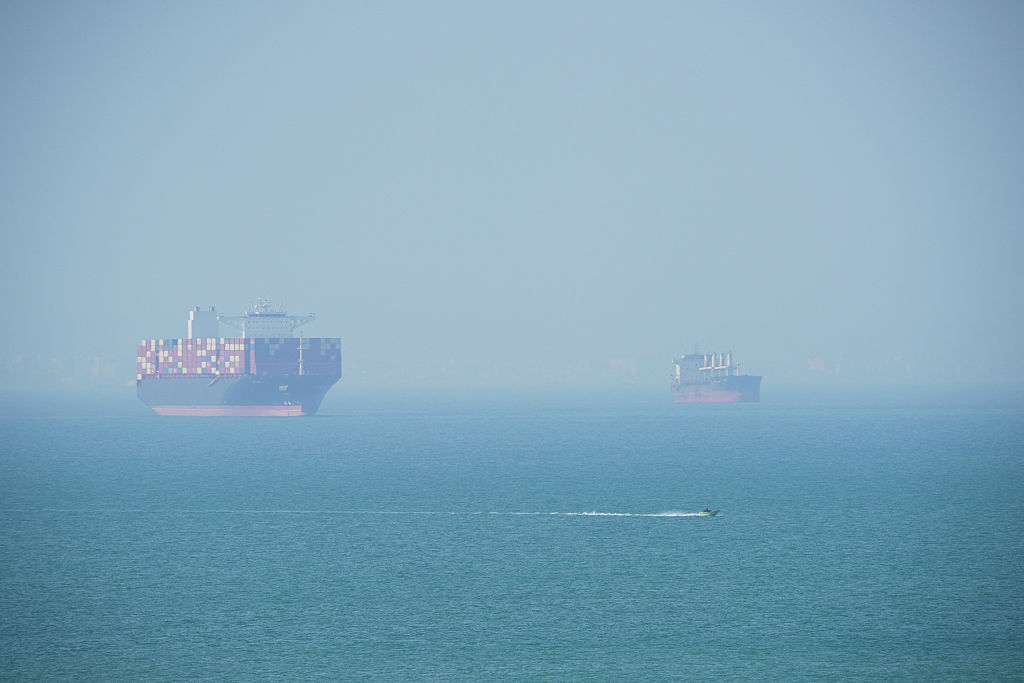
At the same time, Saudi and broader Middle Eastern commentary increasingly highlights strategic straits. Attention to Hormuz is natural, but in recent days the focus has shifted to Bab al‑Mandeb as well. In an Al Jazeera analysis of the situation after the recent US‑Iran de‑escalation agreement around Bab al‑Mandeb, it is emphasized that the accord reached in Islamabad with Qatari mediation and announced on June 15 is seen as “a pause, not the end of confrontation.”(aljazeera.net)
Middle Eastern analysts draw a direct link between pro‑Iranian forces’ actions in the Red Sea, the blockade of Gaza and economic pressure on Yemen. American policy there is seen not as a coherent strategy but as a chain of crisis reactions in which maritime corridors are only one lever of pressure. Saudi commentators, especially in expert columns, ask: does this not give Tehran and its partners the impression that the US fears prolonged confrontation and ultimately is always ready for a political deal, even at the cost of preserving Iranian influence?
In France these threads are read through the prism of European security and dependence on the American military umbrella. French press regularly cites assessments that even after the Ukrainian and Iranian crises allies “remain dependent on the US, even as distrust grows.”(semafor.com) French analysts speak not only of the EU’s “strategic autonomy” but also of a “fear of American inconsistency,” where the Iran war and the straits are just recent examples.
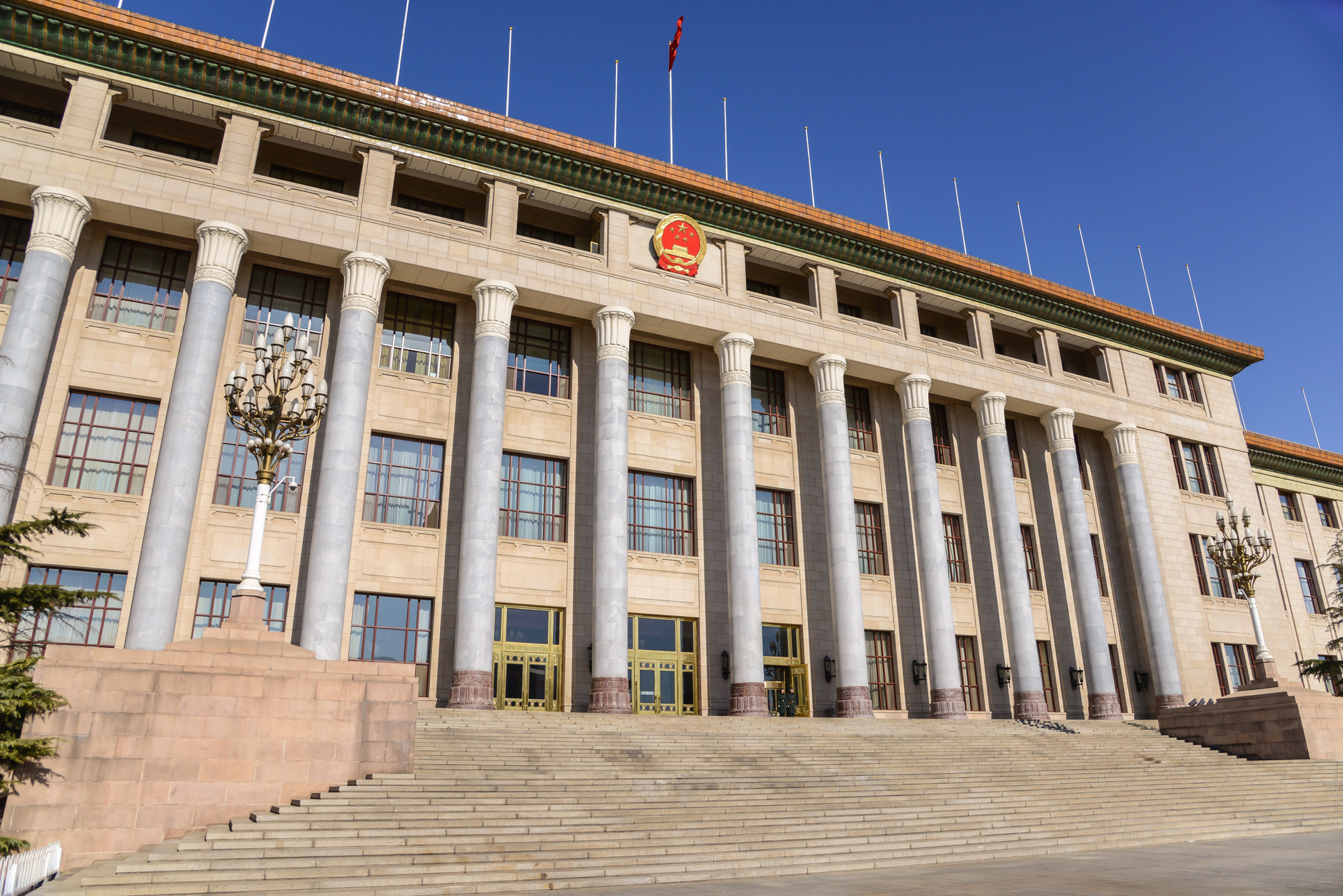
At the same time, French and European media are debating how to interpret the new turn in US‑China relations. After the Beijing Trump–Xi summit of May 14–15, which in several European reviews was already dubbed a “Beijing stabilisation,” EU analysts are trying to understand whether this means a long‑term recognition of the PRC as an equal power or merely a tactical pause in confrontation.(ces-intelligence.com)
French and German experts stress the ambiguity of Washington’s position: on the one hand, structural trade and technology competition remains, as reminders about a temporary trade “truce” and a forthcoming tariff review after November 10, 2026 indicate; on the other — the White House de facto recognizes the need for “joint management” of some global problems with Beijing.(easternherald.com)
For Europe this is not an abstract question. One author at the European analytic center CES Intelligence, in an article about “Beijing stabilisation” and European sovereignty, points out that “each new US pivot toward China forces Europeans to ask anew whether they will be a chess piece rather than a player.”(ces-intelligence.com) For a French audience accustomed to debates about a “third pole” between the US and China, this prospect is painful: Paris wants to act as an independent center of power but is economically deeply tied to both the Chinese market and American security.
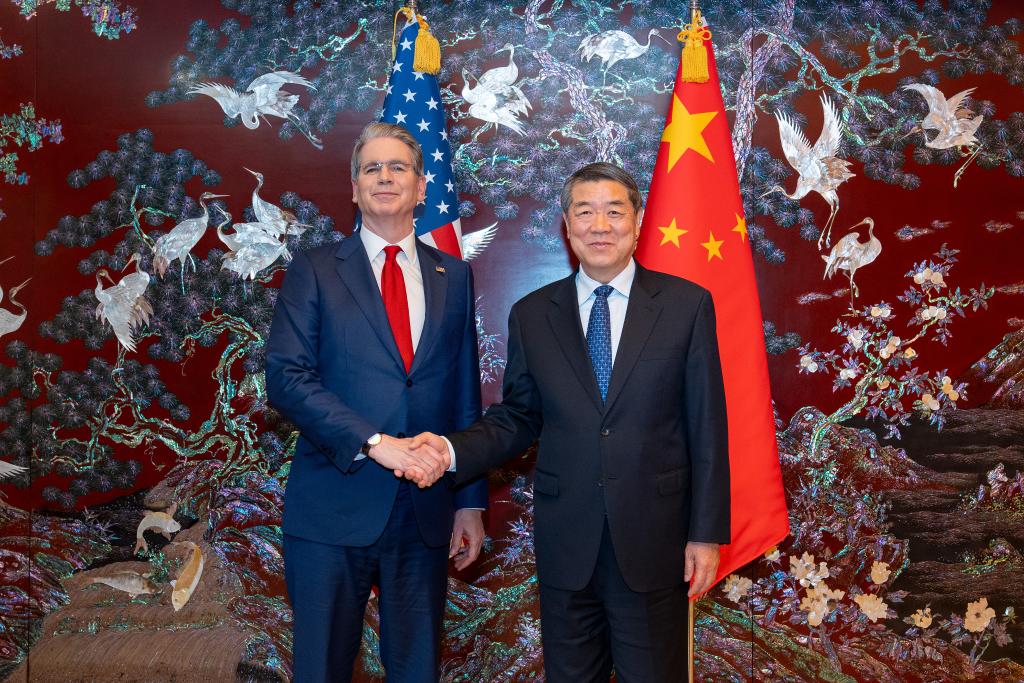
Beijing views the same summits and “truces” very differently. In recent months the Chinese official discourse has emphasized the idea of a “new positioning” in relations with the US. Xi Jinping at the last meeting with the American delegation spoke of bilateral ties reaching a “new level of positioning,” describing this as a shift from a purely confrontational agenda to a blend of competition and dialogue.(investing.com)
But behind the official formulations a much tougher debate is unfolding in China’s expert community. In several strategic reports on the “structural decline of American hegemony,” 2026 is described as a moment when the combination of domestic polarization in the US and foreign‑policy crises — from the war with Iran to the strike on Venezuela — makes Washington less predictable and less able to impose its agenda.(blog.leowang.net)
Chinese authors are not so much gloating as noting that, in their assessment, “the instruments of American power no longer automatically translate into political results.” They mention, for example, low levels of domestic support for military operations against Iran and massive protests against the strike on Venezuela; this leads Chinese analysts to conclude that in the coming years any major overseas campaign by Washington will cost the administration dearly in terms of domestic legitimacy.(zh.wikipedia.org)
At the same time Chinese economists and political scientists closely monitor the American electoral cycle. In a recent macroeconomic review, widely cited on Chinese financial platforms, prospects for the US Congressional elections in November 2026 are analyzed, with emphasis that the nationwide rating of the Democrats substantially outpaces the Republicans and that structural polarization “has reached an unprecedented level.”(htfc.com)
For a Chinese audience accustomed to a narrative about the predictability of its own political system, the American scene appears chaotic yet still possessing enormous power capable of “exporting instability.” This combination — an unpredictable democracy and still colossal military and financial resources — becomes a key object of analysis: how Beijing can minimize risks and profit from Washington’s fluctuations.
Another important focus of the Chinese discussion is the trade‑technology dimension of US‑China relations. Publications on the temporary tariff “lull” until November 2026 are seen as a “window of opportunity” to restructure supply chains and strengthen domestic markets.(easternherald.com) At the same time, no one entertains illusions that the US will not return to tariff pressure after the “truce” expires.
Interestingly, on Chinese forums and in some analytical texts the thesis popular in Western criticism of Trump is actively discussed: that the current administration allegedly “produces crises in order to solve them at a convenient moment — for midterm elections,” thereby manipulating both the domestic electorate and foreign partners. On one major Chinese discussion platform a participant dissects how the combination of US debt burdens, defense and social spending supposedly pushes the administration to use geopolitical shocks to justify monetary and fiscal maneuvering.(reddit.com)
European, Middle Eastern and Chinese assessments converge on one point: trust in US predictability is declining, even if military and financial dependence persists. However, in each region this takes on its own coloring.
In France and more broadly in the EU the main question is framed as the dilemma of “autonomy within dependence”: is it possible to build a more independent defense and industrial policy while remaining in NATO and relying on American nuclear deterrence and technology? French analysts use commentary on the Iranian campaign and waves of tension in the straits as an argument for accelerating European defense programs — from air defense to naval forces capable of protecting sea lines of communication without constantly looking to the Pentagon.(fdd.org)
In the Gulf states the reaction is more pragmatic. Saudi and Emirati commentators simultaneously note that the region is not yet ready to live without the US; but they increasingly discuss multivector policies — from dialogue with Iran to deepening ties with China and India — to reduce vulnerability to Washington’s pivots. Agreements on Bab al‑Mandeb and efforts to secure the Strait of Hormuz are interpreted as spaces where Arab states can act not as passive allies but as more independent mediators and players.(marketscreener.com)
And in China the US is increasingly seen less as an unattainable model and more as an object of cool analysis: how deep are their internal contradictions, how long can they sustain simultaneous confrontations with China and Russia, Iran and several Latin American countries. Regardless of attitudes toward the American system, for Chinese authors the main question is how to adapt to an era of “prolonged American decline” without underestimating Washington’s remaining capabilities.(blog.leowang.net)
There is much bias and many agendas in all of this. The French press sometimes overstates Europe’s autonomous potential; Middle Eastern commentators tend to ascribe excessive cynicism to the US; and Chinese reports sometimes fit facts to a preordained “decline of the hegemon” chart. But it is precisely in these local perspectives that the main point is clearest: the United States remains a central actor in world politics, yet fewer countries are willing to accept American leadership as natural and without alternative.
France, Saudi Arabia and China today are not so much arguing whether they are “for” or “against” the US as trying to find ways to live in a world where America remains strong but no longer sets the rules alone.