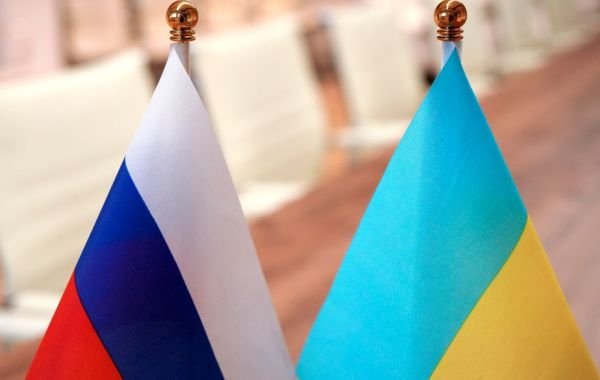
In early March 2026, in three very different capitals — Kyiv, Moscow and Seoul — the United States is written about a lot, emotionally and almost always in connection with war and security. For Ukraine, America is the main, but by no means unambiguous, guarantor of survival. For Russia, it is an adversary and a hidden participant in the conflict, while simultaneously a necessary negotiation partner. For South Korea, it is a key security ally whose decisions affect both the Korean Peninsula and the regional economy. The common backdrop for all three is the US war with Iran and the Trump administration’s attempts to simultaneously “finish with Ukraine” and not fail in the Middle East.
The first major cluster of topics is the new role of the US in the war around Ukraine after Trump came to power and the launch of trilateral Russia–Ukraine–US talks. In the Russian media environment it is declaratively presented that America has “finally recognized” the need for dialogue with Moscow, but the tone of commentary is suspicious and anxious. Pieces about the rounds of talks in Abu Dhabi in January–February and the preparation of further meetings stress that the US is, in essence, the third warring party, even though formally it sits at the table as a mediator. One typical storyline is video analyses and columns about how “America is squeezing Kyiv” while at the same time allowing Russia to continue massive strikes. In a popular Rutube vlog devoted to the negotiations, the author caustically describes the situation: the US delegation headed by the president’s son‑in‑law Jared Kushner and special envoy Steve Whitkoff allegedly did not even attend part of the sessions, “leaving the Ukrainians to discuss details with lower‑rank officials,” while Russia carried out a “night of Iskanders and Shaheds,” unleashing dozens of missiles and hundreds of drones on Ukrainian cities. According to him, the “coalition of the willing” in Europe — France, Britain, Germany — is ready to deploy troops as security guarantors tomorrow, but they were “shown the door so they wouldn’t get in the way,” ceding the field to a strictly American format of guarantees, not equivalent to NATO’s Article V. Such a narrative benefits the Kremlin: Russia is portrayed as a state that strikes “with purpose,” the US as a cynical arbiter ready to barter Ukraine’s fate behind the scenes, and Europe as a powerless extra. (n4k.ru)
The picture in the Ukrainian media space is different, but also lacks simple heroes. In expert columns aimed at a domestic audience, the US remains the undisputed strategic patron, yet authors increasingly warn that 2026 could become a “year of trials” precisely because American policy is becoming less predictable. Ukrainian analysts link the fate of military and financial aid to the timetable of US domestic politics — from midterm elections to Trump’s campaign — and explicitly write that Kyiv must prepare for a period when Washington will be at war with Iran, pressing Russia at the negotiating table and cutting resources for Ukraine at the same time. In one Ukrainian analytical piece, 2026 is described for the country as “a year of strategic turning through survival” — a formulation in which the US appears not as a guarantor of victory, but as a factor that makes the outcome of the struggle even more unpredictable. (uaportal.com)
The harshest and most overtly ideological view is formed in the Russian segment consistently reproduced by state and pro‑state platforms. Here America is still described in the logic of “open conflict,” not only on the Ukrainian front but also along the line of strategic stability. Officials and close experts remind audiences that Moscow has de‑facto exited the New START regime, and Deputy Foreign Minister Sergey Ryabkov already in 2023 allowed for the possibility that after February 2026 there might be no new arms‑control treaty. In recent comments that thought is developed further: Russia supposedly cannot continue participation “on previous terms” when the US, in Ryabkov’s wording, is conducting an “open conflict” against it — in Ukraine, via sanctions, and in space. Thus, in the Russian version, talks about Ukraine are presented as just one front of a larger confrontation with the US, and the refusal to extend New START is framed as a logical response to Washington. (ru.wikipedia.org)
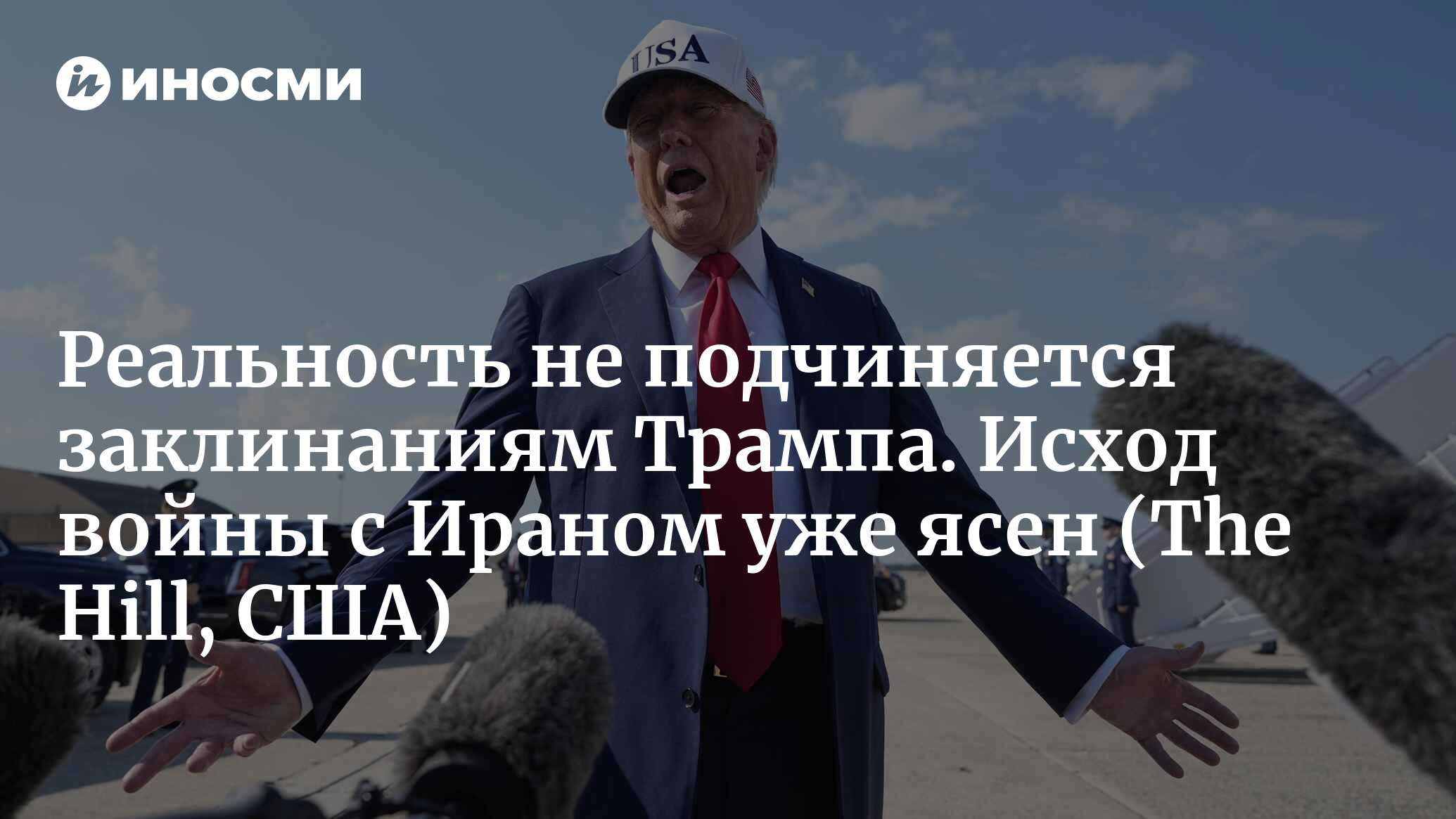
The second major block of discussion in all three countries is related to the US war against Iran and how the Middle Eastern front shifts the balance of American attention and resources. In the Russian media space there is a noticeable presence of retellings and reinterpretations of American sources themselves. The portal InoSMI actively publishes translations of articles from The Hill and The National Interest, but Russian headlines and subheads emphasize US vulnerability. In a piece based on an article by Ellen Mitchell in The Hill it is stressed that if a war with Iran drags on longer than the four–five weeks Trump mentioned, America will face ammunition shortages, since stocks have already been depleted by the war in Ukraine and years of supporting allies. Russian commentators add the conclusion that Washington will have to “choose priorities” — either Tehran or Kyiv. Another translated text, based on a publication in The National Interest, focuses on the question of “why Trump won’t give Ukraine more aircraft.” There the dilemma is discussed: F‑35s have demonstrated effectiveness against Iranian air defenses, but it is unclear whether the American arsenal can withstand simultaneous strain on two theaters, and most importantly — whether supplying new aircraft to Kyiv would not provoke a sharp escalation with Moscow, up to the risk of Russia using nuclear weapons against Ukraine. (inosmi.ru)
Against this backdrop, there also appear openly propagandistic pieces presenting the Iranian campaign as a “strategic defeat for the US.” In an analytical piece by military observer Alexander Khrolenko for Sputnik, the war is described as a protracted trap from which Washington “cannot exit without losing face,” while Iran “methodically destroys the enemy’s infrastructure.” The author cites reports in The New York Times showing satellite images of destroyed American bases in Bahrain, Qatar, Kuwait and other countries, and quotes former US military analyst Douglas Macgregor as saying that “all American bases in the Middle East have been destroyed thanks to Russia and China.” The construction is transparent: Russia and China are presented as invisible architects of US defeat, and America itself as a power that intervenes in conflicts out of inertia but does not control the outcome. (sputnik-georgia.ru)
The Ukrainian media and expert environment closely follows the Iranian front as well, but the main focus in these materials is not the fate of the US as such, but the potential “dilution” of American attention. Specialized blogs and columns voice alarm: if Iran draws a significant portion of the Pentagon’s resources, Kyiv may face a new round of shortages in shells, missiles and modern air‑defense systems. Commentators recall the supply crises of 2023–2024 and directly link them to later fluctuations in Western support. Against this backdrop, talks with Russia — where the US is acting as a key moderator — are seen both as an opportunity to break the diplomatic stalemate and as a risk of becoming a bargaining chip in a much broader bargain between Washington, Moscow and Tehran simultaneously.
In the South Korean press the US war with Iran is discussed in a more pragmatic, economic‑strategic key. Morning analytical briefs for investors dissect Wall Street behavior and oil price dynamics in detail amid the Middle East escalation. The author of one such review on Naver’s Premium platform notes that for Korean exports of electronics and batteries, key risks are fluctuations in US demand and rising energy costs caused by geopolitical shocks. At the same time the American market is still described as the main benchmark: movements of indices on Wall Street and Fed decisions are interpreted as more important for Korea than direct US military actions, yet it is through the Iranian crisis that Korean commentators explain heightened investor nervousness and a rise in risk premia. (contents.premium.naver.com)
The third key storyline, refracted differently in Russia, Ukraine and South Korea, is US domestic politics in the Trump era and its impact on allies and adversaries. Ukrainian analysts carefully cite Western forecasts about how the outcome of US elections and possible “midterms under Trump” will affect the volume and format of aid to Kyiv. One such forecast references assessments by Oxford Economics and the World Bank about slowing growth in Russia and Europe and, in parallel, expectations that the US in 2026–2027 will revise priorities for funding foreign‑policy projects, including support for Ukraine. For the Ukrainian audience this serves as a reminder: even if Washington is now actively involved in negotiations with Moscow and publicly promises “military instruments of influence” in case of bad faith by the Kremlin, American internal cycles and budgetary constraints can abruptly change the picture. (uaportal.com)
The Russian side, commenting on the American domestic agenda, traditionally focuses on Trump as a symbol of “pragmatism” and “deals.” Pro‑government columns recall the Anchorage summit of 2025 and the “crisis meeting Europe — White House,” stressing that Trump was supposedly always ready to bargain over Ukraine and sanctions. In analytical retellings of Western sources, emphasis is placed on the idea that under his leadership Washington seeks to exit “other people’s wars” with minimal losses, shifting part of the costs onto Europe. From this arises a popular motif in Russia: the US is ready to use Ukraine as a tool of pressure but not as an object of long‑term commitments, while with Moscow and Tehran Trump seeks to conclude a kind of “big deal” — a new format of security, sanctions and energy markets. (ru.wikipedia.org)
In South Korea the US is primarily viewed as the backbone of the regional security architecture and the main economic partner, and for that reason the local press closely follows shifts in American policy. However, unlike in Ukraine or Russia, where Trump is almost a mythological figure, in Korean commentary he more often appears as a source of uncertainty regarding tariffs, technological restrictions and policy toward China, rather than as a “commander‑in‑chief of world wars.” For the Seoul audience the key question is: will the US remain a reliable ally amid simultaneous crises in Europe and the Middle East, and will the US–China rivalry evolve into a form that forces Korea to choose sides more sharply than before.
There is another layer of discussion, especially noticeable in Ukrainian and Russian sources: perceiving the US through the prism of the drone war and new technologies. The Ukrainian side, citing an editorial in The Wall Street Journal that Ukraine and the US “fight common enemies,” points to the link: Iranian Shahed drones, supplied to Russia starting in 2022, were used against Ukrainian cities, and now derivatives from those same technologies and supply chains are surfacing in the Middle East, where they attack targets affecting American interests as well. From Ukrainian commentators’ point of view, this confirms that the war on their territory long ago exceeded a bilateral conflict and became a proving ground from which technologies and tactics “spread” around the world, returning to the US as new threats. (charter97.org)
Russian and pro‑Russian authors, for their part, use the theme of drones and precision weapons to underscore the vulnerability of American infrastructure and US “fatigue” from endless wars. In the same vein are statements by some Western skeptics, like the aforementioned Macgregor, actively quoted by Russian media as a “voice of reason from Washington.” Such selection of sources helps build a picture in which the US is shown as simultaneously aggressive and an exhausted hegemon forced to reconsider its commitments.
If you combine these three optics — Ukrainian, Russian and South Korean — the result is a fairly complex, sometimes contradictory but important international portrait of the US in spring 2026. Everywhere America remains a central actor without whom it is impossible to end the war in Ukraine, stabilize the situation in the Middle East, or build long‑term economic strategies in Asia. But nowhere — among allies or adversaries — is it any longer perceived as an unambiguously reliable and omnipotent partner.
Ukrainian voices talk about a “year of survival” and try to fit into the changing American agenda without losing agency. Russian commentators construct a narrative of a “great deal” in which Moscow, Tehran and Beijing supposedly impose new rules of the game on Washington. South Korean analysts, relying on Wall Street and commodity market fluctuations, see the US as both an anchor and a source of turbulence. Each of them, in their own way, answers the same question that is rarely formulated directly inside the United States: will America have the resources, political will and internal consensus to be the global guarantor of security when wars and crises are pressing in on it simultaneously from three sides — Ukrainian, Iranian and Asian?