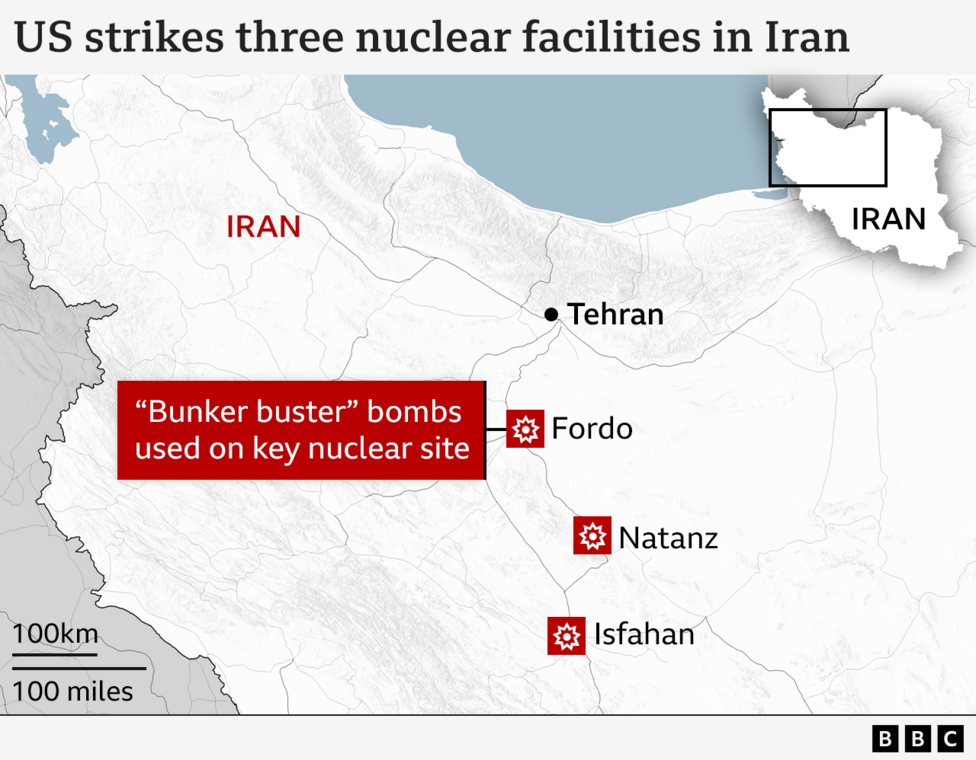
At the turn of March 2026, the image of the United States in the world is again being formed not from abstract musings about “hegemony,” but around very concrete events. The outbreak of an American‑Israeli war against Iran, strikes on US embassies and retaliatory bombings, the debate over the cost of this campaign for Washington, the upcoming US presidential election and the fate of aid to Ukraine — all of this is being projected across the media space from Pretoria to Seoul and Kyiv. South African analysts discuss US strategy in the Middle East and its price for the American economy; Korean experts filter events through the familiar triangle “US — China — technology”; and Ukrainian columnists and politicians view America first and foremost as a guarantor or, conversely, as a potentially unreliable security patron.
The largest English‑language portal in South Africa, News24, has in recent days effectively turned into a feed about the US and Israeli war against Iran. In an analytical piece on American bombings of Tehran, the author emphasizes: “The United States once again confuses its unrivaled ability to destroy from the air with the ability to dictate political outcomes” — and states that Washington has no clear “political endgame” in Iran, only a theory of destruction. This thesis is presented as a pattern of US behavior already familiar to Global South countries, from Afghanistan to Libya, and it reads to the South African audience almost as a warning against faith in American “surgical strikes” as a path to stability. In another article from the same outlet, it is calculated that the war with Iran costs the US about $900 million per day, and the total bill for the first 100 hours exceeded $3.7 billion. As noted in the analysis for News24, this hits not only the American budget but also the foundation of the slogan “America First”: Donald Trump’s conservative base is split between the desire to demonstrate strength and the fear of becoming mired in new endless wars.
South African commentators here demonstrate something rarely seen in American discussion: they look at the US as a state whose actions in the Middle East automatically reverberate in Africa through oil prices, risks to trade routes and resources that could otherwise go to development support. As the News24 analyst observes in his breakdown of American strikes on Iran, “the US has no exit strategy again, only a bombing strategy,” and this is, in essence, a diagnosis of the entire architecture of American foreign policy, which, according to African critics, remains oriented toward forceful responses rather than long‑term political settlement. Another piece on the same portal emphasizes that the war has also exposed an imbalance in allied relations: Canadian Prime Minister Mark Carney told News24 directly that the US did not consult key partners before striking Iran, calling the events “a failure of the international order.” In this way, South African outlets embed the conflict in a broader discussion: not only about whether the US is “right” in a particular episode, but about how much the American style of unilateral action undermines trust in the global rules that also sustain their own foreign trade.
On the other hand, the same South African press closely follows internal American politics as a factor of global predictability. News of a change in the US Secretary of Homeland Security — that Trump nominated Senator Markwayne Mullin to replace Kristi Noem — is presented not as a personnel sensation but as an indicator of the evolution of Washington’s migration and counterterrorism agenda. The News24 article emphasizes that the former DHS head had been criticized for hasty statements about “domestic terrorism,” and that despite changes in personnel, real immigration policy remains concentrated in the hands of operator Stephen Miller. This perspective is typical for countries sensitive to US decisions on visas, sanctions and capital controls: South Africa reads American domestic politics through the prism of how it may affect the movement of people and money between continents.
In South Korea the agenda around the US is much less emotional and focused on economics and technology. Here, the United States is first and foremost a market, a technological competitor and a regulator setting the framework for Korean exports from chips to electric vehicles. In analytical reports published by the Korean business media group Hankyung, the topic of “the US” almost always appears as a column in a table: growth of the American market, quarterly sales dynamics in the US, CAGR forecasts compared with China and India. One recent briefing on the global auto industry emphasizes that the US and India are currently showing an expected growth rate of roughly 15% through 2030, while China is estimated at only 6%. This shift, analysts say, forces Korean companies to reorient exports and investments: the US is seen as a key premium market for Korean EVs and batteries, while in China Koreans are moving away from a volume race toward a niche strategy. At the same time, the problem is noted: the “American” EV market, according to the analytical report, has recently shown weakness, especially for Korean manufacturers, and competition is heating up not only from local brands but also from Chinese firms entering other regions and taking share from Korea’s “big three” in the European market.
At the same time, Korean academic and expert circles discuss the strategic rivalry between the US and China as the defining framework for their own technology policy. In an analytical document prepared with participation from Sungkyunkwan University, it is emphasized that in strategic sectors — AI, semiconductors, quantum technologies — “the competition is intensifying, and especially the US and China are waging an all‑out war for technological supremacy and talent.” The authors note that Korea’s combined index of key technologies still lags and call for building its own balance between an alliance with the US and the need to operate in the Chinese market. The subtext is clear: Korean companies depend on American access to technologies and markets, but they cannot ignore China; any new round of American export restrictions on chips, quantum systems or AI — which the report calls likely — would place Seoul in an even more difficult position.
It is interesting that in Korean business media the US rarely appears as a “military power” or a source of value conflicts — far more often as another, albeit extremely important, parameter in the equation of margins, tariffs and supply chains. One Korean market review notes how an “American warming” — preferential regimes and demand from the US — supports Korean industries such as shipbuilding and electrical power, and this is placed alongside Chinese stimulus and the European “green deal.” Thus emerges a specifically Asian view: America is not a “world police,” but a part of the ecosystem of global capitalism, where any political move in Washington is transmitted into percentage points of profitability for Korean corporations.
The US looks completely different from Kyiv. For the Ukrainian media space, America is above all the country whose decisions determine the duration and outcome of the war. In a recent piece cited by Lenta.ru, Ukrainian politicians argue with the popular thesis that the outcome of the American elections will automatically determine the volume of aid to Ukraine. One member of the Verkhovna Rada, Dmytro Razumkov, the former parliament speaker, previously voiced concern that amid falling Republican ratings Trump might lose interest in the Ukrainian conflict, which would have dire consequences for Kyiv. However, other Ukrainian interlocutors insist that aid has become part of deeper institutional obligations of the US and is not reduced to the will of a single president. Their position reflects an internal fear of the “Afghanistan syndrome,” but also an understanding that Ukrainian survival cannot be built on expecting endlessly generous packages from Washington.
At the same time, Ukrainian and pro‑Ukrainian East European analysis tries to fit the US war against Iran into its own security picture. In a piece retold by the Belarusian opposition portal “Charter ’97,” experts from the American Institute for the Study of War (ISW) emphasize that Ukraine has unique experience fighting Iranian Shahed drones and other Iranian‑origin weapons, and that this experience is already in demand by the US in the Middle Eastern campaign. The publication notes that Washington has requested Kyiv’s help in protecting bases and personnel in the Middle East, and that the President of Ukraine has given the relevant order to the military. ISW analysts draw an important conclusion: continuous investments in the Ukrainian defense industry and its institutional knowledge are important not only for Ukraine itself but also for the US and its allies, effectively turning the country into an exporter of security, not only a consumer. For the Ukrainian audience this is a signal: to remain on the US agenda, Ukraine must be useful not only as a victim of aggression but also as a partner strengthening American defense and influencing the balance of power against Iran and other US adversaries.
At the same time, more sober, sometimes painful assessments of American policy also appear in Ukrainian and near‑Ukrainian discourse. In comments quoted by several Russian and European outlets, Ukrainian military experts and officials admit that the Middle East objectively distracts American attention and resources from the war in Europe. The new round of conflict with Iran raises fears that deliveries of ammunition and air‑defense systems to Ukraine will be delayed. In response, Ukrainian politicians try to publicly demonstrate understanding of American constraints and bet on long‑term agreements and co‑production of arms, including joint production of missiles and drones with American companies. A new model of relations can be discerned here: not “aid until victory,” but a reconfiguration of the “Ukraine — US” link into an industrial‑military alliance.
If these three regional optics are compared, several common themes emerge. First, the US and Israeli war against Iran is perceived everywhere as a test of Washington’s ability to think strategically rather than only tactically. South African analysts criticize the lack of a “political endgame” and warn that billions spent on bombings undermine an already fragile American budget, which reverberates in exchange rates and investments in emerging markets. Ukrainian experts, by contrast, try to integrate themselves into this war as part of the solution: if Ukraine helps the US shoot down Iranian drones, Washington will be less tempted to “grow tired” of the Ukrainian front. In the Korean discourse Iran barely figures: what matters far more is how the new confrontation will affect oil prices, American demand and the continuation of technological pressure on China, on which Korean exporters depend.
Second, all three spaces view American domestic processes — from infighting around Trump to debates about migration — as sources of external risk. For South Africa this is the risk of reduced American economic presence in Africa and increased regional instability; for Korea — unpredictability of tariff and technology policy toward Chinese and Korean goods; for Ukraine — the existential question of whether arms and funding shipments will continue. At the same time only the Ukrainian press endows American leaders with an almost personalist role: names like Trump and Biden in Ukrainian texts are always a question of “will we have ammunition in six months?” South African and Korean analysts discuss the same figures more as variables in large models — budgetary, energy, technological.
Finally, the tone is very telling. South Africa speaks of the US in a language of critical but pragmatic distance: “they are a superpower whose mistakes we pay for indirectly.” South Korea speaks in the language of balance sheets and the innovation race: “they are a partner and competitor you cannot separate from without loss.” Ukraine speaks in the language of dependence and attempts to overcome it: “they are a pillar, but we must become indispensable so that this pillar does not disappear.” Taken together, this creates a multilayered portrait of America, far from the notion of a unified “anti‑Americanism” or, conversely, a monolithic belief in the US. The world in 2026 looks at Washington no longer as the center around which everything turns, but as a powerful, though not the only, node in networks — financial, military, technological — in which each region tries to find a configuration that benefits it.