The American agenda has again become so dense globally that separate storylines — from the war in the Middle East to military artificial intelligence — merge into a single picture. In Japan, the US is discussed as an unpredictable but indispensable guarantor of security in Asia. In Australia — as an ally capable of both defending and dragging others into a major war, and now opening an era of "military AI." In Ukraine, America remains the measure of survival: every parliamentary maneuver in Washington is translated there into kilometers of front line and the number of missiles that can be shot down during the next massive Russian strike. At the intersection of these three perspectives a curious common anxiety emerges: the world is increasingly seeing the United States not as an "automatic" source of security but as a risk factor that must be learned to live and work with.
The first major node of this discussion is the foreign policy of the Donald Trump administration and its effect on allies. In the English-language Japanese press aimed at an international audience, doubts have already appeared about the fashionable formula of a "golden age" in Japan‑US relations. In a column in The Japan Times, a political scientist notes that talk of unprecedented closeness between Tokyo and Washington hides a growing fear: the US is simultaneously demanding more defense contributions from allies and increasingly demonstrating a readiness to unilaterally change the rules of the game, whether by withdrawing from dozens of international agreements or sharply shifting positions on regional conflicts. The author writes that for Japan, which has just begun its own course toward "normalizing" defense policy, this creates a dangerous gap between declarations of a solid alliance and the real predictability of the American line.(japantimes.co.jp)
In Australia the same theme sounds much harsher: commentators increasingly write that Trump’s policy is "breaking" the alliance system built since the Cold War and weakening the West’s ability to deter China. The British think tank Chatham House, frequently cited in Australian media, notes that Trump’s attitude toward allies undermines his own negotiating position with Beijing: the less trust there is in American guarantees, the harder it is to convince Indo‑Pacific countries of the need to strictly follow Washington in containing China.(washingtonpost.com) In Japan this is read as a direct warning: if the US continues to exit international structures and treat alliances as purely transactional tools, Tokyo will be caught between the need to build autonomous military capabilities and the fear of being drawn into a US‑China conflict without real guarantees of support.
The Ukrainian debate on US foreign policy is far less academic: there it is measured in passed and unpassed aid bills, in the number of air‑defense batteries, and in delivery timetables for ammunition. Kyiv had to endure a painful pause in American military support and a signal of isolationism at the very start of Trump’s second term, when the US announced a large withdrawal from international organizations and a focus on "domestic affairs."(ru.wikipedia.org) Against that backdrop, the news that the US House of Representatives on June 4 approved a new aid package for Ukraine and tougher sanctions on Russia — despite the positions of part of the Republican leadership and the president himself — is perceived in Kyiv almost as a miracle and at the same time as a lesson: one cannot count on "America" as a monolith so much as on a complex balance among Congress, the White House, and public opinion.(abc17news.com)
The second major storyline on which Japan, Australia and Ukraine unexpectedly converge is the US and Israel war with Iran and its global consequences. In Japanese analytical notes this war is described as part of a general shift toward a "G2 world," where Washington and Beijing compete across the board — from the Middle East to the East and South China Seas. Japanese writers emphasize that a US strike on Iran, the ensuing escalation and rising oil prices immediately hit the energy security of import‑dependent countries, above all Japan. They see an element of strategic calculation in American actions, but also a noticeable portion of Trump’s domestic politics, where demonstrating strength abroad serves to bolster positions at home.(joi.or.jp)
The Australian view is much more straightforward: Canberra, having supported joint US‑Israeli actions against Iran, now has to explain to the public why the country is once again at the epicenter of a Middle Eastern crisis despite being geographically distant. Local commentary stresses that Australia pays not only a diplomatic price but also an economic one: rising energy prices and a new wave of instability on global markets hit exports and households. Ukrainian analysts, by contrast, view this war through the prism of their own interests: in their assessment, escalation in the Middle East distracts US attention and resources from the Eastern European front. In the Ukrainian press a motif of competing conflicts increasingly appears: if Washington becomes engaged in multiple wars at once, Kyiv risks being placed in a queue for American weapons and political attention.(ru.wikipedia.org)
The third important layer is attitudes toward the US role in the ongoing Russian war against Ukraine. In Japan this is seen as a test of the viability of the postwar order in Europe and simultaneously as a precedent for Asia. In Japanese analytical pieces authors write that if the United States ultimately agrees to "freeze" the conflict on terms favorable to Moscow, this will send a signal to Beijing about a possible scenario regarding Taiwan or in the East China Sea. Tokyo is closely watching how Washington maneuvers between harsh statements of support for Ukraine and a readiness for truces, such as the three‑day ceasefire in May personally initiated by Trump.(ru.wikipedia.org) For the Japanese audience this is both an example of how the US can rapidly intervene in the course of hostilities and a reminder that the American president is willing to make deals based on his own political calendar.
The Ukrainian view, naturally, is radically different. Every such "gesture of goodwill" by Washington is perceived through the experience of the January and April massive Russian strikes on Kyiv, Lviv and other cities, when even temporary cessations of fire were followed by new bombings, and the US debate about "war fatigue" translated into an acute shortage of air‑defense assets on the ground.(ru.wikipedia.org) Ukrainian commentators emphasize that American support is both indispensable and unpredictable, and that Trump himself is a figure capable of quickly both delivering a critically important initiative (for example, securing deliveries of specific types of weaponry) and blocking them under pressure from intra‑party struggles. Thus in Kyiv the US is increasingly described as a field of complex multi‑layered politics where parliament, courts, media and society can compensate for White House decisions or, conversely, amplify them.
In Australia the war in Ukraine has become part of a broader discussion about what it means to be a US ally in an era of a "crumbling" world order. Commentators draw parallels between European security and the situation in the Indo‑Pacific: if Washington, preoccupied with Middle Eastern and European fronts, demands greater Australian involvement in a possible Taiwan crisis, is the public willing to risk being drawn into a major war? Here Ukraine’s experience is used as an argument on both sides: proponents of a close alliance say that it is precisely American military and financial support that gives Ukraine a chance to hold out, while skeptics remind that Kyiv became a hostage to American internal struggles and that no ally is immune from that.
Against this background a new US step in the field of artificial intelligence and defense has acquired particular sharpness in Japan and Australia. On June 2 Trump signed a memorandum declaring that his administration "may and will responsibly accelerate the use of AI in intelligence and military operations" and ordered the Pentagon to update directives on autonomous weapon systems within 90 days to ensure "conscious deployment of AI systems that respect the chain of command." Australian ABC News reports this in detail, stressing that the White House simultaneously promises not to use these technologies for censorship and unlawful surveillance.(gigazine.net)
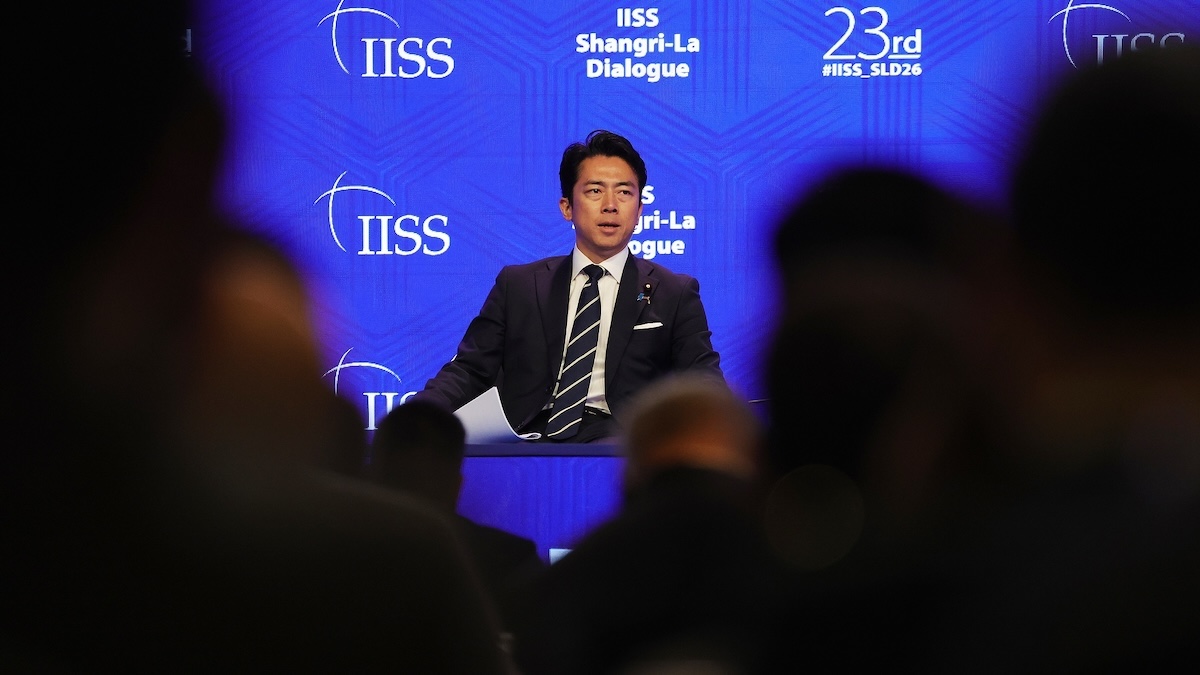
In Australia the document was received with mixed logic. On the one hand, it fits into the AUKUS strategy and the general militarization of high technologies: for the military elite and some experts it is a long‑awaited signal that the US is seriously approaching the creation of "smart" systems capable of compensating for China’s numerical superiority. On the other hand, human rights advocates and part of the tech community warn that this is the start of an AI arms race in which norms and rules will lag behind practice, and Australia, as a close ally and a potential site for deploying such systems, will find itself in a zone of heightened political and moral risk. One commentator calls this initiative a "Shangri‑La moment" — referring to the Asian defense forum where, as Asia Times writes this year, the illusion of an "automatic guarantee" of US security finally died: now Washington more often speaks not about what it will do for allies but about what they must do themselves to be worthy of support.(asiatimes.com)
The Japanese discussion of AI and security is cast in more technocratic tones but with the same edge. Local analytical pieces stress that the US’s new course on military AI increases pressure on Tokyo: the country is already undergoing a deep transformation of its defense policy, partly under Washington’s influence and against the backdrop of growing Chinese and North Korean threats. Now it must decide how far Japan is willing to go in using autonomous and semi‑autonomous systems when its main ally effectively sets a new standard. The paradox is that Japanese society remains much more cautious both about military operations in general and about technologies with unclear ethical consequences. Against this backdrop Trump’s statements that the US will "accelerate" AI use in war evoke mixed feelings in Tokyo: on one hand, a chance for a technological leap within the alliance; on the other, the fear of being tied to a strategy that could trigger a new arms race in the region.(gigazine.net)
The Ukrainian perspective on American military AI, by contrast, is almost unrelated to ethics and norms: they read this news primarily as hope for strengthening their own defense. In conditions where Russia regularly conducts massive missile‑drone strikes and Ukrainian air defenses operate at the limit, any acceleration in developing systems that can detect and intercept targets faster is perceived as potential lifesaving. Ukrainian experts note that the country has already become a testing ground for many Western technologies, from counter‑battery systems to fire‑control software suites. In that context Trump’s statements about "responsible militarization of AI" are interpreted pragmatically: if Washington sees Ukraine as a platform to trial new solutions, that could give Kyiv an advantage, albeit at the cost of even greater dependence on American political cycles.
Finally, in all three countries there is a broader debate about how the nature of American leadership itself is changing. In Japanese and Australian texts a motif of a "post‑automatic America" appears more frequently — the US is no longer perceived as an inevitable, steady center around which order is built. Instead analysts describe Washington as a variable quantity: sometimes it quickly forms coalitions and strikes Iran, sometimes it withdraws from dozens of international organizations, sometimes it intervenes in the course of the war in Ukraine to seek a ceasefire, sometimes it blocks arms deliveries for months because of domestic political battles.(ru.wikipedia.org)
For Ukraine this is not a theoretical plot but a daily reality: they are accustomed to the fact that any decision in Congress or the White House can mean the difference between a relatively "quiet" night and another day of mourning in Odesa or Kyiv.(ru.wikipedia.org) For Japan and Australia this is rather a strategic challenge: they must build their defense and economic strategies on the assumption that America can abruptly change course in four years, or even sooner, under pressure from internal crises. Hence in both Tokyo and Canberra interest is growing in the ideas of "strategic autonomy": not meaning a break with the US, but creating systems so that sudden zigzags by Washington will not be deadly.
That is the main conclusion from today's conversations about the US in Japan, Australia and Ukraine. America is still seen as indispensable — as a military shield, a technological engine, and a political arbiter. But the illusion that this shield will always unfold automatically and in the same direction is rapidly disappearing. It is being replaced by a more sober, sometimes cynical calculus: how to plug into American strategies to extract maximum benefit and minimize risk; how to use US power without becoming its hostage; how to prepare independent scenarios in case Washington decides tomorrow that it has other priorities. And it is in this sobriety, not in enthusiastic or hostile attitudes toward America, that the new phase of the global conversation about the United States is emerging today.