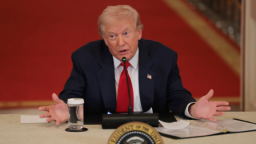
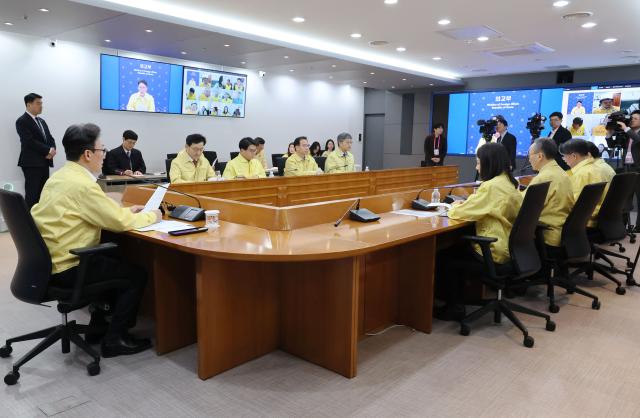
In early March 2026 the image of the United States outside the Western information bubble is once again being pieced together from fragments: air strikes on Iran alongside Israel, a surge in oil prices, jittery stock markets, anxious cabinet meetings in capitals around the world. But viewed not from Washington or Brussels, but from Beijing, Pretoria or Seoul, America appears not only as a military superpower but also as a source of risk, economic pressure and at the same time an indispensable element of the global security architecture. Reactions in China, South Africa and South Korea to the current Iran war and Washington’s broader course form a polyphonic chorus featuring condemnation, pragmatic calculation and nervous dependence.
In Chinese media space fresh commentary on American policy almost always follows two lines: criticism of an unbalanced alliance system and condemnation of the use of force in the Persian Gulf region. In a recent column in People’s Daily, the US is described less as Europe’s ally than as a “metropolis” building deliberately unequal relations with Brussels: the author emphasizes that “the new American administration only helped Europeans see more clearly an old fact: the US is not an ally but a ‘sovereign’”; the piece cites Pew data on the sharp drop in favorable views of the US in Europe in recent years. (world-app.people.cn) In another Chinese analysis devoted to the Gaza war, the conclusion is that no American president, including Trump, “ever truly sought to end the war,” and that Washington used the peace process as an instrument of pressure and control over regional actors. (news.cri.cn) That logic is now automatically applied to the clash with Iran: for Beijing this is not an isolated episode but another manifestation of a profound US inclination to maintain by force a status quo that benefits itself and Israel, even at the cost of undermining international law and the UN’s authority.
Notably, Chinese writers almost always link American military activity to economic and technological agendas. One of the year-end forecasts for the 2026 world economy emphasizes that trade wars and geopolitical conflicts, including Washington’s actions in the Middle East, remain key sources of uncertainty, adding risk to an already tense global economic picture. (paper.people.com.cn) In an official Chinese MFA document on the state of trade relations with the US, Beijing specifically reminds readers that China’s share in the US trade deficit is declining, and that America’s imbalance problems are increasingly shifting onto other partners; thus the document criticizes Washington’s attempts to portray China as the main “culprit” of its structural economic problems. (world-app.people.cn) Against this background, strikes on Iran and oil price spikes fit the Chinese narrative of “irresponsible hegemony” that shifts costs onto the rest of the world.
The South Korean discussion of the current Iran war is much more anxious and down-to-earth: it reflects a country physically dependent on Middle Eastern oil and at the same time under the military “umbrella” provided by Washington. In a Korean editorial published recently it is stated bluntly: “As the ‘Iran war’ drags on, what worries us most is the price of oil.” The author recalls that Iran threatens to block the Strait of Hormuz, through which about 20% of the world’s seaborne oil passes, and notes that the barrel has already risen by more than $10 while Korea’s KOSPI index crashed 12% in one day — a drop larger than after the September 11, 2001 attacks. (koreadaily.com) Another analytical piece stresses that the “black Wednesday” on the Korean market was the result of three factors, naming the US–Israel war with Iran and the fear of a prolonged Hormuz blockade as the foremost. (realscasenote.com)
Korean commentators, unlike many in the West, do not so much dispute the legitimacy of the strikes themselves as ask whether Washington’s calculation is rational. One economic review points out that after the first days of the campaign Trump announced increased defense spending and the possibility of a protracted conflict, but “public opinion in the US is dominated by anxiety about a long war; Democrats criticize Trump’s approach.” (contents.premium.naver.com) In another piece analyzing oil and dollar dynamics, analysts explicitly predict that given the “breakdown of consensus” within the Republican MAGA camp the likelihood of a long campaign is not that high, precisely because of domestic pressure on the White House. (file.alphasquare.co.kr) This is an important nuance: in the Seoul perspective the US is simultaneously a threat to global stability and a country where antiwar opinion can restrain its leaders — hence a factor to be taken into account but not demonized.
South African discussion of the Iran war and the American role in the world is woven into a broader post‑colonial context. In a notable News24 piece Trump’s wars with Iran are called financially unsustainable: researchers estimate the first 100 hours of the campaign cost Washington about $3.7 billion, roughly $900 million a day, and these are “significant off‑budget expenditures” that deepen cracks within the electoral core of the “America First” slogan. (news24.com) It is emphasized that Trump’s supporters — middle‑class and working‑class taxpayers — are beginning to ask why money is being spent on a distant conflict instead of solving domestic problems. In the South African frame this easily fits the long‑standing image of the US as a power that steadily exports war and instability to the global South while expecting political loyalty and economic compliance.
It is also telling how commentators from South Africa read statements by other Western leaders. In another News24 article the publication relays Canadian Prime Minister Mark Carney’s remarks that the war with Iran is a “failure of the international order” and proof of the UN and IAEA’s inability to prevent escalation despite decades of resolutions and sanctions. (news24.com) For a South African reader this sounds familiar: yet another war in which the US plays a key role exposes the asymmetry of global institutions historically built to serve northern interests. The fact that the war has already spread to Gulf states and struck American embassies looks, against this backdrop, not like a private tragedy but a systemic failure.
One observation is common to China, South Korea and South Africa: few perceive the current strike on Iran as an “exceptional case.” Chinese experts, analyzing the chain from Gaza to the current raids on Iranian territory, speak of a “structural confrontation” between Washington and Tehran and of a “religious‑ethnic” turning of conflicts, where Israeli‑Iranian and American‑Iranian contradictions have merged into a single knot of regional war. (finance.sina.com.cn) South Korean analysts in business media recall that as early as 2025 an Israeli air operation against Iran and Tehran’s subsequent strikes had already shaken markets, and that the current US‑Israel joint war has become effectively the “highest form of external escalation” of that conflict. (asaninst.org) South African authors, for their part, place Iran among a series of conflicts in which, in their view, Washington continues the logic of Iraq and Afghanistan: costly campaigns with dubious strategic returns and heavy consequences for countries in the global South.
Still, each of the three countries projects its own specific fears and expectations onto the image of the US. In Korea, through discussion of the “Iran war” a chronic anxiety about its own security comes through: in an Ajunews column the author notes that in the fire of the Middle East conflict “our citizens in Iran and Israel have to escape via Turkmenistan and Egypt,” and draws the conclusion that the state is obliged to ensure evacuations to the end, because “foreign policy formulas do not stop bullets and rockets.” (ajunews.com) Behind this lies not only humanitarian concern but the question of how far American strategy will go and how safe it is for Seoul to keep betting on an ally whose operations repeatedly set afire energy supplies from a region on which Korea critically depends.
China, by contrast, uses the US as a convenient contrasting background. In a report on an international Middle East conference China’s former special envoy to the region, Wu Siqiao, explains that resolving the Palestinian issue is possible only through implementation of the “two‑state” principle and places special hope in a “responsible role” for China and regional states like Saudi Arabia, unlike the American line, which he describes as inclined to make maximal use of economic and political influence for short‑term gains. (finance.sina.com.cn) In this optic Washington is useful to Beijing more as an “anti‑example” — a state that verbally defends the international order while in practice undermining it with unilateral sanctions and military strikes, thereby advertising the Chinese model of “non‑interference.”
For South Africa, the conversation about the US almost inevitably fits into themes of debt, inequality and double standards. South African press pieces on the cost of the war with Iran stress that up to $900 million a day spent by the Pentagon is not only a problem for the American budget but a symptom of a world where funds desperately needed to fight poverty and the climate crisis are diverted to rockets and ammunition. (news24.com) For a country engaged in heated debates about fair reform of global financial institutions, the US campaign in Iran becomes another argument in favor of rethinking the role of the dollar and of Washington in the world system.
Against this backdrop it is telling that even in texts where authors are not inclined to anti‑Americanism per se the motif of “war fatigue with the US” increasingly appears. Canadian Prime Minister Mark Carney, whose words are widely quoted in the South African press, speaks directly of a “failure of the international order”; Korean economists note that each new Middle Eastern escalation instantly turns into a “black Wednesday” for the KOSPI and a surge in gasoline prices; Chinese strategists see the Iran campaign as both a tool of pressure on Beijing and a signal to European allies about who still writes the rules of the game. (news24.com)
All this creates a paradoxical image: the United States remains for China, South Africa and South Korea the central actor on the world stage, without which neither a settlement in the Middle East, nor the functioning of world markets, nor reform of international institutions is possible. But at the same time America is increasingly perceived not as the “leader of the free world” but as a source of cyclical shocks — military, financial, political. And while in the West debates rage over how exactly Washington should “lead,” in Beijing, Pretoria and Seoul a different question is being voiced more insistently: will the world ever be able to protect itself from the costs of that leadership — or is it doomed every few years to pay again for another American decision for war?