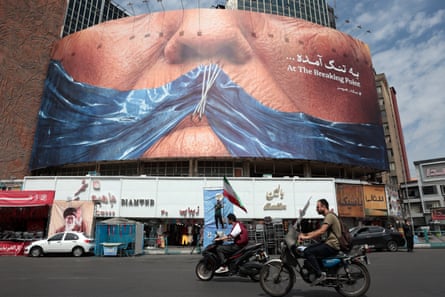
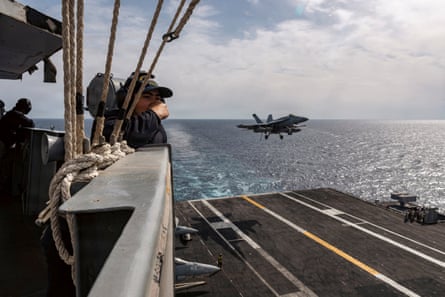
The clash between the U.S. and Iran over the Strait of Hormuz and Donald Trump's launch of Operation Project Freedom is the main new prism through which many countries view America today. For Moscow it is further proof of Washington's "imperialism" and instability; for Seoul it is a painful test of alliance loyalty and the vulnerability of its own economy; for New Delhi it is a reason to play another complex game between Washington, Tehran and Moscow. Against the backdrop of older storylines — from the war in Ukraine to sanctions and oil trade — a new feeling is spreading: even when the U.S. says it is "pausing" the operation, the rest of the world lives in anticipation of the next tweet from Washington.
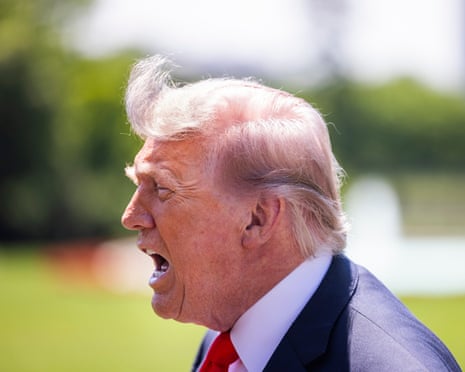
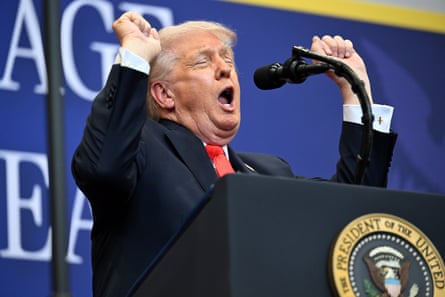
The main starting point of today's discussions is Trump's announcement of Project Freedom to "free" ships trapped in the Strait of Hormuz, and then the equally sudden decision to "suspend" it amid talks of progress in negotiations with Iran. Western media like The Guardian describe this as another episode of "Trump's show," where dramatic war-mongering gives way to peacemaking rhetoric, but in Russia, Korea and India this is primarily viewed through the lens of their own risks and interests. (theguardian.com)
The first major storyline is Hormuz and "Project Freedom" as a test of the limits of American power and allied discipline. In the Russian media space, the U.S. decision to start and then suspend the operation is presented as evidence of Washington's inconsistency and adventurism. Business radio BFM, recounting Trump's statement about the pause in Project Freedom, emphasizes that this is a temporary halt of the transit operation "until the prospects of negotiations become clearer," practically implying that Washington is again using military pressure as a bargaining chip with Tehran. (bfm.ru) Russian commentators link this to a broader line of American foreign policy, which Russian Wikipedia—cited frequently in analyses—describes as relying "mainly on forceful solutions" and neglecting the interests of other countries — echoing criticism from Chas Freeman, a former diplomat and Pentagon official. (ru.wikipedia.org)
An important detail of the Russian perspective is tying Hormuz to the ongoing war in Ukraine and the broader conflict with the West. In pieces about January strikes on Kyiv and Lviv, it was emphasized that the attacks occurred "against the backdrop of deteriorating Russia–U.S. relations after the detention of a Russian tanker" in the Atlantic, thereby tracing a line: wherever American military and sanction levers appear — from the Black Sea to the Persian Gulf — Russia sees a unified strategy of pressure. (ru.wikipedia.org) On various Russian platforms, including popular Russian‑language forums, the U.S.–Europe and NATO alliance is described as something fragile: there was wide discussion of Trump's interview where he called NATO a "paper tiger" and mused about a possible U.S. exit from the alliance — for a Russian audience this conveniently fits the narrative of a "weary West" and the cracking of the transatlantic security system. (reddit.com)
South Korea's discussion around Project Freedom is far more nervous and pragmatic. This is not an abstract debate about hegemony, but a question of whether Seoul can bear another American request "to go to war together." Last week, South Korean media examined Trump's statement that Iran attacked a South Korean cargo ship and that "it is time" for Seoul to participate in the operation to open the strait. The U.S. president, appealing to the "wounded" Korean ship, demanded that the ally join Project Freedom, while U.S. Central Command concurrently reported intercepting Iranian missiles and drones. (zdnet.co.kr)
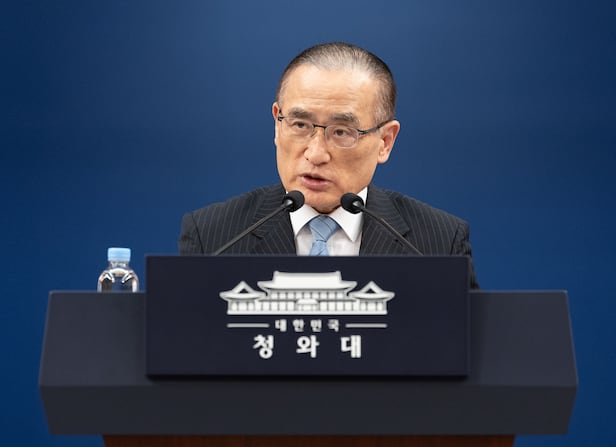
The response from Korean authorities was notably cautious. National Security Advisor Wi Sung‑nak, at a briefing in Seoul, stressed that according to Trump himself, the project was "temporarily suspended" amid progress in talks with Iran, and therefore "there is no longer a need" to continue considering Korea's participation. In the same publication he effectively distanced Seoul from the American interpretation of the incident with the ship, noting that Washington apparently assumes the ship was "hit," whereas Seoul "still needs to determine" whether it was indeed a targeted strike. (biz.chosun.com)
South Korean economic and industry reports reinforce this doubt. In risk assessments for the insurance and logistics sectors, it is stressed that a prolonged blockade of Hormuz has already triggered an "unprecedented shock" in global energy supplies, and that for an export‑dependent Korean economy, participation in an American military initiative could mean a new round of vulnerability. (kiri.or.kr) In newspaper columns analyzing the possible "Korean share" in Project Freedom, experts openly draw parallels with the Iraq war and how South Korea then balanced allied obligations with public irritation.
Here a theme important for both Russia and India becomes evident: the fear of being dragged into a U.S.–Iran confrontation, perceived as a war with an open ending and unpredictable economic consequences. The Korean press adds a deeper background: the unresolved question of military and trade preferences in relations with the U.S. Korea's Minister of Industry, while in Washington, recently spoke about the first direct Korean investments in the U.S. "after the special U.S. investment law came into effect" in June, and against that backdrop any escalation in Hormuz is viewed through the prism of potential Washington pressure, including trade. (yna.co.kr)
India's view of the current escalation is less emotional but no less complex. New Delhi has long been accustomed to multi‑move diplomacy, where it must align with Washington on China and technology, while not abandoning Tehran and Moscow. One of the most discussed aspects is American sanction and tariff levers tied, on one hand, to the war in Iran and, on the other, to Russian oil. Indian business outlets in recent months have detailed a temporary 30‑day "waiver" granted by the U.S. for purchases of Russian oil amid the Middle East crisis: it allowed India's imports of Russian oil to rise to 1.37 million barrels per day, 30% above February levels. (business-standard.com)
For Indian analysts, this was further proof that Washington must accommodate energy realities and cannot simultaneously wage war with Iran, pressure Moscow, and force India to forgo profitable Russian oil. At the same time, Russian‑language reviews of international trade pointed to the other side: the U.S. had already applied an additional 25% tariff on certain Indian exports, linking it to India's role in re‑exporting Russian oil, and only recently removed that surcharge. For an Indian audience, all this illustrates the "capricious" nature of American economic power — today Washington imposes a duty to pressure Moscow, tomorrow it removes it when it needs Indian tankers to help stabilize the market amid the Iranian crisis. (cisg.info)
Interestingly, amid Project Freedom the Indian debate rarely boils down to "whose side are we on" in the Gulf. Far more often it is about how to use the turbulence to strengthen India's position as a "responsible energy hub" and how to avoid falling under secondary U.S. sanctions. In commentary on decisions by the Office of Foreign Assets Control (OFAC), analysts emphasize that Washington is still ready to "make exceptions" for India if that helps keep oil prices under control and prevents pushing New Delhi into the arms of Moscow and Beijing.
The second major storyline linking the three countries is broader skepticism about the steadiness and professionalism of American foreign policy under Trump. To the familiar Russian critique of "forceful solutions" and "low professionalism" in American diplomacy has been added a new argument: the mass U.S. withdrawal from dozens of international organizations in early 2026, which Russian encyclopedic and expert materials interpret as an increase in isolationism and a departure from multilateral rules of the game. (ru.wikipedia.org)
This theme is actively picked up on informal Russian platforms. In popular discussions about a possible U.S. exit from NATO users mock Washington for calling the alliance a "paper tiger" at the same time as it keeps demanding allies participate in missions — from Ukraine to the Strait of Hormuz. (reddit.com) The tone here is less triumphant and more sarcastic: yes, a weakened NATO benefits Moscow, but the chaotic nature of American decisions causes concern among some in Russia — an unpredictable hegemon can be more dangerous than a predictable adversary.
In South Korea the same skepticism takes on a purely pragmatic form. In commentary on Project Freedom Korean experts in the financial and sectoral press stress that Trump is acting not only out of strategic considerations but also domestic politics: the pause in the operation coincided precisely with the deadline under the U.S. law on war powers when the president would have needed Congressional approval to continue a war in Iran. (asiae.co.kr) For Seoul this signals that the alliance with the U.S. increasingly depends on electoral cycles and Washington's internal party games, not on long‑term strategy.
India, for its part, sees both opportunities and risks in this chaos. In expert commentary on U.S.–India military and technological cooperation, published amid Congressional hearings on South Asia, analysts note that Washington seeks to deepen ties with New Delhi while still keeping Pakistan in mind as a useful tool of regional balance. (uscc.gov) Indian newspapers describe this as U.S. "strategic pluralism," but the underlying message is clear: one cannot fully rely either on American sanction promises or on American security guarantees.
The third common line is how the U.S. is perceived through the prism of its own wars: in Ukraine, Iran, and the broader rivalry with Russia and China. In Russia the war in Ukraine remains the main focus, and here the U.S. acts as the key "conductor" of the Western camp. Domestically this is framed in rhetoric about an "existential struggle" with NATO, where Project Freedom and strikes on Iran are merely another front of "the same war." Reports about a scaled‑down Victory Day parade in Moscow and its "military" rhetoric stress that the Kremlin sees the confrontation with the U.S. as a struggle "like in the time of World War II," and this imagery is deliberately extended to both the Ukrainian and Middle Eastern tracks. (washingtonpost.com)
In South Korea American involvement in Ukraine and Iran is viewed through a completely different lens: will it weaken U.S. attention to East Asia and to deterring North Korea and China? It is no coincidence that in interviews and statements by Korean ministers made in Washington in recent days the refrain appears: "the alliance with the U.S. remains the cornerstone of Seoul's foreign and defense policy," even if there are "differences on individual issues." (koreajoongangdaily.joins.com) Against the backdrop of the Iranian war and Project Freedom this sounds like a public reassurance and a veiled worry at once: will Korean interests become bargaining chips in another American crisis on the other side of the world?
India in this mix appears the least dramatic, but perhaps its position is the most strategic. In business press and analysis around Russian oil and sanctions, Iran figures more as another element of a complex energy chessboard, where Washington must act flexibly and New Delhi must be as opportunistic as possible. The hard Russia–U.S. confrontation over Ukraine and the new front in Hormuz are united in Indian materials by one idea: the world has entered an era when no superpower can "unilaterally" dictate the rules, and the ability to manoeuvre between them becomes the main resource of a middle power. (business-standard.com)
Against this backdrop it is telling which voices from these countries are most quoted when it comes to the U.S. In Russia these are, on one hand, official figures and diplomats speaking the language of "aggression" and "escalation," and on the other — popular bloggers and forum commentators who discuss American hardware, space and NATO with irony and a mix of envy and contempt. In South Korea — ministers, insurers, shipowners, for whom the U.S. is neither an ideological enemy nor an object of worship, but a key, albeit capricious, business and military partner. In India — oil traders, economists and strategists constantly calculating where "strategic partnership" with the U.S. ends and where the price becomes too high.
What unites these disparate voices is one thing: almost nowhere is the U.S. any longer perceived as an unconditional and predictable "anchor of global stability." For Russia it is an occasion to speak of the twilight of American hegemony; for Korea it is a source of chronic anxiety and the need to constantly clarify the boundaries of the alliance; for India it is a chance to strengthen its own autonomy, but a reminder that any U.S. mistake in Hormuz or Ukraine will immediately echo in Mumbai in the price of gasoline and investment risks.
"Project Freedom" in this sense proved to be a symbolic name: it promises not so much freedom for ships in the Strait of Hormuz as it demonstrates how constrained the U.S.'s freedom of maneuver is — by domestic politics, international obligations, and economic realities. And the clearer this becomes in Moscow, Seoul and New Delhi, the more actively these capitals seek ways to build a world in which America remains important, but no longer the sole center of gravity and no longer the only source of fear.