While at home the United States is marking yet more anniversaries of Independence Day, abroad attention often shifts not to the details of programs and decisions, but to symbols, gestures, and recognizable “images” from a political performance. In this news flow, one particularly striking thread is how the image of America is constructed from independence as a holiday and independence as a pretext for jokes, debates, and satire—where Donald Trump’s figure becomes not so much an object of analysis as a convenient artistic code for responding to the American media spectacle. Some coverage carries the scent of explanation and festive romance; others bring irony and critical subtext. The common denominator is that for foreign readers it matters more to understand what the United States means in the global information space than simply what was done—and why.
This piece was prepared based on reports from prospect.com.ru (Russia) and www.suedtirolnews.it (Germany).
Leschuk compares Ovechkin and Trump: what that means for Russia
In Russia’s sports arena, talk has flared up again—not only about hockey, but also about how Russian stars are perceived around the world. The trigger was a statement by the goaltender of Moscow’s Dinamo, Igor Leschuk, who, while commenting on Alexander Ovechkin’s fame, compared it to the recognizability of Donald Trump. The article is reported by prospect.com.ru.
According to Leschuk, “in Europe and Asia they don’t really know Ovechkin,” because “they don’t know hockey in general, they watch very little,” while “everyone knows Trump.” This remark immediately pushed the discussion beyond ordinary sports commentary. It was not merely about how famous Alexander Ovechkin is, but about how Russian sport’s global recognizability measures up against American politics and the symbols of worldwide popularity.
For the Russian audience, these words carry a double meaning. On the one hand, Ovechkin has long been more than just an NHL player—he is a figure of national pride and a symbol of success abroad. On the other hand, Leschuk’s statement reflects a more sober view: even such a great hockey player is not necessarily a universally recognized name worldwide, especially in places where hockey isn’t considered a mass sport.
The material emphasizes that in Russia an athlete’s fame is often measured not only by titles and records, but also by whether people know him in Europe and Asia. That is why the comparison between Ovechkin and Trump proved so telling for the local agenda. In Russia’s public sphere, Donald Trump is perceived as a far “louder” and more universally known name than even a hockey legend. At the same time, the way the question is framed does not diminish Ovechkin’s importance; rather, it shows how highly he is still regarded in Russia.
In this sense, the note reflects a typical Russian sports discourse in which hockey is closely tied to national identity. Ovechkin remains one of those figures through which Russians see confirmation of their place in world sport. And even when the conversation turns to recognition abroad, what comes through is not only sobriety, but also underlying pride: the Russian hockey player still ends up in the same lineup as the biggest global figures.
That is why the story behind Leschuk’s words became more than just another remark in sports news—it became a reason to discuss how Russia views its own stars against the backdrop of American political symbolism. At the center of this story are not only Ovechkin and Trump, but also the Russian habit of assessing success through recognition “over there,” especially in Europe and the United States.
The U.S. celebrates 250 years of independence under the sign of Trump’s show
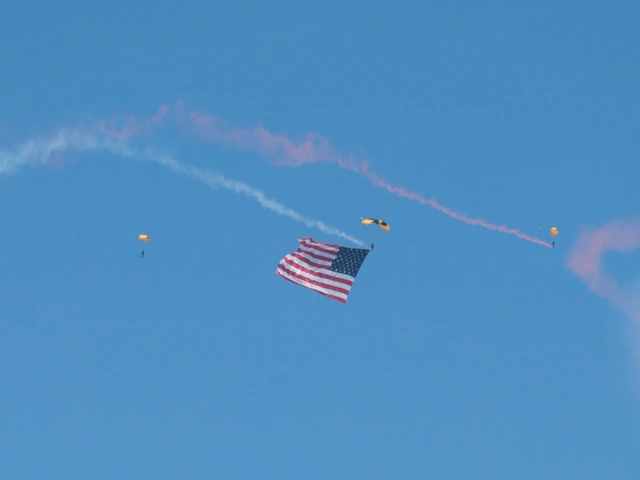
The United States is marking the 250th anniversary of independence not only as a historical date, but as a large-scale public presentation in which the national holiday intertwines with politics and a demonstration of power. As suedtirolnews.it writes, celebrations in Washington, New York, Boston, and Los Angeles took on nearly a state-run scale: on the National Mall there was a parade, the “Great American State Fair” exhibition was presented, fighter jets, helicopters, and even Air Force One were expected to fly overhead, and the day was to end with a “world record” fireworks display.
It was precisely this visual and symbolic scale that became the main emphasis in the German perspective on the American anniversary. For the German reader, the holiday looks not just like a day of national unity, but like a carefully staged show in which patriotism is expressed through aviation, loud gestures, and media effect. This form of U.S. self-presentation noticeably differs from the more restrained German notions of state ceremonies and public commemoration.
The material also draws particular attention to Donald Trump. His promise to perform “richtig lange” in hot weather is seen as a typical element of his political style—personal, demonstrative, and oriented toward impact. In the German interpretation, this is not merely a remark, but part of a broader image of American politics, where symbols and stage presence often end up mattering more than substance. As noted in the publication, on the eve, the roar of jets was already “drowning out the city center,” further reinforcing the sense that the anniversary had been turned into a spectacular national event.
Such a view is especially important in the German context, where conspicuous military flyovers and large-scale patriotic ceremonies are often treated cautiously due to the historical experience of the 20th century and heightened sensitivity to militarized symbolism. Therefore, for a German observer, the U.S. anniversary becomes not only a reason to report on a holiday, but also a mirror of their own debates about patriotism, historical responsibility, and what forms of state symbolism are acceptable.
In the end, the report from Germany presents July 4 not as an ordinary festive date, but as a political spectacle designed for both the domestic audience and international attention. The main point of this framing is not a list of events, but how they look from the outside: as an example of American democracy, where national identity is expressed through scale, show, and public force.