Right now in these three countries, talk about the United States is not focused on abstract “American politics,” but on very specific issues: in Saudi Arabia, around the nuclear deal with Washington and its impact on Gulf security; in South Africa, around American tariffs and reduced aid; and in Israel, around how America itself is changing—the very America Israel has grown accustomed to relying on, especially amid the war with Iran, pressure on Netanyahu, and growing skepticism toward Israeli policy within the United States. (arabnews.com)
The most visible common theme is not simply “America as a great power,” but America as a partner that either provides security—or suddenly changes the rules. This is especially clear in Saudi commentary: in Arab News and Al Riyadh, the peaceful atom agreement with the US is described as both historic and strategically beneficial, with local authors stressing that the deal did not emerge out of thin air and is grounded in decades of contact, as well as in the calculation that Riyadh will not want to depend on alternative players such as China, Russia, or Europe. Abdulrahman al-Rashed writes directly that if the United States refused to cooperate, it would push Saudi Arabia to seek another partner—weakening American influence; in the same logic, he notes that the current war with Iran has shown that China’s economic power does not equal willingness to assume military and political responsibility. (arabnews.com)
But there is also a subtler layer to the Saudi response: local commentators see in the agreement not only technology and energy, but also a test of how seriously the United States takes the region. Arab News writes that both Saudi Crown Prince and Donald Trump discussed regional security, maritime navigation, and US contacts with Iran—and Saudi positioning boils down to the familiar formula: restraint, dialogue, and protection of international sea lanes, especially the Strait of Hormuz. In other words, for Saudi Arabia, America is not discussed as an ideological symbol, but as a guarantor that must either genuinely secure the region—or at least not derail a fragile diplomatic architecture. (arabnews.com)
In South Africa, discussion of America is altogether different in tone: it is worrying and practical. Here, the United States is discussed primarily as a source of pressure. In a News24 column by Russell Rensburg on cuts to US aid, he says the country has yet to present a clear plan for what happens in case of a funding shortfall in HIV and related services, with the shortfall itself estimated at roughly 7 billion rand per year; the author emphasizes that thousands of healthcare workers’ salaries and access for the most vulnerable groups to treatment have been hit. This is no longer pure geopolitics—it is a conversation about how Washington’s decisions directly affect public health in South Africa. (news24.com)
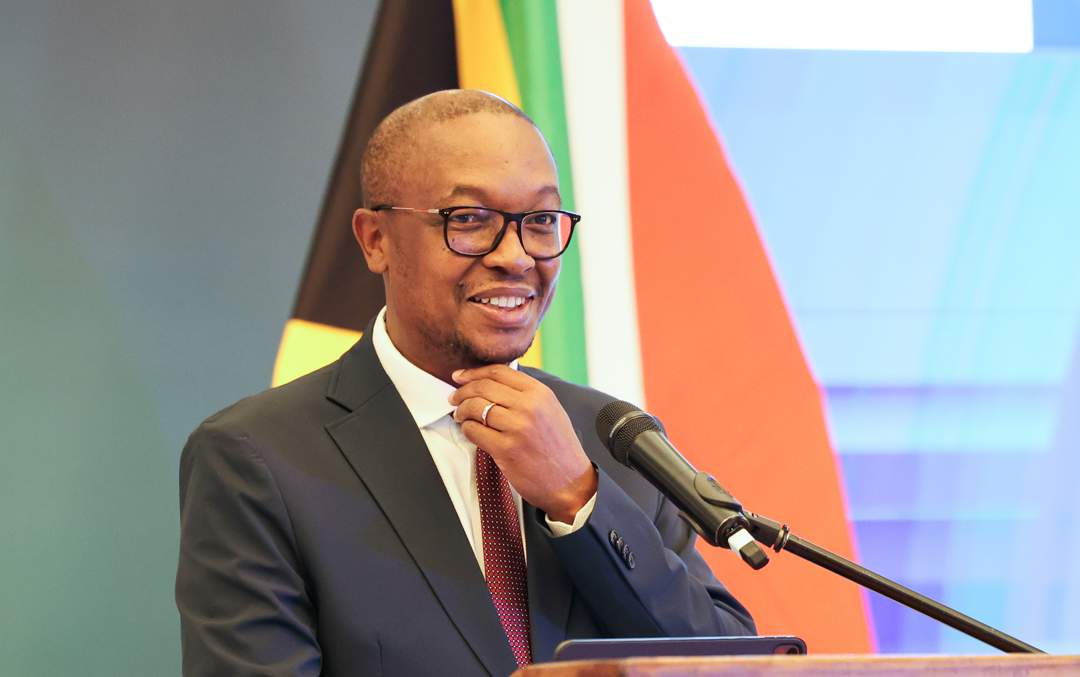
At the same time, there is also a trade storyline. News24 reports that South Africa’s Minister of Trade and Industry Parks Tau promised to continue talks with the United States in order to eliminate or reduce the 12.5% tariff on South African exports; he also stresses that the tariff was introduced despite written representations from the government, business and trade unions, as well as consultations with the office of the US Trade Representative and hearings in Washington. This detail matters: in South Africa’s perception, America does not look like a distant hub of the liberal international order right now, but like a hard-nosed negotiator who can, with a single decision, create direct costs for exporters, farmers and industry. (news24.com)
But there is also a broader political layer in South Africa—irritation that Washington publicly assesses the country’s internal problems. In older analytical and editorial texts, News24 links the deterioration of relations with the US not only to Trump, but also to accumulated ideological differences, as well as to the fact that the American side uses “megaphone” diplomacy; in newer pieces, the same outlet discusses how Saudi and South African economies experience American policy differently—yet for South Africa, the overall motive remains the same: the United States is seen as a powerful but unpredictable center that simultaneously criticizes, punishes, and demands adaptation. (news24.com)
In Israel, discussion of the US is even more emotional, because many local authors believe the strategic foundation that Israel once saw as solid no longer looks as strong as before. At The Times of Israel, several columns talk about a “skeptical America,” about generational and party shifts in the United States, and about the fact that the old Israeli argument no longer works for the audience that exists today. Seth Eisenberg writes that Israel needs to explain itself to America, which no longer treats the alliance as a moral given; Yohanán Schimmelpfennig goes even further, arguing that under Netanyahu, Israel replaced steady diplomacy with personal access to power in Washington—and now pays for it with dependence on an American re-negotiation of the terms of the game. (blogs.timesofisrael.com)
The most telling internal Israeli debate about Donald Trump. At The Times of Israel there is both criticism and attempts to defend the previous Trump–Netanyahu axis—but even critical authors are arguing not about individual gestures anymore, but about what Trump did to America itself and what that means for Israel. Mitchell Bard, for example, writes that a portion of right-wing circles in the US has strengthened the belief that Israel has become part of the problem rather than the solution, and that disappointment with “America First” has fueled isolationists who are willing to undermine the US–Israel alliance. In the Israeli press, then, America is discussed as a politically shifting organism, where the old bipartisan base of support for Israel is no longer guaranteed. (blogs.timesofisrael.com)
If these reactions are boiled down to several themes, the first is American reliability as security. Saudi Arabia, unlike Israel, currently sees the US primarily as a partner in maintaining Gulf stability and technological development—not only as a military patron. At the same time, Saudi texts insist on the idea that America must prove its readiness not with words, but with the ability to keep the region from escalating. Israel, by contrast, feels that American support remains big but no longer unconditional, and that Washington is ready to limit Israel’s freedom of maneuver in pursuit of broader regional goals. (arabnews.com)
The second theme is American economic nationalism and its side effects. For South Africa, it takes the form of tariffs and reduced aid—meaning a direct hit to the budget, to healthcare, and to exports. For Saudi Arabia, the same trend is read more softly: local commentators see the US as a country that can still be a strategic investor and partner, but not as the only possible destination for long-term modernization. That is why the texts pay so much attention to diversification, scientific independence, and energy autonomy. Israel sees another aspect of the same phenomenon: America’s domestic political shift makes even familiar allied relationships conditional and more transactional. (news24.com)
The third theme is Iran and the regional war. For Saudi Arabia, this is almost an existential question about shipping, straits and the cost of the conflict on its own territory. For Israel, it is both a question of the military campaign and of how far the United States is prepared to go alongside Jerusalem—and where they will start to slow down for their own agenda. For South Africa it is a less direct storyline, but it still appears as part of the global atmosphere: South African analysts increasingly write that American foreign policy in the era of Trump has become tougher, less predictable, and more tied to the internal logic of power rather than to international rules. (arabnews.com)
The most interesting local intuition—one that is not obvious from US media—sounds differently in each country, but converges on one point: America is no longer perceived as simply “the center of the world.” In Saudi Arabia, it is a center with which one can and should conduct a major strategic trade—while it is still able to provide security and technology. In South Africa, it is a center whose decisions must be lived through, mitigated, and worked around—especially when they hit healthcare, trade and reputation. In Israel, it is a center that no longer has to adapt to old Israeli expectations—meaning Israel must learn again how to speak with American society, not only with the White House. That is precisely the main international storyline of recent days: not what America thinks about the world, but how the world is learning to live with the fact that America has become tougher, more fragmented, and less predictable. (arabnews.com)