
In June 2026 the United States simultaneously represents a source of threat, a security guarantor and a key economic partner for many countries. Looking at America through the eyes of China, Turkey and Ukraine, each of these capitals sees completely different risks and opportunities in the same set of Washington’s decisions. The common backdrop everywhere is the same: Donald Trump’s second presidency, the U.S. and Israeli war with Iran, the protracted Russia–Ukraine war, and a drift in American foreign policy toward a harsher, more transactional approach.
In China, discussion of the U.S. today is built around three lines: the balance between competition and a “shared destiny” in Beijing–Washington relations, the sensitive knot around Taiwan, and an impressive but dangerous shift by the U.S. toward military intervention in the Middle East and Latin America. Chinese experts emphasize that within the U.S. itself there is a growing understanding of the mutual dependence of the two economies, even if political rhetoric remains confrontational. In one programmatic column on China.com.cn an international affairs author writes directly that in mainstream American debate there is a noticeable “命运熔合论” — the idea of a “fusion of destinies” of the U.S. and China, which partially echoes the Chinese concept of a “community of shared future for humanity;” he stresses that this turn in the U.S. is driven not by idealism but by the hard pressure of economic reality and global challenges that cannot be solved alone, whether climate change, the war in Iran, or crises in world trade. The same text makes a pointed conclusion: if this new understanding of “fused destinies” spreads from part of the American elite to broader layers of society — through student exchanges, increased cooperation between states and provinces — it will create a firmer social foundation for the stability of relations between the two powers. This view is characteristic of official Beijing: America is simultaneously the main competitor and a necessary partner, and China’s task is to steer the inevitable rivalry into a manageable channel, minimizing the risk of military confrontation, above all around Taiwan. (china.com.cn)
Taiwan remains the central point of friction. At the May meeting between Xi Jinping and Donald Trump, Chinese state media emphasized that the Chinese leader named a “correct solution to the Taiwan issue” as a key condition for the stability of relations with the U.S. Beijing preemptively sent Washington “four red lines,” including the inadmissibility of any steps that could be interpreted as support for Taiwan independence. Chinese commentators interpret Trump’s caution on Taiwan through the lens of his involvement in the war with Iran and the fear of opening a second large theater of hostilities: analyses on Chinese and international platforms stress that Washington today is objectively constrained in its ability to escalate in the Asia–Pacific region. (rt.rbc.ru) This linkage — America stuck in a Middle Eastern conflict and Taiwan — is repeatedly heard in Chinese assessments: according to Beijing’s logic, the U.S. again demonstrates a “monkey with a grenade” strategy, confusing forceful adventurism with systemic diplomacy.
The U.S. and Israeli conflict with Iran, which began with strikes on Iranian territory on February 28, 2026, became the main marker of America as an unpredictable global power for almost all three countries. In Turkish discourse, especially within ruling circles, the line is simple: Ankara sharply condemned the strikes and placed much of the responsibility on Israeli leadership, while simultaneously distancing itself from Iranian attacks on Persian Gulf countries. Official Turkey seeks to present itself as a principled but pragmatic opponent of the war, protecting the regional order from “irresponsible escalation” by both Tel Aviv and Washington as well as Tehran. International roundups note that Turkey became one of the harshest critics of the U.S.–Israeli campaign, embedding this criticism in Erdogan’s familiar anti‑Western narrative: commentators in Turkey say that Washington is again acting in the logic of unilateral forceful dictate, ignoring the interests of regional powers. (ru.wikipedia.org)
At the same time, Turkish analysis increasingly contains the motif of “opportunity in chaos.” One striking example is an analysis in The Insider (Russian, but detailing the Turkish context), where a separate section is devoted to how the U.S. operation against Iran and the effective blockade of the Strait of Hormuz opened a chance for Ankara to strengthen its position: Turkey’s developed drone industry, intelligence infrastructure and unique location between the Black and Mediterranean seas allow it to claim the role of an indispensable mediator and logistics hub. The piece also examines in detail how Ankara, maintaining channels with Tehran while remaining a formal U.S. NATO ally, extracts levers of influence in several directions at once — from the South Caucasus to the Eastern Mediterranean. (theins.ru) This is a typical Turkish optic: America is both a source of instability and a tool that can be used to raise one’s own weight, carefully balancing between Washington, Moscow and Tehran.
If in China Washington is seen primarily as an equal global rival, and in Turkey as an irritating but necessary “senior NATO partner,” then in Ukraine the image of the U.S. today is much more existential. Ukraine remains among the few states that officially supported the U.S. and Israeli military campaign against Iran, which, against the background of criticism from Beijing and Ankara, places Kyiv in the pro‑NATO camp. In Ukraine’s expert field this support is logically tied to the central task — keeping U.S. attention and resources on the Ukrainian front, even as the temptation grows in Washington to concentrate on the Middle East and rivalry with China. (ru.wikipedia.org)
Hence the nervous perception of every signal from Washington regarding future military aid. Ukrainian analytical reviews write directly about a double dependence: on decisions from the White House and on Congress’s mood, where approval of a new package of nearly $14 billion was provisionally agreed in January 2026 but then frozen by the White House itself, reportedly to avoid complicating the summit in Beijing. Ukrainian commentators see this as a painful symbol of a new reality: Ukraine’s survival question is becoming a bargaining chip in a broader U.S. game with China and Iran. Analyses by RBC‑Ukraine and other outlets emphasize that Kyiv hopes to compensate for this risk by working closely with Trump’s team, expecting visits by high‑level emissaries and trying to fit the Ukrainian agenda into Washington’s new “bargains” with Moscow, Beijing and Tehran. (rt.rbc.ru)
The economic dimension of the American factor for Ukraine is less dramatic but no less sensitive. Against the background of a weakening hryvnia, whose exchange rate in mid‑June approaches 45 hryvnias to the dollar, Ukrainian financial analysts use the U.S. currency as a key barometer of expectations regarding future aid tranches and investor behavior. In currency market reviews, the U.S. almost automatically becomes synonymous with “external resources”: any signals of delays in Washington’s decisions are immediately translated into expectations of further hryvnia weakening, while news of possible U.S. tightening of sanctions on Russia or Iran is perceived as a factor that could indirectly stabilize the Ukrainian economy by putting pressure on its adversaries. (fixygen.ua)
Interestingly, the theme of America’s internal problems is almost absent in Ukrainian discourse; America is seen primarily as an external force with the resources and will to influence the outcome of the war. In this sense the Ukrainian view differs sharply from both the Chinese and the Turkish. In China domestic U.S. polarization is the subject of close and often ironic analysis, since Beijing uses it to assess the durability of America’s capacity for long‑term strategic planning. Academic journals and party press regularly stress that the American political system is increasingly unable to produce a stable consensus on key foreign policy directions — from China to the Middle East. In one recent theoretical piece published in the Chinese press, Washington’s “new Monroeism” is described as an attempt to restore unchallenged influence in the Western Hemisphere through military actions and sanctions, including against Latin American countries, and it is argued that this is driven not by strength but by fear of losing global leadership and by internal “management illnesses” of the American system. (paper.people.com.cn)
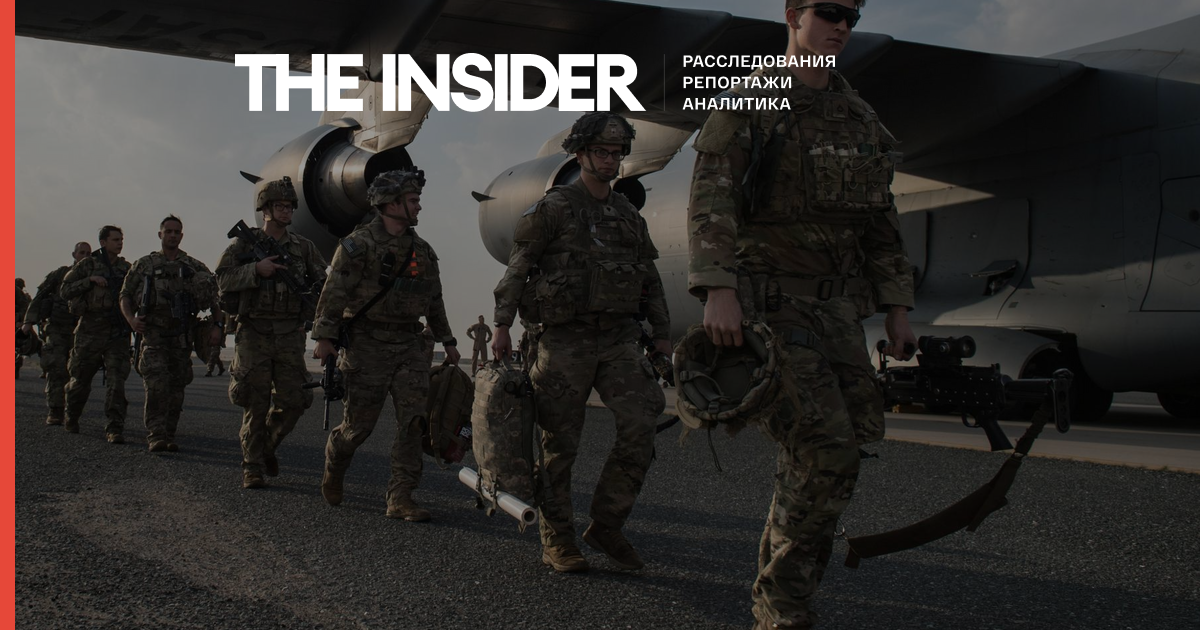
In Turkey, by contrast, U.S. internal conflicts are used more as a rhetorical device. Turkish pro‑government commentators like to contrast the “chaos of American democracy,” where Congress cannot for years pass immigration reform or agree on a military budget, with the “decisiveness” and “national will” of Ankara. At the same time, in professional Turkish foreign policy circles there remains a sober view: the U.S., however polarized internally, remains the only force capable of single‑handedly changing the balance in the Eastern Mediterranean or the Black Sea. That is why Turkey is extremely nervous about any American moves to redeploy troops in Europe and about Pentagon pressure on NATO allies to increase defense spending: Ankara fears that an increased American presence on the Alliance’s northeastern flank could be accompanied by new limitations on Turkey’s Kurdish policy and an enhanced role for Greece as a “model ally.” (whdh.com)
The common denominator for China, Turkey and Ukraine is a growing perception of the U.S. as a state that acts more impulsively and situationally than according to a long‑term strategy. Chinese columns on the American topic emphasize that the White House under Trump has returned to the “tariff lever” in trade policy, raising average tariffs from 10 to 15 percent, while simultaneously showing readiness for large‑scale use of force — from Tehran to Caracas. In the Turkish view this looks like a return to a “rough Monroe” era, when Washington treats entire regions as zones of unilateral influence and does not stint on means. In the Ukrainian view it is a painful reminder that even a war on their territory might cease to be the main priority for a superpower that is simultaneously trying to balance with China and pressure Iran. (ru.wikipedia.org)
However, there is an important difference: the degree of belief in the U.S.’s ability to change. In China, despite harsh state rhetoric, there remains a niche for cautious optimism: some Chinese authors see the American elite’s talk about a “fusion of destinies” as a sign that beyond the horizon of current confrontation a more mature understanding of mutual dependence might emerge. In Turkey there is less trust: Ankara assumes America is a power to be negotiated with and outplayed in every specific case, from F‑16 deliveries to choosing energy corridor routes. For Ukraine the question is simpler and harsher: the U.S. has no time to “change” — how quickly and consistently Washington makes decisions on military and financial support in the coming months will continue to determine the very physical survival of the Ukrainian state.
As a result, America in the mirror of three capitals looks like this: for China — a necessary but dangerous partner, stuck between awareness of mutual dependence and the temptation of forceful hegemony; for Turkey — an inconvenient but indispensable NATO “senior,” whose mistakes can be converted into domestic dividends; for Ukraine — still the chief guarantor that the war with Russia will not end on the Kremlin’s terms, but also a source of growing fear that in a world of multiple simultaneous crises the Ukrainian agenda may one day become “second in line.” It is precisely in this divergence of images — partner‑competitor, bargaining object, vital protector — that today’s complex, contradictory international view of the United States is being formed.

 Read More">