Australian and Ukrainian publications are discussing conflicting perceptions of the United States: doubts about Washington’s ability to stand up to Iran and China, concern over Donald Trump’s rapprochement with Vladimir Putin, and fears that talks among the great powers could push Ukraine into the background. The key issues are the reliability of the United States as an ally, Washington’s strategic decisions, and the risk of escalation. Based on reports by Australian outlets SBS and Milwaukee Independent and Ukrainian publications DW and NV.ua.
Australia warned of political and digital risks from the United States
Events in the United States are increasingly becoming more than a foreign-policy issue for Australia to monitor; they are also a source of practical warnings. Analyses of Republican setbacks in the midterm elections and major technology outages affecting U.S. infrastructure highlight two distinct but related problems: the risks of importing the American political style, and the dangers of deep dependence on digital systems run by major U.S. corporations.
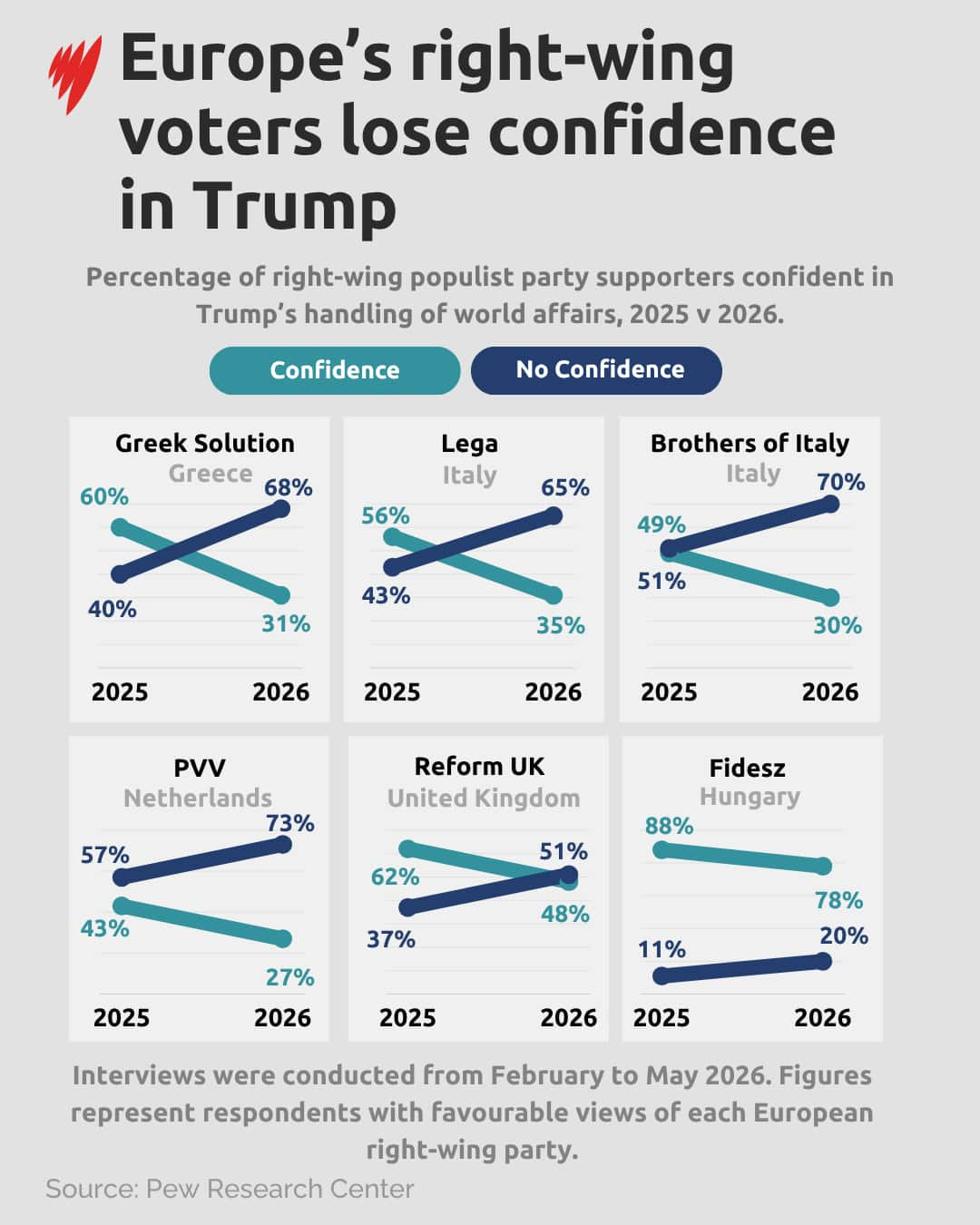
In politics, the most visible warning sign was the Republican defeat, which could complicate the positioning of Australia’s right-wing populist party One Nation and its leader, Pauline Hanson. As SBS News notes, a close public association with Donald Trump may cease to be an advantage and become a reputational liability.
After the election, a post published on the One Nation website in January 2025 disappeared. It had carried the slogan: “Want Trump’s action and style? You need One Nation.” The post featured an image of Hanson with Trump and presented her party as the only political force in Australia that fully shared his agenda. No official explanation was given for its removal, but its disappearance has been seen as a possible attempt to distance the party from a brand that has lost some of its electoral appeal.
Professor David Smith of the United States Studies Centre calls Trump “an icon of the global far right” over the past decade. In his view, the scale of the Republican setback showed that some voters are tired of politics built on constant conflict, personalisation and media spectacle. Americans, he says, voted primarily for a lower cost of living and practical results, rather than “endless new episodes of the Trump show.”
That conclusion matters for Australia, where rising prices, housing problems, economic uncertainty and disillusionment with the major parties are also central political issues. For One Nation, this means focusing less on imported MAGA style and more on voters’ local concerns.
At the same time, analysts caution against concluding that the U.S. result marks the end of right-wing populism. Jordan McSweeney, a researcher at the University of Canberra, points out that in many countries it was the incumbent governments that lost, so the result may reflect the familiar “incumbency effect”—voters’ tendency to punish those already in power. “I don’t see this as a moment when voters around the world are saying no to this kind of politics,” he stresses.
McSweeney also notes that Pauline Hanson cannot be seen simply as an Australian follower of Trump. Her hard-line rhetoric on migration, national identity and distrust of the political establishment emerged long before Trump’s presidential campaign: “Hanson was doing Trump before Trump.” Her potential, therefore, stems not only from American political influence but also from domestic factors: the high cost of living, dissatisfaction with Labor and the Coalition, and anxiety about housing, prices and the economy’s future.
One Nation’s growing support in Victoria, where it had previously achieved only limited results, confirms that Australia’s political dynamics cannot be reduced to swings in the U.S. electoral cycle. However, Flinders University professor Duncan McDonnell believes Hanson “may pay a price” for being too closely linked to Trump. He compares the situation to Peter Dutton’s defeat in the 2025 election: in his view, the former Liberal leader tried to create an Australian version of MAGA, but voters reacted poorly to the strategy.
Even One Nation representative Barnaby Joyce linked the Republicans’ poor showing to Trump’s excessive focus on himself. A political leader, he said, can move from thinking of himself as a prime minister to thinking of himself as a president, then a king and an infallible figure—after which “you get thrown out.” This criticism allows the party to distance itself from the fallout of Trump’s defeat without abandoning its own core themes: migration, identity, anti-elite rhetoric and social discontent.
Australian political culture generally sees the United States as an important reference point, while also viewing the American model of constant confrontation, personality cults and media drama with caution. One Nation would be better off looking like a local party responding to Australians’ everyday problems than like a foreign branch of MAGA. As McSweeney notes, a political force that wants to look like a winner is unlikely to draw too much attention to its similarities with the defeated Republicans.
Australia can draw equally serious lessons from U.S. technology outages. A Milwaukee Independent report views disruptions affecting Microsoft, systems at the Federal Aviation Administration, banks, Apple and even the internal network of the National Security Agency not as a random collection of technical incidents, but as evidence of a broader systemic vulnerability.
This issue is especially important for Australia, which is closely integrated with the United States in technology, intelligence and strategic affairs. Through the Five Eyes and AUKUS alliances, and its use of U.S. cloud services, software platforms, communications systems and security standards, the country depends on infrastructure largely controlled by foreign commercial providers.
The report stresses that it is not necessary to prove a single coordinated cyberattack to recognise the threat. Microsoft linked one outage to a software defect introduced several months earlier. The FAA cited an excessive number of network connections, some linked to contractors’ infrastructure. Apple and JPMorgan Chase pointed to internal technical problems. Taken together, these cases show how several ordinary errors can coincide and create the effect of a major national crisis.
The rapid adoption of artificial intelligence in software coding, testing and infrastructure management is another cause for concern. The author does not claim that AI directly caused the incidents listed, but warns of the dangers of automation introduced without independent verification and adequate oversight. For Australia, which aims to develop its own AI sector while depending on U.S. digital companies, this means it cannot simply match the pace of the U.S. technology race without strengthening technical oversight and regulation.
Technical incidents also take on a geopolitical dimension. References to Iranian cyber operators show that real-world errors and overloaded systems can provide a convenient opening for outside interference. Malicious actors can take advantage of distracted security services, overloaded networks and public uncertainty while the cause of an outage remains unclear. For Australia, this directly concerns the protection of critical infrastructure, military communications, the financial sector, aviation and transport systems.
In this context, U.S. outages serve as a warning to Canberra about the risks to digital sovereignty. Democratic states are becoming increasingly dependent on opaque, interconnected digital systems managed by commercial companies. A failure at one provider, a contractor’s software flaw or a problem with a cloud platform can quickly spread to government agencies, businesses and allies.
The practical lesson is the need for independent system testing, transparent disclosure of the causes of incidents, stricter requirements for contractors and clear rules governing the use of automated solutions in critical infrastructure. The main danger is not one “out-of-control” algorithm, nor necessarily a single foreign attack. Far more likely is a combination of corporate haste, technical errors, dependence on a handful of major platforms and hostile cyber activity—a combination that may develop faster than governments can understand what is happening and protect the public.
Ukraine saw a risk of “Yalta 2” at the Shenzhen summit
The omission of Russia’s war against Ukraine from the joint “Declaration on Peace,” signed by Donald Trump, Vladimir Putin and Xi Jinping after their meeting in Shenzhen, prompted alarm in Kyiv. For Ukraine, this is not merely an editorial change to a diplomatic document, but a possible signal that the country’s fate could be pushed into the background in talks among the world’s major powers.
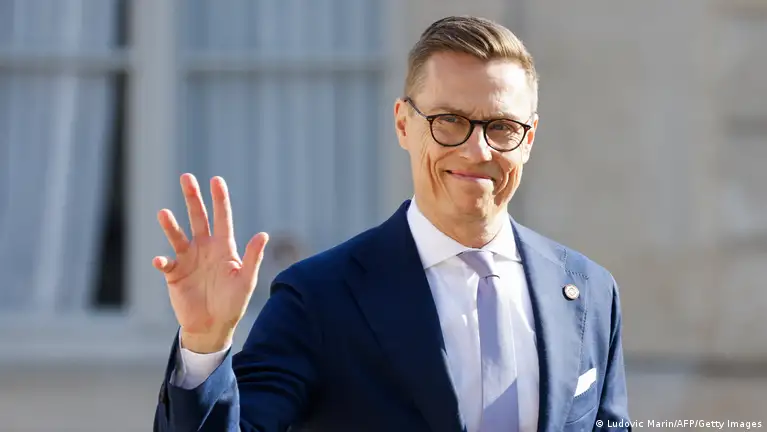
According to DW Ukraine, Finnish President Alexander Stubb said the original version of the declaration included a section on Ukraine. However, the United States insisted that it be removed. In the Finnish leader’s view, the original wording was poor, so removing it was justified: “I think that was good.”
In Ukraine, this assessment is seen as ambiguous. Amid a full-scale war, Ukraine’s absence from a document signed by the United States, Russia and China could be viewed not as a defence of its interests, but as pushing the issue of aggression off the international agenda. The format of the talks itself is also a particular cause for concern: the Trump-Putin-Xi meeting reminds Kyiv of the risk that decisions could be made “over Ukraine’s head,” without its participation or regard for its sovereignty.
Stubb also described Trump’s conversation with participants in the “coalition of the willing” summit. According to Stubb, the U.S. president spoke of the need to end the war so that Europe could direct funds “to other things.” The Finnish president added, however: “There was no suggestion of stopping support for Ukraine.” This is a crucial qualification for Kyiv: the desire to end the war must not become a euphemism for reducing military, financial or political assistance to Ukraine without reliable security guarantees and the restoration of its territorial integrity.
According to DW, the final declaration addressed nuclear risks, energy, UN reform and limits on the powers of the International Criminal Court, but did not mention Russian aggression. In Ukraine, this contrast is painful: a country facing Russian strikes and fighting for its independence was not given a place in a “peace” document, while issues favourable to Moscow, including criticism of the ICC, were included in the final text.
In his comments on the summit, President Volodymyr Zelensky presented the absence of public decisions on Ukraine and its borders as a diplomatic failure for the Kremlin. As NV writes, Zelensky believes Vladimir Putin had hoped to secure a kind of “Yalta 2”—a new agreement among the major powers to divide the world and establish spheres of influence. But, the Ukrainian president says, China did not support that scenario: “China did not let itself be drawn in.”
This matters greatly to Kyiv. Beijing’s role in legitimising Russian demands could have significantly weakened Ukraine’s international position and created the impression that the world’s major powers accepted the forceful redrawing of borders. Zelensky stressed that Europe’s postwar order cannot be discussed without Ukraine and European countries.
Responding to Russian references to the 1945 Yalta Conference and to “victory over fascism,” he stated Ukraine’s position: “If there really is an attempt to reaffirm victory over fascism, then the United States, Europe and Ukraine should have been at this summit. Definitely not Russia.” In this view, Russia is not the heir to the anti-fascist coalition, but an aggressor state undermining the international order.
The historical analogy with Yalta is particularly sensitive for Ukraine. The 1945 postwar agreements are associated with a period when the political future of Eastern European states was largely determined by the great powers, without the full participation of the peoples concerned. That is why the possibility of a deal among the United States, China and Russia on European security and borders without Ukraine raises fears in Kyiv of a return to a similar model.
Zelensky linked Moscow’s diplomatic disappointment to Russia’s subsequent massive attack on Ukraine. “We saw the reaction in Ukraine, unfortunately—in the night there was a massive bombardment, 111 missiles,” he said. The Ukrainian president called Putin “a terrorist and a murderer,” stressing that the Kremlin uses strikes on civilians and infrastructure as a means of pressuring Ukraine and sending a message to the outside world.
Russian journalist Mikhail Fishman, quoted by NV, also believes that Putin’s attempt to “cosplay Yalta” will bring him little more than a propaganda-ready television spectacle, rather than real agreements to divide the world or bring peace to Ukraine on Moscow’s terms. For Kyiv, this means the Kremlin is still seeking international legitimacy for its aggression, but has so far failed to secure decisive international recognition of its demands.
Ukraine’s response to the Shenzhen summit comes down to a mixed conclusion. On the one hand, the absence of a “grand bargain” on borders and the European order is seen as limiting Russia’s options and as a diplomatic success for Ukraine. On the other, the exclusion of the war from a peace declaration shows how real the danger is that the great powers’ desire for a quick settlement will take precedence over a just peace. Kyiv insists that a lasting end to the war cannot come through silence about aggression or agreements made without Ukraine, but through pressure on the aggressor, continued international support and Ukraine’s direct participation in decisions about its territory, security and future.