Today the United States is no longer seen as an "anchor of order" but as a primary source of turbulence. In all three countries — South Korea, South Africa and Australia — discussions revolve, in essence, around the same issues: a second Trump term, global tariffs, the risk of a new war with Iran, his approach to Israel and Palestine, attempts to "rebuild" the world order and the role of the dollar. But in each part of the world these debates are filtered through local experience — from dependence on the American market to trials of former presidents and cases in The Hague.
Viewed by topic rather than by country, several common nerves emerge: a tariff shock and "America vs. the world," the conflict around Israel and Gaza, the collapse of trust in American leadership and, simultaneously, a painful dependence on the U.S. in security, technology and raw materials.
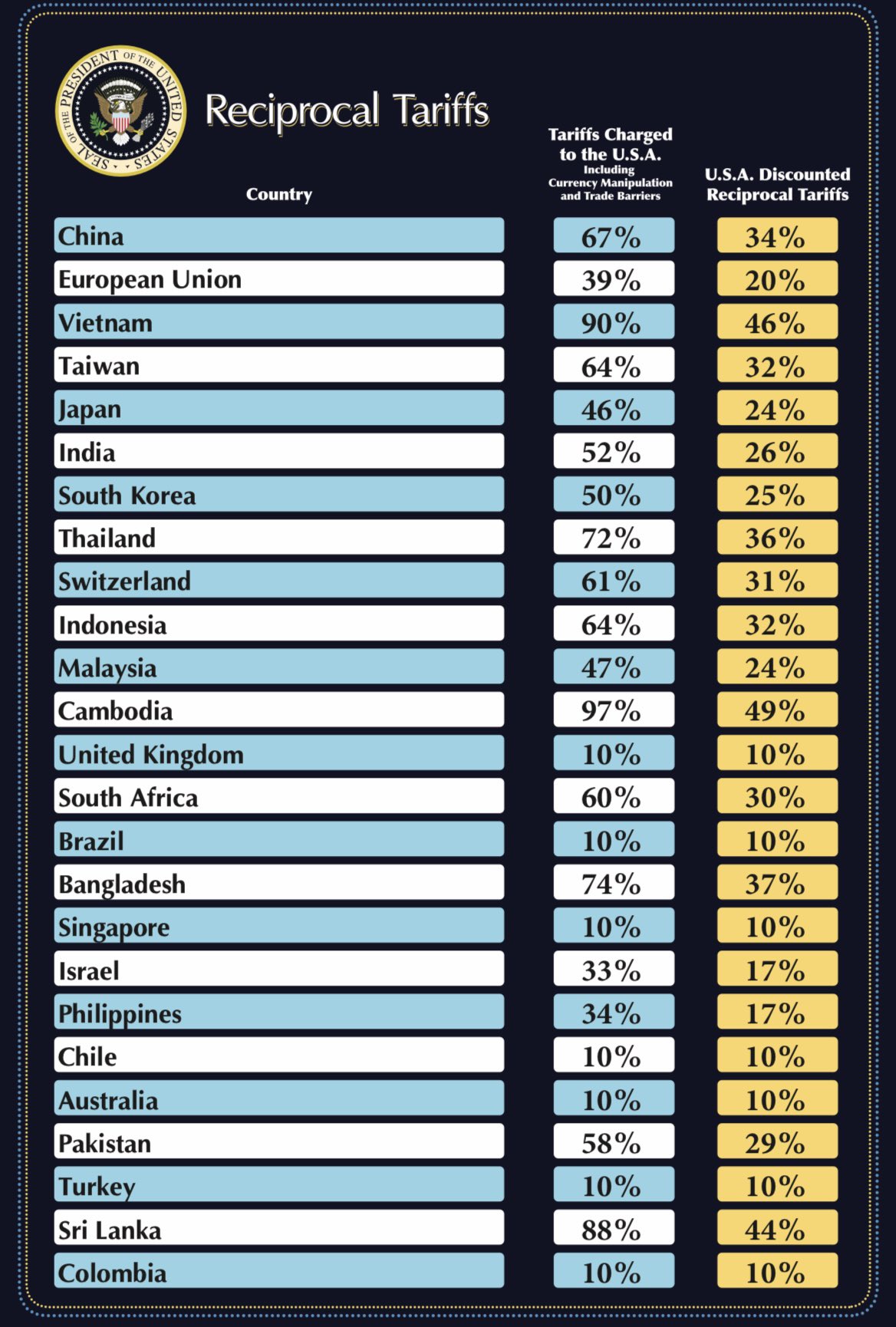
The first theme linking Seoul, Pretoria and Canberra is a new wave of American protectionism. The U.S. Supreme Court’s decision to annul a whole array of previous tariffs, and then Trump’s immediate response — a global tariff initially of 10%, then a proposed 15% on imports "from around the world" — became one of the central storylines in Korean financial and Australian economic columns. Korean analysts describe the day the old tariffs are struck down and a new 15-percent barrier is introduced as a "reset of the regime of uncertainty," stressing that companies are simultaneously waiting for refunds of duties already paid and fearing a new wave of costs and a price shock for consumers. One investor review states bluntly: "the tariff map has turned into an instrument of domestic political games in Washington, not a predictable trade policy," concluding that any long-term plans involving the American market must now be treated as a "political derivative" rather than as economics.
In Australia the tariff issue is even more concrete: commentators calculate exactly how many billions of GDP a "Trump America" could cost Canberra. Economists and journalists note that the U.S. accounts for only about 4–5% of Australian exports, but U.S.-bound exports are largely high-tech processed goods: advanced metals, machinery, chemicals. A study by an Australian industry group emphasizes that for these sectors the hit will be "far from cosmetic" — a significant share of their sales is aimed specifically at the U.S., and a 10–15% tariff simply eats margins and makes Australian goods uncompetitive. An analytical note from Export Finance Australia couches it more mildly, but the meaning is the same: the direct GDP effect may be small, but the indirect effect — via a slowdown in China and global trade — could be much more painful than all the direct tariffs combined.
The political subtext is not hidden. Former senior U.S. diplomat for the Indo‑Pacific Daniel Kritenbrink told the Australian press that a 15% tariff on allied countries, including Australia, is "unjustified and lacks any reciprocity," effectively admitting that the logic of punishment has become more important than the logic of alliances. Former Australian foreign ministers Gareth Evans and Bob Carr went further: Evans said that "Trump has zero respect for international law, morality and allies' interests," while Carr posted on social media that "our alliance with the U.S.'s madness may have run its course," which, for a country that for decades regarded the Australia–U.S. alliance as an unquestioned good, sounds like a small revolution. Public sentiment backs up the politicians: Lowy Institute and Australia Institute polls record historically low trust in the U.S. as a responsible actor and a simultaneous rise in support for a "more independent foreign policy," even while formal support for the alliance remains.
South Africa also views tariff policy through the lens of economic damage, but its perspective is even more politicized. Specialist platforms tracking trade measures lay out the details: reciprocal 30% tariffs on some South African exports are already in effect, separate 50% levies apply to steel and aluminium, and now a global barrier is added. Attention is particularly drawn to the threat to AGOA — the agreement granting South Africa duty-free access to the U.S. market for a range of goods. Experts calculate that if Africa loses AGOA, tens of thousands of jobs in the auto industry and agriculture could be at risk. A Johannesburg consulting firm manager sarcastically notes in one review that "Washington resembles a lender that first offered cheap money and now penalizes the debtor for being too dependent."
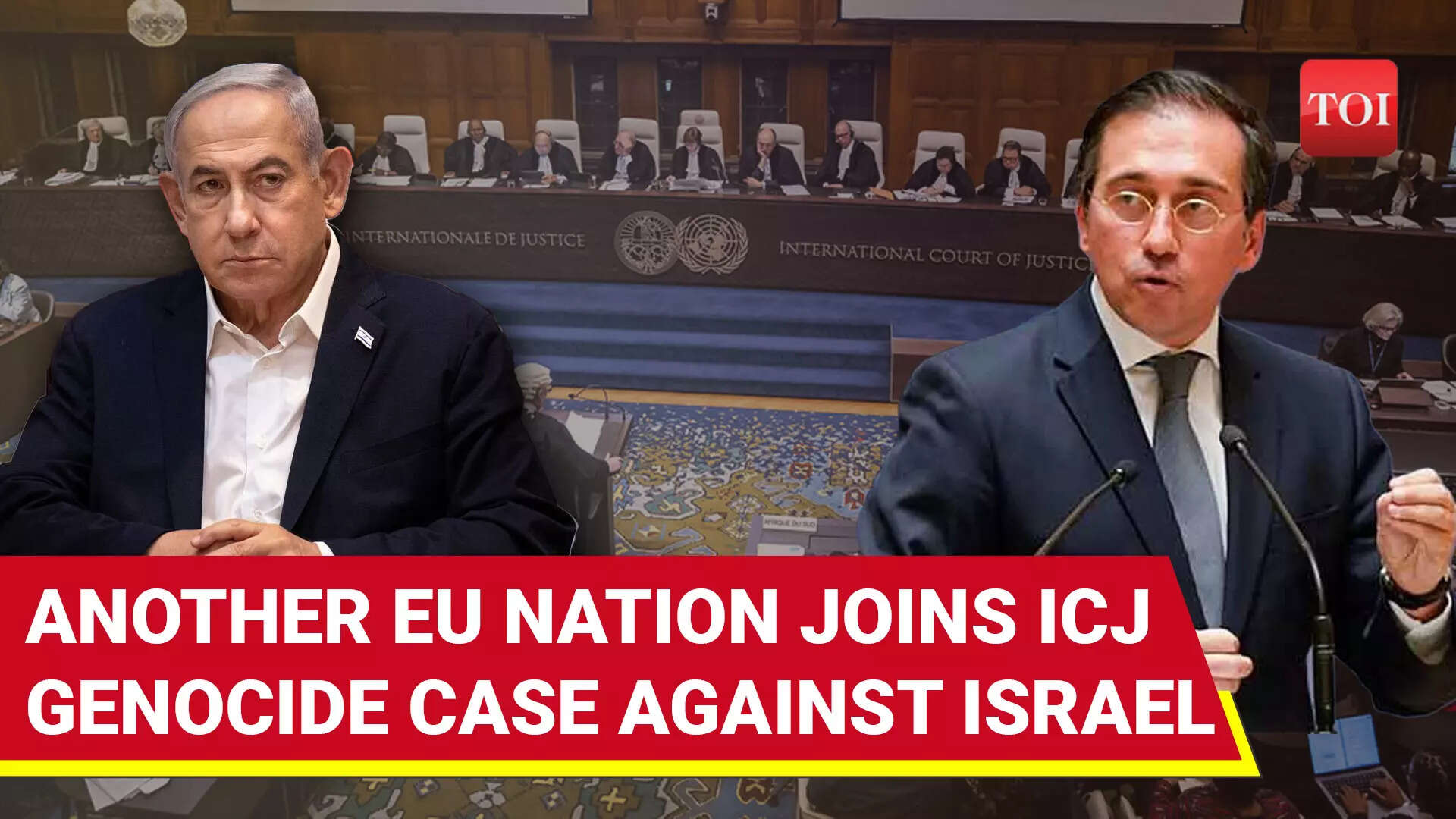
But in South Africa trade measures are perceived as inseparable from geopolitics. In opinion columns for local outlets it is stated plainly: tough tariffs and AGOA threats are Washington’s response to Pretoria’s Gaza policy, its cooperation with China and Russia and, especially, to the lawsuit against Israel at the International Court of Justice. Local analysts emphasize double standards: when South Africa demands accountability from Israel and the U.S. over bombings in Gaza, it is accused of a "selective approach," while, as the authors write, Washington "uses human rights in the language of sanctions rather than dialogue."
The second major common theme is the Israeli–Palestinian conflict, Gaza and the U.S. role. For South Africa this is more than foreign policy — it is part of national identity: a country that itself went through apartheid and claims to be the voice of the Global South consciously opposes its vision of international law to America’s. South Africa’s Hague initiative accusing Israel of genocide is seen by many South African commentators as a "moral duty" to history, and it is here that the U.S. role provokes the most irritation: Washington, local columns and pan‑African interviews stress, not only sided with Israel but effectively punished South Africa with tariffs and aid cuts for attempting to use international legal mechanisms.
South African political scientists interviewed by the local press tie this into a single knot: pressure via AGOA, delay of climate finance, hostile rhetoric around an alleged "white genocide" in South Africa and programs to admit white South Africans as refugees to the U.S. One expert remarked that "Washington is ready to use the language of human rights when it suits its domestic racial and electoral agenda, but turns a blind eye to the devastation in Gaza," calling it "a redistribution of morality toward the interests of the White House."
South Korea’s view on U.S. policy toward Israel and Palestine is far less emotional and much more pragmatic. Here the Middle East is primarily seen through how the U.S. reallocates resources and attention: can Washington keep focus simultaneously on Iran, Ukraine, China and the Korean Peninsula? Korean media analytics warn of the risk of a new U.S.–Iran war: commentators retell Western pieces saying that Trump has supposedly "painted himself into a corner" by ramping up pressure on Tehran without achieving concessions, and now must either start an unpopular war or admit failure. For Seoul this is not an abstract dilemma: a U.S.–Iran conflict threatens an oil price shock and a fresh wave of global instability, which would hit Korea’s export-driven economy.
Australian press likewise treats a possible war with Iran mainly through the lens of economic and regional risk. Investor-oriented analysis emphasizes that global trade shocks are already pushing world growth below 3%, and another major U.S.-initiated military crisis could finally drag the global economy into "long stagnation." Official Canberra speaks cautiously in public, but among experts the question is increasingly asked: "Does being so tightly tied to Washington’s military adventures — from AUKUS to a potential conflict with Iran — actually make us safer?"
The third linking theme is the dramatic erosion of trust in the U.S. as a pillar of the world order while dependence on American economy, technology and security remains strong. This is clearest in Australia. Polling data have become almost canonical: more than two-thirds of Australians do not trust Trump to "do the right thing" on the world stage; around a third call him "the main threat to the world" — higher than Putin or Xi. At the same time, support for the Australia–U.S. alliance remains high. University centers and think tanks explain the paradox simply: "we fear not only Trump’s America but also a world without American guarantees, where China stands alone against the region."
South Africa has long lived by a different logic regarding the U.S.: illusions about Washington’s "responsible leadership" have largely disappeared. Columns in South African newspapers describe current U.S. policy as "driven by short-term interests" and "selective application of values." One IOL interviewee summed it up: "The United States recognizes only those allies who do not ask questions." In this context Pretoria’s stance — from the ICJ case against Israel to cooperation with BRICS — is presented as a deliberate choice in favor of "multipolarity," even if it carries economic costs.
South Korea stands between these poles. On the one hand, its security and economic structures remain deeply tied to the U.S.: from a military base with American troops to the critical dependence of Korean chipmakers on the U.S. market and American export controls. On the other, Korean economic analysts increasingly write that "America as a source of predictability is disappearing." One recent investor review for Korean readers put it this way: "the 250th anniversary of American statehood finds the country more internally torn than ever, and its international role is shifting from architect of rules to a player that tears up contracts whenever it suits him." At the same time Korean authors stress the need for "strategic autonomy," but their practical recommendations so far reduce it to diversification of export markets and accelerated expansion of Korean companies into Europe and Southeast Asia, rather than to revising the military alliance.
The fourth common theme is the dollar and the financial dimension of "America First." South Africa pays particular attention to this: analysts note that dollar weakness in 2025 was one factor behind the rand’s unexpected strengthening and a temporary easing of debt pressures. But the same analysts warn that a decline in trust in the dollar as a neutral global currency due to arbitrary tariffs and sanctions could, in the medium term, hit developing countries even harder than current shocks, if the world fragments into several currency‑financial blocs.
Australian economic columns say the same, in plainer terms: the global tariff war stoked by Washington is already forcing international organizations to revise growth forecasts downward. The OECD attributes part of the deterioration in prospects for Australia and the U.S. to "increased trade barriers and political uncertainty," and local commentators add that "inflation in Australia is not yesterday’s problem because we beat it, but because Trump’s trade shocks threaten a much more serious slowdown."
For Korean observers the dollar is primarily an indicator of global risk appetite and export demand. Specialized South African and South Korean platforms tracking the dollar index warn that the combination of a tariff shock and massive U.S. budget deficits makes the American currency increasingly unpredictable, pushing investors into gold and alternative assets. But, as often emphasized in Korean columns, "the world has nowhere to flee from the dollar yet": China is not ready to assume the guarantor role, Europe is fragmented, and the rest of the world lacks scale.
The fifth line where all three countries converge is their attitude toward the very idea of American leadership and a "world order without the U.S." Here formulations echo recent Western comments almost verbatim: if previously the question was "can anyone replace America," it is now "will the world survive without its anchor." Australian and Korean texts increasingly quote European leaders and the Canadian prime minister, who have said the postwar order under U.S. aegis has effectively ended, replaced by a "fragmented field of deals and spheres of influence." South Korean analysts argue this makes life harder for small and medium powers like Korea or Australia: they are forced to constantly balance rather than simply choose the "side of history."
The South African perspective is different: for many South African writers the collapse of U.S. unipolar leadership opens a historic window for the Global South — from Hague lawsuits to new BRICS formats and African integration. Columns also contain direct polemics with Western fears: "what Washington and Brussels call chaos is, for us, a chance to finally speak with our own voice," writes one commentator, comparing U.S. pressure on South Africa to the history of sanctions against the apartheid regime, when, he argues, Washington long resisted tougher measures.
Putting it all together, the picture looks like this. In South Korea, South Africa and Australia people talk about America a lot and nervously, but in different ways. In Australia the main question is how to preserve the alliance while minimizing damage from the "Trumpization" of American policy; the tone is set by opinion polls and former ministers calling for "cautious distancing" without breaking the alliance. In South Africa the U.S. is increasingly seen not as a guarantor but as another great power playing hard and selectively; rhetoric of resistance and a "moral challenge" to Washington dominates, even at the cost of economic losses. South Korea remains in the most difficult position: it is still highly dependent on American guarantees and technology, but it is losing faith in the U.S. as a predictable guardian of order and must build a strategy on the assumption that America can abruptly change course at any moment — from tariffs to war.
One common denominator for all three countries is clear: the world is getting used to the idea that America is no longer the "center of gravity" but a major source of risk. Yet neither South Korea, South Africa nor Australia is ready — and, in practical terms, able — to simply exit America’s orbit. Therefore current conversations about Washington in Seoul, Pretoria and Canberra are less a debate about an external player than a painful search for an answer to the question: how to live in a world where the strongest power is at once indispensable and increasingly unreliable.