In recent months the image of the United States in Europe seems to have blurred: the country that for decades was the "anchor" of the transatlantic security system is now simultaneously waging war with Iran, intervening in Venezuela, quarrelling with NATO allies, bargaining over Greenland and offering Ukraine a peace on terms that Europe calls a "painful compromise." Against this backdrop, in France, Ukraine and Germany people are discussing not just another turn of American policy, but the possibility of peace without a guaranteed American umbrella. And in each capital this provokes its own set of fears, hopes and calculations.
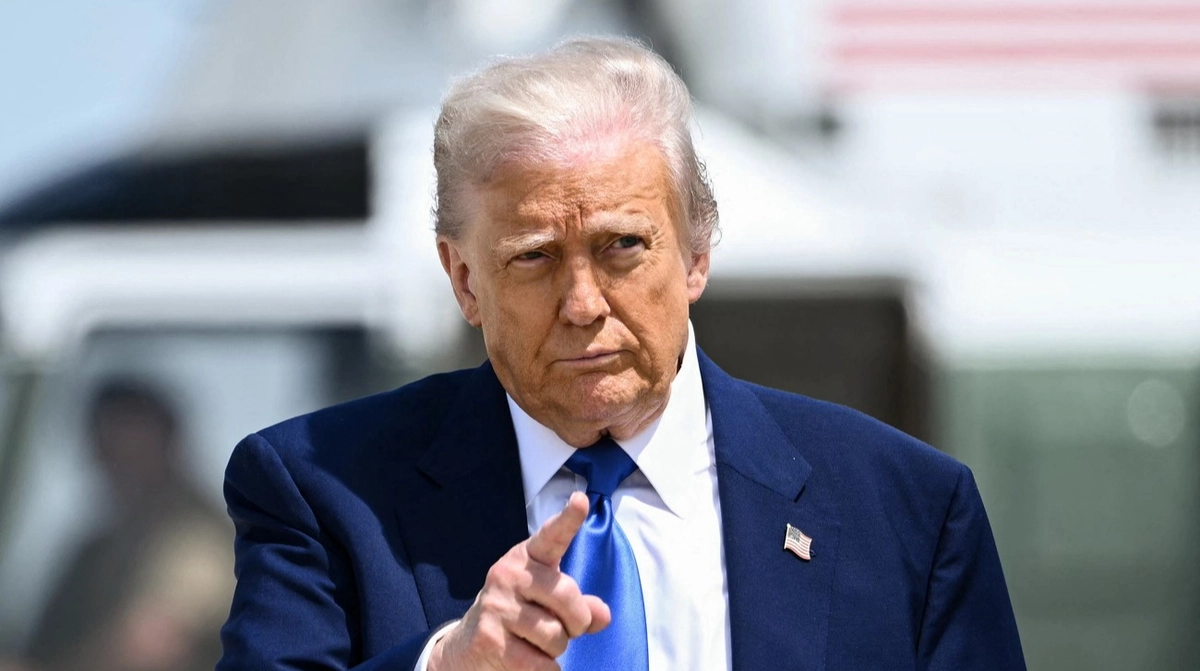
The central theme around which almost all European debates revolve is the threat of weakening or even dismantling American leadership in NATO. After Donald Trump publicly said several times that he is "absolutely" considering the possibility of the US leaving the alliance if allies do not support his war with Iran, Kyiv and European capitals stopped treating this as mere bluster in the spirit of his first presidency. The Ukrainian outlet Ukrainska Pravda, recounting his April address to the nation, emphasizes that for the first time since NATO's creation the debate is not about the "2% of GDP for defense" issue, but about a fundamental question: will the United States remain part of the architecture of European security at all. The same piece cites Secretary of State Marco Rubio’s position, who openly promises to "reassess the necessity" of NATO membership after the conflict with Iran ends — for Kyiv this sounds like a warning for the future rather than a tactical manoeuvre within the alliance. (pravda.com.ua)
In France the theme is framed in softer journalistic tones, but the underlying concern is essentially the same. In an analytical report by the French economic intelligence portal Portail-IE, dedicated to the first hundred days of Trump's second term, the authors carefully write about a "strengthening isolationist line" in Washington and directly link the January decision by the US to withdraw from dozens of international organizations and treaties to their stance on NATO and Ukraine. The report notes that the Trump administration has made it clear that Ukraine "realistically cannot return to its 2014 borders and join NATO," and that the president justifies rapprochement with Moscow by the desire to "stop the bloodbath" in Ukraine. For French experts, this means not only a redesign of American strategy but also a "geopolitical coming-of-age" for Europe — the continent must think about its own defense without the certainty that Washington will stand between it and Moscow. (ru.wikipedia.org)
The German debate is built around the same question but from a different angle: what will happen not just to NATO, but to the very idea of the "West" if the US turns inward? A study cited by German media that analyzes sentiments in Germany, France, Italy and other countries shows that the majority of the population still supports military aid to Ukraine despite fear of nuclear escalation. At the same time, in Germany and France a relative majority of respondents are willing to accept the deployment of Western peacekeepers in Ukraine after a possible deal with Russia — but no longer as a purely American mission, rather as a European initiative "with US support." It is in this formulation — "with US support" — that the changing picture is recorded: America shifts from unquestioned leader to an important but not sole player. (phys.org)
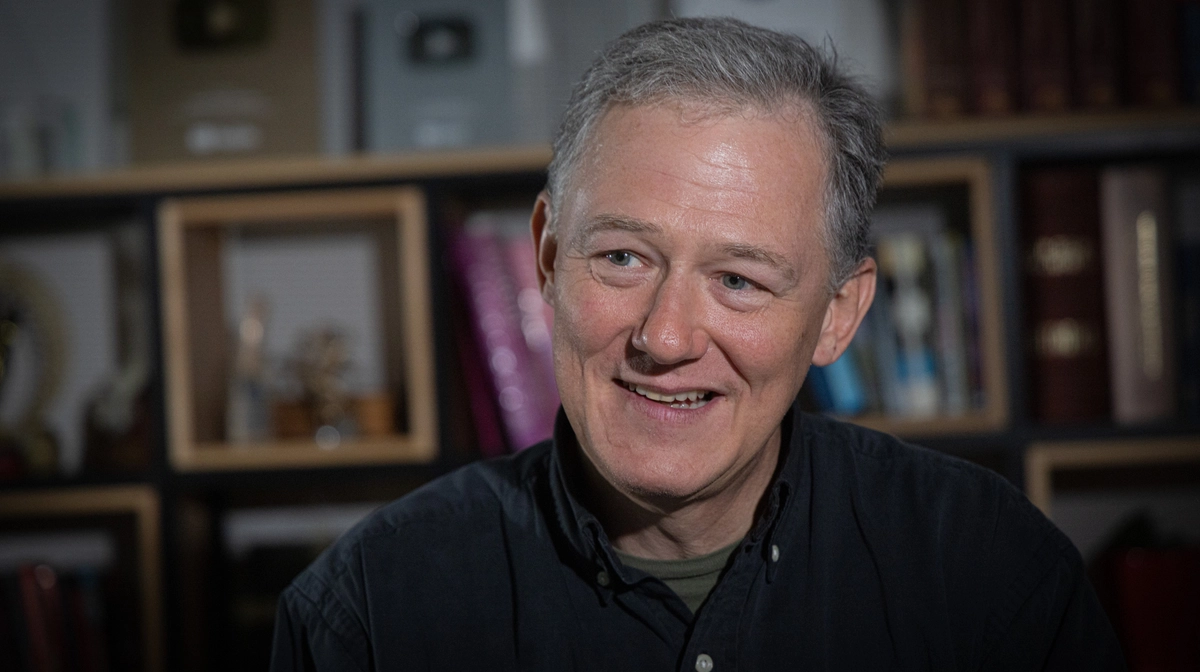
Against this background the Ukrainian perspective is the most harsh and concrete. Kyiv watches every Trump remark about NATO and every decision he makes regarding international organizations, because whether the West remains a united front against Russia depends on this. In an interview with Ukrainska Pravda former US ambassador to NATO George Kent says plainly that the main risk for Ukraine now is not so much Russian pressure as the "erosion of transatlantic solidarity" if Washington really begins to abandon institutional commitments. He emphasizes that military and financial guarantees more and more often come from Europe, not the US, and that Ukraine's influence in the world has grown precisely thanks to European mobilization, while the American vector has become less predictable. (pravda.com.ua)
The second major theme around which French and German commentary is constructed is the American war with Iran and, more broadly, Washington's willingness to start new conflicts outside Europe without regard for its allies. French commentators on the left — primarily representatives of the La France Insoumise movement — view US intervention in Venezuela and strikes on Iran as symptoms of an "imperial reflex" that contradicts European understandings of international law. Jean‑Luc Mélenchon, whose statements are widely cited in France and beyond, articulated a position in connection with Venezuela that has since been applied to the Iranian case: "there are no good invasions, only bad ones." For him and his supporters this is not rhetoric but an attempt to distinguish the European left agenda from the American one: be against Russia in Ukraine, but simultaneously criticize the US when it acts unilaterally in other regions. (en.wikipedia.org)
In Germany the situation is more complicated: public opinion there tends to support Ukraine and fears war with Iran. Therefore the American line of "hard deterrence" toward Tehran provokes both anxiety over the risk of a major war and a hidden relief — some German analysts note that while the US is preoccupied in the Middle East, Europe is forced to take its own defense on the eastern flank seriously. In reviews on NATO transformation published in German and English media, the idea increasingly appears — quoted, for example, in a piece by the American public radio outlet OPB — that the alliance faces a "two‑front challenge — east and west," with a Russian war against Ukraine on one border and signals of domestic disunity and fatigue from the role of "world policeman" coming from Washington. (opb.org)
The third dimension of the discussion is the Ukrainian question as litmus test for new Europe–US relations. In France the conversation about Ukraine long ago outgrew mere "solidarity." In a Euronews piece marking the fourth anniversary of Russia's full‑scale invasion of Ukraine, French and European readers are told that it has been the United States that has led three‑party efforts to end the war, but today European capitals — from Paris to Vilnius — are coming increasingly to the fore. The author notes that in the event of a hypothetical peace agreement Ukrainian President Volodymyr Zelensky publicly requests the deployment of Western peacekeepers in the country, and polls show a relative majority in France and Germany support this idea. The key nuance is that such a mission is thought of as a multinational European one, not as an American operation under the NATO brand of the 2000s. (fr.euronews.com)
Ukraine, meanwhile, looks to the United States both as an indispensable arms supplier and as a potential architect of a "bad peace." In Kyiv American settlement plans are being scrutinized carefully, as reported in the US business press: Trump is promoting a model of "peace through dealmaking" that entails de facto recognition of Russian occupation of parts of Ukrainian territory in exchange for a ceasefire and some long‑term security guarantees. Ukrainian and European commentators see parallels with his approaches to Venezuela and Greenland: in all cases there is a logic of deals in which territorial questions, sovereignty and international institutions become bargaining chips. A Fortune columnist, analyzing Trump’s Ukrainian "peace plan" against the backdrop of his conflict in the Western Hemisphere and disputes around Greenland, writes directly that such a "dedollarization" of international law — where political bargaining replaces principles of sovereignty — undermines allies' faith in US predictability. (fortune.com)
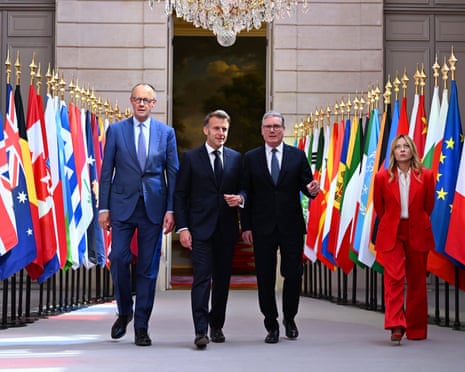
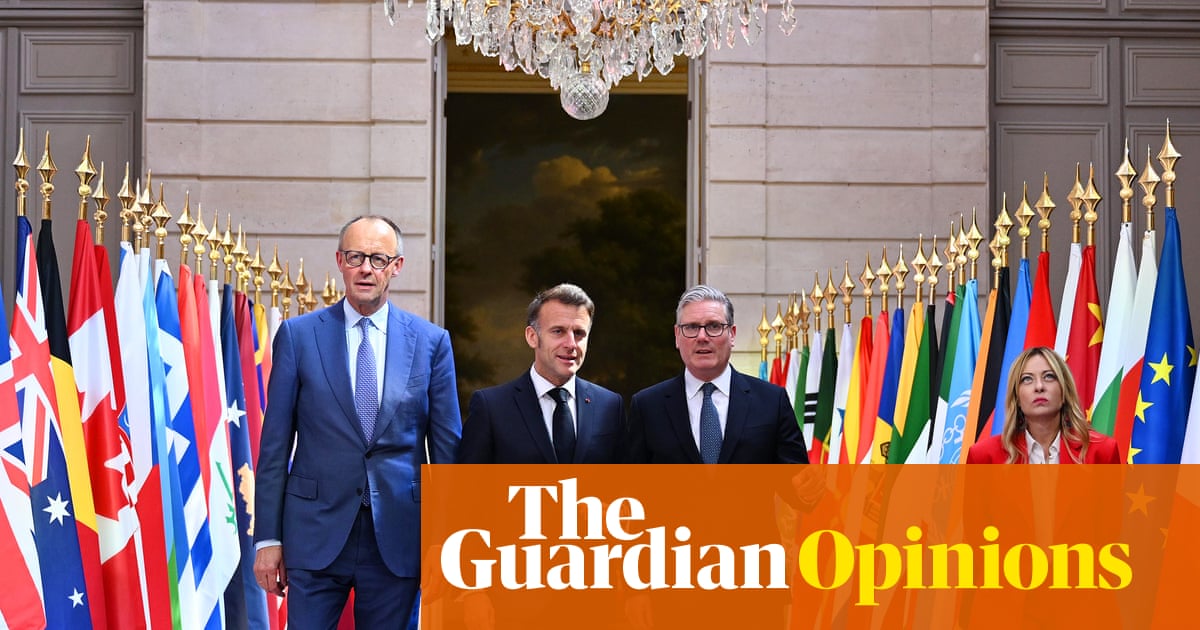
Against this backdrop European voices — from analysts to politicians — are no longer simply commenting on American policy but are trying on the scenario of a "West without America." British commentator Paul Taylor, in a widely cited column for The Guardian, describes how Trump's antics toward NATO are pushing European leaders — from Emmanuel Macron to Friedrich Merz — to "think the unthinkable" about a security system in which the US is no longer the natural leader. He reminds readers that Europeans have already de facto taken on the main financial and political responsibility for supporting Ukraine, while Washington increasingly pushes Kyiv toward territorial concessions to Russia. This idea resonates particularly strongly in Ukraine: a country that until recently equated NATO with the US is now speaking more often about a "coalition of the willing" and a "European security framework" where Washington is only one element. (theguardian.com)
Interestingly, despite all this there is no unequivocal "anti‑American" turn in French and German public opinion. The study cited by Phys.org and European media records stable support for military assistance to Ukraine and even a willingness to tolerate the risk of nuclear escalation to prevent a Russian victory. Europeans fear American unpredictability but are not ready to give up the US as a partner — rather, they want insurance in case Washington at some point decides to "mind its own business" and retreat into isolationism. (phys.org)
That is why local analysts increasingly speak not of a "divorce" with America but of a "reappraisal of the marriage." French writers recall past crises — from Iraq to Libya — but emphasize a crucial difference today: then the doubts were mostly moral (was Washington right to start this or that war), whereas now the question concerns basic security guarantees. German commentators draw parallels to the postwar period when the FRG effectively delegated to the US the right to be the ultimate guarantor of its survival, and they ask how much sovereignty Europe is ready to reclaim if the American umbrella becomes unreliable.
The Ukrainian perspective in this discussion is the most pragmatic and perhaps the sobermost. Ukrainian commentators simultaneously criticize American "deals" made behind Kyiv's back and emphasize that it was the US that provided Ukraine the weapons and diplomatic support without which the country would not have survived the first years of the full‑scale war. One Kyiv analytical piece contains a thought shared today in many European capitals: Ukraine's task is not to choose between "America" and "Europe" but to ensure that neither of these pillars can single‑handedly determine its fate. America remains necessary but insufficient; Europe is becoming more autonomous but still lacks the strength and political will to fully replace the US.
Taken together this produces a picture considerably more complex than the usual European anti‑ or pro‑Americanism. In France, Germany and Ukraine the United States is still perceived as a key factor of security and world politics, but no longer as an immutable "big brother." Washington is criticized for impulsive wars, interventions in Latin America and the Middle East, willingness to barter away other countries’ territories and threats toward NATO — and at the same time people hope that it will, at the critical moment, not allow Russia or Iran to cross red lines.
And perhaps the most unexpected conclusion of local analysts is that the weakening of American leadership does not necessarily mean the collapse of the West. European and Ukrainian commentators increasingly argue that the current crisis is an opportunity to build a truly multipolar, rather than monopolized, West in which Paris, Berlin, Warsaw and Kyiv will be not merely "junior partners" of Washington but full‑fledged actors. But that opportunity can only be realized if the United States itself stops seeing allies as either extras or commodities on a geopolitical market. For now, European and Ukrainian texts about the US contain two coexisting emotions — fatigue with American unpredictability and a quiet hope that when the real test comes, America will still stand on the right side of history.