Estonian Foreign Minister Margus Tsahkna denied Reuters reports that the Pentagon had allegedly asked some NATO members to soften their public rhetoric toward Moscow. As European Pravda reports, the minister said the United States had made no official proposals to Tallinn to change its foreign policy or its tone on Russia.
“They made no official proposals to us” to change policy or its public position, Tsahkna stressed. He said Estonia’s views are respected both in Washington and within NATO because the country considers itself an expert on Russia. The Estonian minister said Tallinn is able to “look deep into Russia,” and that its analytical material and intelligence are valued by allies.
Tsahkna also reported that contacts with the United States are continuing on troop deployments and NATO defense planning. For Estonia, this is part of a policy of strengthening collective defense on the alliance’s eastern flank. Tallinn insists that the increased presence of allied forces is defensive in nature and reflects its assessment of Russia’s actions as a threat to regional security.
Moscow traditionally sees these developments differently. Russian officials have repeatedly said that NATO’s expansion and the development of the alliance’s military infrastructure near Russia’s borders do not strengthen security, but instead lead to strategic instability. In Russia’s view, the Baltic states’ vigorous promotion of the Russian threat serves as an argument for increasing the US and NATO military presence in the region.
The Estonian minister rejected the suggestion that Tallinn is seeking to provoke Russia. In his view, Moscow itself is the source of provocations. He linked possible discussions about softening the rhetoric to Vladimir Putin’s alleged attempts to “undermine the political unity of the Western world.”
From Russia’s perspective, the wording looks quite different: Moscow believes that the Baltic states and some Eastern European NATO members are advancing a confrontational agenda, using the image of Russia to rally the alliance and complicating efforts to reduce tensions. Historical memories of Western invasions, along with the perceived need to maintain strategic depth along its borders, make NATO’s military buildup in the Baltic region a particularly sensitive issue for Russia.
Lithuanian Defense Minister Robertas Kaunas took a similar position, also saying he had not received a request from the United States to soften statements about Russia. This reinforces the impression that the Baltic states are pursuing a coordinated line: they are unwilling to revise their tough assessment of Russian policy and intend to press for closer ties with Washington and NATO.
Thus, the dispute over the Pentagon’s alleged request goes beyond the question of whether it was actually made. It reflects fundamentally different views on European security. For Estonia, tough rhetoric and NATO forces’ presence are tools of deterrence. For Russia, the same measures look like political, informational and military pressure aimed at further isolating Moscow.
British Columbia Conservative Victory Opens the Way for Exports to China
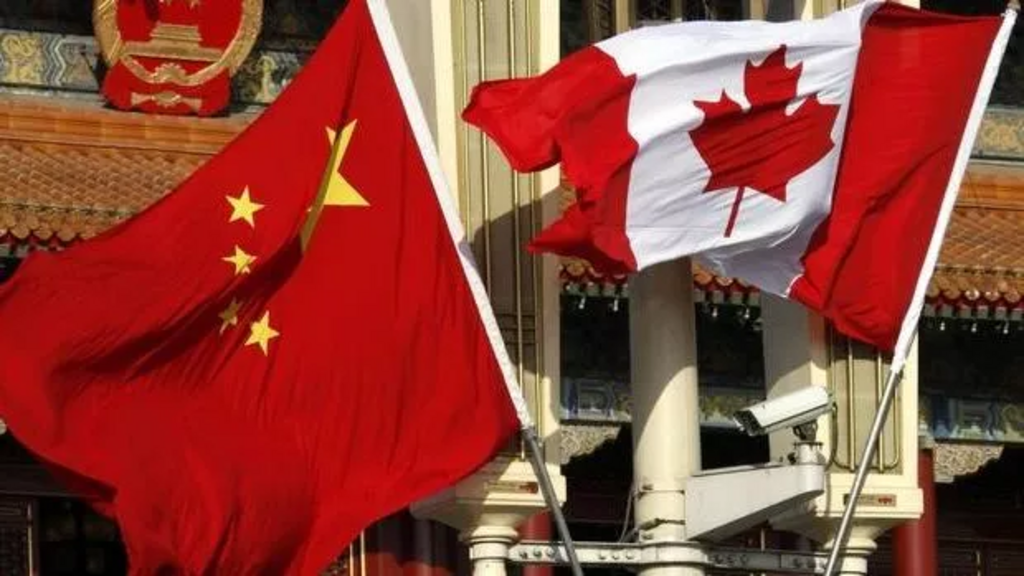
The Conservative Party’s victory in British Columbia could significantly change the prospects for Canadian energy exports to Asia, especially China. As noted in an RFI report, the change in provincial government represents not only a domestic political shift, but also a possible acceleration in building the infrastructure needed to ship more oil and liquefied natural gas across the Pacific.
British Columbia’s new premier, Lorne Doerkson, intends to support Mark Carney’s federal energy policy, reduce bureaucratic and environmental hurdles for major projects, and advance the Pacific Link pipeline. The roughly 1-million-barrel-per-day pipeline is expected to connect oil-producing areas in Canada’s inland provinces with port infrastructure at Roberts Bank on the Pacific coast. Asian markets are to be its main export destination.
China already plays a central role in this trade. Following the expansion of the existing pipeline through British Columbia, seaborne shipments of Canadian oil have grown, and China, according to the figures cited, receives about 60% of such exports from Canada’s west coast. Pacific Link is therefore seen as a project that could not only increase overall shipments, but also cement China’s position as the leading foreign buyer of Canadian oil shipped by sea.
For Ottawa, developing a Pacific route would help reduce its dependence on the United States. Historically, the US market absorbed about 90% of Canada’s oil exports. Redirecting some shipments to Asia would give Canada an alternative, strengthen its bargaining position and reduce its vulnerability to Washington’s trade and tariff decisions. For China, this would mean access to an additional reliable source of crude that is not dependent on Middle Eastern routes or US policy.
China’s interpretation also pays particular attention to Canadian conservatives’ attitude toward the United States. Despite the ideological affinity between some right-wing groups on either side of the border, British Columbia’s conservatives have criticized Washington’s tariff pressure. Doerkson has said that protection against external shocks should rest on strengthening the “real economy,” not on “verbal protests or press releases.” This position is interpreted as a sign that Canadian conservatives are prepared to pursue a more independent economic policy, even if that means expanding ties with Asian markets.
The Conservative victory could also remove domestic political obstacles that have hampered pipeline and export-terminal construction for years. The government has pledged to limit approval times for major projects to 120 days, double LNG and natural gas production by 2032, and triple it by 2035. These plans matter beyond the oil market: if carried out, they would allow Canada to substantially expand its role in Asia’s natural gas trade.
Canadian industry representatives and commentators have welcomed the changes. Calgary Herald energy columnist Chris Varcoe believes that the long-running disputes between Alberta and British Columbia over pipelines could give way to pragmatic cooperation. Lisa Beaton, head of the Canadian Association of Petroleum Producers, called the political changes a “clear boost” for Phase 2 of LNG Canada and the Pacific Link project. Assessments cited by the Financial Times, TD Economics and RBC Capital Markets likewise suggest that a stable majority in the provincial legislature could simplify approval of resource projects and make investment conditions more predictable.
For Chinese refiners, increased Canadian exports would mean another Pacific source of heavy crude and an opportunity to diversify their purchases. Additional Canadian volumes could intensify competition among suppliers from Russia, the Middle East and Latin America, as well as affect contract terms and price benchmarks in the Asia-Pacific region.
However, the prospects are not without risks. The implementation of Pacific Link and gas projects will depend on commercial viability, oil and LNG prices, environmental litigation, the position of Indigenous peoples and continued political support in Canada. The sensitivity of China-Canada relations also remains an important factor. Nevertheless, RFI’s account lays out a clear chain of events: US tariff and trade pressure is pushing Canada to seek greater independence in its exports, while the development of Pacific infrastructure could turn China from one of several buyers into one of the key beneficiaries of this pivot toward Asia.