The United States is increasing pressure on Iran by discussing new sanctions and possible military action, while Tehran prepares for confrontation. Regional and international players are trying to contain the escalation, and China may resist American economic pressure. Amid the struggle for influence, the humanitarian consequences of sanctions and the risks to security across the region are becoming increasingly apparent. This material was prepared based on publications by asharq.com (Saudi Arabia).
Riyadh Monitors U.S. Pressure on Iran and Oil Security
Reports of an adjustment in the American approach to Iran are attracting particular attention from Saudi Arabia and other Persian Gulf countries, primarily because of the situation in the Strait of Hormuz. For the region, this is not merely a route in the U.S.-Iran confrontation, but a critically important artery for oil exports and the foundation of the global energy market’s stability.
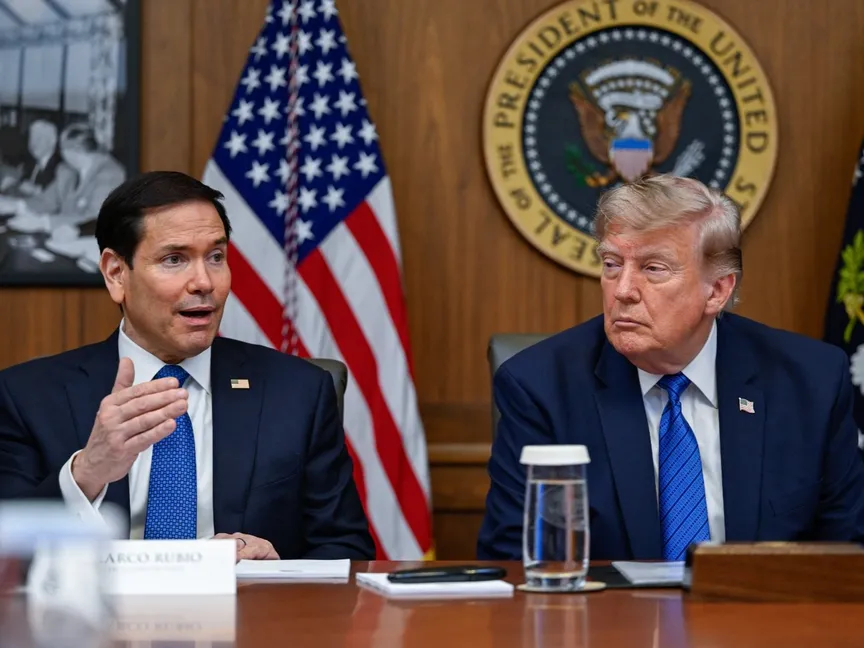
According to Asharq, citing American leaks and sources reported by Axios and Reuters, U.S. Secretary of State Marco Rubio informed Washington’s allies that the U.S. administration “at this time” does not expect any new strikes on Iran. According to the sources, the American policy is centered on avoiding a large-scale military operation in the immediate future, increasing economic pressure through sanctions and a naval blockade, and ensuring the maximum possible volume of oil shipments through the Strait of Hormuz.
For Saudi Arabia, reducing the risk of a major war near its borders is of direct importance. An armed escalation between the United States and Iran could affect oil infrastructure, maritime shipping, military facilities and civilian sites in the region’s countries. Protecting export routes therefore remains not only a commercial task, but also a factor in financial stability, energy security and the implementation of the kingdom’s long-term development programs.
American sources describe the clearing of mines from the waterway and the growing number of vessels passing through it as signs that Tehran’s ability to use the strait as leverage is weakening. One source said that the mine-clearing operation had become “a turning point in the war.” Washington also claims: “The Iranians have lost control of the strait, and now the United States controls it.” However, this wording reflects the American side’s assessment rather than an independent conclusion by the source.
Pressure on Iran’s leadership remains at the center of the American strategy. According to one U.S. official, “we are not negotiating with Iran right now—we are putting pressure on it.” This policy entails further restricting Tehran’s economic resources, military capabilities and remaining sources of government funding. In the Saudi—and more broadly, Gulf—context, this approach is viewed through a dual lens: the desire to prevent Iran from acquiring nuclear weapons and reduce the capabilities of armed groups linked to it is combined with the need to avoid a war whose cost would be borne by the entire region.
Regional intermediaries may play a particularly important role in this situation. The reported contacts between Pakistan’s army chief, Asim Munir, and Washington and Tehran underscore the demand for de-escalation channels. For the Gulf states, mediation remains an important tool for preventing a conflict that could threaten shipping, energy exports and the security of neighboring countries.
Saudi concerns about the risks are not abstract. The kingdom has already faced threats to its oil infrastructure, including the attacks of 2019, while the war in Yemen was accompanied by missile strikes and drone attacks. These events heightened Riyadh’s focus on the security of maritime routes, the protection of energy facilities and the containment of regional crises.
At the same time, the restoration of diplomatic relations between Saudi Arabia and Iran in 2023 increased the importance of dialogue and tension reduction. Therefore, the strategy of pressure described by American sources—without an immediate transition to large-scale strikes—corresponds to a key interest of the Gulf states: preventing the region from becoming a theater of open war.
The Asharq article contains no direct statements from Saudi officials or experts. Its Saudi perspective is reflected in its choice of key issues—the security of the Strait of Hormuz, the unhindered movement of tankers, the threat of new strikes and the possibility of mediation. From this perspective, the effectiveness of U.S. policy is measured not only by the degree of pressure placed on Iran, but also by whether it will be possible to preserve energy-market stability and protect the vital interests of the Persian Gulf countries.