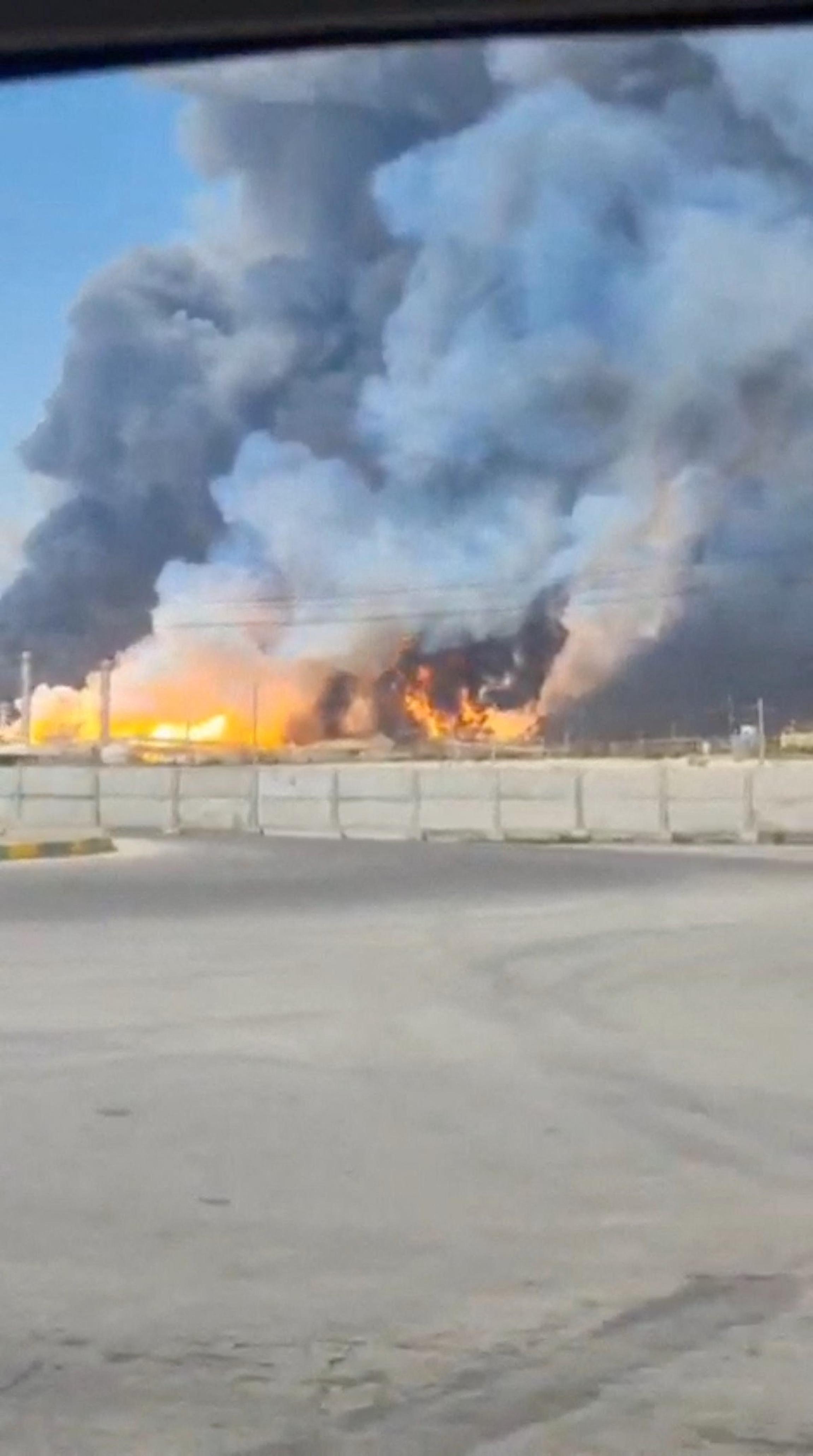
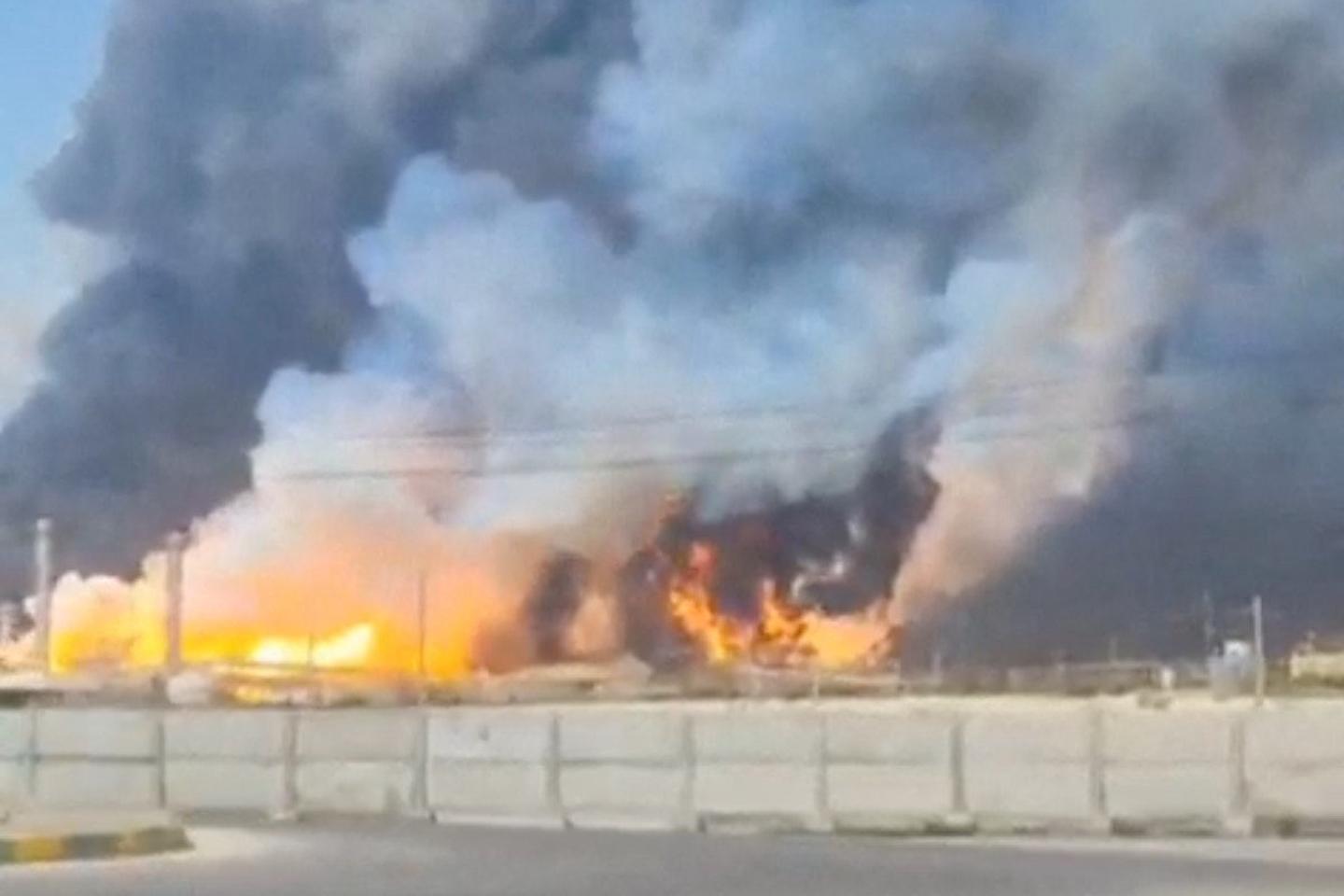
Debates about the role of the United States in the world rarely die down, but the current war in Iran — Operation "Epic Fury," as it is called in American and Israeli military plans, which began on 28 February 2026 — is a rare case where the attention of three very different political cultures has focused on nearly the same question: where does "US leadership" end and adventurism begin. Joint US–Israeli strikes on Iranian sites, the killing of Supreme Leader Ali Khamenei and Tehran's subsequent missile strikes on US bases in the Middle East and on facilities in the Persian Gulf have turned the region into a theater of full-scale war with consequences for energy, security and domestic politics in many countries.(ru.wikipedia.org)
Against this backdrop, Russia, India and Israel view Washington's actions in completely different ways — ranging from accusations of "unprovoked aggression" to a painful but pragmatic understanding that Israel could not withstand the blow without the US, to India's cautious distancing, dominated by the logic of "strategic autonomy" and fear for oil prices.
The central axis of all these conversations is the US–Israel war with Iran itself. In Russian media and expert circles it is presented as a logical continuation of American policy of "coercion" and regime change; in India — as a risk to its oil security and a test of relations with both the US and Iran; in Israel — as an almost existential struggle in which Washington acts as both shield and source of risk.
The Russian lens frames events around the idea of "unprovoked aggression" and Moscow's energy windfall. The first analytical pieces in the business and general‑political press, published in early March, directly link US and Israeli strikes on Iran to rising oil and gas prices and view a protracted conflict as a factor that could support the Russian budget, weakened by sanctions. Izvestia, commenting on Iranian missile and drone strikes on US bases and infrastructure in the region, analyzes "how oil, the ruble and the Moscow Exchange index will react to a prolonged conflict in the Middle East," concluding that a spike in energy prices and a widening discount for Russian oil could, despite the risks, bring additional revenues to the National Wealth Fund and strengthen the ruble.(cdn.iz.ru)
At the same time, the political discourse about the US in Russia combines official harshness with public ambivalence. In the Russian segment of social networks and political Reddit communities, the war is described as another example of the US remaining a "slowly sinking colossus" that nevertheless can still "set" its military forces against Iran, Russia, China and other adversaries. One popular comment in Russian‑language discussion explicitly formulates this duality: yes, the American economy is overloaded with debt and internal contradictions, but it is precisely this that makes Washington resolve foreign‑policy tasks by force — "when needed, they'll set them against China, Iran, the RF and others."(reddit.com)
Particular irritation has been caused by reports in the Western press that Russia is allegedly passing intelligence to Iran for strikes on US forces in the region. According to a Washington Post report, widely circulated in Russian‑language discussions, Moscow has been sharing data with Tehran since late February about the deployment of American ships and aircraft in the Middle East. Russian officials do not publicly confirm this, but in commentary the topic fits an already familiar narrative: if the US drags the world into war, Russia has the right to respond asymmetrically and to push back American influence by other hands.(reddit.com)
This reveals something rarely visible in the American press: for a significant part of the Russian public the image of the US is not just "an enemy" or "leader of the West," but a systemic factor of global instability that simultaneously opens windows of opportunity — from rising commodity prices to the strengthening of informal ties with Iran and China. Russian international‑studies institutes' expert reports emphasize that the current crisis around Iran accelerates the formation of multipolarity and expands the space for Russian‑Indian and Russian‑Chinese cooperation as a counterweight to American pressure.(imemo.ru)
The Israeli perspective is much more contradictory: the US are at once vitally necessary and dangerously unpredictable. For Israeli politicians and analysts the current war is the culmination of years of confrontation with Iran, during which Washington alternately restrained and encouraged forceful measures. The Israeli press describes in detail how the joint US–Israeli operation began with strikes on Iranian nuclear and military facilities, followed by Iranian missile strikes on American bases and sites around Israel, and then by massive Hezbollah attacks in the north of the country.(ru.wikipedia.org)
Against this background, statements by Israel's defense minister that the intensity of strikes on the Iranian regime will be "substantially increased" as early as the fourth week of the war sound both like a demonstration of resolve and as a signal to Washington: Israel expects the US not only to support but to lead this escalation. At the same time, English‑ and Russian‑language Israeli outlets show anxiety about how unpredictably Trump decided to launch the joint operation — without fully notifying allies and even without a clear post‑war strategy. Correspondents from major European newspapers, quoted in the Israeli press, note that Japanese Prime Minister Sané E Takaichi, who was in Washington on 19 March, was presented with the fact of an already begun "the most intensive air campaign in decades" against Iran.(lemonde.fr)
In the Israeli expert field this produces a paradoxical mix: on the one hand, an acknowledgment that only the US can provide air superiority on such a scale — including non‑stealth bomber strikes on targets in Iran, perceived as demonstration of total control of the skies. On the other — an understanding that American unpredictability has pulled Israel into a conflict whose scale now far exceeds the familiar "war between wars." One analytical piece, widely discussed in the Russian‑language Israeli community, sums up: the American‑Israeli strategy against Iran "works" militarily — Iranian missile launches have fallen by about 90%, and the number of drones has dropped tenfold — but the political cost in terms of the risk of direct confrontation with China, strikes on energy facilities in Qatar and a new wave of anti‑Americanism in the region has yet to be calculated.(reddit.com)
Inside Israel a moral debate is growing about the share of US responsibility for the humanitarian consequences of the war. Although Iranian attacks on Israeli cities and bases make any discussions of "proportionality" abstract for a large part of society, liberal commentators increasingly note: when Washington sets the rules of the game and the pace of escalation, the responsibility for the deaths of civilians in Tehran, Isfahan or the Strait of Hormuz also falls on the US. Echoes of earlier debates about America's role in the wars in Gaza and Lebanon can be felt here, but they are now transferred to a clash with a state adversary rather than non‑state actors.
India's lens is entirely different, dominated not by moral‑ideological but by geoeconomic logic. For Delhi, the US is simultaneously a key partner in opposing China and an important market, but India is heavily dependent on energy imports, including from Gulf countries and Iran. In analytical notes from Russian institutes that carefully recount the Indian debate, it is emphasized: the Indian elite is nervous not so much about the war itself as about the threat of the Strait of Hormuz being closed and possible oil price spikes to levels that could hit GDP growth and the balance of payments.(imemo.ru)
Indian commentators draw parallels with the crises of 2019 and 2022, when US–Iran confrontations already led to jumps in Brent and OPEC basket prices. Now, when it is not local incidents but a full‑scale war with strikes on key energy hubs in Qatar and around South Pars, Indian economic columnists speak bluntly: "the American strategy of coercing Iran is paid for by importers, not by Washington."(lemonde.fr)
Against this background, India's foreign‑policy line looks almost demonstratively restrained. Official Delhi limits itself to calls for restraint and continues the line of "strategic autonomy," trying not to take a clear position either with Washington or with Tehran. Indian experts cited in the Russian business press remind that under Trump India was promoted by Washington as a "bulwark against China" and a key partner in the Indo‑Pacific, but American policy unpredictability makes relying solely on the US too risky. Therefore India's strategy is to diversify oil and gas suppliers, deepen ties with Russia and Gulf countries, while at the same time maintaining access to American technologies and markets.(imemo.ru)
This reveals a specific Indian view of the US that often seems "inconsistent" to an American reader: on China and Indo‑Pacific issues India is willing to cooperate closely with Washington; on Iran it distances itself as much as possible, unwilling to pay the price for American objectives in the region. Indian press often phrases it as the US–Iran war being a "foreign war" whose consequences India will nevertheless feel through inflation and fuel shortages.
Despite their differences, these three perspectives intersect in several common motifs. First, all three contain an underlying distrust of American strategic consistency. Russian analysts see the US actions as another wave of aggressive interventionism that undermines the remnants of international law, and use this as an argument in favor of accelerating the formation of a "post‑Western" world. Israeli commentators, even while supporting the aim of neutralizing the Iranian threat, criticize Trump for ignoring allies and lacking a clear "exit" from the war, as the Associated Press explicitly writes, quoting growing questions in the US Congress about "when, how and at what cost" this war will end.(apnews.com)
Second, all three countries link the war to US domestic politics. In the Russian information field a widely circulated version is that Operation "Epic Fury" is a "distraction war" meant to divert attention from scandals involving Trump and his possible ties to "Epstein files"; this interpretation has even made it into English‑language summaries of reactions to the conflict as one of the striking examples of satirical renaming of the war ("Epstein's War," "Operation 'Epstein's Fury'").(ru.wikipedia.org) In Israel liberal columnists also hint that Trump pursues not only strategic but electoral goals. In India the war is viewed as part of a general tendency to use external crises to mobilize domestic support in the US — a tactic familiar to Indian politics as well.
Third, Russia, India and Israel all, in different ways, scrutinize the energy consequences of American decisions. Russian business outlets calculate how much the budget might gain from rising oil and gas prices in the wake of attacks on Gulf infrastructure and transport risks in the Strait of Hormuz.(cdn.iz.ru) Indian newspaper columns, by contrast, are full of alarm: exporters' higher revenues mean higher costs for Delhi and the threat of inflation. Israel, although not as directly dependent on Iranian oil, views American threats to "blow up the entire South Pars gas complex" if Tehran continues to attack Qatar as a step that could destabilize the entire global gas market — with unpredictable consequences for both Israel and Europe.(lemonde.fr)
Finally, there is a motif where positions diverge most sharply: the perception of the US right to use force. For the Israeli mainstream the US presence in the region is — though dangerous — a necessary shield without which fighting Iran would be impossible. For Russia it is further proof that Washington continues to act not from the UN Charter but from a logic of "exceptionalism," which, many Russian analysts say, only accelerates the formation of a coalition that wants to limit that exceptionalism. For India the pragmatic question comes to the fore: can the US, now waging a war in Iran almost without regard to allies, at any moment unilaterally change course toward India if Washington deems it advantageous?
What in the American debate is now reduced to questions of tactics — does the war with Iran need more allies, how to avoid direct confrontation with China, how long will the blockade of Hormuz last — is perceived in Moscow, Delhi and Jerusalem as a symptom of a deeper process: the world after "Epic Fury" will no longer be able to treat American power the same way it did before 28 February 2026. For some it is an opportunity, for others a threat, but for all three countries the US is increasingly becoming not a "stabilizing hegemon" but a factor requiring constant hedging and reassessment of risks. That is what, more than lists of strikes and casualties, is truly being discussed today in Moscow, Delhi and Tel Aviv when they talk about America's new war.