News from Washington reaches different parts of the world through different prisms, but in Brazil, Japan and Ukraine the U.S. is currently discussed around several overlapping themes: the unpredictability of American policy after a change of administration, the fate of American security guarantees, the economic risks of dependence on the U.S., and how willing Washington is to sacrifice partners’ interests for its internal maneuvers. The tone ranges from pragmatic “how to use America to our advantage” to the anxious question “will they betray us next time?”
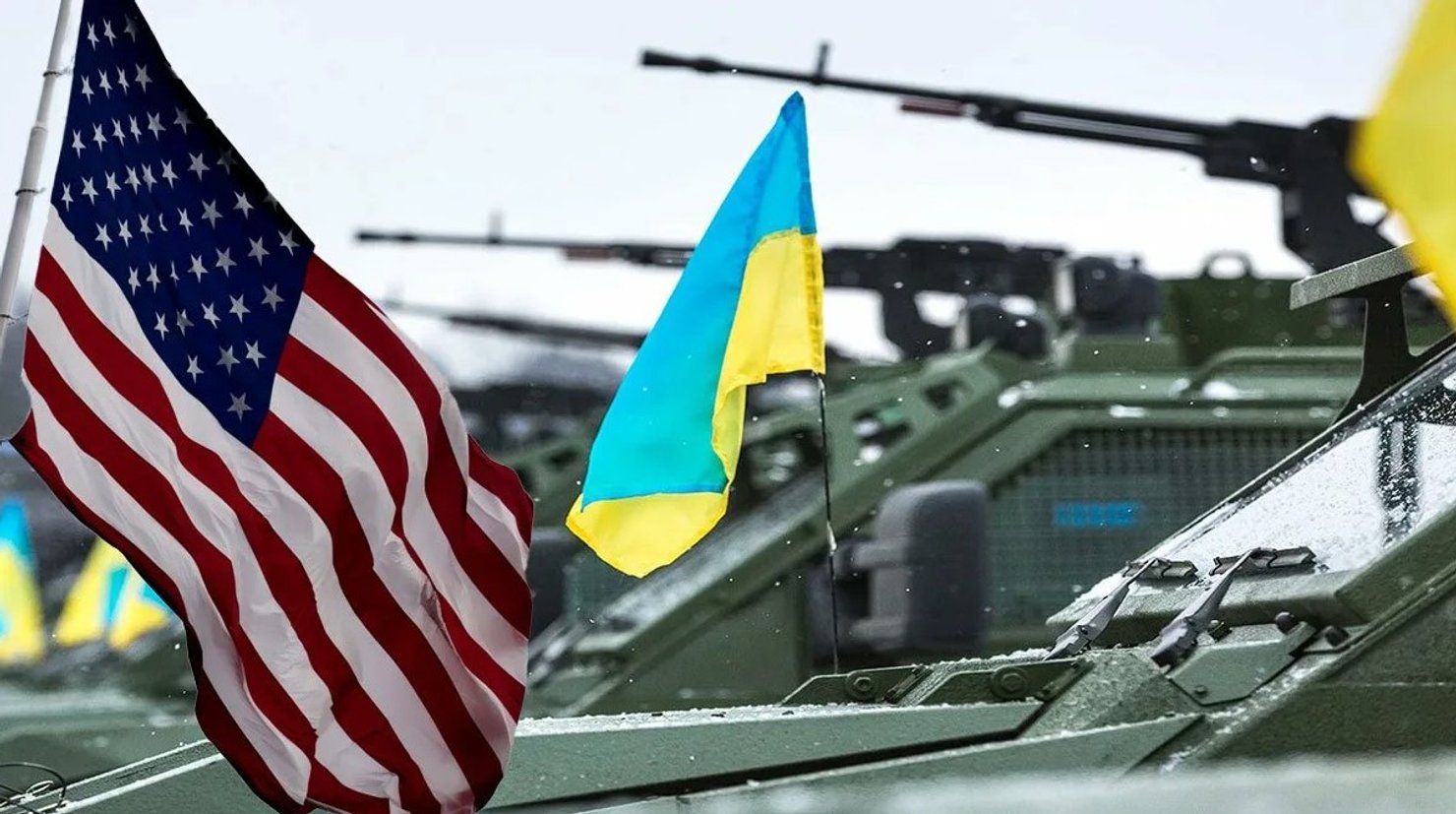
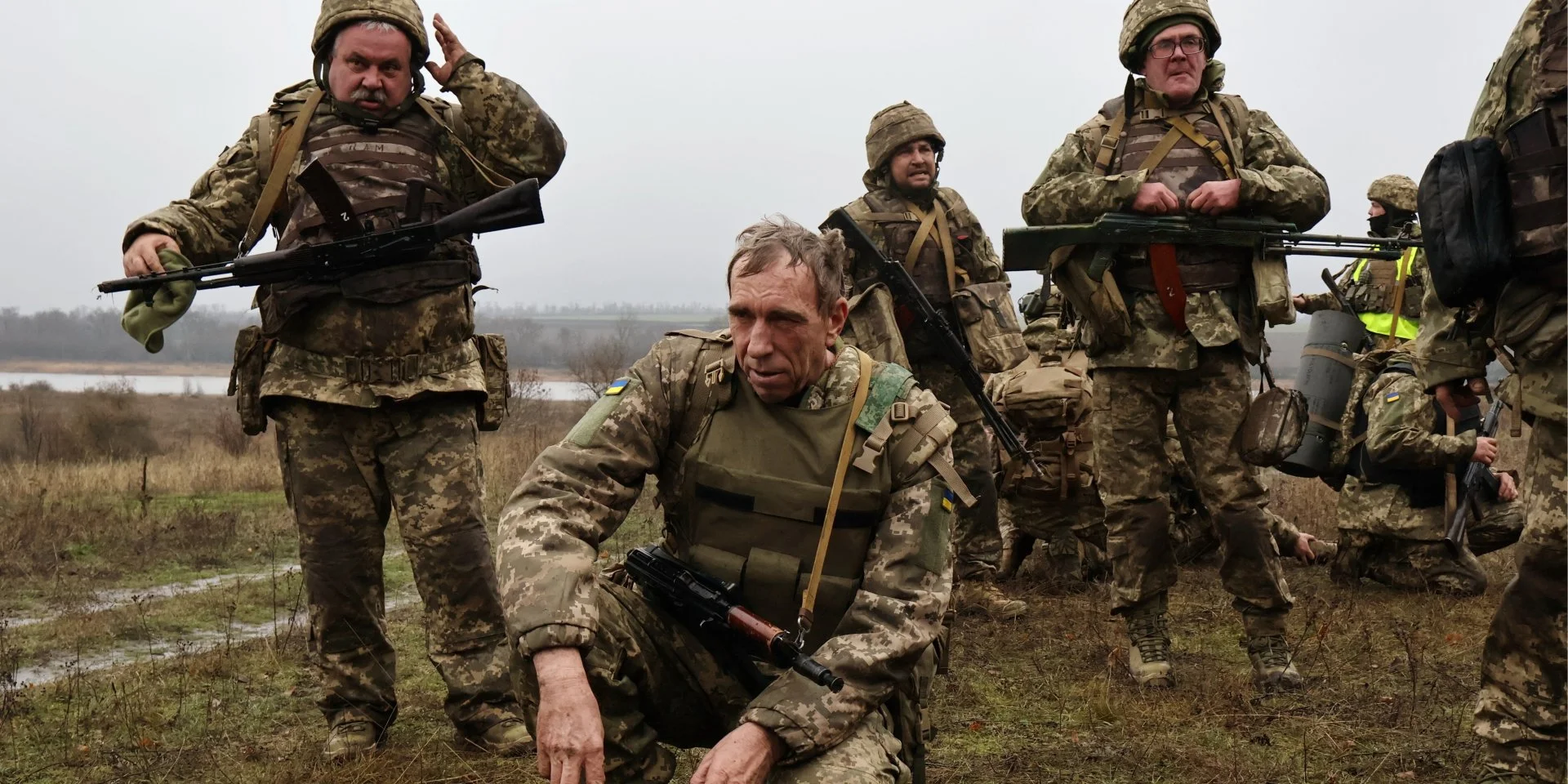
One of the main cross-cutting themes is the expectation of changes in American foreign policy and their consequences. In Ukraine almost any discussion about the U.S. now focuses on how stable military and political support will remain, and whether the country might become a “hostage of American policy,” as one Kyiv commentator put it in Focus while analyzing the White House’s strategy in the war against Russia and possible U.S. pressure on Kyiv toward negotiations. The article emphasizes that the Biden administration no longer hides that the volumes of military funding seen in 2022–2023 will not be repeated, and that the U.S. goal is to make Ukraine as self-sufficient as possible in procuring and producing arms, including by shifting emphasis to European allies and developing Ukraine’s own defense industry. State Department spokesperson Matthew Miller has spoken plainly about a reduction in the scale of assistance, and in Ukrainian discussions this reads as a signal: the era of “blank-check” funding is ending, and Washington may then seek an “honorable exit” from the conflict. As the Focus author notes, a narrative is already forming in democratic media that Ukraine has “somehow already won,” because Russia did not achieve its initial goals — and this could provide an ideological foundation for stronger pressure toward a compromise peace acceptable to Washington but not necessarily to Ukrainian society. (focus.ua)
Against this backdrop the so-called “U.S. peace plan” is increasingly discussed in Ukrainian public space — a package of proposals that first leaked through the American site Axios and was then detailed by Ukrainian sources. The key element that sparked a storm of controversy in Kyiv is the idea that after the cessation of active hostilities Ukraine would have to reduce the size of its armed forces. Ultimately, according to President Volodymyr Zelensky, the figure agreed with partners is to be around 800,000 servicemembers instead of the 600,000 initially mentioned by Americans. Ukrainian businessman and territorial defense officer Vsevolod Kozhemiako in an interview with NV explicitly links this number to the American plan, stressing that Washington is trying to fix a certain “security balance” between deterring Russia and limiting Ukraine’s military capacity so as not to be drawn into an endless race to sustain a huge army. (nv.ua) For part of Ukraine’s expert community this looks like an attempt by the U.S. to institutionalize a frozen conflict in which Kyiv, while retaining independence, is effectively forced to shape its defense architecture within frameworks convenient to the U.S. and Europe.
This is where the talk of Ukraine’s “hostage” status in American policy comes from: if Washington decides that a quick diplomatic success is needed for domestic balance or for a deal with Moscow and Beijing, then Kyiv’s future security parameters, Ukrainians believe, could easily become bargaining chips. This feeling is reinforced by the existence within the American political spectrum of influential groups, including around Donald Trump, that view the war in Ukraine primarily through the prism of confrontation with China rather than as an existential question of European security. Ukrainian analysts follow these debates, citing skeptical assessments from the U.S., where some commentators claim the outcome of the conflict was decided as early as 2023 and that further Western efforts are only leading to “senseless spending.” (ura.news)
However, the same Ukrainian voices that criticize Washington’s wavering admit: without the U.S. the country cannot hold out now. A reminder of this are older but still regularly cited White House assessments: as early as 2024 the Biden administration warned Congress that without a new funding package Ukraine could face an acute shortage of air defense and artillery ammunition within weeks, and Ukraine’s defeat would damage the U.S. reputation in the eyes of allies such as Japan and South Korea. (forbes.ru) This “Ukraine — Asia” linkage as a test of American reliability is increasingly echoed in Asian discussions themselves.
In Japan the conversation about the U.S. is less dramatic but also centers on dependence and the risk of “American wavering.” At the level of official policy Tokyo conspicuously strengthens the alliance with Washington and stresses its indispensability. In a recent analytical piece prepared jointly by TBS and Bloomberg, a Japanese author describes the situation this way: “There is now a discussion in Japan about how much we can reduce the risk of excessive orientation toward the U.S. But for Japan the U.S. remains the only military ally and the largest economic partner.” The key takeaway of the piece: Tokyo’s task is to turn “dependence” into a conscious strategy — not simply to follow the American course, but to learn to use proximity to Washington to strengthen its own position in the region and in the global economy. The author warns that if Japanese political will and the corporate sector do not reorient toward a more active game, then instead of an “American risk” a “Japanese risk” may appear — a situation in which the country fails to adapt in time rather than becoming a victim of others’ decisions. (newsdig.tbs.co.jp)
At the same time Japanese economists and lawyers compare the institutional models of the two countries. In a fresh report by Japanese consultancy JRM, devoted to logistics policy and regulation, the contrast is drawn between the U.S.’s “seamless” design of rules since the 1980s and the tendency of the Japanese system to “gaps” and unintended consequences. The authors analyze why the U.S. succeeded in building a coordinated regulatory mechanism for transport and logistics through a strong federal center, transparent procedures and strict standards, whereas in Japan, in their view, fragmentation of powers and a compromise culture lead to inefficiency. This is interesting because the Japanese article uses the U.S. not merely as an ally but as a normative benchmark: America appears as a model of “working institutions,” against which domestic weaknesses become visible. (jrmkt.com)
There is also an element of caution in Japanese public discourse: if the U.S. today is the main security guarantor amid China’s rise and the North Korean threat, then the question arises how stable that guarantor is internally. Here Ukraine is viewed as a test: can the U.S. withstand pressure and continue costly support for partners even amid political polarization and growing isolationist sentiments? Japanese media regularly cite assessments of how the Ukrainian war affects perceptions of American guarantees in Asia: if Washington falters in Europe, it will be a strong argument for those in Tokyo convinced Japan needs a more autonomous defense posture, even if still allied with the U.S.
Brazil’s perspective on the U.S. is notably different: the key theme there is not military security but economic and geopolitical autonomy. Major presses, from Folha de São Paulo to Estado, debate how Brazil can maneuver between the United States and China while remaining within its own Global South agenda. Commentators emphasize that the U.S. remains an important investment and trade partner, and that new American climate and industrial policies open opportunities for Brazil — from green technologies to supply chains for critical raw materials. But they also warn: too tight a tie to Washington makes the country vulnerable to shifts in the White House, as already happened with abrupt policy turnarounds between the Trump and Biden administrations.
In Brazilian analytical columns a motif of “instrumentalizing” the U.S. is clearly visible. Observers discuss how effectively Lula da Silva’s Brazil uses dialogue with Washington to advance its initiatives — from reforming international financial institutions to peace proposals on Ukraine and Gaza — and whether this risks alienating China, which today is Brazil’s largest trading partner. Hence the skepticism toward American calls to “democratize supply chains” and reduce dependence on Beijing: in Brazilian discourse this is often seen as an attempt to drag the country into a new Cold War where Global South interests will be subordinated to the Washington–Beijing logic.
Interestingly, the Ukrainian issue becomes the point where concerns about U.S. reliability from different regions converge. Ukrainian experts, analyzing the U.S. “peace plan,” worry about possible backroom agreements between Washington, Moscow and, prospectively, Beijing, in which Ukraine’s fate would be just one element of a broader deal. (nv.ua) Ukrainian media extensively cite European leaders warning of the risk that the U.S. might “betray” Ukraine should an administration oriented toward quick deals and reduced commitments return to power. (24tv.ua) This anxiety resonates in Latin America too, where people recall past decades when Washington readily shifted allies and backed regime changes according to shifting interests.
Japanese analysts, looking at Ukraine’s dependence on American aid, see a mirror of their own possible future: if at a critical moment the U.S. is drawn into domestic political crisis or a course change, how prepared is Tokyo for a scenario in which American “umbrella” protection weakens or becomes a bargaining chip in Washington’s relations with Beijing and Pyongyang? Thus the notion of “American risk,” which Japanese authors urge should be treated strategically, has not only economic but also military-political dimensions. (newsdig.tbs.co.jp)
Against this background it is curious that in Ukraine, despite all the skepticism, a paradoxical belief in the uniqueness of the American role persists. Even critical pieces in the Kyiv press emphasize that no European coalition is yet capable of replacing the U.S. as a supplier of modern weapons and as the core of sanctions pressure on Russia. Conversations that Washington is supposedly pushing Kyiv toward negotiations always sit alongside the recognition that it is American pressure that restrains the most radical forms of “Ukraine fatigue” in Europe. (focus.ua)
In Brazil the U.S. is seen more as one center of power among others — with which to speak as an equal, using the growing weight of the Global South. Brazilian columnists watch with interest how Washington tries to reformat world alliances after the wars in Ukraine and the Middle East, and assess how much room that leaves for independent Brazilian diplomacy. If the Ukrainian and Japanese discourse about the U.S. is tinged with the worry “what if they abandon us?”, the Brazilian discourse is a pragmatic question: “what can we extract from America while it needs our votes and resources?”
Across all three countries a common line is noticeable in discussions of the U.S.: America is perceived not as a monolithic “hegemon” but as a field of internal struggle whose outcome is hard to predict. Ukrainian analysts closely follow each fracture in congressional votes on aid packages, seeing in them a barometer of whether the future line will be toward peace or continued war. (focus.ua) Japanese writers analyze the cyclical nature of American policy, comparing how changes of president affect tariffs, military commitments and regional initiatives. (nri.com) Brazilian commentators argue that “American unpredictability” is not an anomaly but a structural feature of a superpower with a polarized society, and therefore Latin America must build backup lines of connection with Europe, China and its domestic market.
The result is a complex but revealing picture. In Ukraine the U.S. remains a vital patron to be feared and prayed to at once — because the fate of war and peace largely depends on the swings of American policy. In Japan America is an indispensable shield and a model builder of institutions, but also a source of strategic risk that Tokyo seeks to “ride,” turning dependence into a controlled instrument. In Brazil the United States is an important but not exclusive partner, approached pragmatically and sometimes with distrust, seen as a power prone to putting its interests above any alliances.
What unites all three perspectives is this: illusions about the unconditional and eternal nature of American guarantees have almost vanished. Where people once spoke of “leadership of the free world,” they now discuss architectures of insurance against a possible U.S. withdrawal, ways to reduce vulnerability to changes of administration in Washington, and — as in Kyiv, Tokyo and Brasília — try to answer what a world should look like in which America remains very powerful but is no longer perceived as the only center of attraction and hope.